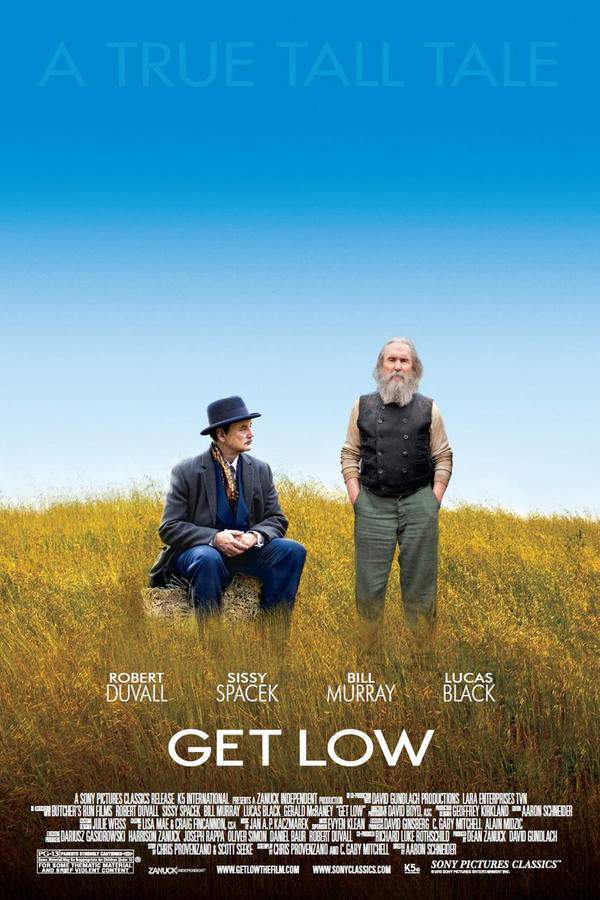
Felix Bush is a reclusive man who lives on the edge of a rural town, shrouded in rumors and whispered legends. Some say he killed in cold blood; others suspect he has trafficked with darker forces. The townsfolk are startled when he appears at Reverend Gassy Horton’s church carrying a large roll of cash and asking for a funeral party to be held for him.
The church meeting spirals into a plan that could revive a struggling community business as well as settle old scores. Reverend Horton’s initial skepticism gives way to a performance of rumor, memory, and mutual curiosity. Frank Quinn, the owner of a small funeral parlor that is financially strained, sees an opportunity to turn Bush’s money into real business and agrees to publicly advertise and help organize the event. To guarantee a good turnout, Bush insists on a raffle, offering his own property as the prize, with tickets selling for $5 apiece. The gathering becomes a stage for the town to hear the stories people have heard about him, turning private whispers into public memory and shaping how everyone will remember the man soon to be buried.
Amid the stories from neighbors and long-buried pasts, an old mystery resurfaces around Mattie Darrow, a widow, and her deceased sister Mary Lee Stroup. A preacher named Charlie Jackson pushes for truth to emerge from forty years of silence, urging the community to confront what really happened. Bush decides to tell the truth about his relationship with Mary Lee, insisting that she was his true love and that the affair with her defined his past in more ways than one. He recounts how the two had planned to run away together; when Mary Lee did not appear at the agreed rendezvous, he went to her home to search for her.
Inside that house, chaos erupts. Mary Lee’s husband attacks her with a hammer, knocking her unconscious, and then sets the wall alight with a kerosene lamp to kill himself, Mary Lee, and Bush. Bush manages to break free from the attacker, but his clothes catch fire, and he recalls seeing Mary Lee engulfed in flames as he tries to extinguish the blaze. He frees himself by leaping from a window, and the memory leaves him uncertain whether the husband shoved him or if he simply lost his footing. He cannot re-enter the burning house to save Mary Lee, a moment that haunts him as the truth comes to light.
Back at the funeral party, Mattie momentarily steps away from the crowd, and the raffle proceeds with a winner proclaimed. When the event ends and the last guests depart, Mattie returns and appears to have found a measure of forgiveness for Bush. He, for his part, dies soon after, his final perception framed by the image of Mary Lee coming down the lane toward him.
The actual funeral takes place on a small patch of Bush’s property, a place where he has long buried his animal companions. Charlie officiates the ceremony, joined by Reverend Horton, Buddy, Buddy’s wife and child, Mattie, and Frank. In a quiet, symbolic gesture that brings the past into the present, Mattie places a portrait of Mary Lee on Bush’s casket, giving a sense that the two lovers can be together again in memory, even if only in spirit. As the grave is filled and the mourners begin to drift away, the town is left with a story that blends rumor, truth, regret, and the fragile possibility of reconciliation.