













Plot Explained Spoilers guaranteed!
Plot Explained

Browse by genre

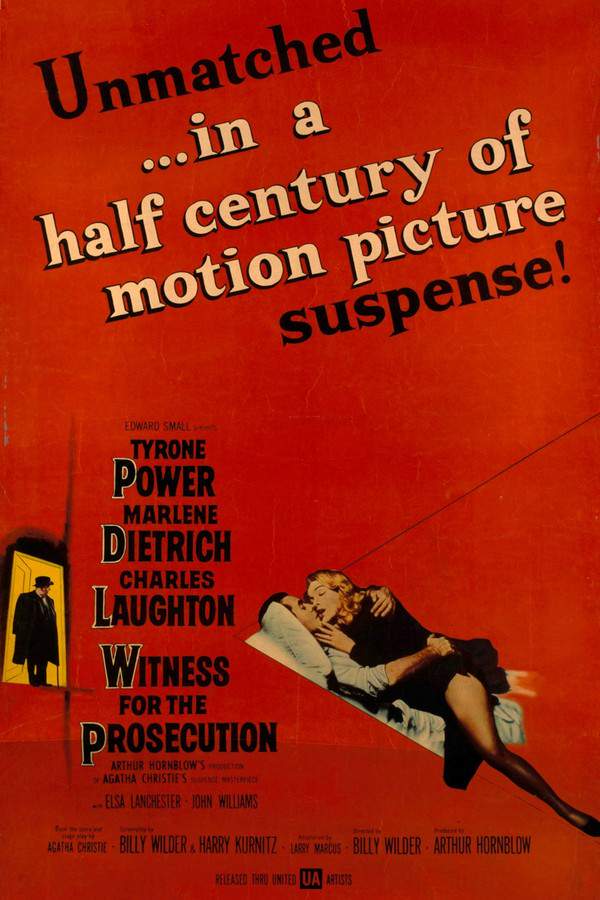
Witness for the Prosecution (1958) movie poster

Timeline

Witness for the Prosecution (1958) Timeline Explained – Every Event in Order

Release, runtime and language
1958 · 116 min · English
JustWatch #1,598 28
Directed by
Billy Wilder
Starring
Elsa Lanchester, Ian Wolfe, Henry Daniell, Una O'Connor, Charles Laughton, John Williams

Charismatic lawyer Sir Wilfrid Robarts takes on the defense of Leonard Vole, who is accused of murder. As the trial progresses, Vole’s seemingly solid alibi begins to unravel. The situation becomes even more complicated when his estranged wife, Christine, testifies, exposing a tangled history of secrets and lies. Robarts must navigate a complex web of conflicting accounts to uncover the truth and determine whether his client is truly innocent.

On this page (6)
  1. 1 Where to watch
  2. 2 Events in order (10)
  3. 3 Timeline questions answered
  4. 4 Movie threads
  5. 5 Movies like Witness for the Prosecution
  6. 6 Every angle

Where to watch

Where to Watch Witness for the Prosecution (1958)

Where can you watch Witness for the Prosecution? Stream, rent or buy it in the US, including on Amazon Prime Video, Fawesome and Hoopla: current JustWatch availability with up-to-date prices.

Streaming availability powered by JustWatch

10 events in order · contains spoilers

Witness for the Prosecution Timeline: Events in Chronological Order

Every key event of Witness for the Prosecution (1958) in order, scene by scene, with when and where it takes place. Use it to untangle flashbacks, time jumps and parallel storylines, to refresh your memory before the sequel or to find the exact scene you are thinking of.

  1. Murder Accusation

    Leonard Vole finds himself embroiled in a murder accusation shortly after World War II. The wealthy widow Emily French is found dead, and Leonard is implicated due to his recent inheritance from her will.

    Where
    London
  2. The Lawyer's Recovery

    Fresh from recovery in the hospital, Sir Wilfred Robarts decides to take on Leonard's case despite his doctor's strict orders. He is motivated by doubt over the accused's innocence expressed by his replacement barrister.

  3. Meeting Christine Vole

    Sir Wilfred meets Christine Vole, Leonard's wife, and becomes suspicious of her demeanor. After a careful evaluation, he decides against calling her as a witness, fearing she could detract from the defense.

  4. Christine's Testimony

    In a surprising turn, Christine takes the stand for the prosecution, offering compelling circumstantial evidence against Leonard. Her testimony fails to provide him an alibi and puts him deeper in legal jeopardy.

    Where
    Courtroom
  5. Desperation at Midnight

    As hope dwindles for Leonard, a late-night phone call reveals shocking evidence against Christine. It is discovered that she had written letters to a lover named Max, indicating her intent to undermine her husband's defense.

  6. Turning the Jury's Opinion

    The revelation of Christine's letters swings the jury's perspective, leading to Leonard's unexpected acquittal. However, Sir Wilfred is left with lingering suspicions about the sudden emergence of this evidence.

    Where
    Courtroom
  7. Christine's Confession

    During the climactic courtroom scene, Christine confesses to having sabotaged her own credibility to exonerate Leonard. This shocking revelation adds another layer to the already complicated case.

    Where
    Courtroom
  8. Leonard's Betrayal

    In the heat of the moment, Leonard reveals his plans to leave Christine for a younger woman, showcasing his true character. This betrayal adds tension to an already electric atmosphere.

    Where
    Courtroom
  9. Desperate Act

    In a dramatic turn of events, Christine seizes a knife, an item submitted as evidence, and stabs Leonard in front of the shocked courtroom. This act seals her fate and turns the narrative upside down.

    Where
    Courtroom
  10. Aftermath of the Stabbing

    Following the tragic stabbing, Miss Plimsoll, Sir Wilfred's nurse, immediately cancels his planned trip to Bermuda. She pledges to assist in defending Christine Vole against the new murder charge, setting the stage for another intense legal battle.

Last updated: November 07, 2024 at 23:41

Was this helpful?

Timeline questions answered

Witness for the Prosecution Timeline Explained: Your Questions Answered

When does it happen, and why in that order? The questions people ask about the chronology of Witness for the Prosecution (1958): time jumps, flashbacks, cause and effect between scenes and the correct order of events, each answered with spoilers.

Q1

Why does Christine testify against Leonard?

Christine takes the stand for the prosecution despite being Leonard's wife. She provides circumstantial evidence that reinforces his guilt and fails to offer him an alibi. However, it's later revealed she was deliberately undermining her own credibility to help Leonard get acquitted so she could be free from their marriage.

Foreshadowing: Earlier, Sir Wilfred notices something suspicious about Christine's demeanor and decides not to call her as a witness, fearing she would harm the defense.

  • christine vole testimony
  • leonard vole trial
  • prosecution witness
Q2

What were the letters Christine wrote to Max?

The letters were discovered during a late-night phone call. Christine had written them to a secret lover named Max, expressing her intention to deny Leonard an alibi. The prosecution used these letters to suggest Christine had a motive to frame her husband. However, this actually helped Leonard because the jury believed Christine was framing him out of revenge, leading to his acquittal.

  • max lover
  • christine letters
  • secret lover
Q3

Why was Leonard acquitted if he killed Emily French?

Leonard was acquitted because the jury believed Christine was framing him. The revelation of her letters to Max suggested she wanted to deny him an alibi out of personal revenge. This made the jury doubt the prosecution's case and view Leonard as a victim of his wife's deception rather than a guilty murderer.

Foreshadowing: Sir Wilfred expresses suspicion about the timing and nature of this evidence, suggesting something is not quite right.

  • acquittal
  • jury verdict
  • emily french murder
Q4

Why does Christine confess to sabotaging her own testimony?

Christine confesses during the final courtroom scene that she deliberately undermined her own credibility to exonerate her guilty husband. Her plan was to appear as if she was framing him out of revenge, which would cause the jury to sympathize with Leonard and acquit him. She did this because she wanted to be free from their marriage.

Foreshadowing: Sir Wilfred noticed something suspicious about Christine's demeanor when they first met and chose not to call her as a witness.

  • christine confession
  • trial twist
  • courtroom revelation
Q5

Why does Leonard get stabbed at the end?

After being acquitted, Leonard reveals to Christine that he plans to leave her for a younger woman. This betrayal pushes Christine over the edge. In a desperate act, she grabs the knife that was submitted as evidence of Leonard's supposed accidental injury and stabs him to death in front of the shocked courtroom.

  • leonard death
  • christine stabbing
  • courtroom murder
Q6

Why does Sir Wilfred take the case despite being ill?

Sir Wilfred is a distinguished lawyer fresh from hospital recovery. His doctor has ordered him to avoid excitement. However, when the replacement barrister expresses doubt about Leonard's innocence, Sir Wilfred decides to personally represent the accused himself, driven by his professional instincts and skepticism about the case.

  • sir wilfred robarts
  • health condition
  • lawyer defense
Q7

Why did Emily French leave Leonard an inheritance?

Emily French, a wealthy widow, recently altered her will to leave Leonard a significant inheritance. This is what initially raises suspicions about Leonard's motives, as he stands to benefit financially from her death. The inheritance becomes a key piece of evidence suggesting he had a motive to murder her.

  • emily french will
  • inheritance
  • motive for murder
Q8

Why does Sir Wilfred suspect the letters' evidence?

After the jury acquits Leonard based on Christine's letters to Max, Sir Wilfred harbors lingering suspicions about the timing and nature of this evidence. He finds it convenient that such damaging evidence against Christine would emerge at exactly the right moment to save Leonard, suggesting something may be contrived.

  • sir wilfred suspicion
  • evidence timing
  • late night phone call
Q9

Why does Miss Plimsoll offer to defend Christine?

After Christine stabs Leonard in the courtroom, killing him, Miss Plimsoll immediately cancels Sir Wilfred's planned trip to Bermuda. She then pledges to assist in defending Christine Vole against the new murder charge, showing her commitment to the legal profession and willingness to help even someone who just committed a crime in open court.

  • miss plimsoll
  • christine defense
  • new murder charge
Q10

Why does Christine grab the knife during the verdict?

Christine grabs the knife submitted as evidence during the trial. It was originally presented as proof of Leonard's supposed accidental injury from the night of Emily's murder. When Leonard reveals his intention to leave her for a younger woman, Christine uses this weapon to kill him in a desperate act of vengeance in front of the entire courtroom.

Foreshadowing: The knife was introduced earlier as evidence of Leonard's injury, making it a loaded symbol in the courtroom.

  • knife evidence
  • weapon
  • courtroom violence

Movie threads

More Movies Like Witness for the Prosecution, by Mood & Story

Curated lists built around what makes Witness for the Prosecution tick: the same mood, the same kind of story or the same emotional payoff. Each list explains why these movies belong together.

Deceptive Courtroom Dramas with Shocking Twists like in Witness for the Prosecution

Legal battles where the truth is a labyrinth of lies and surprise revelations. For viewers who enjoyed the intricate lies and dramatic surprises of Witness for the Prosecution. This section features movies like it, focusing on tense legal thrillers and crime stories where the truth is elusive and the final revelation is both shocking and emotionally potent.

  • suspenseful
  • deceptive
  • methodical
  • surprising
  • dramatic
  • anxious
  • Tone: tense, deceptive
  • Pacing: methodical, variable
Why these movies?

The story pattern: Stories in this thread are built around a central legal conflict, often a murder trial, where testimonies and evidence are deliberately misleading. The plot methodically unravels a web of deception, placing the audience in a position of uncertainty, and typically concludes with a major twist that recontextualizes the entire narrative, often with tragic or bittersweet consequences.

Why they belong together: These movies are grouped by their shared focus on the courtroom as a stage for manipulation, their complex narrative structures that withhold key information, and their ability to deliver a powerful, surprising climax that challenges perceptions of guilt and innocence.
Heavy Tragedies of Betrayal and Moral Collapse like in Witness for the Prosecution

Stories where profound deception leads to inescapable, sorrowful endings. If you were moved by the heavy emotional weight and tragic conclusion of Witness for the Prosecution, explore these similar movies. They share themes of deep betrayal, complex character motives, and endings that are profoundly sad, focusing on the dark consequences of human deception.

  • dramatic
  • sad
  • betrayal
  • deceptive
  • heavy
  • tragic
  • Tone: tense, dramatic, sad
  • Pacing: variable, deliberate
Why these movies?

The story pattern: The narrative pattern follows characters navigating a world poisoned by lies, often within intimate relationships. The central conflict arises from a betrayal that unravels a carefully constructed reality, leading to a climax where moral boundaries collapse. The ending is typically sad or bleak, emphasizing the irreversible damage caused by the deception.

Why they belong together: These films are united by their heavy emotional weight, exploration of dark themes like betrayal and manipulation, and their commitment to endings that are tragic rather than triumphant. They share a tense, dramatic tone and a focus on the psychological devastation of their characters.

If you liked this

Movies Like Witness for the Prosecution

Similar movies to Witness for the Prosecution: the same genre, themes or kind of story. Each one comes with its own plot summary, timeline and ending explained.

Browse all movie summaries

Every angle

Witness for the Prosecution (1958) Explained: Plot, Timeline & Characters

Everything about Witness for the Prosecution in one place: what happens in the plot summary, the timeline in chronological order, the characters and meaning and a spoiler-free summary. What's After the Movie adds the cast, box office and post-credit scenes.

Coming soon on iOS and Android

The Plot Explained Movie Summary App

Plot summaries, endings explained and timelines on your phone. Catch up on any movie in minutes, save your favorites and never miss a twist again.

Be the first to know when we launch. Your email stays private, always.

Learn more about the app