Plot Explained Spoilers guaranteed!
Plot Explained

Browse by genre

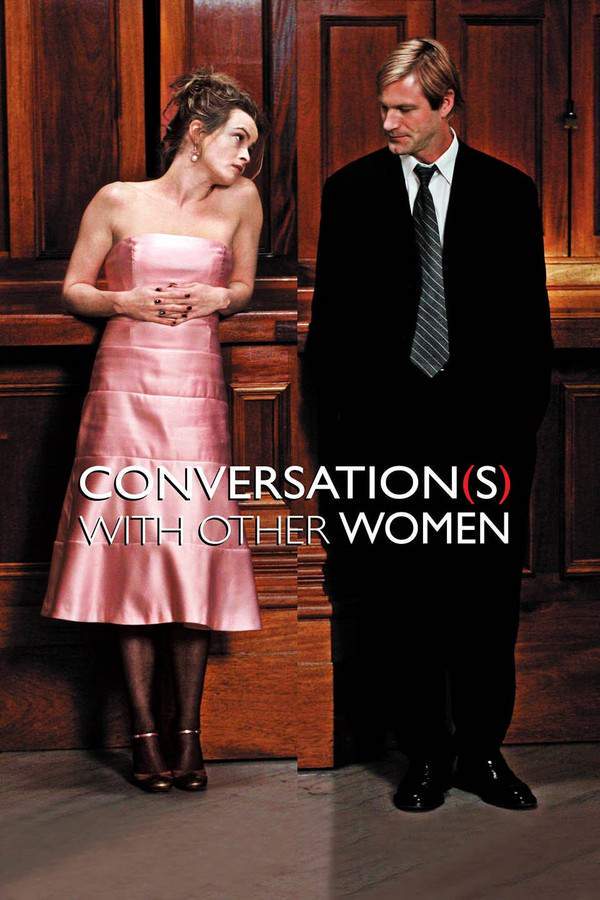
Conversations with Other Women (2006) movie poster

Plot Summary

Conversations with Other Women (2006) Plot Summary Explained

Release, runtime and language
2006 · 84 min · English
Loading streaming availability…
Directed by
Hans Canosa
Starring
Aaron Eckhart, Helena Bonham Carter
Budget
$450K

Two former lovers, portrayed by Helena Bonham Carter and Aaron Eckhart, unexpectedly reunite at a celebratory event. Drawn to each other, they retreat to a hotel room to revisit their shared history. The encounter forces them to confront the unresolved feelings and unspoken attraction that still linger between them, exploring the complexities of past relationships and the enduring power of connection.

On this page (6)
  1. 1 Where to watch
  2. 2 What happens: full plot
  3. 3 Plot questions answered
  4. 4 Movie threads
  5. 5 Movies like Conversations with Other Women
  6. 6 Every angle
Loading streaming availability…

Full plot summary · contains spoilers

What Happens in Conversations with Other Women: Full Plot Summary

The whole story of Conversations with Other Women (2006) explained, from the opening scene to the final frame: every key event, every twist and what it all adds up to. Read it as a quick recap before the sequel, to check a scene you missed, or to finally understand what really happened.

As the celebrations unfold at a lively wedding reception in Manhattan, a man in his late thirties, Aaron Eckhart, takes a deliberate step toward a bridesmaid, Helena Bonham Carter, who is also in his age bracket. With a glass of champagne serving as their conversational catalyst, they engage in a playful exchange, fluidly transitioning from light-hearted chatter about the wedding festivities to more profound revelations about their personal histories.

As their dialogue progresses, it becomes increasingly obvious that this seemingly serendipitous meeting is anything but coincidental—these two individuals are actually ex-spouses, reunited after a lifetime filled with myriad experiences and memories. The film delves into a series of nostalgic flashbacks, portraying a younger version of the couple as they navigated the peaks and valleys of their early relationship with a spirited vigor.

Although they are accompanied by significant others—Sarah, a 22-year-old dancer, and Geoffrey, a cardiologist, who remain conveniently out of sight—the couple makes a poignant choice to retreat to her hotel room. This decision bears emotional weight as they wrestle with the complexity of rekindled desire, their hearts echoing with the laughter, joy, and sorrow of their shared past.

Lying together in bed, surrounded by the phantoms of their youth, they are compelled to face the unresolved emotions that have lingered between them for years. He finds himself caught between his yearning for stability and a desire for excitement, while she appears to have come to terms with her life choices, radiating an aura of fulfillment.

As dawn breaks across the skyline, the reuniting couple realizes that their time together is drawing to a close. With her impending transatlantic flight back to London only hours away, they take a moment to gaze into each other's eyes, their thoughts wavering towards the ambiguous future that lies ahead.

When the time comes to part ways and resume their separate lives, a sense of contemplation envelops them. Each rides away in a taxi, immersed in introspection about the challenges of seeking happiness—not just within relationships but in their broader existence. Thus, their journeys home transform into a profound exploration of what it truly means to be at peace with oneself.

Last updated: November 19, 2024 at 16:39

Was this helpful?

Plot questions answered

Conversations with Other Women Plot Explained: Your Questions Answered

The questions people ask most about Conversations with Other Women (2006): what happens in the confusing scenes, why the characters do what they do, the twists, hidden details and what the ending means. Each answer contains spoilers.

Q1

Why do the ex-spouses decide to go to the hotel room together despite having current partners?

Despite being with new partners, Sarah, a young dancer, and Geoffrey, a cardiologist, the ex-spouses feel an undeniable pull toward each other. Their connection stems from unresolved feelings that have lingered since their divorce. The hotel room becomes a space where they can confront these emotions without the complications of their present lives intruding. Their choice reflects the raw emotional intensity of reuniting with someone who once defined a significant chapter of their lives.

Foreshadowing: Their flirtatious conversation at the wedding hints at the deeper connection they still share.

  • ex-spouses reunion
  • hotel room
  • unresolved feelings
  • current partners
Q2

What does the film reveal about the ex-spouses' past relationship?

The flashbacks portray their younger selves navigating the natural progression of a relationship, from the excitement of first love to the complexities of growing together and apart. Their past is filled with both joy and struggle, showing how they evolved from passionate young lovers into individuals who eventually chose different paths. The film explores how time, choices, and circumstances can drift people apart even when genuine love once existed.

Foreshadowing: The opening scene at the wedding celebration establishes the theme of love and commitment that contrasts with their own fractured past.

  • flashbacks
  • past relationship
  • younger selves
  • marriage history
Q3

Why does the male character struggle between wanting stability and excitement?

The character represents a common emotional tension, the desire for the comfort and security of a settled life versus the thrill of passion and spontaneity. His current relationship likely offers stability, but his reunion with his ex-wife reawakens the excitement and depth of connection he once knew. This internal conflict drives much of his emotional journey throughout the film, forcing him to question what truly fulfills him.

Foreshadowing: His deliberate approach to her at the wedding suggests he is seeking something missing in his current life.

  • stability
  • excitement
  • emotional conflict
  • marriage choices
Q4

Why does the female character appear more fulfilled than her ex-husband?

She seems to have reached a place of acceptance with her life choices. Rather than yearning for what might have been, she appears at peace with who she has become and the path she has taken. This contrast highlights the different ways people process past relationships, some carry regret, while others find closure. Her fulfillment suggests she has done the emotional work necessary to move forward, even if old feelings resurface.

Foreshadowing: Her playful yet composed demeanor at the wedding hints at someone who has made peace with her present.

  • fulfillment
  • acceptance
  • life choices
  • emotional closure
Q5

What is the significance of her impending transatlantic flight to London?

The flight serves as a literal and symbolic deadline that adds urgency to their reunion. It represents the reality that their worlds exist apart, he in Manhattan, she in London. The impending departure creates tension, forcing them to make the most of their limited time together and raising the question of whether rekindling their connection is worth disrupting their separate lives. The flight underscores the theme of fleeting moments and choices that define our futures.

Foreshadowing: The wedding setting itself is temporary, mirroring how their time together is bounded.

  • transatlantic flight
  • London
  • limited time
  • impending departure
Q6

What does the ambiguous ending imply about their future?

The ending leaves their relationship purposefully unresolved, reflecting the complexity of real human connections. Rather than offering a neat reunion or clean separation, the film suggests they may return to their separate lives still carrying feelings for each other. The taxi rides become metaphors for their individual journeys, each person Contemplating what happiness truly means. The ambiguity respects the reality that some relationships don't have clear conclusions, only ongoing questions.

Foreshadowing: Their final gaze into each other's eyes before parting carries the weight of unspoken possibilities.

  • ambiguous ending
  • future
  • separation
  • possibilities
Q7

Why does the film use flashbacks to tell the story?

The flashbacks create a layered narrative that contrasts the vibrancy and hope of their youth with the complexity of their present circumstances. By showing their past, the film illustrates how their relationship evolved and why it carries such emotional weight. This structure allows viewers to understand the depth of their connection while observing how time has changed them both. The technique adds emotional depth without relying on exposition.

Foreshadowing: The transition from their playful wedding conversation to nostalgic imagery signals the blending of present and past.

  • flashbacks
  • narrative structure
  • past vs present
  • emotional depth
Q8

Who are Sarah and Geoffrey and why aren't they more present in the film?

Sarah, the 22-year-old dancer, and Geoffrey, the cardiologist, represent the ex-spouses' current lives and choices. Their absence from the main narrative emphasizes the film’s focus on the past rather than the present. By keeping these partners out of sight, the story maintains its intimate exploration of what once was between the main characters. Their presence is implied but deliberately minimized to highlight the emotional priority the ex-spouses give to confronting their shared history.

Foreshadowing: The fact that both characters choose to leave their partners unattended at the wedding signals the significance of their reconnection.

  • Sarah
  • Geoffrey
  • current partners
  • absent characters
Q9

What is the central theme of the movie?

The film explores the enduring impact of past relationships and the complexity of re-evaluating significant life choices. At its core, it examines whether we can truly move forward when unresolved feelings linger, and whether reconnecting with a former love helps us understand ourselves better. The bittersweet tone acknowledges that some connections leave permanent marks on our lives, regardless of where life takes us next.

Foreshadowing: The wedding celebration itself symbolizes the commitment and questions that surround love.

  • theme
  • relationships
  • past vs present
  • re-evaluation
Q10

Why is their meeting at a wedding significant?

A wedding, a celebration of love and commitment, provides the perfect backdrop for two former spouses to confront their own history with that institution. The irony of celebrating new love while grappling with failed love adds emotional complexity. The festive, heightened atmosphere amplifies their emotions, making their reunion feel both natural and charged with meaning. The wedding setting reinforces the film’s exploration of what makes relationships work or fail.

Foreshadowing: The joyous celebration around them contrasts sharply with their own uncertain emotional state.

  • wedding
  • celebration
  • irony
  • emotional backdrop
Q11

What do the separate taxi rides at the end represent?

The taxi rides symbolize each character's journey toward self-discovery and acceptance. Alone with their thoughts, they reflect on what happened, what was revealed, and what comes next. The separation in taxis underscores that despite their intimate reunion, they remain ultimately alone in their individual struggles to find peace and happiness. Their parallel journeys home become a final meditation on the human condition and the search for fulfillment.

Foreshadowing: Their earlier decision to leave together in one taxi toward the hotel room contrasts sharply with this final separation.

  • taxi ride
  • introspection
  • separation
  • journey home

Movie threads

More Movies Like Conversations with Other Women, by Mood & Story

Curated lists built around what makes Conversations with Other Women tick: the same mood, the same kind of story or the same emotional payoff. Each list explains why these movies belong together.

Movies about bittersweet reunions like Conversations with Other Women

Stories where former lovers reconnect, confronting past regrets and unresolved feelings. If you liked the poignant reunion in 'Conversations with Other Women,' explore more movies where former lovers unexpectedly reconnect. These films delve into themes of unresolved feelings, nostalgia, and the complex emotions of revisiting a shared past, offering similar bittersweet and reflective experiences.

  • nostalgic
  • longing
  • contemplative
  • melancholic
  • intimate
  • regretful
  • Tone: bittersweet, melancholic, nostalgic
  • Pacing: slow, conversational
Why these movies?

The story pattern: Narratives in this thread often revolve around a chance meeting between characters with a significant romantic history. Through dialogue-driven scenes and flashbacks, the story contrasts their past idealism with their present-day realities, forcing them to grapple with regret, desire, and the impossibility of fully recapturing what was lost.

Why they belong together: Movies are grouped here for their shared focus on the specific emotional dynamic of reconnecting with a past love. They share a bittersweet tone, an intimate, conversational pace, and a thematic core centered on memory, regret, and the enduring impact of significant relationships.


Dialogue-driven character dramas similar to Conversations with Other Women

Films that unfold through deep conversations, revealing character depths and emotional truths. Fans of the conversational style of 'Conversations with Other Women' will appreciate these talky character studies. These films prioritize emotional honesty and character revelation over plot, creating an intimate and reflective viewing experience focused on human connection and introspection.

  • intimate
  • talky
  • reflective
  • contemplative
  • realistic
  • emotional
  • Tone: reflective, intimate, melancholic
  • Pacing: slow, deliberate
Why these movies?

The story pattern: The plot is secondary to character revelation in these stories. Conflict arises from verbal exchanges, subtext, and the unspoken emotions between characters. The structure is often simple, taking place in real-time or over a short period, allowing the audience to feel like a silent observer in a deeply personal encounter.

Why they belong together: These films are grouped by their primary narrative engine: conversation. They share a slow, deliberate pacing, a medium emotional intensity, and a focus on creating a sense of intimacy and authenticity through realistic, weighty dialogue that drives character development.

If you liked this

Movies Like Conversations with Other Women

Similar movies to Conversations with Other Women: the same genre, themes or kind of story. Each one comes with its own plot summary, timeline and ending explained.

Browse all movie summaries

Every angle

Conversations with Other Women (2006) Explained: Plot, Timeline & Characters

Everything about Conversations with Other Women in one place: what happens in the plot summary, the timeline in chronological order, the characters and meaning and a spoiler-free summary. What's After the Movie adds the cast, box office and post-credit scenes.

Coming soon on iOS and Android

The Plot Explained Movie Summary App

Plot summaries, endings explained and timelines on your phone. Catch up on any movie in minutes, save your favorites and never miss a twist again.

Be the first to know when we launch. Your email stays private, always.

Learn more about the app