Plot Explained Spoilers guaranteed!
Plot Explained

Browse by genre

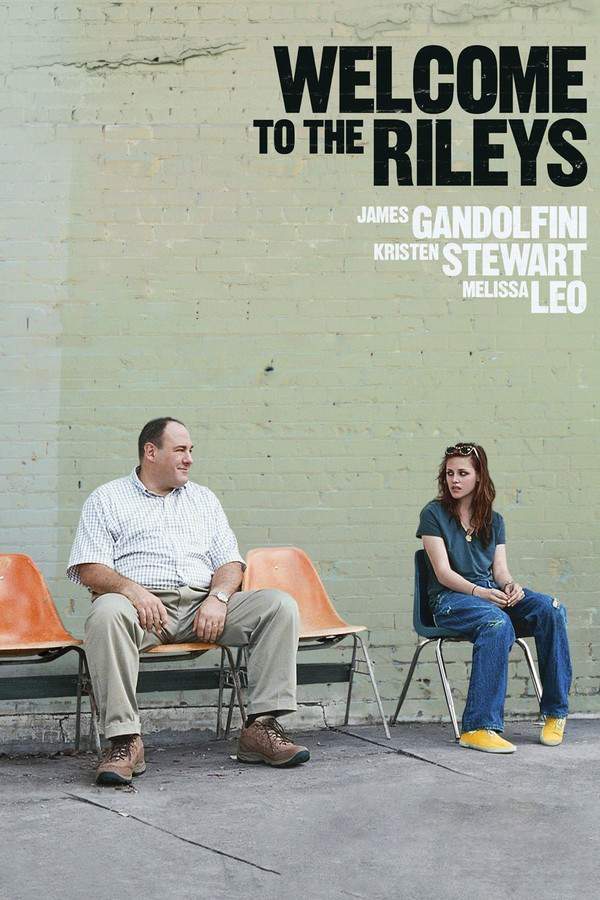
Welcome to the Rileys (2010) movie poster

Plot Summary

Welcome to the Rileys (2010) Plot Summary Explained

Release, runtime and language
2010 · 110 min · English
Loading streaming availability…
Directed by
Jake Scott
Starring
Kristen Stewart, James Gandolfini, Melissa Leo, David Jensen

Following the tragic loss of their young daughter, Doug and Lois Riley struggle to cope with their grief, drifting apart from each other. Seeking solace, they find themselves drawn into the orbit of a troubled young woman in New Orleans. As they navigate this unexpected connection, the couple confronts their pain and begins a journey toward healing and rediscovering their marriage.

On this page (6)
  1. 1 Where to watch
  2. 2 What happens: full plot
  3. 3 Plot questions answered
  4. 4 Movie threads
  5. 5 Movies like Welcome to the Rileys
  6. 6 Every angle
Loading streaming availability…

Full plot summary · contains spoilers

What Happens in Welcome to the Rileys: Full Plot Summary

The whole story of Welcome to the Rileys (2010) explained, from the opening scene to the final frame: every key event, every twist and what it all adds up to. Read it as a quick recap before the sequel, to check a scene you missed, or to finally understand what really happened.

Doug Riley and his wife Lois have been living in a state of emotional limbo ever since their daughter Emily was tragically killed eight years earlier. Doug, portrayed by James Gandolfini, finds himself entangled in an affair with a waitress named Vivian, while Lois struggles with her own unbearable guilt over their daughter’s death. She has become increasingly reclusive, relying on in-home services like hairdressers, her sister Harriet, and a local pastor for support.

The unexpected death of Vivian leaves Doug in turmoil. During a business trip to New Orleans, he faces a poignant moment of choice. In a local strip club, he encounters a 16-year-old lap dancer named Mallory, whose daring invitation for intimacy he declines. Instead, he offers her $100 a day for the privilege of staying at her rundown apartment to help sort through his grief and confusion—no strings attached. Mallory, played by Kristen Stewart, reluctantly agrees.

Feeling obligated to be honest, Doug tells Lois he cannot return home. As Doug and Mallory settle into an unconventional cohabitation, marked by Mallory’s nakedness and constant flirtation, Lois finally resolves to confront her overwhelming solitude. For the first time in eight years, she manages to drive to New Orleans, propelled by a paper bag in case anxiety overwhelms her.

Once in Louisiana, Doug takes a proactive role in organizing Mallory's neglected space, hoping to cultivate some semblance of normalcy. When Lois arrives and is shocked to discover her husband living with a foul-mouthed under-aged hooker, she sees an unsettling resemblance between Mallory and her lost daughter Emily. Driven by both sorrow and desperation, Lois decides to stay in the cramped apartment, leading to an unusual dynamic among the trio.

Tensions rise when Lois attempts to persuade Mallory to step away from her lifestyle. After an intense argument, a distraught Mallory flees, only to find herself in trouble with the law. She calls Doug for help, who, along with Lois, rushes to her aid. However, as they drive away, Mallory makes a poignant assertion, stating, > "I'm not somebody's little girl. It's too late for that," before sprinting back into the night.

This moment crystallizes the painful realization for Doug and Lois: Mallory can never replace their daughter, and they must confront the reality of their loss. Their return to Indianapolis signifies a sobering acceptance. Weeks later, Mallory reaches out to Doug, informing him of her plans to head to Las Vegas. He assures her that no matter where life takes her, he and Lois will always be waiting, ready to support her whenever she decides to reach out.
Last updated: October 27, 2024 at 23:09

Was this helpful?

Plot questions answered

Welcome to the Rileys Plot Explained: Your Questions Answered

The questions people ask most about Welcome to the Rileys (2010): what happens in the confusing scenes, why the characters do what they do, the twists, hidden details and what the ending means. Each answer contains spoilers.

Q1

Why does Doug choose to pay Mallory instead of having sex with her?

Doug is not looking for physical intimacy, he's seeking emotional connection and a way to process his grief over his daughter's death. After Vivian's unexpected death, Doug realizes that random encounters cannot fill the void left by his loss. Offering money for companionship rather than sex shows he's searching for something deeper: a human connection that doesn't involve the transactional nature of his affairs, and a chance to help someone rather than use them.

  • doug riley
  • mallory
  • grief
  • new orleans
  • emotional connection
Q2

Why does Lois finally leave home after eight years?

Lois is driven to New Orleans by sheer loneliness and the desperate need to confront her husband directly. After eight years of isolating herself, relying on in-home services, her sister Harriet, and a pastor, Lois reaches a breaking point when Doug tells her he cannot come home. Her decision represents her first major act of agency since Emily's death, motivated by both fear of losing Doug entirely and the realization that she cannot heal in isolation.

  • lois riley
  • indianapolis
  • new orleans
  • isolation
  • eight years
Q3

Why does Lois think Mallory resembles her dead daughter Emily?

Lois sees in Mallory a haunting physical and behavioral echo of Emily, both are young women at a vulnerable age, and Mallory's situation as a troubled teen mirrors the lost potential of Emily's life cut short. This resemblance triggers Lois's profound grief and guilt, as she projects her maternal instincts onto Mallory, desperately wanting to save her as she couldn't save her own daughter. The resemblance is as much emotional projection as physical reality.

  • lois riley
  • mallory
  • emily riley
  • resemblance
  • projection
Q4

What does Mallory mean when she says 'I'm not somebody's little girl'?

Mallory is rejecting the role of surrogate daughter that Doug and Lois are unconsciously trying to impose on her. She recognizes that they see her as a replacement for Emily, and her statement is a painful assertion of her own identity and autonomy. By declaring it's 'too late', because she has already lived through years of neglect and exploitation, Mallory makes clear that no one can undo her difficult past or rescue her into a new identity she didn't choose.

  • mallory
  • emily
  • surrogate daughter
  • autonomy
  • rejection
Q5

What happens to Vivian, the waitress Doug was having an affair with?

Vivian dies unexpectedly, though the exact circumstances are not detailed in the film. Her sudden death sends Doug into further emotional turmoil and accelerates his decision to travel to New Orleans. The loss compounds his grief and highlights his pattern of seeking external connections to fill his emotional void, connections that keep failing him.

  • vivian
  • waitress
  • affair
  • death
Q6

Why do Doug and Lois return to Indianapolis at the end?

They return because they finally accept that Mallory cannot replace their daughter Emily. The painful realization that they were trying to fill a void with someone who has her own separate life forces them to confront their grief directly rather than through a surrogate. Returning home represents their decision to heal as a couple, acknowledging their loss without using another person as an emotional crutch.

  • indianapolis
  • return
  • acceptance
  • healing
  • couple
Q7

How did Emily's death affect Doug and Lois's marriage?

Emily's death eight years earlier sent both spouses into separate trajectories of grief. Doug dealt with his pain through infidelity and emotional avoidance, while Lois retreated into severe isolation and guilt. The tragedy created an emotional distance that left them living as strangers in the same marriage, Doug seeking connection elsewhere, Lois unable to function outside her home. Their individual coping mechanisms drove them apart rather than bringing them together.

  • emily riley
  • marriage
  • grief
  • divorce
  • separation
Q8

Why does Mallory call Doug weeks later about moving to Las Vegas?

Mallory reaches out to show that despite rejecting the surrogate daughter role, she genuinely values the connection she formed with Doug and Lois. Her call represents growth, she's making her own choice about her future rather than being trapped by circumstance. Doug's reassurance that they'll always be there signals that the three have established a real, if unconventional, family bond built on ongoing support rather than replacement.

  • mallory
  • las vegas
  • phone call
  • support
  • future
Q9

Why does Doug tell Lois he cannot come home?

Doug feels he cannot return to Indianapolis because doing so would mean returning to the empty life and failing marriage that drove him to New Orleans in the first place. He's still drowning in grief and confusion, and returning home would force him to confront his marriage's collapse directly. By staying in New Orleans with Mallory, he's buying time to process his emotions while avoiding the painful conversations his return would require.

  • doug riley
  • lois riley
  • return home
  • avoidance
Q10

Why does Mallory agree to let Doug stay in her apartment for money?

Mallory agrees primarily because she's desperate for money, she's a 16-year-old struggling to survive in difficult circumstances. While initially reluctant, the $100 daily payment provides financial security she desperately needs. Her agreement isn't romantic; it's a pragmatic decision by a vulnerable teenager facing economic hardship, though she gradually comes to appreciate the strange companionship Doug offers.

  • mallory
  • money
  • arrangement
  • poverty
  • survival

Movie threads

More Movies Like Welcome to the Rileys, by Mood & Story

Curated lists built around what makes Welcome to the Rileys tick: the same mood, the same kind of story or the same emotional payoff. Each list explains why these movies belong together.

Movies about surrogate family bonds like Welcome to the Rileys

Stories where broken individuals create unlikely new bonds to mend their grief. If you were moved by the surrogate family dynamic in Welcome to the Rileys, explore more movies where grief-stricken characters form new, fragile family units. These dramas feature emotional healing through unlikely connections, similar themes of coping with loss, and bittersweet, character-driven stories.

  • grieving
  • lonely
  • painful
  • raw
  • hopeful
  • introspective
  • Tone: melancholic, raw, bittersweet
  • Pacing: slow, contemplative
Why these movies?

The story pattern: The narrative typically follows characters isolated by profound grief—such as the death of a child or a spouse—who cross paths with another lost soul. Through a hesitant, often awkward process, they begin to care for each other, creating a new, non-traditional family structure that helps them confront their pain, even if full resolution remains elusive.

Why they belong together: Movies in this thread share a focus on emotional survival through connection. They are united by a heavy emotional weight, a melancholic tone, and a central theme of building new familial bonds as a form of therapy and redemption, rather than simply moving on.

Quiet movies about grief and loss like Welcome to the Rileys

Character studies where sorrow unfolds slowly, with raw emotional honesty. For viewers who appreciated the slow, somber exploration of grief in Welcome to the Rileys, this list features similar dramas about coping with loss. These movies share a melancholic tone, heavy emotional weight, and a straightforward, character-focused narrative that prioritizes emotional authenticity over plot twists.

  • melancholic
  • somber
  • quiet
  • grieving
  • lonely
  • introspective
  • Tone: melancholic, somber, introspective
  • Pacing: slow, deliberate
Why these movies?

The story pattern: The narrative pattern is often linear and straightforward, following characters as they navigate the aftermath of a life-altering tragedy. The conflict is primarily internal—a battle against numbness, guilt, and isolation. The story progresses not through major events, but through subtle shifts in behavior and fragile attempts at reconnection, leading to an ending that acknowledges the permanence of loss while allowing for a glimmer of forward movement.

Why they belong together: These films are grouped by their shared commitment to a realistic, slow-burn portrayal of mourning. They possess a melancholic tone, slow pacing, heavy emotional weight, and a bittersweet conclusion, creating a cohesive viewing experience for those seeking deeply introspective and emotionally resonant stories.

If you liked this

Movies Like Welcome to the Rileys

Similar movies to Welcome to the Rileys: the same genre, themes or kind of story. Each one comes with its own plot summary, timeline and ending explained.

Browse all movie summaries

Every angle

Welcome to the Rileys (2010) Explained: Plot, Timeline & Characters

Everything about Welcome to the Rileys in one place: what happens in the plot summary, the timeline in chronological order, the characters and meaning and a spoiler-free summary. What's After the Movie adds the cast, box office and post-credit scenes.

Coming soon on iOS and Android

The Plot Explained Movie Summary App

Plot summaries, endings explained and timelines on your phone. Catch up on any movie in minutes, save your favorites and never miss a twist again.

Be the first to know when we launch. Your email stays private, always.

Learn more about the app