Plot Explained Spoilers guaranteed!
Plot Explained

Browse by genre

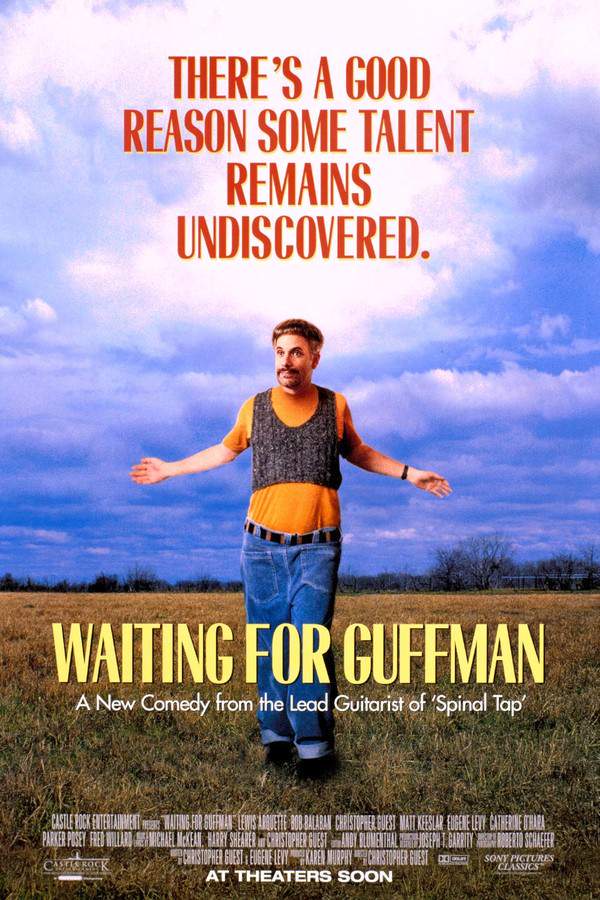
Waiting for Guffman (1997) movie poster

Plot Summary

Waiting for Guffman (1997) Plot Summary Explained

Release, runtime and language
1997 · 84 min · English
JustWatch #6,130 8
Starring
Christopher Guest
Budget
$4M

The small Missouri town of Blaine eagerly prepares for its sesquicentennial celebration, culminating in a locally produced musical. Director Corky St. Clair assembles an enthusiastic, if unconventional, cast of townspeople—a dentist, a Dairy Queen employee, and others—to stage a show based on the town's history. Their hopes rise with the anticipated arrival of a Broadway theater critic, Mr. Guffman, who could potentially bring them national recognition. The production promises a uniquely charming and humorous theatrical experience.

On this page (6)
  1. 1 Where to watch
  2. 2 What happens: full plot
  3. 3 Plot questions answered
  4. 4 Movie threads
  5. 5 Movies like Waiting for Guffman
  6. 6 Every angle

Where to watch

Where to Watch Waiting for Guffman (1997)

Where can you watch Waiting for Guffman? Stream, rent or buy it in the US, including on Amazon Video, Apple TV Store and Fandango At Home: current JustWatch availability with up-to-date prices.

Streaming availability powered by JustWatch

Full plot summary · contains spoilers

What Happens in Waiting for Guffman: Full Plot Summary

The whole story of Waiting for Guffman (1997) explained, from the opening scene to the final frame: every key event, every twist and what it all adds up to. Read it as a quick recap before the sequel, to check a scene you missed, or to finally understand what really happened.

In the quaint and idiosyncratic town of Blaine, Missouri, a unique ensemble of residents gears up for a community theater production orchestrated by the delightfully eccentric director, Corky St. Clair. The musical, aptly titled Red, White and Blaine, aims to commemorate the city's 150th anniversary while recounting the colorful history of the town.

The leading roles are filled by Ron and Sheila Albertson, a pair of married travel agents who indulge in amateur theatrics, alongside Libby Mae Brown, a chipper employee from Dairy Queen. Joining them is Clifford Wooley, a longtime local and retired taxidermist who serves as the show's narrator, and Johnny Savage, a handsome yet oblivious mechanic that Corky is determined to include in the production. Rounding out the cast is Dr. Allan Pearl, a notably stiff dentist on a quest to uncover his hidden talents, while high school teacher Lloyd Miller becomes increasingly exasperated as the musical director.

Corky, leveraging connections from his past experience on the "off-off-off-off-Broadway" circuit, invites Mort Guffman, a Broadway producer, to watch the show and potentially offer a review that could catapult them to Broadway fame. The production itself seeks to musically narrate the origins of Blaine, humorously illustrating its founding father's ridiculous blunders in geography and why the town proudly refers to itself as "the stool capital of the United States."

The soundtrack features an array of hilariously performed tunes like "Nothing Ever Happens on Mars", poking fun at the town's infamous purported UFO sighting, and the aptly named "Stool Boom." (Bonus tracks such as "This Bulging River" and "Nothing Ever Happens in Blaine" are included in the DVD release but were omitted from the theatrical version.)

At the heart of the film is Corky's stereotypical flamboyant personality. He claims to have a wife named Bonnie, who remains an enigma to everyone in Blaine, serving as his excuse for shopping for women's clothes and accessories. When Johnny is pressured by his skeptical father to leave the show, Corky steps into his roles, which are explicitly meant for a youthful, rugged performer. Corky's portrayal of characters—a spirited young frontiersman, a lovesick soldier, and a little boy donned in a beanie—contrasts sharply with his effeminate mannerisms, bowl haircut, and exaggerated makeup.

Facing the challenge of a minuscule budget, Corky’s aspirations seem dashed when the city council turns down his request for a whopping $100,000 to fund the production. After a dramatic exit, the distraught cast rallies him to return. On the night of the performance, the audience eagerly anticipates Guffman's arrival, only to discover that his seat is empty. Corky assures the cast that Broadway producers typically arrive fashionably late, which comes to fruition when a man does eventually sit in the reserved spot.

Unfortunately, this man turns out to be Roy Loomis, there to visit his niece's newborn rather than to critique the show. Despite enjoying the performance, Corky's disappointment escalates when he learns via telegram that Guffman was unable to make it due to snowstorms in New York, echoing the "Godot" theme that the narrative playfully mimics.

In a reflective epilogue, the fates of the cast are revealed: Libby Mae has relocated to Sipes, Alabama, working at a Dairy Queen after her father's release from prison. Allan and the Albertsons have taken significant strides towards realizing their aspirations in showbiz, with Ron and Sheila moving to Los Angeles to pursue extra work, while Allan entertains retirees in Miami, Florida. Corky, on the other hand, returns to New York City to launch a novelty shop centered around Hollywood memorabilia, showcasing eclectic items like Brat Pack bobbleheads, My Dinner with Andre action figures, and The Remains of the Day lunch boxes.
Last updated: November 15, 2024 at 15:40

Was this helpful?

Plot questions answered

Waiting for Guffman Plot Explained: Your Questions Answered

The questions people ask most about Waiting for Guffman (1997): what happens in the confusing scenes, why the characters do what they do, the twists, hidden details and what the ending means. Each answer contains spoilers.

Q1

Why does Corky St. Clair never introduce his wife Bonnie to anyone in Blaine?

Corky claims to have a wife named Bonnie, but she never appears throughout the film. This is part of Corky's elaborate persona as a flamboyant director. The fictional Bonnie serves as his convenient excuse for shopping for women's clothes and accessories, which he does openly in town. No character ever meets Bonnie or questions her absence, suggesting she may not exist at all, this is left ambiguous, adding to Corky's eccentricity and the film's deadpan humor.

  • corky st. clair
  • bonnie
  • wife
  • flamboyant director
Q2

Why does Mort Guffman never arrive at the performance?

Mort Guffman, the Broadway producer Corky invited, never arrives because of severe snowstorms in New York. Corky receives a telegram confirming this during the performance. This mirrors the play's theme of waiting for someone who never comes, a direct reference to Samuel Beckett's 'Waiting for Godot.' The empty seat becomes a poignant symbol of dashed hopes and unfulfilled dreams.

  • mort guffman
  • snowstorm
  • broadway
  • empty seat
  • godot reference
Q3

Why does Blaine call itself the stool capital of the United States?

In the musical 'Red, White and Blaine,' the town humorously claims to be 'the stool capital of the United States.' This is part of the musical's fictional (and absurd) history of Blaine, which also includes the founding father's ridiculous blunders in geography. The song 'Stool Boom' celebrates this quirky claim, which the townspeople take great pride in despite, or because of, its utter ridiculousness.

  • stool capital
  • red white and blaine
  • musical
  • town history
Q4

What happens to each main character after the musical ends?

The epilogue reveals each character's fate: Libby Mae Brown moves to Sipes, Alabama and works at a Dairy Queen after her father is released from prison. Ron and Sheila Albertson relocate to Los Angeles to pursue extra work in show business. Dr. Allan Pearl moves to Miami, Florida to entertain retirees. Corky St. Clair returns to New York City and opens a novelty shop selling Hollywood memorabilia like Brat Pack bobbleheads and 'My Dinner with Andre' action figures.

  • epilogue
  • libby mae
  • ron albertson
  • sheila albertson
  • corkie
  • new york
Q5

Why does Corky step in to play Johnny Savage's roles when Johnny leaves the show?

When Johnny Savage's skeptical father pressures him to quit the production, Corky takes over Johnny's roles, which were explicitly written for a youthful, rugged performer. Corky performs three characters: a spirited young frontiersman, a lovesick soldier, and a little boy in a beanie. This creates a stark contrast with Corky's effeminate mannerisms, bowl haircut, and exaggerated makeup, highlighting both his desperation to keep the production running and the absurdity of small-town theater.

  • corky
  • johnny savage
  • roles
  • musical
  • understudy
Q6

What is the 'Nothing Ever Happens on Mars' song about in the musical?

'Nothing Ever Happens on Mars' is one of the musical numbers in 'Red, White and Blaine' that pokes fun at Blaine's infamous alleged UFO sighting. The song humorously addresses the town's claim to fame from the 1950s, when residents claimed to have witnessed a flying saucer. The tune became a signature piece of the production, reflecting the film's affectionate satire of small-town self-importance.

  • nothing ever happens on mars
  • song
  • ufo
  • musical
  • mars
Q7

Why does the city council reject Corky's request for $100,000 in funding?

Corky requests a substantial $100,000 from the Blaine city council to fund his ambitious production. The council declines this hefty sum, leaving Corky devastated. He dramatically exits the meeting, but the cast rallies together to convince him to return. The rejection forces Corky to work with a minuscule budget, making the eventual production even more impressive given the limitations.

  • city council
  • funding
  • 100000
  • budget
  • production
Q8

What happens when Guffman's seat remains empty during the performance?

On performance night, the reserved seat for Mort Guffman remains empty as the show begins. Corky assures the anxious cast that Broadway producers often arrive fashionably late. Eventually, a man does sit in the reserved spot, but it's Roy Loomis, there to visit his niece's newborn baby, not to critique the show. Corky's dreams of Broadway validation crumble further when he learns Guffman won't be coming at all.

  • empty seat
  • roy loomis
  • audience
  • performance night
  • reserved seat
Q9

Why is Corky so desperate for Mort Guffman to attend the show?

Corky believes that if Mort Guffman, a real Broadway producer, sees 'Red, White and Blaine' and likes it, he could offer a review that might catapult the small-town production to Broadway fame. Corky leverages his vague connections from the 'off-off-off-off-Broadway' circuit to extended this invitation. For the residents of Blaine, this represents their one shot at national recognition and validation of their artistic aspirations.

  • mort guffman
  • broadway
  • producer
  • invitation
  • corkie aspirations
Q10

How does the film reference Waiting for Godot?

The entire narrative structure of Waiting for Guffman parallels Samuel Beckett's play 'Waiting for Godot.' Just as in the famous play, the characters spend the entire story waiting for someone (Mort Guffman) who never arrives. The snowstorm in New York that prevents Guffman's attendance serves as the ultimate punchline to this extended wait, making the film a loving tribute to absurdist theater disguised as a small-town mockumentary.

  • godot reference
  • waiting for godot
  • absurdism
  • samuel beckett
  • parallel

Movie threads

More Movies Like Waiting for Guffman, by Mood & Story

Curated lists built around what makes Waiting for Guffman tick: the same mood, the same kind of story or the same emotional payoff. Each list explains why these movies belong together.

Quirky underdog comedies like Waiting for Guffman

Affectionate comedies about eccentric characters chasing their improbable dreams. If you liked the charmingly awkward characters and small-town aspirations in Waiting for Guffman, you'll enjoy these movies. This collection features comedies about eccentric underdogs chasing their dreams, filled with heart, gentle satire, and a hopeful, if bittersweet, spirit.

  • quirky
  • heartfelt
  • comedic
  • charming
  • underdog
  • eccentric
  • Tone: whimsical, hopeful
  • Pacing: steady, character driven
Why these movies?

The story pattern: The narrative typically follows a group of unconventional characters or a singular dreamer as they embark on an ambitious, often improbable, project or goal. The journey is marked by humorous mishaps and personal revelations, culminating in an outcome that values personal growth and community bonds over conventional success.

Why they belong together: Movies are grouped here based on their shared tone of affectionate, character-driven comedy, a focus on underdog protagonists, and a light, whimsical mood. They resonate with viewers seeking feel-good stories that find humor and heart in everyday eccentricities.

Movies about amateur arts and bittersweet endings like Waiting for Guffman

Stories of passionate amateur artists finding meaning in the creative process itself. Find movies similar to Waiting for Guffman that explore the world of amateur productions. These stories capture the heartfelt passion, comedic mishaps, and bittersweet reality of community theater, local bands, and other grassroots creative projects where the journey matters more than the destination.

  • aspirational
  • reflective
  • comedic
  • community
  • amateur
  • passionate
  • Tone: bittersweet, whimsical
  • Pacing: steady, linear
Why these movies?

The story pattern: These narratives follow the buildup to a public performance or showcase, documenting the rehearsals, interpersonal dynamics, and logistical challenges. The climax is the event itself, which may not be a professional success but serves as a catalyst for character growth and strengthened relationships, leading to a bittersweet yet satisfying conclusion.

Why they belong together: This grouping is defined by a shared plot structure centered on an amateur production, a steady pacing that follows the creative journey, and a uniquely bittersweet but hopeful emotional tone. They appeal to viewers who enjoy stories about the transformative power of art on a personal, rather than professional, level.

If you liked this

Movies Like Waiting for Guffman

Similar movies to Waiting for Guffman: the same genre, themes or kind of story. Each one comes with its own plot summary, timeline and ending explained.

Browse all movie summaries

Every angle

Waiting for Guffman (1997) Explained: Plot, Timeline & Characters

Everything about Waiting for Guffman in one place: what happens in the plot summary, the timeline in chronological order, the characters and meaning and a spoiler-free summary. What's After the Movie adds the cast, box office and post-credit scenes.

Coming soon on iOS and Android

The Plot Explained Movie Summary App

Plot summaries, endings explained and timelines on your phone. Catch up on any movie in minutes, save your favorites and never miss a twist again.

Be the first to know when we launch. Your email stays private, always.

Learn more about the app