Plot Explained Spoilers guaranteed!
Plot Explained

Browse by genre

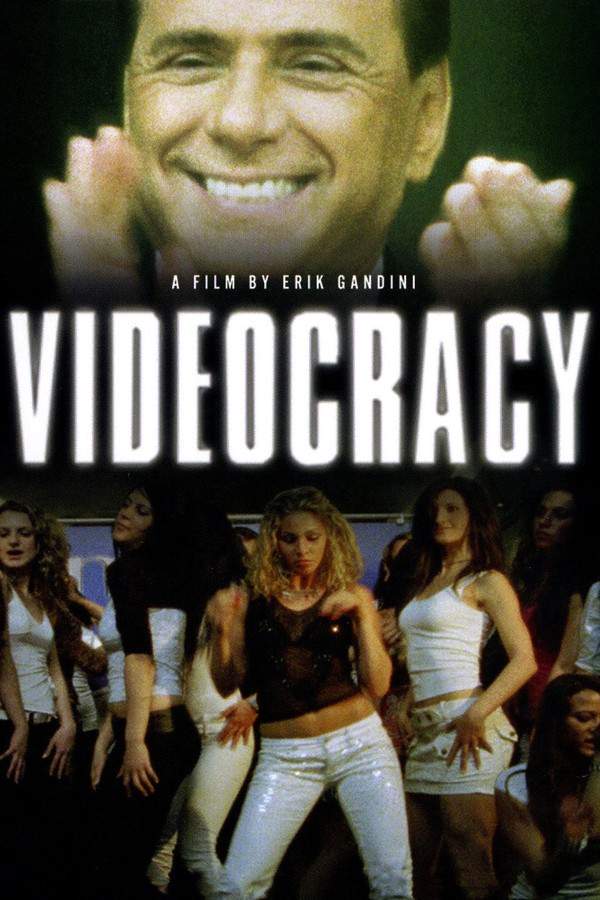
Videocracy (2010) movie poster

Timeline

Videocracy (2010) Timeline Explained – Every Event in Order

Release, runtime and language
2010 · 85 min · English
Loading streaming availability…
Directed by
Erik Gandini

This critically acclaimed documentary explores the complex relationship between politics and media in Italy. Director Erik Gandini gains unprecedented access to Silvio Berlusconi's inner circle, revealing how his media empire influences public opinion for financial and political advantage. The film exposes the ruthless strategies employed within Italian television, illustrating the often-blurred lines between entertainment and propaganda, and presenting a compelling portrait of a nation grappling with the power of media control.

On this page (6)
  1. 1 Where to watch
  2. 2 Events in order (13)
  3. 3 Timeline questions answered
  4. 4 Movie threads
  5. 5 Movies like Videocracy
  6. 6 Every angle
Loading streaming availability…

13 events in order · contains spoilers

Videocracy Timeline: Events in Chronological Order

Every key event of Videocracy (2010) in order, scene by scene, with when and where it takes place. Use it to untangle flashbacks, time jumps and parallel storylines, to refresh your memory before the sequel or to find the exact scene you are thinking of.

  1. 1977 Quiz Show Footage

    The documentary opens with engaging footage from the 1977 quiz show 'Spogliamoci insieme', where female contestants progressively stripped off their clothing as audience members answered questions. This ritualistic display highlighted societal norms that created a significant cultural impact, leading to observations about men's fatigue after the show's airings, marking the inception of what Gandini refers to as 'the President's television'.

    When
    1977
  2. Riccardo's Ambitions

    In north-western Lombardy, 26-year-old factory worker Riccardo 'Ricky' Canevali strives to achieve television fame and auditions for various Mediaset shows. He candidly expresses his frustration about the disparity in celebrity status attainment between men and women, attributing it to the superficial nature of the industry that prioritizes looks above all else.

    Where
    Lombardy
  3. The Veline Phenomenon

    The documentary delves into the Italian veline phenomenon where aspiring actresses, notably young women, go through rigorous auditions demonstrating their beauty and grace. This portrayal includes footage of a casting call at a mall, emphasizing the physical measurements, poses, and dance routines that potential veline undergo to capture the attention of producers.

    Where
    Mall
  4. Berlusconi's Retreat

    A shift in focus brings the viewer to Sardinia's Emerald Coast, frequented by Silvio Berlusconi along with a circle of influential politicians and celebrities. Key figures like manager Lele Mora share their admiration for Berlusconi, comparing him to Benito Mussolini and discussing the shared traits of both figures while revealing uncomfortable fascist sentiments.

    Where
    Sardinia's Emerald Coast
  5. Fabrizio Corona's Operations

    Fabrizio Corona, accompanied by a paparazzo, operates under the cover of night to capture compromising photographs of celebrities. He justifies his actions by likening himself to a modern Robin Hood, rationalizing that he exploits wealthy individuals while gaining fame through public scandals, even capitalizing on his criminal past.

  6. Release from Prison

    Upon his release from prison related to the Vallettopoli scandal, Corona stands before a crowd of reporters delivering a meticulously crafted speech. He skillfully portrays himself as a victim of circumstance, which Erik recognizes as a strategy to rebuild his public image while diverting attention away from his recent legal troubles.

    Where
    Prison
  7. Struggling Comeback

    After his release, Corona participates in various paid appearances aimed at reigniting his celebrity status, yet these attempts yield disappointing results. His fleeting engagements with the public highlight his diminishing relevance in the entertainment industry, forcing him to seek more provocative ways to regain media attention.

  8. Attempt to Exploit Grief

    In a desperate bid for fame, Corona requests a grieving father to model in promotional gear for his agency, but the father promptly declines. Following this, he approaches the Cappa twins, recent witnesses in a murder investigation, but they also refuse to engage, leading to another public relations setback for him.

  9. Public Backlash

    The fallout from Corona's aggressive promotional tactics ignites public outrage, subsequently covered by news media. A specific incident occurs as Erik's crew films Mora witnessing Corona's unfavorable interaction with the Cappa sisters during a TG5 news segment, which paints Corona in an unflattering light and damages his already tenuous reputation.

  10. Mora's Disavowal

    Upon realizing the negative attention surrounding Corona, Mora distances himself by making a phone call to criticize Corona's mental stability and extravagant behavior. This conversation marks a turning point, emphasizing Mora's desire to sever ties with Corona as both men navigate the precarious world of celebrity.

  11. Ricardo's Prime Time Breakthrough

    The documentary culminates with a wide-angle shot showcasing numerous antennas atop residential buildings symbolizing the pervasive reach of television. Finally achieving his dream, Ricky makes his debut in prime time television on a game show, showcasing the significant impact of media on contemporary culture.

  12. Veline Dance Performance

    In a celebratory moment, aspiring veline dance on a platform during Ricky's moment on television, representing the superficial yet glamorous nature of fame they're all chasing. This sequence starkly contrasts with the earlier examinations of the darker, exploitative aspects of fame and television culture.

  13. Documentary Conclusion

    As the documentary draws to a close, it presents a final reflection on Italian television through statistics that reveal its pervasive influence on society. The film terminates with a cut to black, leaving viewers to ponder the complexities of fame and the morality behind the entertainment industry.

Last updated: September 28, 2026 at 10:55

Was this helpful?

Timeline questions answered

Videocracy Timeline Explained: Your Questions Answered

When does it happen, and why in that order? The questions people ask about the chronology of Videocracy (2010): time jumps, flashbacks, cause and effect between scenes and the correct order of events, each answered with spoilers.

Q1

Why does the documentary open with footage from the 1977 quiz show Spogliamoci insieme?

The opening segment establishes the historical roots of what Gandini calls "the President's television", the idea that Berlusconi's media empire did not emerge in a vacuum but was built on decades of normalizing sexual spectacle and audience manipulation on Italian television. The reports of working-class men feeling too exhausted to work the next morning illustrate how deeply these broadcasts penetrated everyday life, laying the cultural groundwork for Mediaset's later dominance.

  • spogliamoci insieme
  • 1977 quiz show
  • president's television
  • mediaset origins
  • gandini
Q2

What does Gandini mean by "the President's television"?

The phrase is Gandini's term for the media ecosystem controlled by Silvio Berlusconi's Mediaset network, which he argues has shaped Italian public consciousness since the late 1970s. By linking Berlusconi's political authority directly to his commercial broadcasting power, the term suggests that his role as prime minister and his role as Italy's dominant media mogul are inseparable halves of the same phenomenon.

  • president's television
  • berlusconi
  • mediaset
  • public opinion
  • propaganda
Q3

Why does Ricky think men and women do not have equal chances at Italian TV fame?

Ricky observes that aspiring women on Mediaset shows, especially the veline, can succeed almost purely on the basis of physical appearance, while men like him must compete through talent, personality, or sheer persistence. His complaint exposes the gendered double standard at the heart of Italian celebrity culture: looks function as a fast track for women but rarely work as the sole credential for men.

  • ricky canevali
  • gender disparity
  • veline
  • italian television
  • fame
Q4

What is the veline phenomenon in Italian television?

Veline are showgirls whose primary function is decorative, appearing on screen to add visual appeal to variety and game shows rather than performing any meaningful role. The mall casting call featured in Videocracy reveals how young women are screened through body measurements, poses, and dance routines, underscoring how Italian television systematically reduces female participants to bodies judged by producers and audiences alike.

  • veline
  • showgirls
  • italian variety shows
  • casting call
  • beauty standards
Q5

Why does Lele Mora openly compare Berlusconi to Mussolini?

Mora, Berlusconi's longtime talent manager, admires strong-man political figures and proudly displays fascist memorabilia on his phone, including a montage paired with the wartime song Faccetta Nera. His comparison is not casual political small talk; he genuinely sees Berlusconi's control of Italian media and politics as a continuation of Mussolini's capacity to dominate public life through propaganda, spectacle, and personal charisma.

Foreshadowing: Mora's later willingness to publicly disavow Fabrizio Corona on live television shows how casually loyalty is treated within this circle once it becomes inconvenient.

  • lele mora
  • berlusconi
  • mussolini
  • fascism
  • faccetta nera
Q6

How does Fabrizio Corona justify his paparazzi business?

Corona frames himself as a modern Robin Hood, claiming he redistributes wealth from the rich and famous by selling compromising photographs to tabloids. He argues that the ultra-famous are less deserving of their fortunes than he is, which makes his invasion of their privacy morally acceptable. The documentary exposes this as self-serving mythology that glorifies extortion while dressing it up in populist language.

  • fabrizio corona
  • robin hood
  • paparazzi
  • extortion
  • celebrity culture
Q7

What was the Vallettopoli scandal and how does Corona use it?

Vallettopoli was an Italian sex-and-blackmail scandal in the mid-2000s that exposed celebrity escort rings and led to multiple high-profile arrests, including Corona's own conviction for extortion. Rather than retreat from public view after prison, Corona openly admits in the film that he spent his sentence planning his comeback, converting his criminal notoriety into a marketable personal brand he could sell to gossip media.

  • vallettopoli
  • fabrizio corona
  • extortion
  • italian scandal
  • prison
Q8

Why does Corona try to involve a grieving father and the Cappa twins in his comeback?

After his release, Corona's ordinary paid appearances generate almost no attention, so he escalates by approaching a father mourning his daughter and asking him to wear a T-shirt promoting Corona's agency, then tries the same move with the Cappa twins, witnesses in the high-profile 2007 murder of Chiara Poggi. The requests cross a clear ethical line, which is precisely why he expected them to make headlines, regardless of whether they were accepted.

  • fabrizio corona
  • cappa twins
  • chiara poggi
  • exploitation
  • public relations
Q9

Why does Lele Mora publicly criticize Corona during the TG5 news segment?

When Mora sees the footage of Corona's clumsy attempts to exploit the Cappa twins, he recognizes that Corona has become a liability rather than an asset. His biting phone call denouncing Corona's erratic behavior during the TG5 broadcast is a damage-control move designed to publicly sever ties and protect his own standing within Berlusconi's circle. It reveals how quickly loyalty evaporates inside this world once the cameras turn against a former ally.

  • lele mora
  • fabrizio corona
  • tg5
  • disavowal
  • berlusconi circle
Q10

What do the rooftop antennas symbolize in the closing sequence?

The final aerial shot pans across countless television antennas installed on residential buildings throughout Italy, visually conveying how completely Mediaset's signal has saturated private domestic life. The image argues that Berlusconi's influence is not just political or economic but infrastructural, embedded into the rooftops of ordinary homes so thoroughly that it becomes part of the country's physical landscape.

  • rooftop antennas
  • mediaset
  • symbolism
  • italian television
  • media saturation
Q11

Why does Ricky finally make it onto prime-time television?

After repeated auditions and rejections, Ricky lands a spot on a prime-time game show, fulfilling the dream that has driven him throughout the documentary. Gandini uses his success not as a triumphant moment but as evidence of the system's magnetic pull: even a working-class factory worker is ultimately drawn into Mediaset's orbit, validating the very machine the film is critiquing.

Foreshadowing: Ricky had been auditioning for Mediaset shows since the opening segments, making his breakthrough feel inevitable rather than surprising.

  • ricky canevali
  • prime time
  • game show
  • mediaset
  • dream of fame
Q12

How are Ricky, Corona, and Berlusconi's circle connected in the documentary?

The film weaves three threads together to show different rungs of the same ladder. Ricky represents the bottom, ordinary Italians seduced by the promise of televised fame. Corona represents the middle, someone who has learned to monetize notoriety and turn scandal into currency. Berlusconi's inner circle represents the top, where media ownership, political power, and celebrity management converge to consolidate control over the entire system.

  • ricky canevali
  • fabrizio corona
  • berlusconi
  • lele mora
  • structure
Q13

What do the statistics shown at the very end of the film add to its argument?

The closing figures present concrete data about Italian television ownership, viewership habits, and the political influence of Berlusconi's companies, grounding the documentary's emotional and observational footage in measurable reality. By cutting to black immediately after the numbers, Gandini refuses to offer resolution or commentary, leaving viewers to sit with the systemic scale of what they have just watched.

  • statistics
  • italian television
  • berlusconi
  • media ownership
  • conclusion

Movie threads

More Movies Like Videocracy, by Mood & Story

Curated lists built around what makes Videocracy tick: the same mood, the same kind of story or the same emotional payoff. Each list explains why these movies belong together.

Media and political corruption documentaries like Videocracy

Documentaries that pull back the curtain on empires built by cameras, votes, and lies. If you liked Videocracy and want more documentaries like it, this thread collects investigative films that expose how media empires manipulate politics, public opinion, and celebrity culture. Expect unsettling, voyeuristic portraits of power brokers, propagandists, and the people caught inside their machinery.

  • cynical
  • investigative
  • unsettling
  • oppressive
  • sardonic
  • exposé
  • Tone: dark, cynical, unsettling
  • Pacing: steady, observational
Why these movies?

The story pattern: These stories typically orbit a central figure or institution at the heart of a media-political machine. Through observational footage, insider interviews, and sardonic narration, they expose how entertainment becomes a tool for control, how public narratives are manufactured, and how ambition, celebrity, and corruption feed each other. The narrative often circles the paradox that audiences are simultaneously seduced and exploited by the very systems shaping their worldview, with endings that refuse redemption.

Why they belong together: Movies are grouped here because they share a cynical, investigative stance toward power and media. They tend to be steady in pacing, heavy in emotional weight, and bleak in resolution, offering viewers a chance to sit with uncomfortable truths rather than easy answers about how propaganda and spectacle shape society.
Voyeuristic films about cultural decay and exploitation like Videocracy

Films that linger on the rot beneath glamour, desire, and the screens we cannot look away from. Looking for movies like Videocracy that sit with uncomfortable truths about fame, exploitation, and societal rot? This thread collects films and documentaries that use a detached, observational style to expose how celebrity, media, and politics corrode the people caught inside them. Heavy, bleak, and unblinking.

  • voyeuristic
  • detached
  • oppressive
  • disquieting
  • sardonic
  • bleak
  • Tone: dark, detached, oppressive
  • Pacing: steady, observational
Why these movies?

The story pattern: These films often follow multiple characters orbiting a corrupt or decaying system rather than a single protagonist. The narrative is observational rather than plot-driven, using repetition, lingering shots, and quiet accumulation to build a portrait of moral failure. There is rarely a hero; instead, characters serve as symptoms of a larger disease, and endings tend to deny catharsis in favor of bleak, often wordless silence.

Why they belong together: They share a voyeuristic, oppressive mood and a refusal to offer resolution or redemption. Pacing is steady, tone is dark, and emotional weight is heavy. Viewers are invited to witness rather than to sympathize, creating an experience that is intellectually provocative but emotionally draining, anchored in the discomfort of watching exploitation play out in plain sight.

If you liked this

Movies Like Videocracy

Similar movies to Videocracy: the same genre, themes or kind of story. Each one comes with its own plot summary, timeline and ending explained.

Browse all movie summaries

Every angle

Videocracy (2010) Explained: Plot, Timeline & Characters

Everything about Videocracy in one place: what happens in the plot summary, the timeline in chronological order, the characters and meaning and a spoiler-free summary. What's After the Movie adds the cast, box office and post-credit scenes.

Coming soon on iOS and Android

The Plot Explained Movie Summary App

Plot summaries, endings explained and timelines on your phone. Catch up on any movie in minutes, save your favorites and never miss a twist again.

Be the first to know when we launch. Your email stays private, always.

Learn more about the app