Plot Explained Spoilers guaranteed!
Plot Explained

Browse by genre

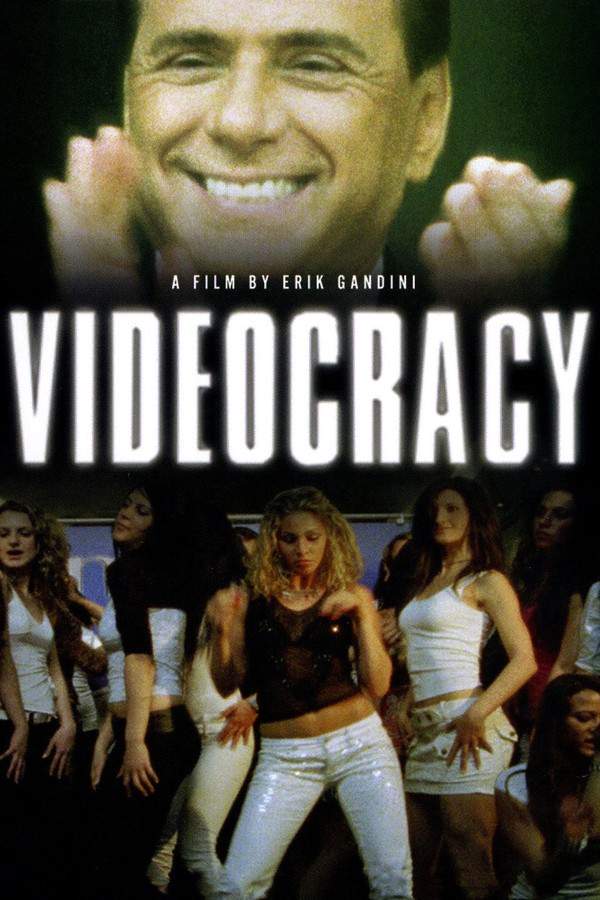
Videocracy (2010) movie poster

Characters & Themes

Videocracy (2010) Characters, Setting & Themes Explained

Release, runtime and language
2010 · 85 min · English
Loading streaming availability…
Directed by
Erik Gandini

This critically acclaimed documentary explores the complex relationship between politics and media in Italy. Director Erik Gandini gains unprecedented access to Silvio Berlusconi's inner circle, revealing how his media empire influences public opinion for financial and political advantage. The film exposes the ruthless strategies employed within Italian television, illustrating the often-blurred lines between entertainment and propaganda, and presenting a compelling portrait of a nation grappling with the power of media control.

On this page (8)
  1. 1 Where to watch
  2. 2 Characters explained (3)
  3. 3 Where & when it takes place
  4. 4 Themes & meaning (2)
  5. 5 Character & meaning questions
  6. 6 Movie threads
  7. 7 Movies like Videocracy
  8. 8 Every angle
Loading streaming availability…

3 main characters · contains spoilers

Videocracy Characters Explained: Who Is Who

The main characters of Videocracy (2010), heroes and villains: what drives them, how they change over the course of the story and what each of them reveals about the film's bigger ideas.

  • Riccardo 'Ricky' Canevali

    Ricky is a 26-year-old factory worker whose dreams of television stardom illustrate the struggles of many seeking fame in a visually oriented society. He grapples with the challenges of being a man in a medium that favors looks, revealing the societal pressures and superficial nature of fame. His journey from obscurity to prime-time television represents both personal ambition and broader cultural critiques.

    • 👨‍💼 Aspiration
    • 📺 Fame
  • Fabrizio Corona

    Fabrizio is a controversial figure in the documentary, portraying himself as a victim of circumstance while adeptly manipulating the media for his gains. His complex character embodies the intersection of celebrity, morality, and public persona, as he capitalizes on notoriety while presenting his own justifications for his actions. Corona's narrative challenges audiences to consider the consequences of media fame.

    • 👤 Celebrity
    • 💰 Controversy
  • Lele Mora

    Lele Mora is a media manager who represents the intertwining of celebrity culture and politics in Italy. His admiration for Berlusconi and the controversial opinions he expresses reveal the complexities of loyalty and ethics in the entertainment industry. Through his interactions with other personalities, Mora showcases the dynamics of social standing and media influence in shaping public narratives.

    • 🎭 Influence
    • 📰 Media

Last updated: September 27, 2026 at 19:28

Was this helpful?

Setting

Where and When Does Videocracy Take Place?

The setting of Videocracy (2010): the year and time period, the places and locations, and how they shape the characters, the mood and the tension of the story.

Time period

1970s

The 1970s in Italy were marked by significant social and cultural changes with the rise of television as a dominant force in entertainment. This era saw the emergence of various television phenomena, alongside a shift in public perception influenced by media portrayal and celebrity culture. The decade also ushered in political complexities, as figures like Berlusconi began to shape the media landscape in Italy.

Location

Lombardy, Sardinia's Emerald Coast

Lombardy is a region in northern Italy known for its industrial heartland and vibrant cities, particularly Milan. It serves as the backdrop for the aspirations of factory workers like Riccardo 'Ricky' Canevali, highlighting the stark contrasts between work and fame. Meanwhile, Sardinia's Emerald Coast is renowned for its breathtaking beaches and luxury retreats, often frequented by Italy's elite, where political figures and celebrities gather.

  • 🌆 City
  • 🏖️ Beach

Last updated: September 27, 2026 at 19:28

Was this helpful?

2 major themes

Videocracy Meaning: Themes & Message Explained

What is Videocracy (2010) really about? The emotional, social and philosophical themes the film keeps returning to, its symbolism and the message beneath the surface.

  • Media Influence

    The documentary explores the pervasive influence of television on society, particularly how visual media shapes public perceptions and personal aspirations. It examines the commodification of fame, highlighting the lengths individuals will go to pursue celebrity status. The interaction of politics and media is also scrutinized, suggesting a blurring of ethics in the pursuit of entertainment.

  • Morality and Fame

    The theme of morality in the pursuit of fame weaves throughout the documentary, as figures like Fabrizio Corona illustrate the often questionable ethics behind celebrity culture. By positioning himself as a modern Robin Hood, Corona exemplifies the twisted values associated with fame and the public's response to such moral dilemmas. This theme provokes reflection on the nature of respectability and its erosion in the quest for notoriety.

Last updated: September 27, 2026 at 19:28

Was this helpful?

Character & theme questions

Videocracy Characters & Meaning: Your Questions Answered

The questions people ask about Videocracy (2010): who the characters really are, their relationships, what the symbols mean, where it takes place and what the movie is really about. Each answer contains spoilers.

Q1

What role does Silvio Berlusconi play in Videocracy?

Berlusconi is the gravitational center of Videocracy even though he is rarely the person on screen, with his private media empire treated as the structural force behind the industry the film investigates. Through interviews with his associates such as Lele Mora, the documentary traces how Berlusconi converted ownership of commercial television into political capital over decades. Rather than profiling him as an individual, Videocracy presents him as the embodiment of a system in which screens, elections, and personal loyalty are deeply intertwined.

  • berlusconi
  • media empire
  • italian politics
  • television
  • videocracy
Q2

Where does Videocracy take place?

Videocracy is primarily set in northern Italy, with Lombardy and its industrial cities, particularly Milan, serving as the backdrop for working-class subjects like Ricky Canevali. The film also spends significant time on Sardinia's Emerald Coast, a luxury destination where Italy's political elite and celebrities gather at private retreats. The geographic jump between Milan's factories and Sardinia's beaches visually frames the gap between ordinary citizens and the media class the documentary scrutinizes.

  • lombardy
  • milan
  • sardinia
  • emerald coast
  • filming locations
  • italy
Q3

What time period does Videocracy cover?

The documentary engages with the legacy of Italian television culture that took shape in the 1970s, when commercial broadcasting became a dominant force in entertainment and politics. Although Videocracy was released in 2010, director Erik Gandini looks back across several decades to connect the rise of celebrity culture to the media empire Berlusconi was building. This long timeline lets the film argue that today's media-political dynamics are the product of choices made generations ago.

  • 1970s
  • italian television
  • media history
  • timeline
  • era
Q4

What is the main argument about media influence in Videocracy?

Videocracy argues that commercial television in Italy has become a tool for shaping public perception rather than simply informing it, blurring the line between entertainment, propaganda, and politics. By securing access to Berlusconi's inner circle, the film shows how ratings, scandal, and loyalty are engineered into programming to serve financial and political ends. The documentary treats visibility itself as a resource that is produced, rationed, and weaponized.

  • media influence
  • propaganda
  • television
  • public perception
  • berlusconi
Q5

Who is Ricky Canevali in Videocracy?

Riccardo "Ricky" Canevali is a 26-year-old factory worker from Lombardy whose dream of television stardom anchors the documentary's exploration of fame's pull on ordinary Italians. His journey from the factory floor to auditions and small-screen appearances represents the everyday viewer who measures self-worth against media visibility. Ricky serves as the film's most empathetic subject, allowing Videocracy to show how television manufactures desire and channels aspiration into a narrow, image-driven ideal.

  • ricky canevali
  • factory worker
  • fame
  • aspiration
  • lombardy
Q6

Who is Fabrizio Corona in Videocracy?

Fabrizio Corona is a paparazzi-turned-media figure who built his reputation by photographing celebrities and monetizing their private lives, including exploiting grief and tragedy. In Videocracy he presents himself as a wronged everyman while openly describing the manipulation tactics he uses to extract images and stories. Corona embodies the documentary's argument that moral compromise has become a prerequisite for success in Italy's celebrity ecosystem, and his self-styled image as a modern Robin Hood amplifies that critique.

  • fabrizio corona
  • paparazzi
  • celebrity
  • morality
  • robing hood
Q7

Who is Lele Mora in Videocracy?

Lele Mora is a celebrity talent manager who represents the direct bridge between Italian entertainment and political power, particularly through his ties to Silvio Berlusconi. His vocal admiration for Berlusconi and his willingness to defend controversial clients reveal how loyalty operates as currency in Italy's media industry. Mora's presence in Videocracy illustrates how a single manager can shape which faces appear on television and which stories are allowed to reach the public.

  • lele mora
  • talent manager
  • berlusconi
  • celebrity
  • loyalty
Q8

Is Videocracy a traditional documentary or an essay film?

Videocracy is structured as a documentary essay rather than a chronological narrative, weaving three distinct threads together: the aspiring TV personality Ricky, the paparazzi figure Fabrizio Corona, and Berlusconi's media-political circle represented by Lele Mora. Rather than using voiceover to explain events, Erik Gandini relies on observational footage, interviews, and quiet visual framing to build the argument. This essayistic structure lets the film surface the connections between entertainment, power, and politics without forcing a single through-line of plot.

  • documentary
  • essay film
  • structure
  • observational
  • gandini
Q9

What does Videocracy say about morality in the pursuit of fame?

The documentary argues that Italy's media environment rewards people willing to abandon conventional ethics, with Fabrizio Corona explicitly framing his exploitative practices as a form of outlaw justice. By presenting Corona as a self-styled Robin Hood figure, the film prompts viewers to question why audiences tolerate behavior that would be condemned in other contexts. The erosion of respectability is treated not as an aberration but as a structural feature of the system the film examines.

  • morality
  • fame
  • ethics
  • celebrity culture
  • fabrizio corona
Q10

How does Videocracy connect entertainment to politics?

The film argues that in Italy, entertainment and politics have merged into a single ecosystem where television ratings translate into electoral power and political loyalty translates into on-air favors. By following figures like Lele Mora, who manage both celebrities and political access, Videocracy shows how the two industries share personnel, incentives, and audiences. The result is a portrait of a system where visibility on screen is treated as indistinguishable from influence in government.

  • entertainment
  • politics
  • power
  • italian media
  • berlusconi
Q11

What is the tone and mood of Videocracy?

Videocracy maintains a consistently dark tone throughout, addressing corruption, the exploitation of grieving families, and the sexual commodification of public life without offering relief or humor. Its pacing is deliberately measured, allowing observational footage and interviews to build a portrait of moral decay that the film never sentimentalizes. The mood is heavy and uncomfortable because the subjects rarely express shame about the tactics they openly describe on camera.

  • tone
  • mood
  • dark
  • documentary
  • moral decay

Movie threads

More Movies Like Videocracy, by Mood & Story

Curated lists built around what makes Videocracy tick: the same mood, the same kind of story or the same emotional payoff. Each list explains why these movies belong together.

Media and political corruption documentaries like Videocracy

Documentaries that pull back the curtain on empires built by cameras, votes, and lies. If you liked Videocracy and want more documentaries like it, this thread collects investigative films that expose how media empires manipulate politics, public opinion, and celebrity culture. Expect unsettling, voyeuristic portraits of power brokers, propagandists, and the people caught inside their machinery.

  • cynical
  • investigative
  • unsettling
  • oppressive
  • sardonic
  • exposé
  • Tone: dark, cynical, unsettling
  • Pacing: steady, observational
Why these movies?

The story pattern: These stories typically orbit a central figure or institution at the heart of a media-political machine. Through observational footage, insider interviews, and sardonic narration, they expose how entertainment becomes a tool for control, how public narratives are manufactured, and how ambition, celebrity, and corruption feed each other. The narrative often circles the paradox that audiences are simultaneously seduced and exploited by the very systems shaping their worldview, with endings that refuse redemption.

Why they belong together: Movies are grouped here because they share a cynical, investigative stance toward power and media. They tend to be steady in pacing, heavy in emotional weight, and bleak in resolution, offering viewers a chance to sit with uncomfortable truths rather than easy answers about how propaganda and spectacle shape society.
Voyeuristic films about cultural decay and exploitation like Videocracy

Films that linger on the rot beneath glamour, desire, and the screens we cannot look away from. Looking for movies like Videocracy that sit with uncomfortable truths about fame, exploitation, and societal rot? This thread collects films and documentaries that use a detached, observational style to expose how celebrity, media, and politics corrode the people caught inside them. Heavy, bleak, and unblinking.

  • voyeuristic
  • detached
  • oppressive
  • disquieting
  • sardonic
  • bleak
  • Tone: dark, detached, oppressive
  • Pacing: steady, observational
Why these movies?

The story pattern: These films often follow multiple characters orbiting a corrupt or decaying system rather than a single protagonist. The narrative is observational rather than plot-driven, using repetition, lingering shots, and quiet accumulation to build a portrait of moral failure. There is rarely a hero; instead, characters serve as symptoms of a larger disease, and endings tend to deny catharsis in favor of bleak, often wordless silence.

Why they belong together: They share a voyeuristic, oppressive mood and a refusal to offer resolution or redemption. Pacing is steady, tone is dark, and emotional weight is heavy. Viewers are invited to witness rather than to sympathize, creating an experience that is intellectually provocative but emotionally draining, anchored in the discomfort of watching exploitation play out in plain sight.

If you liked this

Movies Like Videocracy

Similar movies to Videocracy: the same genre, themes or kind of story. Each one comes with its own plot summary, timeline and ending explained.

Browse all movie summaries

Every angle

Videocracy (2010) Explained: Plot, Timeline & Characters

Everything about Videocracy in one place: what happens in the plot summary, the timeline in chronological order, the characters and meaning and a spoiler-free summary. What's After the Movie adds the cast, box office and post-credit scenes.

Coming soon on iOS and Android

The Plot Explained Movie Summary App

Plot summaries, endings explained and timelines on your phone. Catch up on any movie in minutes, save your favorites and never miss a twist again.

Be the first to know when we launch. Your email stays private, always.

Learn more about the app