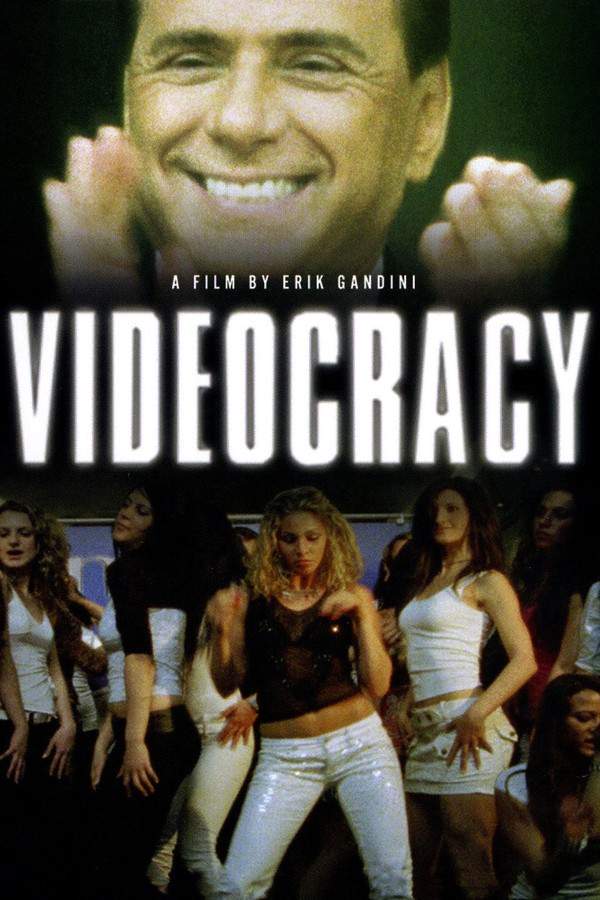
The documentary begins with a striking segment from the 1977 quiz show Spogliamoci insieme, where a woman gradually removes her clothing in response to questions answered correctly by the audience. The narrator, Gandini, notes that in the aftermath of these broadcasts, reports emerged of working-class men feeling too exhausted to go to work—a phenomenon he terms "the President's television."
In the north-western region of Lombardy, we meet Riccardo "Ricky" Canevali, a 26-year-old factory worker with dreams of stardom. Driven to audition for various shows on the Mediaset network, Ricky expresses his frustrations regarding the unequal odds he faces compared to women in the pursuit of fame. He remarks that for women, beauty and looks often overshadow talent, a subject that leads to an explanation of the Italian veline phenomenon. The documentary highlights a casting call at a mall, showcasing young women who are judged on their appearance, methodically measured, and required to dance as part of the selection process.
The narrative then transitions to the luxurious Emerald Coast in Sardinia, a favored retreat for Silvio Berlusconi and his entourage, which includes politicians and celebrities like Lele Mora and Fabrizio Corona. In an intimate interview setting within his villa, Mora praises Berlusconi, drawing parallels between him and Benito Mussolini and boasting about owning various fascist videos on his phone, even displaying a montage visually characterized by Nazi symbols paired with the song Faccetta Nera.
Fabrizio Corona, riding through the night in an unmarked car with his paparazzo assistant, describes his work as a modern-day Robin Hood. He claims to exploit the wealth of the famous but keeps the earnings for himself, arguing that those with even more money and fame are less deserving. His notoriety skyrocketed following a conviction for extortion, which he now capitalizes on as a form of celebrity. The documentary does not shy away from showing explicit content, including a scene where Corona is filmed decidedly naked while showering.
As he is released from prison after his involvement in the Vallettopoli scandal, Corona addresses the media in a calculated speech. His intentions are clear: to frame himself as a victim while diverting attention from his criminal past. When given the opportunity, he openly admits that he crafted plans for his future career while incarcerated.
However, his journey back into the spotlight proves challenging. Although he attempts multiple paid appearances at local events, they garner little interest. In a controversial move, he asks a grieving father to wear a T-shirt of his struggling agency for a promotional photo, but the father declines. Not deterred, he then approaches the Cappa twins—witnesses in the trial linked to the tragic 2007 murder of Chiara Poggi—but they deny his request as well.
This incident provokes public outrage, prompting media coverage. During a segment of TG5, Mora observes Corona's encounter and hastily distances himself from him, capturing the moment with a biting phone call, criticizing him for his recent erratic and inappropriate remarks.
The documentary culminates with a sweeping aerial shot of numerous antennas atop residential complexes, symbolizing the pervasive nature of television. In a climactic moment, Ricky finally achieves his aspiration of appearing on prime-time television through a game show. Meanwhile, the aspiring veline from the mall perform aimlessly on a platform, and the screen eventually fades to black. The film closes with revealing statistics on the state of Italian television, leaving the audience to ponder the implications of fame, fortune, and the industry's inherent challenges.