Plot Explained Spoilers guaranteed!
Plot Explained

Browse by genre

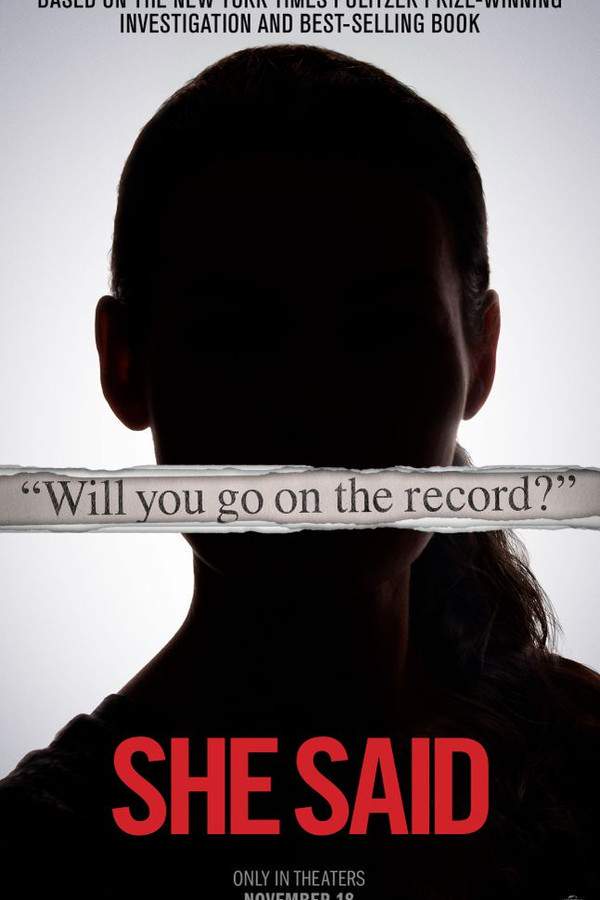
She Said (2022) movie poster

Plot Summary

She Said (2022) Plot Summary & Ending Explained

Release, runtime and language
2022 · 128 min · English
Echo score 66
JustWatch #5,005 58
Directed by
Maria Schrader
Starring
Samantha Morton, Patricia Clarkson, Seán Cullen, Jennifer Ehle, Carey Mulligan, Tom Pelphrey
Budget
$32M

Two New York Times reporters embark on a sensitive and groundbreaking investigation into allegations of sexual abuse against powerful film producer Harvey Weinstein. Academy Award nominees Carey Mulligan and Zoe Kazan portray the journalists as they uncover a long-standing culture of silence and cover-ups within Hollywood. Their reporting sparks a global reckoning, leading to a new era of accountability and profoundly impacting the entertainment industry.

On this page (8)
  1. 1 Where to watch
  2. 2 What happens: full plot
  3. 3 Plot questions answered
  4. 4 How it ends
  5. 5 The book behind the movie
  6. 6 Movie threads
  7. 7 Movies like She Said
  8. 8 Every angle

Where to watch

Where to Watch She Said (2022)

Where can you watch She Said? Stream, rent or buy it in the US, including on Netflix, Netflix Standard and Amazon Video: current JustWatch availability with up-to-date prices.

Streaming availability powered by JustWatch

Full plot summary · contains spoilers

What Happens in She Said: Full Plot Summary

The whole story of She Said (2022) explained, from the opening scene to the final frame: every key event, every twist and what it all adds up to. Read it as a quick recap before the sequel, to check a scene you missed, or to finally understand what really happened.

In 2017, Jodi Kantor (Zoe Kazan), a dedicated reporter for The New York Times, receives an unexpected tip regarding actress Rose McGowan (Keilly McQuail), who alleges that she was sexually assaulted by the infamous producer Harvey Weinstein (Mike Houston) back in 1992. Initially hesitant, McGowan later opens up about the traumatic encounter, vividly recounting how Weinstein assaulted her when she was just 23. Frustratingly, she reveals that, despite confiding in numerous individuals over the years, her pleas for help went unanswered.

Megan Twohey (Carey Mulligan), another reporter at The Times, is closely following the allegations of sexual misconduct against then-President Donald Trump, having communicated with Rachel Crooks (Emma Clare O'Connor), who asserts that Trump assaulted her. Encouraging Crooks to go public, Jodi warns her that the newspaper would be unable to offer legal support if the president initiated a lawsuit.

As Megan publishes the article about Crooks, she finds herself threatened when Crooks receives a shocking bag of feces in the mail. Married to Vadim Rutman (Tom Pelphrey), Megan becomes a pivotal character in pursuing these grave allegations, especially as sexual harassment in the workplace gains prominence in national discourse.

Jodi, driven by her conviction that sexual harassment is alarmingly prevalent in Hollywood, brings the McGowan story to the attention of her editors, including Rebecca Corbett (Patricia Clarkson) and Matt Purdy (Frank Wood), who grant her the necessary clearance to investigate further. As she delves deeper, she interviews notable actresses like Ashley Judd and Gwyneth Paltrow, who share harrowing accounts of their own experiences with Weinstein but insist on anonymity, fearing repercussions on their careers.

Recognizing that progress is slow in her investigation, Jodi enlists help from Megan, who has shown exceptional skill in encouraging women to disclose their painful experiences. Together, they uncover a labyrinth of complaints against Miramax, the studio associated with Weinstein, but find that many allegations have been settled quietly without ever seeing the inside of a courtroom.

Despite their determined efforts, Megan encounters obstacles when she tries to gather further information; a key government investigator remains tight-lipped, while former Miramax executive John Schmidt (John Mazurek) hesitates to provide crucial details regarding Weinstein's prior settlements.

Their investigation exposes a disturbing pattern of silence surrounding sexual harassment claims, where settlement agreements often include non-disclosure clauses, effectively silencing victims. Alarmingly, they learn that a staggering 40% of the settlement funds often line the pockets of attorneys, compounding the sense of injustice.

As the story unfolds, Ambra Battilana also comes forward, having accused Harvey of groping her, only for law enforcement to conclude that insufficient evidence existed to mount a prosecution. Conversations with individuals connected to the legal system reveal that connections between Weinstein and those in power have likely contributed to the swift dismissal of criminal complaints against him.

Eventually, Jodi receives a critical tip from an assistant at Miramax, leading her to interview three former aides - Rowena Chiu (Angela Yeoh), Zelda Perkins (Samantha Morton), and Laura Madden (Jennifer Ehle). Each woman bravely shares her experiences of abuse, describing how the toxic environment at Miramax ultimately forced them to remain silent in fear of professional fallout.

Though initially reluctant, Laura consents to speak with Jodi after a representative from Weinstein's camp attempts to intimidate her. The pressure intensifies as Harvey catches wind of the investigation and dispatches attorney Lanny Davis (Peter Friedman) to refute the allegations, while still avoiding any formal statements regarding his actions.

Megan and Jodi press on, striving to convince their sources to go public. After much deliberation, both Judd and Madden choose to be named in the article, understanding that this crucial exposure could foster change.

Finally, on October 5, 2017, The New York Times publishes the groundbreaking article. The resulting impact is profound, as 82 women come forward to share their experiences with Weinstein, igniting a movement for workplace reform and legal consequences against those who perpetuate such behavior. As it stands, Weinstein is now serving a 23-year prison sentence for sexual assault in New York, a chilling testament to the systemic issues that these courageous women sought to address.
Last updated: November 07, 2024 at 22:31

Was this helpful?

Plot questions answered

She Said Plot Explained: Your Questions Answered

The questions people ask most about She Said (2022): what happens in the confusing scenes, why the characters do what they do, the twists, hidden details and what the ending means. Each answer contains spoilers.

Q1

Why did Weinstein's victims sign non-disclosure agreements?

Victims signed NDAs as part of settlement agreements with Weinstein. These legal documents required silence in exchange for financial compensation, effectively buying the victims' silence and protecting Weinstein's reputation. The settlements often included条款 that prohibited victims from discussing their experiences, creating a systemic cover-up that allowed Weinstein to continue his behavior for decades.

Foreshadowing: The pattern of settlements is established early when Jodi and Megan discover the extensive history of quietly resolved complaints against Miramax.

  • non-disclosure agreements
  • ndas
  • settlements
  • cover-up
  • weinstein
Q2

How did Jodi and Megan convince victims to go public?

Jodi and Megan built trust through persistent communication, listening empathetically to traumatic experiences, and demonstrating genuine commitment to telling the women's stories. They emphasized the historical importance of speaking out and how public disclosure could create systemic change. Megan had particular skill in encouraging women to share their experiences, while Jodi provided the editorial backing that their stories would be handled responsibly.

Foreshadowing: Megan Twohey's experience encouraging Rachel Crooks to go public about Trump allegations foreshadows her role in the Weinstein investigation.

  • sources
  • witnesses
  • testimony
  • convincing victims
  • trust building
Q3

Why was it so difficult to prosecute Harvey Weinstein?

Prosecution was difficult because victims were silenced through NDAs, there was limited physical evidence for old incidents, and Weinstein's connections to law enforcement officials likely contributed to the swift dismissal of criminal complaints. Additionally, many incidents occurred years before the investigation, making evidence collection challenging. Ambra Battilana's accusation, for example, was dropped due to insufficient evidence despite her credibility.

Foreshadowing: The pattern of dismissed complaints is hinted at when Ambra Battilana's case fails despite her accusation.

  • prosecution
  • criminal case
  • evidence
  • law enforcement
  • investigations
Q4

What intimidation tactics were used against victims and journalists?

Victims faced career retaliation, with many fearing professional fallout from speaking out. Laura Madden was directly intimidated when a representative from Weinstein's camp attempted to pressure her. Journalist Megan Twohey faced alarming backlash when Rachel Crooks received a bag of feces in the mail after going public with her story. This demonstrates the personal risks involved in coming forward.

Foreshadowing: The threat against Crooks illustrates the broader climate of fear surrounding the investigation.

  • intimidation
  • threats
  • harassment
  • pressure
  • victims safety
Q5

Why did Ashley Judd and Laura Madden agree to be named in the article?

After lengthy deliberation, both Ashley Judd and Laura Madden chose to be named because they recognized the historic importance of publicly exposing Weinstein's pattern of abuse. They understood that visibility would strengthen the investigation's impact and potentially inspire other victims to come forward. Their willingness to sacrifice anonymity represented a pivotal moment in shifting from quiet settlements to public accountability.

Foreshadowing: The earlier reluctance of actresses like Judd and Paltrow to be named highlights the evolution from anonymous accounts to public testimony.

  • Ashley Judd
  • Laura Madden
  • named sources
  • public testimony
  • accountability
Q6

What was Miramax's role in enabling Weinstein's behavior?

Miramax was Weinstein's studio where a toxic work environment allowed abuse to flourish. Former executives and assistants at Miramax facilitated Weinstein's access to victims and often participated in silencing complaints. The studio's culture of complicity meant that employees who witnessed or heard about abuse were pressured to stay silent. Three former aides - Rowena Chiu, Zelda Perkins, and Laura Madden - eventually provided crucial testimony about this environment.

Foreshadowing: The investigation's breakthrough comes from a tip from a Miramax assistant, showing the company's central role.

  • miramax
  • studio
  • workplace culture
  • executives
  • toxic environment
Q7

What was the impact of the New York Times article?

The October 5, 2017 article had an immediate and profound impact. Within days, 82 women came forward with their own allegations against Weinstein, catalyzing the global #MeToo movement. The article led to increased scrutiny of sexual harassment across industries and workplace reforms. Crucially, it contributed to Weinstein's eventual conviction in 2020, where he received a 23-year prison sentence for sexual assault in New York.

Foreshadowing: The article's publication marks the climax of the film, representing the successful outcome of the journalists' efforts.

  • publication
  • impact
  • #metoo
  • movement
  • weinstein conviction
Q8

Why didn't victims come forward with their stories sooner?

Victims didn't come forward sooner due to multiple factors: NDAs bound them legally, fear of career destruction in Hollywood kept them silent, Weinstein's power made them believe no one would believe them, and the normalization of such behavior in the industry created a culture of silence. Rose McGowan herself recounted telling numerous people over years who did nothing. The systemic nature of the cover-up made individual disclosure feel impossible.

Foreshadowing: Rose McGowan's account of confiding in people who ignored her illustrates the depth of this systemic failure.

  • victims silence
  • hollywood culture
  • fear
  • career repercussions
  • normalization
Q9

What happened to Rachel Crooks and why was her story included?

Rachel Crooks was one of multiple women accusing then-President Donald Trump of sexual assault. Megan Twohey had been investigating these allegations and encouraged Crooks to go public, though she warned Crooks that the newspaper couldn't provide legal protection if Trump sued. Crooks ultimately appeared in Megan's article but received a threatening package of feces in the mail, demonstrating the personal risks of accusations against powerful men.

Foreshadowing: This subplot establishes Megan's experience with sexual assault investigations before she joins the Weinstein story.

  • rachel crooks
  • donald trump
  • allegations
  • threats
  • sexual assault
Q10

What was problematic about the settlement system?

The settlement system was problematic because approximately 40% of settlement funds went to attorneys, meaning victims received far less compensation than expected while the legal system profited. More critically, settlements routinely included confidentiality agreements that protected predators by keeping accusations hidden, creating a cycle where Weinstein could settle and silence victims while continuing his behavior.

Foreshadowing: Jodi and Megan discover this disturbing statistic while investigating the pattern of settled complaints.

  • settlements
  • legal fees
  • attorneys
  • confidentiality
  • financial exploitation
Q11

Who were the three former Miramax aides who testified?

The three former Miramax aides were Rowena Chiu, Zelda Perkins, and Laura Madden. Rowena Chiu was an assistant who witnessed inappropriate behavior. Zelda Perkins was a former assistant who attempted to report misconduct. Laura Madden, a former Miramax employee, courageously agreed to speak with Jodi after initially hesitating, providing detailed accounts of the toxic environment that enabled Weinstein's abuse.

Foreshadowing: These women represent the inside perspective on Miramax's culture of complicity.

  • rowena chiu
  • zelda perkins
  • laura madden
  • miramax assistants
  • testimony

Ending explained

What Happens at the End of She Said?

How She Said (2022) ends, in short: the final scene, the last twist and what it means for the characters. The full ending explained, with every spoiler, lives on its own page.

Read the full ending explained

*The climax of "She Said" sees Megan Twohey and Jodi Kantor finally publishing their groundbreaking article about Harvey Weinstein's decades of sexual abuse and harassment. Throughout their investigation, they gather irrefutable evidence—such as testimonies from victims willing to speak out after years of silence and internal memos that detail Weinstein’s misconduct, which had been deliberately suppressed by his employer. Weinstein, desperate to protect his reputation, attempts to discredit the story by threatening legal action and trying to involve other publications to overshadow the New York Times’ reporting. Nevertheless, Megan and Jodi persist, and just as time runs out, they secure the crucial testimonies of victims like Ashley Judd and Laura Madden, who publicly confirm their experiences. With this solid evidence, their article is published, exposing Weinstein’s predatory behavior to the world.

In the aftermath, Weinstein denies all allegations publicly, claiming they are false and that he is the victim of a conspiracy. Yet, within a month, more than 80 women come forward with accusations of sexual assault, leading to Weinstein’s arrest and eventual trial. In 2020, he is convicted of rape and sexual assault and sentenced to 23 years in prison, symbolizing a significant victory for the victims and the burgeoning #MeToo movement. The film concludes by highlighting how Megan and Jodi’s relentless journalism sparked a global conversation about workplace harassment, inspiring legal reforms and empowering many women to come forward and share their stories. The ending underscores that their tenacity not only brought a dangerous predator to justice but also ignited a movement that challenged long-standing systemic silence and impunity in Hollywood and beyond.*

She Said ending explained in full

Movie threads

More Movies Like She Said, by Mood & Story

Curated lists built around what makes She Said tick: the same mood, the same kind of story or the same emotional payoff. Each list explains why these movies belong together.

Investigative Journalism Movies like She Said

Stories of dogged reporters uncovering systemic corruption and fighting for justice. Explore movies like She Said that focus on the intense, methodical work of investigative journalists. These films are similar in tone, showing reporters uncovering corruption and fighting for truth against powerful opposition. If you liked the procedural detail and moral urgency of She Said, you'll find compelling stories here.

  • urgent
  • methodical
  • courageous
  • serious
  • unflinching
  • suspenseful
  • Tone: tense, serious, resolute
  • Pacing: steady, methodical
Why these movies?

The story pattern: Narratives in this thread typically follow a linear, evidence-gathering structure, building tension as reporters piece together a puzzle against a ticking clock and institutional resistance. The climax is often the publication of an article or the breaking of a story, leading to a hopeful or impactful conclusion.

Why they belong together: Movies are grouped here based on their shared focus on the journalism profession, a steady procedural pace, a tense and serious tone, and the central theme of exposing truth. They offer a similar viewing experience of intellectual sleuthing and moral courage.

Movies about Exposing Systemic Injustice like She Said

Emotionally heavy dramas about breaking silence and challenging corrupt systems. Find films similar to She Said that deal with uncovering and confronting systemic abuse and institutional cover-ups. These movies share a heavy emotional weight and a serious tone, often depicting the courage it takes to break a culture of silence. If you were moved by the themes of accountability in She Said, explore this selection.

  • somber
  • courageous
  • urgent
  • serious
  • unflinching
  • empowering
  • Tone: somber, tense, hopeful
  • Pacing: steady, deliberate
Why these movies?

The story pattern: These narratives often begin with individuals experiencing or discovering an injustice, leading to a difficult and dangerous journey of gathering testimonies and evidence. The conflict is against a faceless system or a powerful individual, culminating in a public exposure that has wide-reaching consequences, often ending on a note of hope or major change.

Why they belong together: This thread connects movies through their core theme of fighting systemic power, a heavy emotional weight derived from serious subject matter, and a narrative of empowerment through truth-telling. They share a somber yet resolute mood and a focus on impactful real-world issues.

If you liked this

Movies Like She Said

Similar movies to She Said: the same genre, themes or kind of story. Each one comes with its own plot summary, timeline and ending explained.

Browse all movie summaries

Every angle

She Said (2022) Explained: Plot, Ending, Timeline & Characters

Everything about She Said in one place: what happens in the plot summary, the timeline in chronological order, the characters and meaning, the ending explained and a spoiler-free summary. What's After the Movie adds the cast, box office and post-credit scenes.

Coming soon on iOS and Android

The Plot Explained Movie Summary App

Plot summaries, endings explained and timelines on your phone. Catch up on any movie in minutes, save your favorites and never miss a twist again.

Be the first to know when we launch. Your email stays private, always.

Learn more about the app