Year: 2005
Runtime: 132 min
Language: English
Director: John Dahl
Budget: $80M
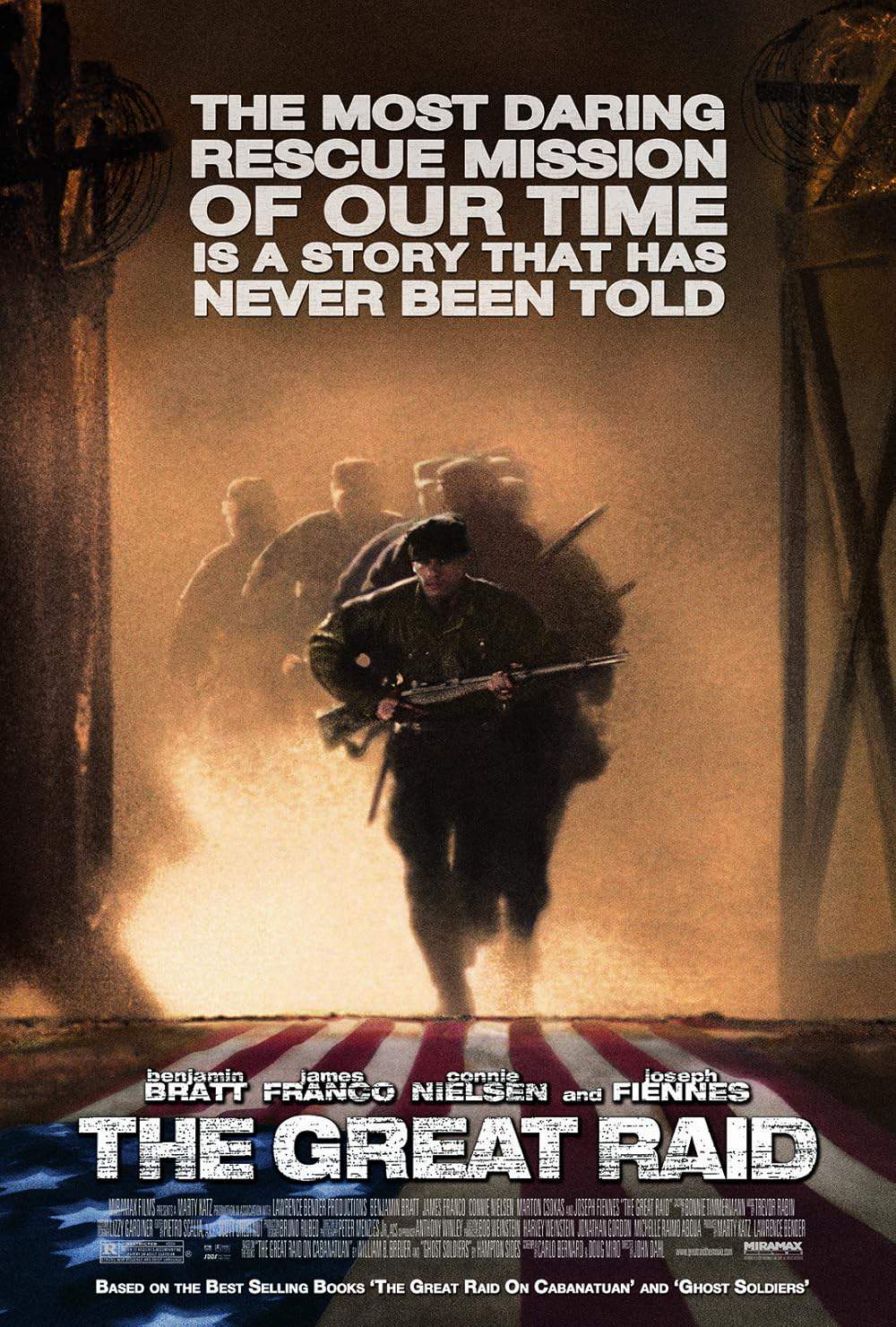
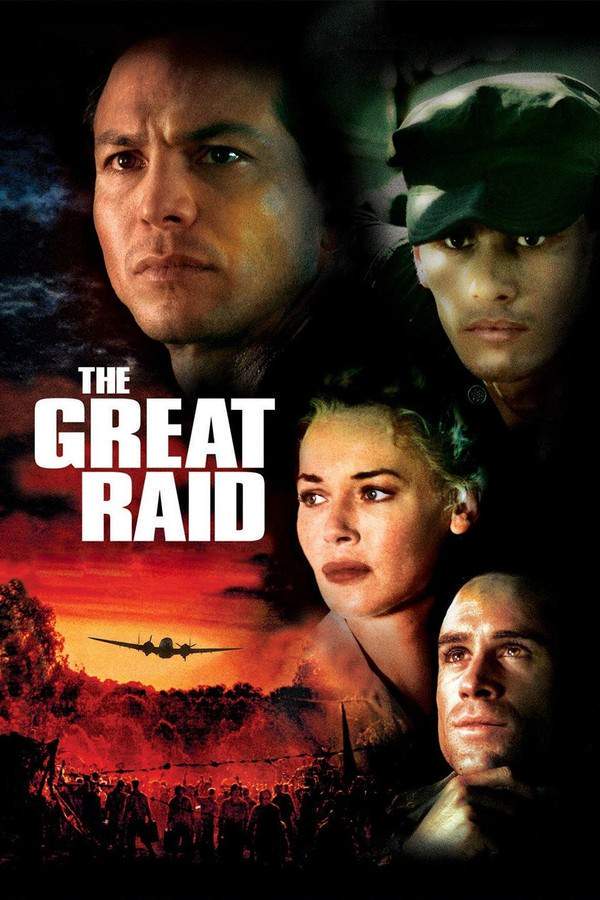
During World War II, a small team of U.S. Army Rangers undertakes a perilous mission to liberate over 500 American prisoners of war held at the Cabanatuan prison camp in the Philippines. Facing overwhelming enemy forces and treacherous terrain, these soldiers must overcome seemingly impossible odds to free their comrades. The raid is a desperate attempt to restore hope and demonstrate resolve amidst the brutal realities of war, testing the limits of courage and resilience.
Warning: spoilers below!
Haven’t seen The Great Raid yet? This summary contains major spoilers. Bookmark the page, watch the movie, and come back for the full breakdown. If you're ready, scroll on and relive the story!
Read the complete plot breakdown of The Great Raid (2005), including all key story events, major twists, and the ending explained in detail. Discover what really happened—and what it all means.
In December 1941, following the devastating attack on Pearl Harbor, the United States found itself thrust into the chaos of World War II. Just ten hours later, Japanese forces launched an aggressive assault on the Philippines. 10,000 Americans and 60,000 Filipinos retreated to the Bataan peninsula, but found themselves trapped with no naval rescue in sight. As the U.S. refocused its efforts on defeating Hitler in Europe, General MacArthur was compelled to leave the Philippines for Australia, making a solemn vow to return.
After four months, surviving American and Filipino troops reluctantly surrendered to the Japanese Imperial Army. The Japanese, unable to accommodate 70,000 prisoners of war (POWs), forced them into a harrowing 60-mile march—a tragic event that would become infamous as the Bataan Death March, with an estimated 15,000 lives lost. Tragically, the survivors faced even grimmer fates in camps such as O’Donnell, Cabanatuan, and Palawan, where countless others succumbed to starvation, brutality, and disease.
By 1944, the tide of war began to shift with U.S. victories in Europe. However, facing impending doom, the Japanese defense grew increasingly desperate. They prepared to fight fiercely, fueled by propaganda suggesting that Americans would show no mercy. In August 1944, the Tokyo war ministry issued a chilling directive regarding POWs: kill them all and leave no trace. The film begins with a horrifying depiction of this policy, showcasing the Kempeitai, the secret police of the Imperial Japanese military, committing mass murder against prisoners on Palawan.
Set in the Philippines in 1945, as the end of World War II loomed, Lieutenant Colonel Henry Mucci (Benjamin Bratt) and Captain Robert Prince (James Franco) led the 6th Ranger Battalion on a perilous rescue mission. Their objective was to venture thirty miles behind enemy lines in a bold effort to liberate over 500 American soldiers from the notorious Cabanatuan POW camp.
At this time, the Cabanatuan camp was home to numerous American prisoners who had endured the horrors of the Bataan Death March, now suffering from harsh treatment and illness, notably malaria. As the 6th Ranger Battalion received orders from Lieutenant General Walter Krueger, the urgency of their mission heightened—time was not on their side.
The narrative alternates between various perspectives: the suffering POWs under the leadership of Major Daniel Gibson (Joseph Fiennes) and Captain Redding (Marton Csokas), the valiant Rangers, and the Filipino resistance fighters. Among them is nurse Margaret Utinsky (Connie Nielsen), who undertook dangerous missions to smuggle much-needed medicine into the camps, risking her life to save the men imprisoned there. Her arrest by the Kempeitai, and the subsequent confiscation of supplies, provided a dire backdrop to the unfolding rescue mission.
With a growing understanding of the precarious situation, Mucci greenlights Prince’s plan to execute the raid. As the soldiers traverse the landscape, challenges abound, including the heavy presence of Japanese troops. Under the guidance of Captain Juan Pajota (Cesar Montano), they prepare for what is tantamount to a suicide mission.
As the narrative intensifies, the Rangers gather intel and adapt their strategies, leading to a climactic raid on Cabanatuan. The ensuing rescue operation, driven by bravery, cunning, and a palpable sense of urgency, witnesses both profound sacrifice and the exultation of freeing 511 POWs—though not without the cost of lives on both sides.
Ultimately, Mucci and Prince’s incredible mission culminates in military acclaim as they are awarded the Distinguished Service Cross. Meanwhile, the survivors of this harrowing ordeal, including the resilient Margaret, continue to reflect the indomitable spirit of those who navigate the darkest chapters of history, emerging not only as victors but as symbols of hope and perseverance in a world torn by conflict.
Last Updated: October 27, 2024 at 20:34
Discover curated groups of movies connected by mood, themes, and story style. Browse collections built around emotion, atmosphere, and narrative focus to easily find films that match what you feel like watching right now.
High-stakes military operations where courage faces overwhelming enemy forces.If you enjoyed the high-stakes military strategy and tense execution of the raid in The Great Raid, you'll find similar thrill in these films. This section features movies like The Great Raid that focus on desperate, against-all-odds rescue operations, often based on true historical events, where precision and courage are the only keys to success.
These narratives often follow a clear three-act structure: establishing the dire situation of those trapped, detailing the complex and risky planning phase, and culminating in the tense, action-packed execution of the mission. The journey is one of focused determination, where success is measured in lives saved against a backdrop of significant danger.
Movies are grouped here for their shared focus on a specific, high-stakes military objective—rescue. They share a tone of grim urgency, a steady pacing that builds towards a climactic operation, and a heavy emotional weight derived from the life-or-death stakes. The experience is defined by strategic tension and the catharsis of a hard-won victory.
Stories where survival comes at a profound cost, blending trauma with triumph.For viewers who appreciated the somber portrayal of war's cost and the bittersweet victory in The Great Raid, this section highlights similar movies. These films, like The Great Raid, explore themes of prisoner survival, war atrocities, and the heavy emotional residue that remains even after a mission is accomplished.
The narrative pattern involves characters enduring extreme hardship, often in captivity or under oppression, their spirits tested by violence and deprivation. The story builds towards a moment of liberation or escape, but the resolution is complex. The focus shifts to the psychological aftermath, acknowledging that freedom does not erase the trauma endured, resulting in an emotionally layered and realistic ending.
These films are united by their heavy emotional weight, bleak depictions of war's reality, and a tone that balances grim tension with a thread of human resilience. The pacing is often steady, allowing the gravity of the situation to sink in, and they consistently deliver endings that are more contemplative and bittersweet than purely victorious.
Don't stop at just watching — explore The Great Raid in full detail. From the complete plot summary and scene-by-scene timeline to character breakdowns, thematic analysis, and a deep dive into the ending — every page helps you truly understand what The Great Raid is all about. Plus, discover what's next after the movie.
Track the full timeline of The Great Raid with every major event arranged chronologically. Perfect for decoding non-linear storytelling, flashbacks, or parallel narratives with a clear scene-by-scene breakdown.
Discover the characters, locations, and core themes that shape The Great Raid. Get insights into symbolic elements, setting significance, and deeper narrative meaning — ideal for thematic analysis and movie breakdowns.
Get a quick, spoiler-free overview of The Great Raid that covers the main plot points and key details without revealing any major twists or spoilers. Perfect for those who want to know what to expect before diving in.
Visit What's After the Movie to explore more about The Great Raid: box office results, cast and crew info, production details, post-credit scenes, and external links — all in one place for movie fans and researchers.
Discover movies like The Great Raid that share similar genres, themes, and storytelling elements. Whether you’re drawn to the atmosphere, character arcs, or plot structure, these curated recommendations will help you explore more films you’ll love.
The Great Raid (2005) Scene-by-Scene Movie Timeline
The Great Raid (2005) Movie Characters, Themes & Settings
The Great Raid (2005) Spoiler-Free Summary & Key Flow
Movies Like The Great Raid – Similar Titles You’ll Enjoy
Onoda: 10,000 Nights in the Jungle (2022) Detailed Story Recap
The Great Escape (1963) Ending Explained & Film Insights
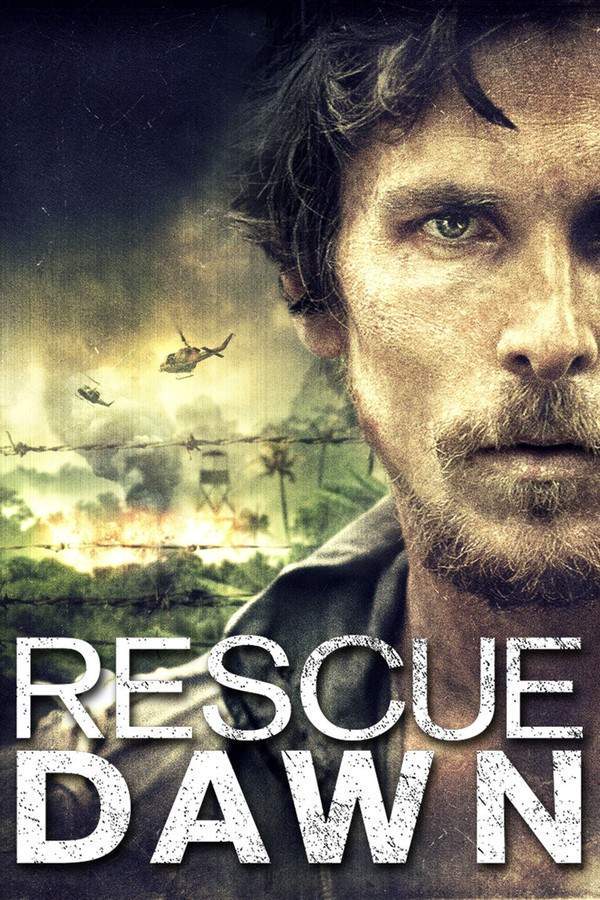
Rescue Dawn (2007) Full Movie Breakdown
The Raid (1991) Story Summary & Characters
Back to Bataan (1945) Film Overview & Timeline
Marine Raiders (1944) Spoiler-Packed Plot Recap
Pacific Inferno (1979) Film Overview & Timeline
Bataan (1943) Story Summary & Characters
American Guerrilla in the Philippines (1950) Plot Summary & Ending Explained
Gung Ho! (1943) Complete Plot Breakdown
The Raid (1954) Full Summary & Key Details
Back Door to Hell (1964) Full Summary & Key Details
Corregidor (1943) Full Summary & Key Details
The Ravagers (1965) Full Movie Breakdown
Lost Battalion (1962) Movie Recap & Themes