





Plot Explained Spoilers guaranteed!
Plot Explained

Browse by genre

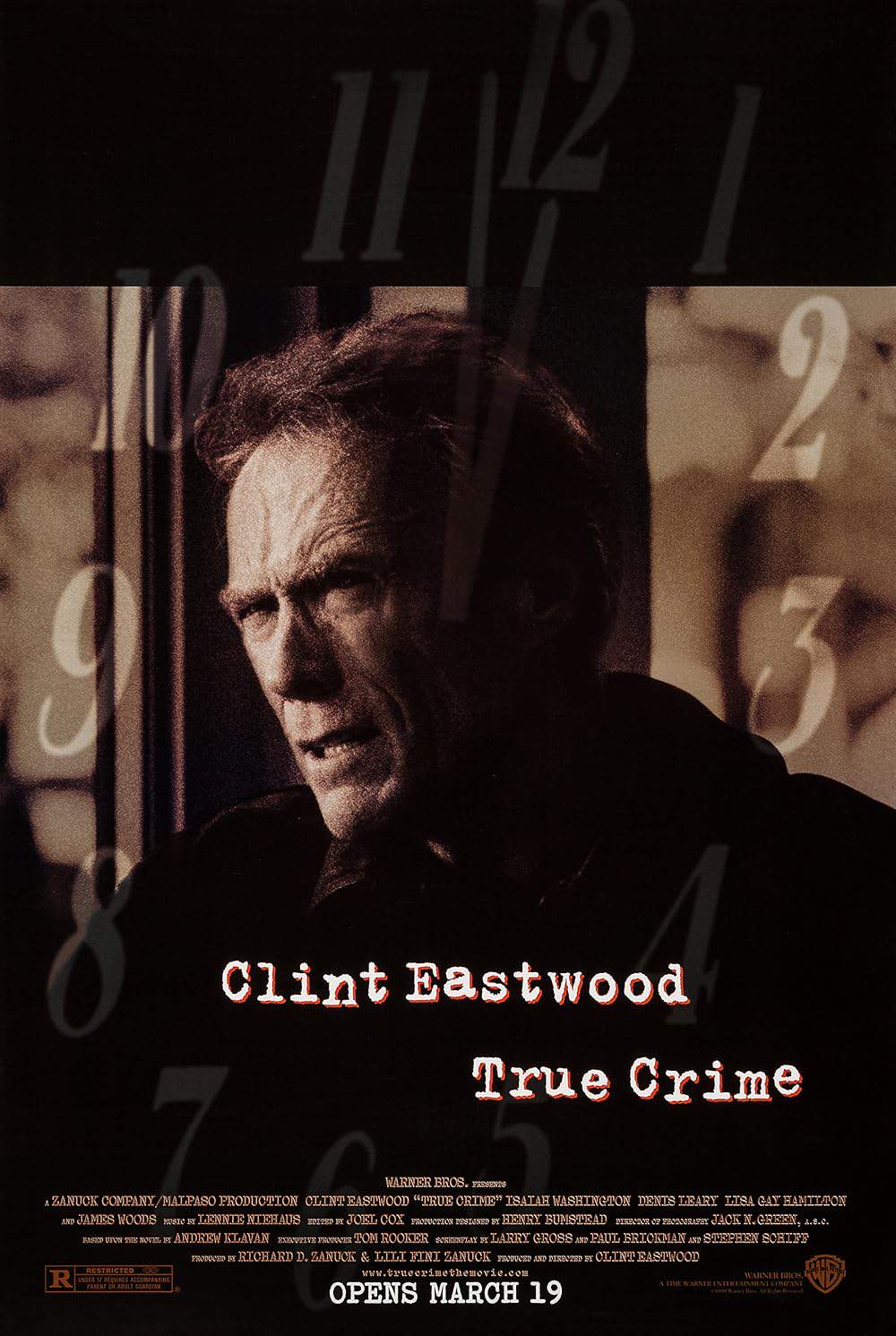
True Crime (1999) movie poster

Characters & Themes

True Crime (1999) Characters, Setting & Themes Explained

Release, runtime and language
1999 · 127 min · English
Starring
Clint Eastwood, Isaiah Washington
Budget
$55M

A brutal attack on a young detective ignites a relentless pursuit of justice. Palmerston North police delve into a complex case, uncovering a web of deceit and shocking truths that challenge the initial investigation. As they dig deeper, the detectives face unexpected obstacles and a twist that dramatically alters the course of the search.

On this page (8)
  1. 1 Where to watch
  2. 2 Characters explained (2)
  3. 3 Where & when it takes place
  4. 4 Themes & meaning (3)
  5. 5 Character & meaning questions
  6. 6 Movie threads
  7. 7 Movies like True Crime
  8. 8 Every angle

Where to watch

Where to Watch True Crime (1999)

Where can you watch True Crime? Stream, rent or buy it in the US, including on Amazon Video, Apple TV Store and Fandango At Home: current JustWatch availability with up-to-date prices.

Streaming availability powered by JustWatch

2 main characters · contains spoilers

True Crime Characters Explained: Who Is Who

The main characters of True Crime (1999), heroes and villains: what drives them, how they change over the course of the story and what each of them reveals about the film's bigger ideas.

  • Steve Everett (Clint Eastwood)

    Steve Everett is a complex character, grappling with alcoholism and personal demons while striving to fulfill his journalistic duty. His integrity and commitment to uncovering the truth drive the narrative, even as he navigates intense emotional conflicts stemming from his personal life.

    • 📰 Journalist
    • 🍺 Alcoholism
    • 💔 Integrity
  • Frank Beechum (Isaiah Washington)

    Frank Beechum is a convicted murderer who maintains his innocence, representing the struggle against racial prejudice in the justice system. His character is a poignant reminder of the human cost of wrongful convictions and the societal biases faced by marginalized individuals.

    • 🕵️ Innocent
    • ⚖️ Victim
    • 🚨 Racial Bias

Last updated: January 14, 2025 at 22:04

Was this helpful?

Setting

Where and When Does True Crime Take Place?

The setting of True Crime (1999): the year and time period, the places and locations, and how they shape the characters, the mood and the tension of the story.

Time period

The movie takes place in contemporary times, reflecting modern societal issues, particularly regarding race, justice, and the death penalty. This period is marked by heightened awareness around wrongful convictions and human rights, making the themes of the film particularly relevant.

Location

Oakland, San Quentin State Prison

Oakland is a vibrant city in California known for its diverse culture and history, often overshadowed by its neighboring cities. San Quentin State Prison, located on the northern shore of San Francisco Bay, is one of the oldest prisons in California and is infamous for housing death row inmates.

  • 🏙️ City
  • 🏢 Prison

Last updated: January 14, 2025 at 22:04

Was this helpful?

3 major themes

True Crime Meaning: Themes & Message Explained

What is True Crime (1999) really about? The emotional, social and philosophical themes the film keeps returning to, its symbolism and the message beneath the surface.

  • Justice

    The theme of justice is central to the film as Steve Everett battles against the clock to uncover the truth behind the wrongful conviction of Frank Beechum. The narrative explores the complexities of legal ethics, racial bias, and the moral dilemmas faced by individuals in the pursuit of justice.

  • Loss

    Loss permeates the film, affecting both Steve Everett and Frank Beechum. Everett copes with the tragic death of a colleague and the emotional weight of family commitments, while Beechum faces the potential loss of his life unjustly. This theme underscores the personal stakes involved in the characters' journeys.

  • Time

    The pressure of time is a critical element in the film, as Everett races against the clock to save Beechum from execution. This urgent narrative device heightens tension and emphasizes the significance of timely action in matters of life and death.

Last updated: January 14, 2025 at 22:04

Was this helpful?

Character & theme questions

True Crime Characters & Meaning: Your Questions Answered

The questions people ask about True Crime (1999): who the characters really are, their relationships, what the symbols mean, where it takes place and what the movie is really about. Each answer contains spoilers.

Q1

Where is True Crime set?

The movie takes place primarily in Oakland, California, with key scenes also set at San Quentin State Prison, located on the northern shore of San Francisco Bay. San Quentin is one of California's oldest prisons and is infamous for housing death row inmates.

  • oakland
  • san quentin
  • california
  • prison
  • setting
Q2

When does the movie take place?

True Crime is set in contemporary times, reflecting modern societal issues around race, justice, and the death penalty. The film addresses themes particularly relevant to the late 1990s when wrongful convictions and human rights became more prominently discussed.

  • contemporary
  • 1990s
  • modern era
  • time period
Q3

What is the main theme of True Crime?

Justice is the central theme of the film. The story follows journalist Steve Everett as he battles against time to uncover the truth behind the wrongful conviction of Frank Beechum, exploring legal ethics, racial bias, and the moral dilemmas faced in the pursuit of justice.

  • justice
  • justice system
  • racial bias
  • legal ethics
  • wrongful conviction
Q4

How does the film explore loss?

Loss permeates the film affecting both main characters. Steve Everett copes with the tragic death of a colleague and the emotional weight of family commitments, while Frank Beechum faces the potential loss of his life unjustly. This theme underscores the personal stakes driving their parallel journeys.

  • loss
  • grief
  • family
  • emotional stakes
  • death
Q5

How does time function as a theme?

The pressure of time is a critical element, as Everett races against a 12-hour countdown to prevent Beechum's execution. This urgent narrative device heightens tension and emphasizes how timely action can be the difference between life and death in the justice system.

  • deadline
  • urgency
  • execution countdown
  • time pressure
Q6

Who is Steve Everett?

Steve Everett is the protagonist, a journalist played by Clint Eastwood, who grapples with alcoholism and personal demons while striving to fulfill his journalistic duty. His integrity and commitment to uncovering the truth drive the narrative despite intense emotional conflicts from his personal life.

  • steve everett
  • clint eastwood
  • journalist
  • protagonist
Q7

Who is Frank Beechum?

Frank Beechum is the wrongfully convicted murderer whose case becomes the focus of Everett's investigation. He maintains his innocence throughout the film, representing the struggle against racial prejudice in the justice system and the human cost of wrongful convictions faced by marginalized individuals.

  • frank beechum
  • wrongful conviction
  • innocence
  • racial prejudice
Q8

What role does the death penalty play in the film?

The death penalty serves as the story's high-stakes backdrop, with Frank Beechum facing imminent execution. The film uses this to explore the finality of capital punishment and how wrongful convictions can lead to irreversible injustice, adding profound weight to Everett's investigation.

  • death penalty
  • capital punishment
  • execution
  • death row
Q9

How does the film address racial issues?

True Crime examines racial bias within the justice system through Frank Beechum's case, highlighting how marginalized individuals often face prejudice in criminal proceedings. The film suggests that racial injustice is a systemic problem that can lead to wrongful convictions.

  • racial bias
  • racism
  • justice system
  • discrimination

Movie threads

More Movies Like True Crime, by Mood & Story

Curated lists built around what makes True Crime tick: the same mood, the same kind of story or the same emotional payoff. Each list explains why these movies belong together.

Race Against the Clock Thrillers like True Crime

Investigative stories where every second counts and lives hang in the balance. If you liked the high-pressure investigation in True Crime, you'll find similar tension in these movies. This thread gathers films with journalists and detectives working against a strict deadline, where uncovering the truth becomes a frantic battle against time, creating a uniquely stressful and gripping viewing experience.

  • urgent
  • tense
  • investigative
  • high-stakes
  • morally gray
  • gritty
  • Tone: tense, urgent, morally conflicted
  • Pacing: fast, relentless
Why these movies?

The story pattern: These narratives typically follow a flawed protagonist uncovering a deeper conspiracy or correcting a miscarriage of justice. The plot is propelled by a ticking clock—an execution, a publishing deadline, or an impending disaster—forcing rapid-fire decisions and creating a structure of escalating stakes and constant forward momentum.

Why they belong together: Movies in this thread share a potent mix of investigative procedural elements and intense deadline pressure. They feature fast pacing, heavy emotional weight, and morally complex protagonists, resulting in a consistently tense and urgent viewing experience that mirrors the high-stakes pressure of real-world journalism.

Morally Complex Crime Dramas like True Crime

Stories where finding the truth comes with a heavy personal and ethical cost. Fans of the ethical struggles and bittersweet ending in True Crime will appreciate these films. This collection features crime stories where the investigation challenges the protagonist's morality, and victory is tinged with sadness, reflecting the complex reality of justice and sacrifice.

  • somber
  • morally conflicted
  • gritty
  • thought-provoking
  • redemptive
  • heavy
  • Tone: somber, tense, morally conflicted
  • Pacing: steady, character-driven
Why these movies?

The story pattern: The narrative journey involves a protagonist, often flawed, confronting a deeply rooted injustice. The path to truth forces them to grapple with their own demons and the limitations of the system they operate within. The conclusion provides a measure of justice but is rarely a clean victory, emphasizing the cost and complexity of truth.

Why they belong together: These films are united by their heavy emotional weight, focus on moral conflict, and a bittersweet emotional payoff. They explore themes like wrongful conviction, institutional failure, and personal redemption, creating a thoughtful and emotionally resonant experience that lingers long after the credits roll.

If you liked this

Movies Like True Crime

Similar movies to True Crime: the same genre, themes or kind of story. Each one comes with its own plot summary, timeline and ending explained.

Browse all movie summaries

Every angle

True Crime (1999) Explained: Plot, Timeline & Characters

Everything about True Crime in one place: what happens in the plot summary, the timeline in chronological order, the characters and meaning and a spoiler-free summary. What's After the Movie adds the cast, box office and post-credit scenes.

Coming soon on iOS and Android

The Plot Explained Movie Summary App

Plot summaries, endings explained and timelines on your phone. Catch up on any movie in minutes, save your favorites and never miss a twist again.

Be the first to know when we launch. Your email stays private, always.

Learn more about the app