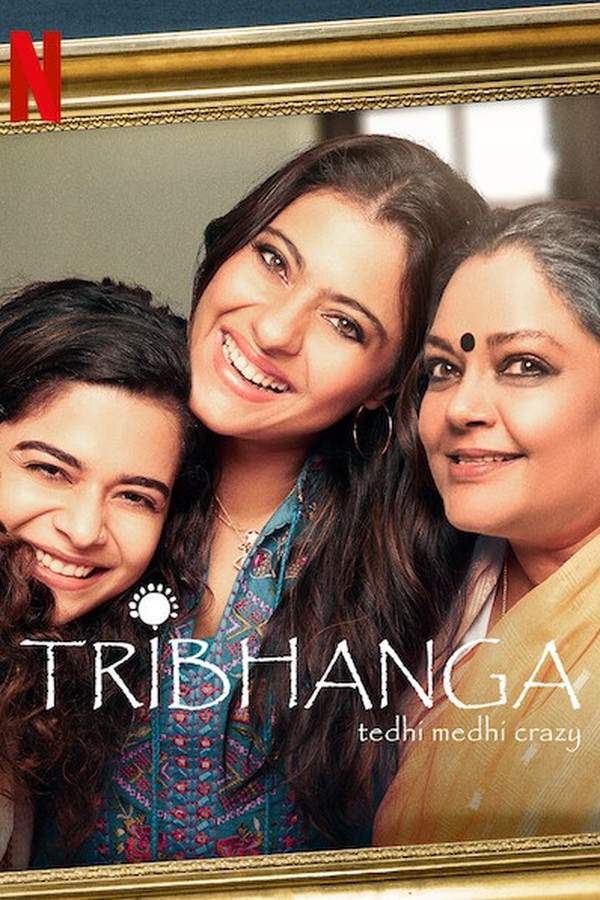
Nayantara Apte Tanvi Azmi is a celebrated author who can’t write anymore because of arthritis, and the task of shaping her life story falls to her devoted disciple, Milan Upadhyay Kunaal Roy Kapur, who helps turn her memories into an autobiography. As the two work, Nayantara’s routine includes a night of drinking that ends badly: she suffers a stroke, is rushed to the hospital, and slips into a coma. Her famous daughter, Anuradha Apte Kajol — a Bollywood star and a celebrated Odissi dancer — arrives with her own daughter, Masha Mithila Palkar, while the media swarms the scene and the hospital corridor becomes a press glare that Anu tries to ignore. The tension around Milan’s presence at the hospital unsettles Anu, and she voices her irritation, assisted by her brother, Robindro. From the wings, Milan overhears them mutter that Nayantara has ruined their lives, especially Anu.
The film then shifts to look at Nayantara’s past: in her youth, Nayantara’s mother-in-law grew frustrated with Nayantara’s relentless writing and her refusal to settle into traditional domestic chores. This rift prompts Nayantara to leave the household with Anu and Robindro. Later, Milan and Masha travel to Anu’s childhood home and speak with Nayantara’s ex-husband and his sister, both of whom mourn the distance that has grown between Nayantara and her children. Milan probes for more of the story, and Masha opens up about her own life: she is married into a conservative family, yet her husband Deepak remains supportive.
As the storytelling unfolds, Anuradha begins to warm to Milan, who keeps pressing for a collaborative account because Nayantara hoped her children would confront her for the hurts of their lives. Anu’s grandmother’s history and Nayantara’s choices begin to echo across generations, and Anu’s perception begins to shift.
Anu’s own chapter starts to come into focus as we learn about her childhood. Nayantara opted to give her children their own surname rather than their father’s—a bold move that earned Anu ridicule at school. Nayantara later remarried a photographer named Vikram [Nishank Verma], whose actions would scar Anu: abuse that she discovers only after it becomes public knowledge in a magazine interview from Anu’s early career. By then, Nayantara had already divorced Vikram.
As Nayantara’s career shines, Anu enters a live-in relationship with a Russian cinematographer, Dmitri. A complicated bond forms between Anu and Dmitri, but when he becomes abusive during Anu’s pregnancy, she drives him out. Nayantara visits, but Anu feels neglected, as if her mother cares more about Dmitri’s career than about her. This rift deepens, and Anu and Robindro sharply distance themselves from Nayantara, with the family’s estrangement widening.
Then a turning point arrives when Nayantara’s former partner Bhaskar Raina [Kanwaljeet Singh] re-enters their lives, acting as a bridge between Nayantara and Anu and becoming a surrogate grandfather to Masha. He helps both Anu and Robindro discover their passions—Anu with Odissi dance and Robindro with Krishna’s teachings—yet the bonds ultimately fray after Nayantara and Raina break up, even as Raina remains a quiet, guiding presence.
In the present, Milan seeks to reassure Anu that Nayantara might not have realized the full scope of her daughter’s struggle, but Anu remains conflicted, especially after seeing footage of Nayantara expressing remorse for failing her child. Anu’s empathy grows further when she overhears Masha confiding to her mother-in-law that she’s pregnant with a boy, and that her in-laws would not have accepted a girl. Masha explains that she stays with the family to give her child a stable father and a sense of normalcy, even as she confesses that she was shamed at school because her mother had multiple partners. Anu confronts the uncomfortable truth: she has lived in the same unseeing space as Nayantara once did, and she must reckon with her own blind spots.
This realization leads Anu to apologize to Masha, accepting that parents are imperfect and capable of missteps, and yearning to reconcile with Nayantara. Yet Nayantara dies soon after, leaving Anu and Robindro to seek closure with Milan as they perform Nayantara’s last rites and finally honor her memory.
Six months later, Milan arrives at Anu’s home on her birthday with the first copy of Nayantara’s autobiography, Tribhanga, a title that nods to a standing Odissi pose and to a family history that bends, but endures. The book stands as a testament to a mother’s complexities and a daughter’s evolving understanding, a multigenerational portrait that blends love, guilt, forgiveness, and resilience, and that invites readers to see how three generations of women navigate past hurts to shape a future that respects, if not fully reconciles with, their imperfect legacies.