Plot Explained Spoilers guaranteed!
Plot Explained

Browse by genre

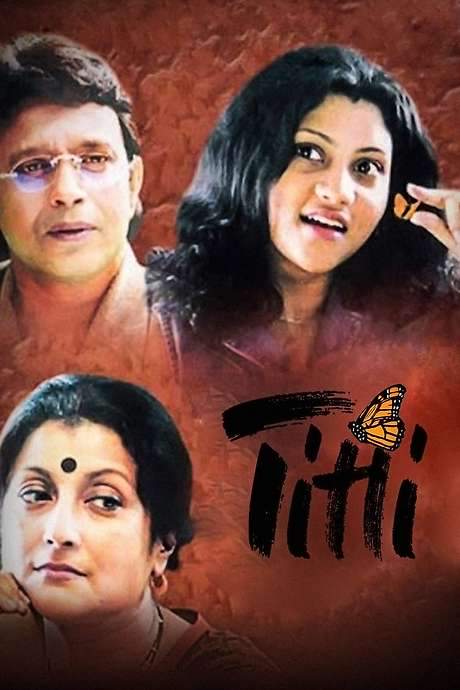
Titli (2002) movie poster

Plot Summary

Titli (2002) Plot Summary Explained

Release, runtime and language
2002 · 146 mins · Bengali, Bangla
Directed by
Rituparno Ghosh
Starring
Rukkmini Ghosh, Aparna Sen, Mithun Chakraborty, Konkona Sen Sharma, Dipankar Dey

Set amid the tranquil hills of Darjeeling, the tender coming‑of‑age drama follows a teenage girl as she navigates puberty, longing, and the shifting bond with her mother. Through quiet moments and vivid scenery, it portrays the complexities of familial love and the fragile threads that hold them together.

On this page (6)
  1. 1 Where to watch
  2. 2 What happens: full plot
  3. 3 Plot questions answered
  4. 4 Movie threads
  5. 5 Movies like Titli
  6. 6 Every angle

Where to watch

Where to Watch Titli (2002)

Where can you watch Titli? Stream, rent or buy it in the US, including on Amazon Prime Video and Hoichoi: current JustWatch availability with up-to-date prices.

Streaming availability powered by JustWatch

Full plot summary · contains spoilers

What Happens in Titli: Full Plot Summary

The whole story of Titli (2002) explained, from the opening scene to the final frame: every key event, every twist and what it all adds up to. Read it as a quick recap before the sequel, to check a scene you missed, or to finally understand what really happened.

The story unfolds against the misty, lush jungles of the Duars in north Bengal, where morning fog curls through Buddhist monasteries and the Darjeeling toy train threads its way through scenic hills. The film centers on Titli Konkona Sen Sharma as she grows from a spirited 17-year-old girl into a young woman, her heart caught in the delicate ache of a crush on Rohit Roy Mithun Chakraborty, a Bollywood star who is more than twice her age. Posters and memorabilia fill Titli’s room, hinting at a yearning that feels both secret and inevitable, while her mother Urmila Chatterjee Aparna Sen looks on with surprised tenderness at how real those feelings can feel.

On a winding jeep ride from Kurseong to Siliguri to fetch Titli’s father, Urmila’s quiet nostalgia surfaces when Titli plays a tune that reminds her of her own adolescence. Their shared ride becomes a hinge moment: Rohit Roy himself appears as their fellow passenger, sparking Titli’s electricity the moment she sees him in person. The conversation is brief and practical—a request for cigarettes, a favor granted by a teenager’s boldness—but it’s enough to shatter the wall between fantasy and reality. As this encounter unfolds, the film opens a longer, more intimate backstory: twenty years earlier, Urmila and Rohit had been lovers, a romance that lingers in the air and in the poems Urmila recites with a hushed ache. The moment is intensified when Urmila softly quotes a line from a Shakti Chattopadhyay poem, and Titli overhears enough to sense a more complicated history behind her mother’s calm exterior.

When the jeep finally reaches the airport and Titli’s father—an avid reader of Harry Potter and a Khushwant Singh joke collection—joins them, the tension takes on a new, everyday texture. Unknown to him, Rohit’s presence is a quiet, unsettling reminder of the past; yet he greets Rohit warmly and urges Urmila and Titli to stay in touch. The trip home leaves Titli teetering on the edge of tears, confronting the possibility that her own mother may still harbor a part of Rohit’s past. The film traces this emotional weather with a careful, almost tactile sensitivity: the first day of rains becomes a recurring image of awakening and change, the fog and greenery becoming a living backdrop to every whispered feeling.

As Titli’s curiosity grows, so does the contrariness of the situation. Urmila’s warmth and openness clash with Titli’s protective love for her mother, turning their bond into a subtle competition she never anticipated. The climactic turn arrives when Rohit writes Urmila a letter about his engagement to another woman, and Urmila’s response—quiet, decisive, and finally revealing—puts an end to the suspense that has hovered over their family’s dynamic. The film thus closes on a provocative note, mirrored by a magazine cover headline—Bangali Babur Biye (Bengali gentleman gets married)—that frames the end as both a social ritual and a personal reckoning.

Throughout, the visual rhythm is as important as the dialogue: the rain-slicked roads, the soft Rabindrasangeet that Urmila sings, and the interludes of Tagore’s poetry that punctuate moments of longing. The soundtrack and the landscape sing in harmony with Titli’s inner life, making her coming-of-age feel both intimate and expansive. This is a story about desire, memory, and the complicated loyalties of family, told with a poised, stylish restraint that invites viewers to read between the lines as much as they listen to the words.

- Tara, Rukkmini Ghosh, anchors the film with a grounded presence that contrasts Titli’s fluttering dreams.

- Urmila Chatterjee, Aparna Sen, moves between tenderness and restraint, shaping Titli’s understanding of love and choice.

- Rohit Roy, Mithun Chakraborty, lingers in the memory of the family as a force that tests boundaries and truth.

- Titli, Konkona Sen Sharma, carries the film’s emotional core with a growing and nuanced vulnerability.

- Titli’s father, a loyal reader and open-minded man, remains a gentle silhouette who helps trigger the final reckoning.

Last updated: October 09, 2025 at 15:17

Was this helpful?

Plot questions answered

Titli Plot Explained: Your Questions Answered

The questions people ask most about Titli (2002): what happens in the confusing scenes, why the characters do what they do, the twists, hidden details and what the ending means. Each answer contains spoilers.

Q1

What did Titli discover about her mother's past with Rohit?

Titli learned that her mother Urmila had a romantic relationship with Rohit Roy twenty years earlier, when he was trying to establish himself in Bollywood. When the jeep stalled during the journey and Titli went to fetch cigarettes, Urmila and Rohit revealed their shared history, which Titli overheard upon returning. This discovery shattered Titli's fantasy of her own crush and created tension between her loyalty to her mother and her feelings for the actor.

Foreshadowing: Earlier, Titli notices her mother reciting poetry with a hushed ache, hinting at lingering emotional wounds.

  • Urmila
  • Rohit Roy
  • twenty years
  • past relationship
  • jeep journey
Q2

Why does Titli become upset after the jeep journey?

Titli breaks down because she discovers her own crush on Rohit is complicated by the fact that her mother once loved him too. The revelation makes her confront the possibility that her mother might still have feelings for him, which threatens both her romantic ideals and her understanding of her parents' marriage. The emotional isolation she feels on the drive home stems from being caught between her shattered fantasies and her loyalty to her mother.

Foreshadowing: The moment Titli sees Rohit in person, her 'electricity' shifts from excitement to confusion as reality collides with fantasy.

  • Titli
  • emotional breakdown
  • jeep journey
  • overheard conversation
  • loyalty
Q3

What does Rohit's letter about his engagement signify?

Rohit's letter announcing his engagement to another woman serves as the concrete resolution to the unspoken tension throughout the film. It provides the answer Titli had been seeking, whether her mother would rekindle the old romance. Urmila's quiet, decisive response to the news closes that chapter definitively. The letter transforms the lingering uncertainty into closure, though it also marks the end of both mother and daughter's romantic hopes.

Foreshadowing: Throughout the journey, Rohit's presence acts as an unsettling reminder of the past for Urmila.

  • Rohit
  • letter
  • engagement
  • closure
  • Urmila response
Q4

Why does Titli question whether her mother still loves Rohit?

Titli questions this because she witnessed the genuine emotional connection between Urmila and Rohit during their reunion. The way Urmila recited poetry about longing, the tenderness in her voice when recalling their past, and Rohit's warm presence all suggested unresolved feelings. This uncertainty drives Titli's anxiety throughout the film, she fears her mother might choose the old romance over her current family, which would destroy the family structure Titli knows.

Foreshadowing: Urmila's quiet nostalgia surfaces when Titli plays a tune that reminds her of her own adolescence, showing her past remains emotionally present.

  • Urmila
  • Titli
  • love
  • jealousy
  • family tension
Q5

What does the recurring rain and fog imagery represent in the film?

The first day of rains serves as a recurring motif symbolizing awakening, change, and emotional turning points, a romantic theme in Bengali culture. The fog and misty jungles of Duars create a dreamlike atmosphere that mirrors the characters' inner states: uncertainty, longing, and the blur between reality and fantasy. The rain marks transitions in the story and amplifies the sense of things shifting beneath the surface, much like the secrets being uncovered.

Foreshadowing: The first day of rains is introduced early as a celebrated romantic turning point in the Bengali calendar.

  • rain
  • fog
  • monsoon
  • motif
  • awakening
  • change
Q6

What does the magazine cover at the end signify?

The magazine cover announcing 'Bangali Babur Biye' (Bengali gentleman's marriage) serves as a cultural commentary on marriage and desire. It frames Rohit's engagement as both a social ritual and a personal reckoning. The ending mirrors the unresolved tensions: Rohit marries within the expected social framework, while both Titli and her mother must process their unmet desires. The cover acts as a stylish signpost marking the closure of one chapter while leaving emotional questions lingering.

Foreshadowing: The film closes on a provocative note, suggesting the 'personal reckoning' has arrived.

  • magazine cover
  • ending
  • Bengali Babur Biye
  • marriage
  • cultural commentary
Q7

Why is the cigarette request scene significant?

The cigarette request becomes significant because it creates the pivotal opportunity for Titli to leave the jeep, allowing Urmila and Rohit to be alone together. When Titli volunteers to fetch cigarettes for Rohit, it marks her first direct interaction with him, but more importantly, it enables the revelation of the past relationship. This seemingly small errand becomes the hinge moment that transforms the entire dynamic of the film, shifting from a romantic fantasy to a complex family revelation.

Foreshadowing: The coolant failure forces the halt, interrupting the long-awaited moment and creating the necessary pause for connection.

  • cigarette
  • jeep halt
  • opportunity
  • Urmila Rohit conversation
Q8

Why does Titli develop a crush on someone so much older than her?

Titli's crush on Rohit Roy, who is more than twice her age, reflects the intensity of adolescent longing and the idealized nature of celebrity admiration. Her room filled with posters and memorabilia represents a secret, inevitable yearning, an infatuation that exists in the safe realm of fantasy. The film uses this crush not to judge but to explore the universal experience of first feelings, which often fixate on inaccessible figures. The twist that makes this complicated is that her mother once felt the same way about the same man.

Foreshadowing: The summary establishes early that Titli's infatuation 'hints at the emotional storms to come as she grows up.'

  • Titli
  • crush
  • Rohit Roy
  • adolescent
  • age difference
  • celebrity
Q9

What role does Titli's father play in the story?

Titli's father acts as a gentle, oblivious anchor to normal family life. An avid reader of Harry Potter and Khushwant Singh, he represents the everyday world that continues despite the emotional turmoil around him. His warm greeting of Rohit and encouragement for his wife and daughter to stay in touch creates dramatic irony, he is unaware of the romantic history. His presence provides the contrast that makes the secret feel more consequential and highlights the fragility of the family equilibrium.

  • father
  • Harry Potter
  • Kushwant Singh
  • oblivious
  • family equilibrium
Q10

Why does Urmila recite poetry during the journey?

Urmila's recitation of Shakti Chattopadhyay poetry serves as an emotional release and a window into her unresolved feelings. The poem she quotes with 'hushed ache' speaks to longing and the passage of time, themes that directly mirror her situation. The poetry creates a lyrical space where she can express what she cannot say directly: her nostalgia, her regrets, and her lingering connection to Rohit. This moment elevates the scene from practical travel to a meditation on memory and desire.

Foreshadowing: The poetry recitation occurs precisely when Urmila feels the presence of her past rekindled.

  • poetry
  • Shakti Chattopadhyay
  • Urmila
  • longing
  • nostalgia
  • emotional expression
Q11

What is the significance of the Darjeeling setting and toy train?

The Darjeeling hills, misty jungles of Duars, and the toy train create a liminal space between reality and fantasy that mirrors the characters' emotional states. The scenic landscape, Buddhist monasteries, fog-enshrouded hills, winding roads, functions almost as a character itself, providing an intimate, almost tactile backdrop for the emotional drama. The toy train specifically represents childhood innocence and the passage of time, threading through the hills like the story threads through generations of longing.

  • Darjeeling
  • toy train
  • Duars
  • hills
  • landscape
  • atmosphere

Movie threads

More Movies Like Titli, by Mood & Story

Curated lists built around what makes Titli tick: the same mood, the same kind of story or the same emotional payoff. Each list explains why these movies belong together.

Atmospheric Coming-of-Age Movies like Titli

Quiet stories of young people navigating self-discovery in evocative settings. If you liked the poetic and tender portrayal of adolescence in Titli, explore more movies like it. This collection features gentle, character-driven stories about young people coming of age, often set against beautiful, atmospheric backdrops that mirror their inner worlds.

  • contemplative
  • nostalgic
  • tender
  • atmospheric
  • dreamlike
  • quiet
  • Tone: melancholic, tender, contemplative
  • Pacing: slow, reflective
Why these movies?

The story pattern: These narratives are typically linear and character-driven, following a protagonist through the subtle awakenings of puberty, first love, and changing family dynamics. The central conflict is often internal, a quiet struggle with identity, memory, and longing.

Why they belong together: They are grouped by their shared focus on the introspective and often melancholic experience of growing up, their slow, contemplative pacing, and their use of vivid, sensory-rich settings to enhance the emotional journey.

Quiet Family Dramas with Subtle Tension like Titli

Stories where subtle family dynamics and buried secrets shape relationships. For viewers who appreciated the nuanced mother-daughter relationship and the echoes of past romance in Titli, this list highlights similar movies about family dynamics. These films use a gentle pace to explore the love, longing, and quiet secrets that hold families together.

  • tender
  • melancholic
  • nostalgic
  • contemplative
  • quiet
  • emotional
  • Tone: bittersweet, melancholic, tender
  • Pacing: slow, deliberate
Why these movies?

The story pattern: The plot is often driven by emotional revelations rather than external events, uncovering hidden layers within family relationships. A key pattern is the intergenerational connection, where a character's present-day struggles mirror or are illuminated by the unresolved past of a parent.

Why they belong together: They share a focus on the bittersweet nature of familial love, a moderate complexity derived from emotional nuance, and a pacing that allows the weight of history and unspoken feelings to resonate deeply with the viewer.

If you liked this

Movies Like Titli

Similar movies to Titli: the same genre, themes or kind of story. Each one comes with its own plot summary, timeline and ending explained.

Browse all movie summaries

Every angle

Titli (2002) Explained: Plot, Timeline & Characters

Everything about Titli in one place: what happens in the plot summary, the timeline in chronological order, the characters and meaning and a spoiler-free summary. What's After the Movie adds the cast, box office and post-credit scenes.

Coming soon on iOS and Android

The Plot Explained Movie Summary App

Plot summaries, endings explained and timelines on your phone. Catch up on any movie in minutes, save your favorites and never miss a twist again.

Be the first to know when we launch. Your email stays private, always.

Learn more about the app