Plot Explained Spoilers guaranteed!
Plot Explained

Browse by genre

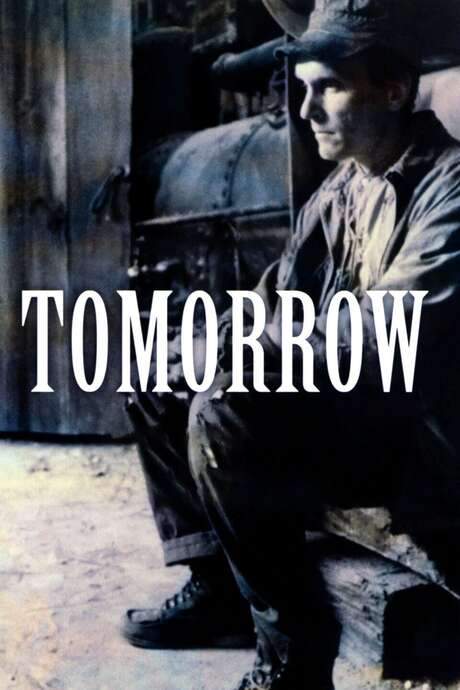
Tomorrow (1972) movie poster

Timeline

Tomorrow (1972) Timeline Explained – Every Event in Order

Release, runtime and language
1972 · 103 mins · English
Loading streaming availability…
Directed by
Joseph Anthony
Starring
Robert Duvall, Peter Masterson, Sudie Bond, Johnny Mask, James Franks, Olga Bellin

A lonely farmer takes in a pregnant woman and looks after her. After she gives birth, tragedy strikes.

On this page (6)
  1. 1 Where to watch
  2. 2 Events in order (14)
  3. 3 Timeline questions answered
  4. 4 Movie threads
  5. 5 Movies like Tomorrow
  6. 6 Every angle
Loading streaming availability…

14 events in order · contains spoilers

Tomorrow Timeline: Events in Chronological Order

Every key event of Tomorrow (1972) in order, scene by scene, with when and where it takes place. Use it to untangle flashbacks, time jumps and parallel storylines, to refresh your memory before the sequel or to find the exact scene you are thinking of.

  1. Fentry shelters a pregnant drifter

    In rural Mississippi, an isolated farmer named Fentry takes in a pregnant drifter abandoned by the father of her child. He provides food, shelter, and steadiness, giving her a safe place to wait out her pregnancy. The act marks the start of a deep, if uneasy, bond between them.

    When
    early days after arrival
    Where
    rural Mississippi
  2. Bond deepens as she recovers

    As the drifter's pregnancy progresses, Fentry's care extends beyond shelter into companionship. He nurses her back to health after her destitution, and their connection grows despite the isolation around them. The situation plants the seeds for a profound and tragic attachment.

    When
    early weeks after arrival
    Where
    on the farm in rural Mississippi
  3. The drifter dies; he pledges to care for her son

    She dies after Fentry promises to take care of her son, binding his fate to a child he never expected to raise. The loss leaves him with a sense of responsibility and a memory of the mother figure he found in her. The tragedy carves the foundations of the story's moral conflict.

    When
    after the promise
    Where
    on the farm
  4. Fentry raises the boy for a time

    Fentry raises the boy for a period, giving him care, discipline, and a chance at a life away from destitution. He acts as a father figure, shaping the boy's early years with quiet steadfastness. The bond he forms becomes central to later events.

    When
    in the years after the mother's death
    Where
    the farm
  5. The boy is taken from him by force

    The boy is forcibly removed from Fentry by the brothers of the boy's mother. The family asserts control, severing the fragile link Fentry had built. This act sets the boy on a harsher path and deepens Fentry's sense of loss.

    When
    sometime later
    Where
    near the farm
  6. The boy grows up to be seen as worthless

    The boy grows into a man who is widely viewed as worthless by the community. His rough upbringing and the stigma attached to his childhood seal his reputation. The public's low regard makes his murder feel like a 'public service' to some.

    When
    years later
    Where
    the community
  7. A murder that is seen as a public service

    A man, considered worthless by most, is murdered, and the act is framed by some as a public service. The event underscores the town's brutal logic about worth and punishment. The killer's actions are debated, but the social verdict remains harsh.

    When
    recently
    Where
    the town
  8. Present day jury scene

    Twenty years later, Fentry sits on a jury for the murder trial. The defense attorney narrates the case, guiding the audience through Fentry's logic and hidden past. The jury's dynamics become a study of character and prejudice.

    When
    present day
    Where
    courthouse in Mississippi
  9. The fragile thread of Fentry's vote

    The narrative slowly reveals that Fentry's vote is driven by a sense that life can be precious in the least expected places. His own past with Sarah Eubanks and the boy informs his understanding of worth. The courtroom becomes a space to weigh memory against the official record.

    When
    present day
    Where
    courthouse
  10. The attorney sees Fentry's humanity

    The defense attorney realizes Fentry is someone society often dismisses, yet he embodies tremendous character and resolve. This insight reframes the courtroom as a moral mirror rather than a battlefield. The line about enduring life anchors the film's message.

    When
    present day
    Where
    courtroom
  11. The victim's lineage ties to Sarah Eubanks

    The killer's victim is revealed to be the son of Sarah Eubanks, the pregnant drifter Fentry sheltered. The past resurfaces, connecting the present trial to the farmer's long-untold memories. This link reframes the crime as one with moral weight rather than a distant incident.

    When
    present day
    Where
    courtroom/past revelations
  12. Endurance and the invincible of the earth

    The film closes on Fentry's quiet endurance, mirroring the attorney's line about the 'lowly and invincible of the earth'. He shows that people who seem insignificant can bear heavy burdens and shape others' lives. The courtroom becomes a space to honor those hidden stories.

    When
    present day
    Where
    courtroom
  13. Flashbacks reveal Fentry's past

    Through the defense attorney's narration, the story unfolds in flashbacks that show Fentry's quiet acts of care and the consequences of removing the boy from his life. The past connects to the present, shaping how the jury and audience interpret the crime. The structure emphasizes memory as a force in moral judgment.

    When
    across the past twenty years
    Where
    Mississippi; various times
  14. Final reflection on worth

    The film's closing reflection notes endurance and the dignity of the overlooked. It ties Fentry's personal history to a broader statement about worth and humanity. The long road to understanding ends with a charge to recognize the lowly as invincible.

    When
    end of film
    Where
    courtroom / memory

Last updated: February 24, 2026 at 13:56

Was this helpful?

Timeline questions answered

Tomorrow Timeline Explained: Your Questions Answered

When does it happen, and why in that order? The questions people ask about the chronology of Tomorrow (1972): time jumps, flashbacks, cause and effect between scenes and the correct order of events, each answered with spoilers.

Q1

Why did Fentry take in the pregnant drifter?

Fentry, a lonely and isolated farmer in rural Mississippi, took in Sarah Eubanks because he found her in a state of destitution and couldn't turn away a pregnant woman in need. His act was driven by basic human compassion rather than any expectation of reward. The film presents this as an example of the quiet, often invisible decency that exists in people society dismisses as unimportant.

Foreshadowing: Early scenes show Fentry living alone, establishing his isolation before Sarah arrives, making his decision to help her even more significant.

  • Fentry
  • Sarah Eubanks
  • drifter
  • pregnant
  • compassion
  • Mississippi farm
Q2

What happened to Sarah after she gave birth?

Sarah died after childbirth, leaving Fentry to fulfill his promise to care for her son. Her death marks the first major tragedy in the film and establishes the foundation of Fentry's lifelong commitment to the boy she left behind. This loss deeply shapes Fentry's character and his sense of responsibility throughout the narrative.

Foreshadowing: The timeline notes mention that she dies after Fentry makes his promise, binding his fate to a child he never expected to raise.

  • Sarah Eubanks
  • death
  • childbirth
  • promise
  • son
  • Fentry
Q3

Why did Sarah's brothers take the boy from Fentry?

Sarah's brothers forcibly removed the boy from Fentry's care, asserting familial control over the child. This act severed the fragile bond Fentry had built with the boy and set him on a harsher path. The film presents this as a betrayal that ultimately contributed to the boy's tragic fate, as he grew up without the stability Fentry had provided.

Foreshadowing: The timeline establishes this as a turning point that 'sets the boy on a harsher path' and deepens Fentry's sense of loss.

  • Sarah's brothers
  • boy
  • taken
  • Fentry
  • force
  • family
Q4

Why was the murder considered a public service by some?

The victim, Sarah's son, grew up to be viewed as worthless by the community due to his rough upbringing and the stigma attached to his childhood. This social judgment led some in the town to view his murder as eliminating a troublesome figure rather than a tragic loss of life. The film uses this reaction to critique how society assigns worth to people based on class and reputation.

Foreshadowing: The timeline notes the boy's 'worthless' reputation was sealed by his upbringing, making the murder feel justified to some.

  • murder
  • public service
  • worthless
  • community
  • judgment
  • victim
Q5

Why is Fentry's vote crucial in the murder trial?

Fentry's vote is pivotal because his past with Sarah Eubanks and the boy gives him unique insight into the victim's humanity. While other jurors see the murder victim as worthless, Fentry remembers the child he raised and the promise he made to Sarah. His vote becomes a moral statement about recognizing worth in people society has dismissed.

Foreshadowing: The narrative reveals Fentry's hidden past gradually, building toward the moment when his connection to the victim becomes clear.

  • Fentry
  • jury
  • vote
  • murder trial
  • worth
  • victim
Q6

What is Fentry's connection to the murder victim?

The murder victim is Sarah Eubanks' son, the same child Fentry promised to care for after Sarah's death. Fentry raised the boy for a time before Sarah's brothers took him away. This connection, revealed during the trial through the defense attorney's narration, reframes the case as a personal matter for Fentry rather than a distant event. His memories of the boy inform his understanding of the victim's worth.

Foreshadowing: Timeline item 11 confirms the victim's lineage ties directly to Sarah Eubanks, the drifter Fentry sheltered.

  • Fentry
  • Sarah's son
  • victim
  • connection
  • trial
  • raised
Q7

What does the ending mean about endurance?

The film's closing references the idea that 'the lowly and invincible of the earth' endure despite being overlooked by society. This message applies both to Fentry, who maintained his moral character despite being dismissed, and to the victim, whose brief life had value even if society refused to recognize it. The courtroom becomes a space where hidden stories of worth are finally acknowledged.

Foreshadowing: The final quote about endurance echoes throughout the film, connecting Fentry's quiet actions to a broader philosophy about human dignity.

  • endurance
  • tomorrow
  • lowly
  • invincible
  • worth
  • dignity
  • meaning
Q8

Why is the story told through flashbacks in the courtroom?

The non-linear structure, with the defense attorney narrating as Fentry sits on the jury, allows the film to gradually reveal Fentry's hidden past. This storytelling method creates dramatic irony, viewers and jurors piece together the connection between Fentry and the victim as the trial progresses. It emphasizes how memory and personal history shape moral judgment in ways the official record cannot capture.

Foreshadowing: The attorney's narration invites the audience to look closer, just as the jury must look beyond the surface of the case.

  • flashback
  • courtroom
  • attorney
  • narration
  • structure
  • non-linear
Q9

What role does the defense attorney play in the story?

The defense attorney serves as both narrator and moral guide, framing the trial through the lens of Fentry's hidden past. He recognizes Fentry's humanity when others dismiss him, using the story to argue for the dignity of seemingly insignificant people. His perspective drives the film's thematic argument about worth and endurance.

Foreshadowing: The attorney realizes Fentry's true character late in the film, reframing the courtroom as a 'moral mirror.'

  • defense attorney
  • narrator
  • Lawyer Douglas
  • role
  • perspective
  • moral
Q10

What caused the boy to become seen as worthless?

After being forcibly taken from Fentry by Sarah's brothers, the boy grew up in a harsh environment that shaped his reputation. The stigma attached to his origins, born to a destitute drifter, abandoned by his mother, taken from his foster home, combined with his difficult upbringing led the community to dismiss him as worthless. This social judgment made his murder feel acceptable to some, a tragedy the film explicitly critiques.

Foreshadowing: The timeline notes the boy's 'harsh upbringing' directly contributes to his 'worthless' reputation in the community.

  • boy
  • worthless
  • upbringing
  • community
  • stigma
  • reputation
  • society

Movie threads

More Movies Like Tomorrow, by Mood & Story

Curated lists built around what makes Tomorrow tick: the same mood, the same kind of story or the same emotional payoff. Each list explains why these movies belong together.

Movies about solitude and duty like Tomorrow

Stories about isolated characters finding purpose in caring for others. Find more films like Tomorrow that explore themes of profound loneliness and unwavering duty. If you were moved by the quiet commitment of an isolated guardian, these similar dramas capture the same melancholic, character-driven vibe.

  • lonely
  • steadfast
  • melancholic
  • reflective
  • tragic
  • grieving
  • Tone: melancholic, reflective
  • Pacing: slow, deliberate
Why these movies?

The story pattern: These stories often begin with a character living in isolation, whose life is interrupted by the arrival of someone vulnerable. The narrative arc follows the development of a deep, often unspoken bond built on duty and care, typically culminating in a moment of tragic loss or bittersweet reflection that underscores the fragility of their connection.

Why they belong together: Movies are grouped here for their shared focus on the emotional weight of responsibility shouldered by solitary individuals. They share a melancholic tone, slow pacing for introspection, and a heavy emotional weight, creating a cohesive experience about the dignity found in unnoticed lives.


Movies with bittersweet echoes of loss like Tomorrow

Melancholic narratives where past tragedies shape a character's present. Discover more melancholic dramas like Tomorrow that use flashbacks to explore tragedy and memory. These films share a slow-burning pace, complex emotional layers, and a bittersweet feeling, perfect if you appreciated the reflective tone.

  • melancholic
  • tragic
  • grieving
  • reflective
  • somber
  • memory
  • Tone: melancholic, bittersweet
  • Pacing: slow, reflective
Why these movies?

The story pattern: The narrative is often structured non-linearly, using flashbacks or a framing device to gradually reveal a past tragedy. The plot is less about action and more about the emotional fallout and philosophical reflection, leading to an ending that acknowledges the pain of loss while finding a glimmer of enduring meaning.

Why they belong together: These films are united by their complex, reflective structure and their dominant mood of melancholic sadness. They share a slow pacing that allows for deep introspection, a bittersweet ending feel, and a heavy emotional weight centered on themes of grief and memory.

If you liked this

Movies Like Tomorrow

Similar movies to Tomorrow: the same genre, themes or kind of story. Each one comes with its own plot summary, timeline and ending explained.

Browse all movie summaries

Every angle

Tomorrow (1972) Explained: Plot, Timeline & Characters

Everything about Tomorrow in one place: what happens in the plot summary, the timeline in chronological order, the characters and meaning and a spoiler-free summary. What's After the Movie adds the cast, box office and post-credit scenes.

Coming soon on iOS and Android

The Plot Explained Movie Summary App

Plot summaries, endings explained and timelines on your phone. Catch up on any movie in minutes, save your favorites and never miss a twist again.

Be the first to know when we launch. Your email stays private, always.

Learn more about the app