Plot Explained Spoilers guaranteed!
Plot Explained

Browse by genre

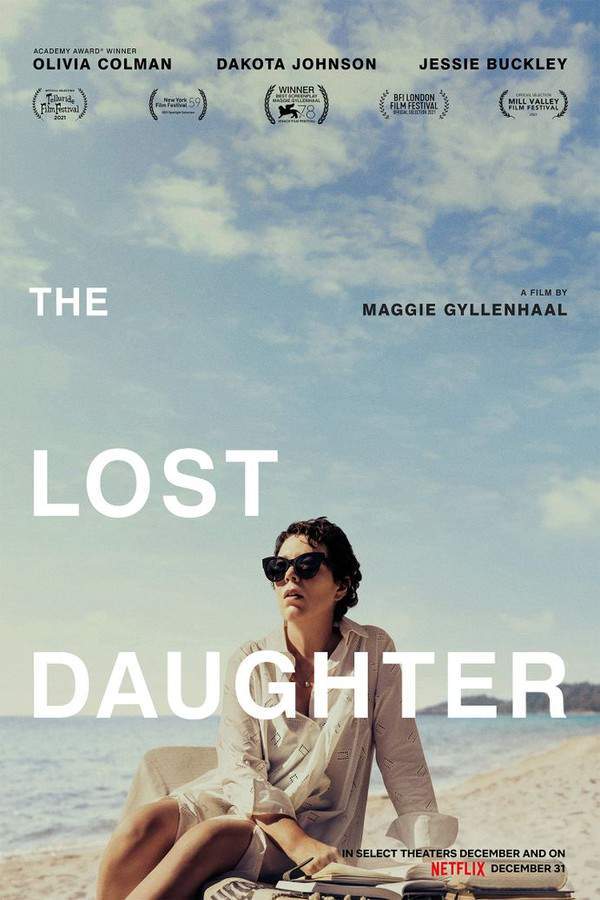
The Lost Daughter (2021) movie poster

Plot Summary

The Lost Daughter (2021) Plot Summary & Ending Explained

Release, runtime and language
2021 · 121 min · English
Echo score 66
JustWatch #1,520 12
Directed by
Maggie Gyllenhaal
Starring
Peter Sarsgaard, Jessie Buckley, Dakota Johnson, Paul Mescal, Olivia Colman, Ed Harris
Budget
$5M

During a seaside vacation, a woman named Leda becomes increasingly fascinated by a family she observes. This encounter triggers memories of her own experiences as a young mother, forcing her to confront the difficult and unconventional choices she made. As she reflects on her past, the lines between reality and memory blur, and she must grapple with the consequences of those decisions and the lingering impact they’ve had on her life.

On this page (8)
  1. 1 Where to watch
  2. 2 What happens: full plot
  3. 3 Plot questions answered
  4. 4 How it ends
  5. 5 The book behind the movie
  6. 6 Movie threads
  7. 7 Movies like The Lost Daughter
  8. 8 Every angle

Where to watch

Where to Watch The Lost Daughter (2021)

Where can you watch The Lost Daughter? Stream, rent or buy it in the US, including on Netflix and Netflix Standard: current JustWatch availability with up-to-date prices.

Streaming availability powered by JustWatch

Full plot summary · contains spoilers

What Happens in The Lost Daughter: Full Plot Summary

The whole story of The Lost Daughter (2021) explained, from the opening scene to the final frame: every key event, every twist and what it all adds up to. Read it as a quick recap before the sequel, to check a scene you missed, or to finally understand what really happened.

While on a vacation in the scenic landscape of Greece, specifically at Kyopeli, the story unfolds around Leda Caruso, portrayed by Olivia Colman, a middle-aged college professor renowned for her translating prowess. During her time there, she encounters Nina, played by Dakota Johnson, a young mother whose three-year-old daughter, Elena, has briefly gone missing on the beach. In a remarkable moment of serendipity, Leda discovers Elena, who had merely wandered off to play in a secluded spot, and promptly returns her to a visibly exhausted Nina. This encounter allows for a glimpse into Nina’s turmoil as she articulates her despair and fatigue. On top of everything, Elena is inconsolable over the loss of her favoured doll, a doll that Leda has secretly taken for reasons shrouded in her personal conflict.

Nina, noted for her striking appearance, finds herself repeatedly pursued by young admirers who share the island. This attention brings to light her struggles as a mother but also reflects on the societal pressures placed upon women. The narrative shifts through compelling flashbacks that reveal a parallel struggle faced by a younger version of Leda, who grapples with her own challenges as a parent to her daughters, Bianca and Martha, played by Robyn Elwell and Ellie Mae Blake respectively. During their childhood, Leda often found herself overwhelmed, dealing with Bianca’s rebellious temperament and Martha’s spirited nature, both of whom frequently went missing, feeding her growing frustration.

As the story unfolds, we see Leda’s significant other, Joe, illustrated by Jack Farthing, rendering little support, fully absorbed in his own career. This lack of assistance drives Leda into further isolation. The film introduces an intriguing scene where Leda encounters two hikers, Female Hiker, played by Alba Rohrwacher, and her male counterpart, who both epitomize a carefree lifestyle, having detached themselves from familial obligations in search of adventure.

The heart-wrenching dichotomy of Leda’s past as a mother and her current observations of Nina and Elena urges her to reflect on her own decisions. The arrival of Nina's husband, Toni, portrayed by Oliver Jackson-Cohen, alongside his dominating sister-in-law, Callisto or “Callie”, played by Dagmara Dominczyk, adds another layer of complexity as Nina struggles with the weight of their expectations while also coping with her own feeling of being overwhelmed.

In a pivotal night filled with tension, Leda shares a meal with Lyle, the hotel caretaker played by Ed Harris, who seemingly recognizes the doll she has taken but chooses not to address it. Striking revelations and tensions come to light when Leda learns of Nina's affair with Will, brought to life by Paul Mescal, highlighting Nina’s desperate search for autonomy under Toni’s controlling nature.

An emotional exchange occurs when Leda gifts Nina a hatpin as a gesture of kindness while inadvertently stirring a deeper conversation about her own past. Leda opens up about her feelings of abandonment when she left her children for three years, siding an affair with a fellow professor. In an act of vulnerability, she expresses a bittersweet liberation, stating that the separation felt "amazing," a moment that reveals the complexities of motherhood.

However, as the narrative crescendos, the tension between Leda and Nina culminates as Leda admits her shortcomings as a mother, revealing her selfish impulses and offering the coveted doll back—a decision that ignites a furious reaction from Nina. In an act of desperation, Nina confronts Leda and injures her with the hatpin, leading Leda to a place of both physical and emotional turmoil.

The self-exploration leads Leda to leave the resort in distress; however, her journey takes an unexpected turn as she loses control of her vehicle and crashes, collapsing on the beach. Here, Leda experiences a moment of awakening, discovering herself lying on the sand as the day breaks. Her poignant reconnect with her daughters, Bianca and Martha, brings a wave of relief as they express their concerns, while Leda, with newfound clarity, peels an orange—a symbol reconnecting her with the nurturing moments of her past, reminiscent of her time as a mother. In this rich tapestry of emotional exploration, the film unearths the intricate layers of motherhood, identity, and the pursuit of self amid familial expectations.
Last updated: November 25, 2024 at 19:24

Was this helpful?

Plot questions answered

The Lost Daughter Plot Explained: Your Questions Answered

The questions people ask most about The Lost Daughter (2021): what happens in the confusing scenes, why the characters do what they do, the twists, hidden details and what the ending means. Each answer contains spoilers.

Q1

Why does Leda take Elena's doll?

Leda takes Elena's doll as a way to process her own unresolved feelings about motherhood. The act represents a symbolic reclamation of something she feels she lost or denied herself during her own early years as a mother. By taking the doll, Leda is unconsciously acting out the maternal instinct she suppressed when she abandoned her own daughters.

Foreshadowing: Earlier scenes show Leda observing Nina's exhaustion as a mother, which triggers memories of her own overwhelmed state as a young parent.

  • doll
  • stealing
  • motherhood
  • Nina
  • Elena
Q2

Why did Leda leave her children for three years?

Leda left her two daughters, Bianca and Martha, for three years to pursue an affair with a fellow professor. In her conversation with Nina, she admits this was a selfish choice driven by her feeling trapped by motherhood. She describes the separation as feeling 'amazing' at the time, revealing the deep conflict she experienced between her desire for personal freedom and her role as a mother.

  • abandonment
  • affair
  • daughters
  • Bianca
  • Martha
  • professor
Q3

Why is Nina so overwhelmed as a mother?

Nina struggles with motherhood because she lacks support from her husband Toni, who is controlling, and faces judgment from his sister Callie. Her daughter Elena is described as difficult, frequently going missing and becoming inconsolable over minor losses like her doll. The film shows Nina is also having an affair with Will, seeking some form of autonomy or escape from her suffocating home life.

Foreshadowing: Leda witnesses Nina's exhaustion firsthand when Elena goes missing on the beach, setting up the parallel to Leda's own past struggles.

  • Nina
  • Elena
  • Toni
  • overwhelmed
  • motherhood
  • control
Q4

What triggers Leda's fascination with Nina?

Leda becomes fascinated with Nina because Nina's situation mirrors Leda's own past as a young, overwhelmed mother. Seeing Nina's exhaustion, frustration, and struggles triggers Leda's suppressed memories of feeling trapped by motherhood. The parallel between Nina's daughter Elena going missing and Leda's own daughters Bianca and Martha frequently going missing forces Leda to confront feelings she has spent years avoiding.

  • Nina
  • obsession
  • mirrors
  • past
  • motherhood
  • triggers
Q5

Why does Nina attack Leda with the hatpin?

Nina attacks Leda with a hatpin after Leda confesses to stealing Elena's doll and admits her failures as a mother. The revelation that this seemingly kind older woman secretly took her daughter's beloved doll, combined with Leda's candid admission of abandoning her own children, sends Nina into a rage. For Nina, who is already overwhelmed and struggling, this betrayal represents a final breaking point.

  • hatpin
  • attack
  • Nina
  • violence
  • doll
  • confession
Q6

What is the significance of the orange at the end?

The orange at the end symbolizes Leda's reconnection with her nurturing instincts and maternal past. Peeling and eating the orange mirrors memories of her caring for her daughters when they were young children. This act represents a form of reconciliation with the mothering identity she rejected for so many years, bringing her full circle to a place of tentative peace with her choices.

  • orange
  • symbolism
  • mothering
  • reconciliation
  • ending
  • memory
Q7

Why does Leda crash her car after leaving the resort?

Leda crashes her car because she is physically wounded from the hatpin stabbing and emotionally devastated by her confrontation with Nina. The combination of blood loss, exhaustion, and psychological turmoil causes her to lose control of the vehicle. She ends up on the beach, where she collapses but survives, leading to her morning awakening and reconciliation with her daughters.

  • crash
  • car
  • injury
  • beach
  • escape
  • Nina
Q8

What was Leda's relationship with her husband Joe like?

Leda's relationship with her husband Joe was largely distant and unsupportive. Joe was fully absorbed in his own career and provided little help with their two daughters. This lack of support contributed to Leda feeling trapped and isolated, eventually leading her to seek an affair and abandon her family altogether. The dynamic mirrors the controlling relationship Nina has with her husband Toni.

  • Joe
  • husband
  • marriage
  • support
  • career
  • absence
Q9

Why does Nina have an affair with Will?

Nina has an affair with Will because she feels trapped in her marriage to the controlling Toni and overwhelmed by motherhood. Her relationship with Will represents a desperate search for autonomy and validation outside of her suffocating family life. The affair mirrors Leda's own past infidelity, creating another parallel between the two women.

  • affair
  • Will
  • Nina
  • Toni
  • escape
  • autonomy
Q10

How do Bianca and Martha react to Leda after she returns?

When Leda finally reaches out to her adult daughters Bianca and Martha after her breakdown on the beach, they express concern and relief at hearing from her. Their response suggests a tentative reconciliation despite the years of emotional distance and the trauma of her abandonment. This moment represents Leda's first step toward genuine reconnection.

  • Bianca
  • Martha
  • daughters
  • reunion
  • forgiveness
  • adult

Ending explained

What Happens at the End of The Lost Daughter?

How The Lost Daughter (2021) ends, in short: the final scene, the last twist and what it means for the characters. The full ending explained, with every spoiler, lives on its own page.

Read the full ending explained

The Lost Daughter leaves its ending open to interpretation, focusing on the complex journey of its main character, Leda. After being stabbed by Nina in a moment of violent confrontation, Leda is found wounded but still alive, as evidenced by her attempts to drive herself to the airport, only to crash her car and collapse on the beach. She wakes up the next morning clutching her phone and an orange— a symbol of her childhood and a motif throughout the film. When she talks to her daughter Bianca, she insists she is alive, and her tone suggests a sense of acceptance or at least a peaceful detachment from her previous struggles. The orange, which she begins peeling in her final moments, evokes memories of her childhood and her attempts to bring order to chaos—a metaphor for her desire to find harmony within herself amid her tumultuous feelings about motherhood. Some viewers interpret this scene as evidence that Leda is still alive and has possibly found some form of peace or redemption. Others believe the orange's presence and her physical wounds symbolize her death—perhaps she succumbed to her injuries off-screen, and the act of calling her daughter is a final attempt at connection from beyond. The film’s ambiguous conclusion leaves the question of her fate deliberately open, emphasizing themes of self-acceptance, the enduring scars of motherhood, and the internal conflicts that define her life. In the end, whether alive or dead, Leda’s expression of peace or finality suggests she has come to terms with her identity—both as a mother and as a woman—leaving viewers to decide if her journey is one of survival or release.

The Lost Daughter ending explained in full

Movie threads

More Movies Like The Lost Daughter, by Mood & Story

Curated lists built around what makes The Lost Daughter tick: the same mood, the same kind of story or the same emotional payoff. Each list explains why these movies belong together.

Slow burn psychological unease like in The Lost Daughter

Stories where quiet tension and unsettling behavior create a creeping sense of dread. If you liked the quietly tense and unsettling atmosphere of The Lost Daughter, explore these movies with a similar slow burn psychological unease. This list features character-driven dramas and thrillers where internal turmoil creates a palpable sense of dread and moral ambiguity.

  • slow burn
  • unsettling
  • psychological
  • tense
  • oppressive
  • introspective
  • Tone: tense, melancholic, unsettling
  • Pacing: slow burn, deliberate
Why these movies?

The story pattern: Narratives in this thread often follow a character grappling with a buried past or a hidden flaw, with the tension arising from their psychological state rather than external action. The plot unfolds gradually, revealing disturbing truths and forcing a confrontation with uncomfortable aspects of human nature.

Why they belong together: These films are grouped by their shared mood of psychological discomfort and a slow-burn pacing that prioritizes character depth over plot speed. They create a similar viewing experience of quiet observation that builds to a powerful, often unsettling, emotional impact.

Unconventional portraits of motherhood like in The Lost Daughter

Raw and honest films that challenge the idealized myths of being a mother. For viewers who appreciated The Lost Daughter's honest look at motherhood, this list features similar movies with unconventional portraits of motherhood. Discover films that explore the struggles, identity crises, and difficult choices faced by mothers beyond societal expectations.

  • introspective
  • vulnerable
  • emotional
  • reflective
  • raw
  • honest
  • Tone: melancholic, bittersweet, reflective
  • Pacing: slow, character driven
Why these movies?

The story pattern: The narrative pattern involves a female protagonist, often in a state of crisis, reflecting on her role as a mother. These journeys are non-linear and introspective, juxtaposing past decisions with present consequences to explore themes of regret, sacrifice, and female identity separate from parenthood.

Why they belong together: Movies in this thread are united by their thematic focus on the complex, messy, and sometimes painful realities of motherhood. They share a heavy emotional weight and a tone that is often melancholic or bittersweet, providing a nuanced look at a universal experience.

If you liked this

Movies Like The Lost Daughter

Similar movies to The Lost Daughter: the same genre, themes or kind of story. Each one comes with its own plot summary, timeline and ending explained.

Browse all movie summaries

Every angle

The Lost Daughter (2021) Explained: Plot, Ending, Timeline & Characters

Everything about The Lost Daughter in one place: what happens in the plot summary, the timeline in chronological order, the characters and meaning, the ending explained and a spoiler-free summary. What's After the Movie adds the cast, box office and post-credit scenes.

Coming soon on iOS and Android

The Plot Explained Movie Summary App

Plot summaries, endings explained and timelines on your phone. Catch up on any movie in minutes, save your favorites and never miss a twist again.

Be the first to know when we launch. Your email stays private, always.

Learn more about the app