Plot Explained Spoilers guaranteed!
Plot Explained

Browse by genre

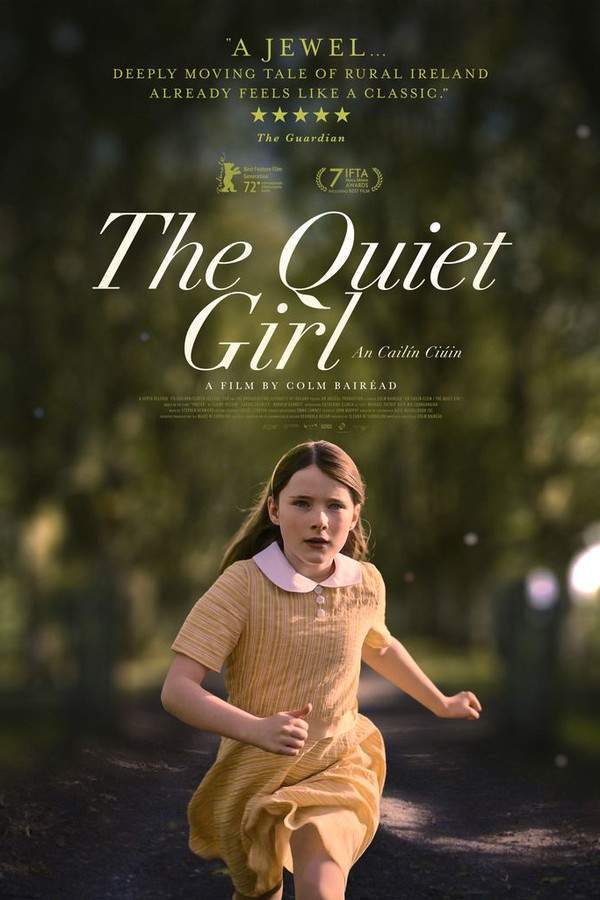
The Quiet Girl (2022) movie poster

Plot Summary

The Quiet Girl (2022) Plot Summary & Ending Explained

Release, runtime and language
2022 · 94 min · English
Echo score 74
Directed by
Colm Bairéad
Starring
Andrew Bennett, Carolyn Bracken, Carrie Crowley, Catherine Clinch, Joan Sheehy, Kate Nic Chonaonaigh
Budget
$1

During a summer in rural Ireland, a withdrawn nine-year-old girl named Cait is sent to stay with foster parents. Away from her troubled family, she experiences a newfound sense of peace and blossoms under their care. However, the tranquility is disrupted as a long-held secret is revealed, challenging her understanding of her own past and forcing her to face difficult truths about the people around her.

On this page (8)
  1. 1 Where to watch
  2. 2 What happens: full plot
  3. 3 Plot questions answered
  4. 4 How it ends
  5. 5 The book behind the movie
  6. 6 Movie threads
  7. 7 Movies like The Quiet Girl
  8. 8 Every angle

Where to watch

Where to Watch The Quiet Girl (2022)

Where can you watch The Quiet Girl? Stream, rent or buy it in the US, including on Kanopy, Fandango at Home Free and Plex: current JustWatch availability with up-to-date prices.

Streaming availability powered by JustWatch

Full plot summary · contains spoilers

What Happens in The Quiet Girl: Full Plot Summary

The whole story of The Quiet Girl (2022) explained, from the opening scene to the final frame: every key event, every twist and what it all adds up to. Read it as a quick recap before the sequel, to check a scene you missed, or to finally understand what really happened.

In the summer of 1981, Cáit, portrayed by Catherine Clinch, is a nine-year-old girl growing up in a rural Irish household that is both impoverished and neglectful. Among many siblings, she finds herself struggling to fit in at school, experiencing a moment of humiliation when milk spills on her lap. With her mother expecting another child, the family decides to send this quiet girl away to live with her middle-aged cousin, Eibhlín Cinnsealach, played by Carrie Crowley, and her husband Seán, depicted by Andrew Bennett.

Upon arriving at the Cinnsealach home, Cáit is warmly welcomed by Eibhlín, who shower her with affection and teaches her the day-to-day chores involved in running the household and the farm. Eibhlín introduces Cáit to a deep well on the property, cautioning her about the dangers of fetching water from it. Initially, Cáit finds herself in a spare bedroom and experiences fear about the presence of adults nearby, leading her to have an accident in bed. Since Cáit's luggage was left behind, Eibhlín dresses her in boys' clothes from the wardrobe, but later goes out to purchase a set of new girls' clothes for her.

Seán, however, is initially distant and cold toward Cáit. One day, while Eibhlín is away, Cáit accompanies Seán to clean the milking parlour. As he engrosses himself in his tasks, Cáit wanders off, prompting a panicked search when Seán realizes she's missing. After he finds her, he scolds her, which frightens Cáit into running back to the house. Following this incident, Seán starts to regret his reaction and gradually attempts to connect with Cáit. He invites her to fetch the mail, transforming it into a joyful ritual and praising her speed, which leads her to open up and form a bond with him.

A significant event occurs when the Cinnsealach family attends a wake. In Cáit's restless state, a neighbor offers to look after her, and after a moment of hesitation, Eibhlín consents. During their walk, the neighbor divulges the tragic past of the Cinnsealachs, revealing that they lost a young son to drowning in their slurry pit before Cáit's arrival. When Cáit returns and shares this information, she unwittingly stirs up emotions in Eibhlín and Seán, who are visibly affected but do not contradict the neighbor's tale.

As Cáit's stay at the Cinnsealach home stretches over a month, her mother gives birth and expresses a desire for Cáit to return in time for the new school year. Each member of the Cinnsealach family feels a profound sadness about this impending separation. In an impulsive moment, Cáit sneaks off to fetch water from the well but tragically falls in, overwhelmed by her greatly filled bucket. Eibhlín, panic-stricken upon realizing Cáit's absence, finds her shivering and soaked, comforting her during this distressing episode.

Days later, Eibhlín and Seán take Cáit back to her parents. Upon her return, her mother hardly acknowledges her, and her father berates her for sneezing. After a strained conversation among the adults, Eibhlín extends an invitation for Cáit to return to them anytime, parting ways with heavy hearts.

As she watches the car drive down the long driveway, the gravity of the moment sinks in for Cáit, who suddenly breaks into a sprint toward the vehicle, managing to reach them just as Seán is closing the gate. They share a heartfelt embrace, while Eibhlín quietly sobs in the car. Caught between her conflicting emotions, Cáit gazes over Seán's shoulder and glimpses her father's angry approach, calling out "Daddy" as she closes her eyes again in an attempt to retreat from the tumult of her reality.

Last updated: November 16, 2024 at 18:18

Was this helpful?

Plot questions answered

The Quiet Girl Plot Explained: Your Questions Answered

The questions people ask most about The Quiet Girl (2022): what happens in the confusing scenes, why the characters do what they do, the twists, hidden details and what the ending means. Each answer contains spoilers.

Q1

Why was Cáit sent to live with her cousins?

Cáit was sent away because her mother was expecting another child and the family was already struggling with poverty and neglect. Among many siblings, Cáit was the quietest and most overlooked, making her the one chosen to be sent to live with distant relatives. This decision reflects the harsh reality of her family's circumstances rather than any malicious intent.

Foreshadowing: The film opens with Cáit being humiliated at school when milk spills on her lap, establishing her invisibility within her own family.

  • cáit
  • foster care
  • family neglect
  • rural ireland
  • sent away
Q2

Why was Seán initially cold toward Cáit?

Seán's coldness stemmed from unresolved grief over the death of his young son, who drowned in the slurry pit years before Cáit's arrival. When Cáit went missing in the milking parlour, his panicked reaction revealed the depth of this trauma, he feared losing another child. This grief explains his initial distance and later his gradual warming to Cáit.

Foreshadowing: Seán's emotional guardedness at the beginning mirrors the closed-off nature of a family still healing from tragedy.

  • seán
  • grief
  • emotional distance
  • slurry pit death
  • foster father
Q3

What happened to the Cinnsealach's son?

The Cinnsealachs lost their young son to a drowning accident in a slurry pit on their farm before Cáit arrived. A neighbour revealed this tragic backstory during a wake, explaining why the couple was so deeply affected by Cáit's presence and why they struggled with the idea of her eventually leaving.

Foreshadowing: Eibhlín warns Cáit about the dangers of the deep well early on, a warning that gains weight once the slurry pit tragedy is revealed.

  • drowned son
  • slurry pit
  • tragedy
  • cinnsealach family loss
Q4

Why did Cáit fall into the well?

Cáit's fall into the well was an impulsive act driven by her emotional turmoil over the impending separation from the Cinnsealachs. After learning she would soon return to her parents, she tried to fetch water from the deep well, an act Eibhlín had explicitly warned her against, as if to prove her usefulness and worthiness to stay. The heavy bucket overwhelmed her, causing her to fall.

Foreshadowing: Eibhlín's warning about the well's danger early in the film foreshadows this near-tragic incident.

  • cáit
  • well accident
  • emotional distress
  • separation anxiety
  • impulsive act
Q5

Why did Cáit's parents treat her the way they did?

Cáit's parents were overwhelmed by poverty and the demands of a large family, leaving little emotional capacity for individual children. Her mother hardly acknowledged her upon return, and her father berated her for sneezing, signs of emotional disconnection rather than active cruelty. The family saw Cáit as an additional burden rather than a child in need of love.

Foreshadowing: The opening scene establishes Cáit's invisibility at home, where she spills milk and no one seems to notice or care.

  • cáit's parents
  • neglect
  • poverty
  • family dysfunction
  • rural ireland
Q6

Why did Cáit run after the car at the end?

Cáit's desperate sprint toward the departing car represents her overwhelming conflict between the love she found with the Cinnsealachs and the harsh reality awaiting her at home. In that moment, she chose hope and connection over the neglect she knew. The fact that she reaches them and shares a final embrace shows her courage to fight for belonging, even as she glimpses her father's angry approach.

Foreshadowing: The entire summer buildup of Cáit's emotional bond with Eibhlín and Seán culminates in this breaking point.

  • emotional climax
  • departure scene
  • cáit's choice
  • bittersweet ending
  • running after car
Q7

Why did the neighbour reveal the tragedy at the wake?

The neighbour told Cáit about the drowned son seemingly out of a desire to share local knowledge or gossip during the quiet moment at the wake. Unaware of the pain this would cause, the neighbour's revelation unintentionally reopened old wounds for Eibhlín and Seán while also giving Cáit insight into why the couple might be especially drawn to her.

Foreshadowing: Eibhlín's visible distress when Cáit mentions this reveals the ongoing sensitivity around the lost child.

  • neighbour
  • wake scene
  • revelation
  • slurry pit tragedy
  • emotional impact
Q8

Why did Cáit have an accident in bed?

Cáit's bed accident stemmed from anxiety and fear in her new environment. Being away from her family for the first time, sharing a room with unfamiliar adults, and feeling overwhelmed by the attention caused her to wet the bed. This incident highlights her emotional vulnerability and the trauma she carried from her neglectful home.

Foreshadowing: Her initial fear of adults and the new environment establishes her emotional fragility from the start.

  • bed accident
  • anxiety
  • fear
  • emotional vulnerability
  • childhood trauma
Q9

Why did Eibhlín buy Cáit new girls' clothes?

Eibhlín initially dressed Cáit in boys' clothes from the wardrobe because Cáit's luggage was left behind. However, recognizing that Cáit needed to feel valued and comfortable in her own identity, Eibhlín went out to purchase a proper set of new girls' clothes. This act symbolized her acceptance of Cáit and her effort to help the girl feel like she belonged.

Foreshadowing: The transition from borrowed boys' clothes to new girls' clothes mirrors Cáit's transformation from outsider to member of the household.

  • eibhlín
  • new clothes
  • cáit's identity
  • acceptance
  • belonging
Q10

Why did Cáit's stay extend past the original plan?

Cáit's stay extended because the original plan was for her to return after her mother gave birth, but Eibhlín and Seán had grown deeply attached to her. They wanted more time with her, and Cáit herself had found a sense of peace and belonging she had never known. The extended stay allowed her emotional bond with the couple to deepen before the inevitable separation.

Foreshadowing: The longer stay sets up the emotional stakes for both the well incident and the final departure.

  • extended stay
  • emotional bond
  • cáit's transformation
  • summer 1981
  • foster family

Ending explained

What Happens at the End of The Quiet Girl?

How The Quiet Girl (2022) ends, in short: the final scene, the last twist and what it means for the characters. The full ending explained, with every spoiler, lives on its own page.

Read the full ending explained

*In the ending of "The Quiet Girl," Cáit, who has endured a life of neglect and emotional emptiness with her unloving family, finally experiences genuine love and care from the Kinsellas, Eibhlín and Seán. Throughout her stay with them, she begins to thrive in a household filled with warmth, affection, and simple happiness—something she’s never truly known before. As she forms attachments to her foster parents, her bond with them deepens, and she starts to see what a healthy, loving family environment looks like. The climax reveals her heartbreaking realization that her biological parents are unlikely to provide this kind of love and stability, especially given her parents’ neglect and the tragic loss of the Kinsellas' own child, which has left them vulnerable and yearning for connection.

In the emotional final scenes, Cáit is shown being gently embraced by Eibhlín and Seán, who are willing to love her as if she were their own child, despite knowing their time together might be limited. The film leaves it ambiguous but poignantly implies that Cáit’s biological parents would probably be relieved to let her go, recognizing that the foster parents offer her a chance at happiness and safety that she never had. Ultimately, Cáit’s connection with the Kinsellas signifies a hopeful escape from her past trauma, and through their love, she begins to imagine a future where she no longer has to remain the “quiet girl”—a future filled with the possibility of belonging, warmth, and belonging she so desperately deserves.*

The Quiet Girl ending explained in full

Movie threads

More Movies Like The Quiet Girl, by Mood & Story

Curated lists built around what makes The Quiet Girl tick: the same mood, the same kind of story or the same emotional payoff. Each list explains why these movies belong together.

Movies with quiet rural melancholy like The Quiet Girl

Introspective stories where quiet, rural landscapes mirror deep emotional wounds. Discover films like The Quiet Girl that use rural settings to explore themes of grief and quiet emotional healing. These movies share a gentle pace, a melancholic tone, and a focus on introspection, perfect for viewers seeking similar character-driven, atmospheric dramas.

  • melancholic
  • quiet
  • atmospheric
  • rural
  • contemplative
  • gentle
  • Tone: melancholic, introspective
  • Pacing: slow, deliberate
Why these movies?

The story pattern: Narratives in this thread often follow individuals grappling with loss or trauma in a rural environment. The slow pace allows the setting to become a character in itself, with the story unfolding through subtle interactions and a gradual, often bittersweet, emotional unburdening rather than dramatic plot twists.

Why they belong together: Movies are grouped here for their shared atmospheric quality, where the rural setting is integral to the melancholic mood. They prioritize emotional resonance over plot complexity, using a slow, gentle pace to explore themes of grief, solitude, and quiet connection.

Movies about bittersweet found family like The Quiet Girl

Stories where lonely individuals find profound, yet temporary, connection. If you liked The Quiet Girl, explore these stories of bittersweet found family. These films depict characters discovering profound love and safety outside their birth families, often with endings that are emotionally complex and deeply moving.

  • bittersweet
  • tender
  • emotional
  • heartfelt
  • lonely
  • healing
  • Tone: tender, bittersweet
  • Pacing: slow, character-driven
Why these movies?

The story pattern: The journey typically involves a withdrawn character being placed into a caring environment, where they slowly learn to trust and love. The central conflict arises from the fragility of this newfound bond, often challenged by external circumstances or painful secrets, resulting in an ending that acknowledges the beauty of the connection while accepting its painful limitations.

Why they belong together: These films are united by the powerful theme of found family as a healing force, balanced by a narrative structure that embraces bittersweet realism. They share a heavy emotional weight, a straightforward but impactful narrative, and a tone that mixes tenderness with melancholy.

If you liked this

Movies Like The Quiet Girl

Similar movies to The Quiet Girl: the same genre, themes or kind of story. Each one comes with its own plot summary, timeline and ending explained.

Browse all movie summaries

Every angle

The Quiet Girl (2022) Explained: Plot, Ending, Timeline & Characters

Everything about The Quiet Girl in one place: what happens in the plot summary, the timeline in chronological order, the characters and meaning, the ending explained and a spoiler-free summary. What's After the Movie adds the cast, box office and post-credit scenes.

Coming soon on iOS and Android

The Plot Explained Movie Summary App

Plot summaries, endings explained and timelines on your phone. Catch up on any movie in minutes, save your favorites and never miss a twist again.

Be the first to know when we launch. Your email stays private, always.

Learn more about the app