





Plot Explained Spoilers guaranteed!
Plot Explained

Browse by genre

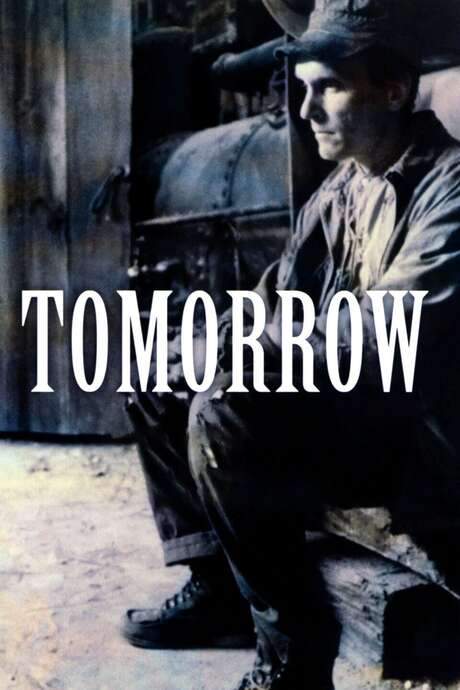
Tomorrow (1972) movie poster

Characters & Themes

Tomorrow (1972) Characters, Setting & Themes Explained

Release, runtime and language
1972 · 103 mins · English
JustWatch #5,972 89
Directed by
Joseph Anthony
Starring
Robert Duvall, Peter Masterson, Sudie Bond, Johnny Mask, James Franks, Olga Bellin

A lonely farmer takes in a pregnant woman and looks after her. After she gives birth, tragedy strikes.

On this page (8)
  1. 1 Where to watch
  2. 2 Characters explained (9)
  3. 3 Where & when it takes place
  4. 4 Themes & meaning (3)
  5. 5 Character & meaning questions
  6. 6 Movie threads
  7. 7 Movies like Tomorrow
  8. 8 Every angle

Where to watch

Where to Watch Tomorrow (1972)

Where can you watch Tomorrow? Stream, rent or buy it in the US, including on Kanopy, Plex and Tubi TV: current JustWatch availability with up-to-date prices.

Streaming availability powered by JustWatch

9 main characters · contains spoilers

Tomorrow Characters Explained: Who Is Who

The main characters of Tomorrow (1972), heroes and villains: what drives them, how they change over the course of the story and what each of them reveals about the film's bigger ideas.

  • Jackson Fentry (Robert Duvall)

    A lonely Mississippi farmer who cares for a destitute drifter and later raises her son. His quiet, steadfast morality drives him to endure betrayal and social contempt, revealing a core of stubborn resilience. As the lone jury vote is explained, the audience sees a man who refuses to let a life pass unseen.

    • 🌾 Farmer
    • 🛡️ Protector
    • 🧭 Moral complexity
  • Sarah Eubanks (Olga Bellin)

    A pregnant drifter taken in by Fentry, whose intense bond with him frames the film’s emotional core. Her life is marked by hardship and a fragile hope, whose tragic end underscores the human cost of the town’s judgments.

    • 🤰 Pregnant mother
    • 🕊️ Vulnerable
    • 💔 Tragic fate
  • Lawyer Douglas (Peter Masterson)

    The defense attorney who narrates the trial, guiding the audience toward questions of motive and meaning behind the apparent crime. He frames Fentry’s guilt or innocence as a moral issue about value and humanity rather than mere legality.

    • ⚖️ Lawyer
    • 🗣️ Narrator
    • 🧭 Moral questioning
  • Thorpe Brother (Jack Simley)

    One of the Thorpe brothers who forcibly took the boy from Fentry, representing the oppressive forces that push marginalized people out of kin and community. His actions contribute to the tragedy at the heart of the story.

    • 🏷️ Villain
    • 🪶 Oppressive force
    • 🕳️ Family conflict
  • Thorpe Brother (Billy Summerford)

    Another of the Thorpe brothers involved in stripping away Fentry’s family ties, embodying the community’s harsh judgment and the cycles of poverty and cruelty.

    • 🏷️ Villain
    • 🧱 Oppressive force
    • 🕰️ Retaliation
  • Thorpe Brother (Thomas C. Coggin)

    The third Thorpe brother who contributes to the social devastation that leads to the murder at the story’s center.

    • 🏷️ Villain
    • 🧱 Oppressive force
    • 🪓 Family conflict
  • Judge (Ken Lindley)

    The judge overseeing the trial, whose decisions and demeanor reflect the prejudice and formality of the courtroom. He serves as a symbol of authority and the weight of public opinion.

    • ⚖️ Authority
    • 🏛️ Courtroom
    • 🧭 Judgment
  • Jury Foreman (R.M. Weaver)

    A juror who represents the pressure of collective responsibility and the possibility of moral clarity amid a crowd. His demeanor and vote highlight the film’s meditation on who deserves mercy.

    • 🧑‍⚖️ Jury
    • 🧭 Responsibility
    • 🕯️ Morality
  • Papa Fentry (William Hawley)

    Fentry’s father figure whose presence frames the sense of family duty and the continuity of values across generations. His relationship with the protagonist anchors the sense of legacy.

    • 👨‍👦 Family
    • 🪶 Legacy
    • 🪵 Rural roots

Last updated: February 19, 2026 at 09:16

Was this helpful?

Setting

Where and When Does Tomorrow Take Place?

The setting of Tomorrow (1972): the year and time period, the places and locations, and how they shape the characters, the mood and the tension of the story.

Time period

20 years

The narrative moves between a past era and a present courtroom scene, spanning two decades. Flashbacks reveal how Fentry sheltered Sarah and raised her son, while the present trial exposes how memory and guilt influence a lone jury vote. The timeline emphasizes endurance across years rather than a specific historical year.

Location

Rural Mississippi, United States

Set in a remote farming area of Mississippi, the film depicts a small, close-knit community where the land and poverty shape people’s choices. The countryside is austere and the courthouse becomes the focal point of public life. Isolation and rough livelihoods drive the characters’ tensions and loyalties.

  • 🏞️ Rural setting
  • 🏚️ Isolated community
  • 🌾 Agricultural life

Last updated: February 19, 2026 at 09:16

Was this helpful?

3 major themes

Tomorrow Meaning: Themes & Message Explained

What is Tomorrow (1972) really about? The emotional, social and philosophical themes the film keeps returning to, its symbolism and the message beneath the surface.

  • Justice

    The story probes how law and moral judgment collide when society labels a life as insignificant. The lone dissenting vote becomes a window into deeper truths about worth, memory, and responsibility. The defense attorney’s narration reframes a murder as a test of integrity rather than a simple crime.

  • Rural life

    The Mississippi countryside frames the characters’ interactions, highlighting poverty, stoicism, and hard work. Community reputation matters, and small-town dynamics influence who is perceived as guilty or virtuous. The setting underscores the fragility and resilience of everyday people.

  • Memory and endurance

    Memories of care, loss, and promises kept haunt Fentry across decades. The film treats endurance as a quiet, dignified act, visible in a man who bears others’ burdens while refusing to forget. Time deepens the sense that some lives are significant long after public notice fades.

Last updated: February 19, 2026 at 09:16

Was this helpful?

Character & theme questions

Tomorrow Characters & Meaning: Your Questions Answered

The questions people ask about Tomorrow (1972): who the characters really are, their relationships, what the symbols mean, where it takes place and what the movie is really about. Each answer contains spoilers.

Q1

What is the setting of the movie?

The film takes place in rural Mississippi, in a remote farming area where a small, close-knit community lives. The countryside is austere, defined by poverty and the struggle of agricultural life. The local courthouse serves as the focal point of public life, reflecting how community reputation and social judgment dominate this isolated world.

  • rural mississippi
  • farming community
  • small town setting
  • mississippi countryside
Q2

When does the story take place?

The narrative spans approximately 20 years, moving between a past era and a present-day courtroom scene. Flashbacks reveal how Jackson Fentry sheltered Sarah and raised her son, while the trial in the present exposes how memory and guilt influence the jury's decision. The story emphasizes endurance across decades rather than a specific historical year.

  • 1970s
  • twenty years
  • non-linear timeline
  • courtroom drama
  • flashbacks
Q3

What is the main theme of justice in the film?

The story explores how law and moral judgment collide when society labels a life as insignificant. The lone dissenting vote on the jury becomes a window into deeper truths about worth, memory, and responsibility. The defense attorney's narration reframes what appears to be murder as a test of integrity rather than a simple crime, questioning who deserves mercy and why.

  • justice
  • moral judgment
  • jury
  • worth
  • mercy
  • legal drama
Q4

How does the rural setting shape the story's themes?

The Mississippi countryside frames every character interaction, highlighting poverty, stoicism, and hard work. Community reputation matters greatly in this isolated world, and small-town dynamics influence who is perceived as guilty or virtuous. The setting underscores the fragility and resilience of everyday people struggling against both economic hardship and social prejudice.

  • poverty
  • rural community
  • small town dynamics
  • mississippi
  • stoicism
  • social judgment
Q5

What does memory and endurance mean in the movie?

Memories of care, loss, and promises kept haunt Jackson Fentry across decades. The film treats endurance as a quiet, dignified act, a man who bears others' burdens while refusing to forget those he loved. Time deepens the sense that some lives remain significant long after public notice fades, making the theme of remembrance central to understanding Fentry's character.

  • memory
  • endurance
  • loss
  • promises
  • legacy
  • time
Q6

Who is Jackson Fentry and what drives him?

Jackson Fentry is a lonely Mississippi farmer portrayed by Robert Duvall who takes in a destitute pregnant drifter and later raises her son. His quiet, steadfast morality drives him to endure betrayal and social contempt without wavering. He represents the film's meditation on hidden strength, someone who refuses to let a life pass unseen and maintains his dignity despite overwhelming hardship.

  • jackson fentry
  • robert Duvall
  • farmer
  • moral character
  • resilience
Q7

Who is Sarah Eubanks in the story?

Sarah Eubanks is the pregnant drifter whom Fentry takes in, played by Olga Bellin. Her intense bond with Fentry frames the film's emotional core. Her life is marked by hardship and fragile hope, and her tragic end underscores the human cost of the town's harsh judgments and social neglect.

  • sarah eubanks
  • pregnant drifter
  • tragic character
  • olga bellin
Q8

Who are the Thorpe brothers in the film?

The Thorpe brothers are a group of men who forcibly took the boy from Fentry, representing the oppressive forces that push marginalized people out of their kin and community. Their actions contribute directly to the tragedy at the story's center, embodying the community's harsh judgment and the cycles of poverty and cruelty that trap the film's characters.

  • thorpe brothers
  • antagonists
  • oppression
  • community cruelty
Q9

What is the significance of the courtroom in the narrative?

The courtroom serves as the film's framing device, with the present-day trial providing structure to the non-linear story. The defense attorney narrates the proceedings, guiding the audience toward questions of motive and meaning behind the apparent crime. This setup allows the film to examine guilt, innocence, and moral judgment through the lens of a jury deliberation.

  • courtroom
  • trial
  • jury
  • legal framing
  • non-linear story
Q10

How does the film balance tragedy and hope?

The ending feels bittersweet, while the trial's outcome and the boy's death are sad, the narrative concludes with a philosophical observation about the hidden strength and endurance of 'the lowly.' The film offers a glimmer of meaning and respect for Fentry's character amidst tragedy, suggesting that quiet dignity and moral steadfastness have value even when society fails to recognize it.

  • bittersweet ending
  • hope
  • tragedy
  • dignity
  • moral strength
Q11

What role does the defense attorney play in the story?

Lawyer Douglas, played by Peter Masterson, serves as the defense attorney who narrates the trial. He guides the audience toward questions of motive and meaning behind what appears to be a crime. Rather than presenting the case as mere legality, he frames Fentry's guilt or innocence as a moral issue about value and humanity, adding philosophical depth to the courtroom proceedings.

  • defense attorney
  • narrator
  • peter masterson
  • moral philosophy
Q12

How does the small-town community influence the characters?

In this isolated Mississippi community, reputation determines worth in the eyes of neighbors. The close-knit nature of the town means that outsiders like Sarah are judged harshly, and those who defy social norms, such as Fentry sheltering a pregnant drifter, face contempt. These dynamics shape the tragic events and the moral questions the film asks about collective responsibility and mercy.

  • small town
  • community judgment
  • social norms
  • isolation
  • reputation

Movie threads

More Movies Like Tomorrow, by Mood & Story

Curated lists built around what makes Tomorrow tick: the same mood, the same kind of story or the same emotional payoff. Each list explains why these movies belong together.

Movies about solitude and duty like Tomorrow

Stories about isolated characters finding purpose in caring for others. Find more films like Tomorrow that explore themes of profound loneliness and unwavering duty. If you were moved by the quiet commitment of an isolated guardian, these similar dramas capture the same melancholic, character-driven vibe.

  • lonely
  • steadfast
  • melancholic
  • reflective
  • tragic
  • grieving
  • Tone: melancholic, reflective
  • Pacing: slow, deliberate
Why these movies?

The story pattern: These stories often begin with a character living in isolation, whose life is interrupted by the arrival of someone vulnerable. The narrative arc follows the development of a deep, often unspoken bond built on duty and care, typically culminating in a moment of tragic loss or bittersweet reflection that underscores the fragility of their connection.

Why they belong together: Movies are grouped here for their shared focus on the emotional weight of responsibility shouldered by solitary individuals. They share a melancholic tone, slow pacing for introspection, and a heavy emotional weight, creating a cohesive experience about the dignity found in unnoticed lives.

Movies with bittersweet echoes of loss like Tomorrow

Melancholic narratives where past tragedies shape a character's present. Discover more melancholic dramas like Tomorrow that use flashbacks to explore tragedy and memory. These films share a slow-burning pace, complex emotional layers, and a bittersweet feeling, perfect if you appreciated the reflective tone.

  • melancholic
  • tragic
  • grieving
  • reflective
  • somber
  • memory
  • Tone: melancholic, bittersweet
  • Pacing: slow, reflective
Why these movies?

The story pattern: The narrative is often structured non-linearly, using flashbacks or a framing device to gradually reveal a past tragedy. The plot is less about action and more about the emotional fallout and philosophical reflection, leading to an ending that acknowledges the pain of loss while finding a glimmer of enduring meaning.

Why they belong together: These films are united by their complex, reflective structure and their dominant mood of melancholic sadness. They share a slow pacing that allows for deep introspection, a bittersweet ending feel, and a heavy emotional weight centered on themes of grief and memory.

If you liked this

Movies Like Tomorrow

Similar movies to Tomorrow: the same genre, themes or kind of story. Each one comes with its own plot summary, timeline and ending explained.

Browse all movie summaries

Every angle

Tomorrow (1972) Explained: Plot, Timeline & Characters

Everything about Tomorrow in one place: what happens in the plot summary, the timeline in chronological order, the characters and meaning and a spoiler-free summary. What's After the Movie adds the cast, box office and post-credit scenes.

Coming soon on iOS and Android

The Plot Explained Movie Summary App

Plot summaries, endings explained and timelines on your phone. Catch up on any movie in minutes, save your favorites and never miss a twist again.

Be the first to know when we launch. Your email stays private, always.

Learn more about the app