


Plot Explained Spoilers guaranteed!
Plot Explained

Browse by genre

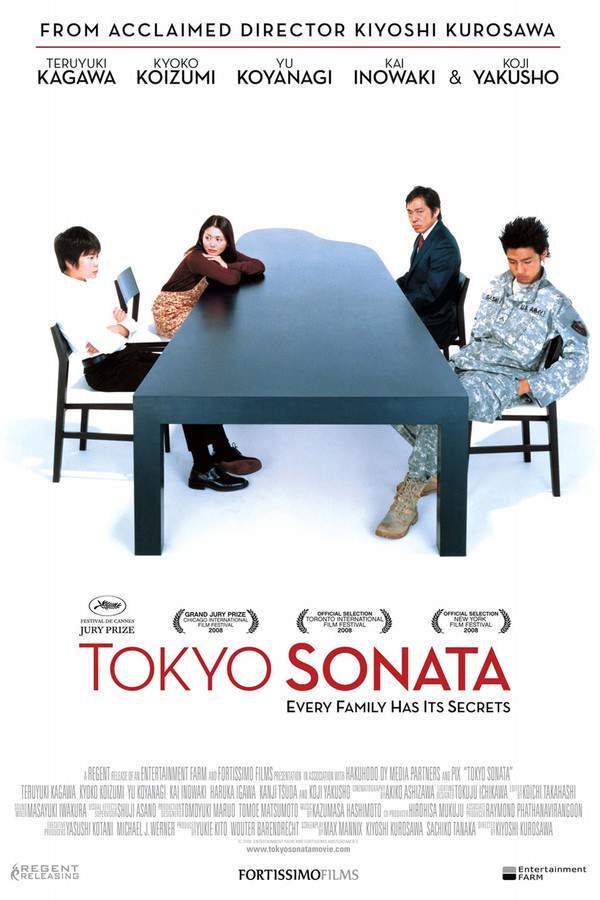
Tokyo Sonata (2009) movie poster

Timeline

Tokyo Sonata (2009) Timeline Explained – Every Event in Order

Release, runtime and language
2009 · 120 min · Japanese
Directed by
Kiyoshi Kurosawa
Starring
Kyôko Koizumi, Teruyuki Kagawa, Yû Koyanagi

A Japanese family struggles to maintain appearances as personal hardships emerge. The father unexpectedly loses his job, while the eldest son is preoccupied with college, creating distance between them. The youngest son harbors a secret passion for playing the piano, further complicating family dynamics. As the mother grapples with these challenges, the carefully constructed facade of their lives begins to crumble, revealing hidden tensions and threatening their relationships.

On this page (7)
  1. 1 Where to watch
  2. 2 Events in order (14)
  3. 3 Timeline questions answered
  4. 4 Movie threads
  5. 5 Movies like Tokyo Sonata
  6. 6 Categories
  7. 7 Every angle

Where to watch

Where to Watch Tokyo Sonata (2009)

Where can you watch Tokyo Sonata? Stream, rent or buy it in the US, including on Tubi TV and Amazon Video: current JustWatch availability with up-to-date prices.

Streaming availability powered by JustWatch

14 events in order · contains spoilers

Tokyo Sonata Timeline: Events in Chronological Order

Every key event of Tokyo Sonata (2009) in order, scene by scene, with when and where it takes place. Use it to untangle flashbacks, time jumps and parallel storylines, to refresh your memory before the sequel or to find the exact scene you are thinking of.

  1. Ryūhei Loses His Job

    Ryūhei, the head of the Sasaki family, loses his stable office job due to his company's decision to outsource labor to China. This unexpected change plunges him into a state of desperation as he struggles to handle the financial burdens and emotional turmoil within his family.

  2. Reconnecting with Kurosu

    In his quest for employment, Ryūhei reconnects with an old classmate, Kurosu, who has also been laid off. They share their frustrations and fears about their futures, both unaware of the tragic consequences that will soon unfold due to their hidden struggles.

  3. Kurosu's Tragic End

    Tragedy strikes when Ryūhei learns that Kurosu and his wife have taken their own lives. This news deepens Ryūhei's despair and serves as a stark reminder of the dire mental state that can accompany job loss and desperation.

  4. Takashi Enlists

    In a bid to assert his independence and contribute financially, Takashi decides to enlist in the United States military. This decision is met with anger from Ryūhei and sadness from Megumi, creating tension within the family regarding the future.

  5. Kenji's Secret Piano Lessons

    Kenji secretly begins taking piano lessons from Miss Kaneko, despite his father's disapproval. Using his lunch money for the lessons, he becomes increasingly passionate about music, finding solace away from his troubled home life.

  6. Ryūhei's Anger Towards Kenji

    When Ryūhei discovers Kenji's clandestine piano lessons, his anger boils over, resulting in an abusive outburst. This leads to Kenji suffering a minor concussion after being pushed down the stairs, highlighting the escalating tensions within the family.

  7. Megumi as a Hostage

    In a surprising turn of events, Megumi becomes a hostage to a burglar in her own home. She is forced to drive him away, yet she faces a moral dilemma when she unexpectedly encounters a distraught Ryūhei during their escape.

  8. Connection with the Burglar

    As they journey together, Megumi and the burglar slowly develop a connection, finding comfort in one another amid the chaos. Despite the initial dangers and tension, they share a sense of companionship that neither of them expected.

  9. Kenji's Brush with the Law

    Kenji tries to help a friend escaping an abusive situation but ends up getting caught by the police. Spending a night in an adult cell, he experiences a harsh reality that challenges his perceptions of adulthood and responsibility.

  10. Night by the Sea

    Megumi and the burglar find themselves spending a night in a shed by the sea, seeking refuge from their struggles. They bond over their shared feelings of hopelessness, yet Megumi finds a flicker of hope in a distant light that the burglar cannot see.

    Where
    Shed by the Sea
  11. A Stash of Cash

    While working as a janitor, Ryūhei finds a stash of cash, but his luck takes a downturn when he is struck by a speeding car. Miraculously waking up the next day, he chooses to abandon the money, reflecting on his moral priorities.

  12. Family Reunion

    Eventually, the Sasaki family reunites at home, sharing a mundane meal that starkly contrasts their individual journeys. Their silent struggles remain unacknowledged, illustrating the emotional distance that still divides them.

  13. Adjusting to New Struggles

    Four months later, the family begins to adjust to a new normal. Ryūhei continues his janitorial job, while Takashi chooses to stay stationed in the Middle East, highlighting their continued disconnect amid ongoing challenges.

    When
    Four months later
  14. Kenji's Performance

    The film culminates with Kenji performing Claude Debussy's 'Clair de Lune' at an audition. His flawless performance moves his parents to tears, serving as a poignant reminder of their family's potential for reconnection and shared joy.

Last updated: November 16, 2024 at 15:30

Was this helpful?

Timeline questions answered

Tokyo Sonata Timeline Explained: Your Questions Answered

When does it happen, and why in that order? The questions people ask about the chronology of Tokyo Sonata (2009): time jumps, flashbacks, cause and effect between scenes and the correct order of events, each answered with spoilers.

Q1

Why does Ryūhei hide his unemployment from his family?

Ryūhei hides his job loss because he fears losing his role as the family provider and patriarch. In Japanese society, a man's worth is closely tied to his employment, so admitting failure would shatter the family's perception of him. He maintains the facade by leaving the house each day pretending to go to work, while actually searching for jobs or meeting with other unemployed men like Kurosu.

Foreshadowing: Early scenes show Ryūhei meticulously preparing for work each morning, establishing his need to maintain appearances.

  • unemployment
  • job loss
  • family pressure
  • masculinity
  • Japan
Q2

Why does Kurosu and his wife take their own lives?

Kurosu succumbs to despair after prolonged unemployment and the inability to provide for his family. The film suggests his situation mirrors Ryūhei's, hidden financial ruin, mounting shame, and feeling trapped with no way out. When Ryūhei discovers the news, it reinforces his own fears and creates urgency for him to find work before suffering the same fate.

Foreshadowing: Ryūhei and Kurosu bonding over their shared unemployment foreshadows the tragic outcome.

  • suicide
  • unemployment
  • despair
  • mental health
Q3

Why does Takashi enlist in the United States military?

Takashi enlists to assert his independence and escape the dysfunctional family environment. Feeling neglected and wanting to contribute financially, he sees military service as a way to gain purpose and leave behind his unresolved issues with his father. His choice angers Ryūhei because it represents another failure, his son rejecting Japanese identity, and saddens Megumi because it means losing another family member.

Foreshadowing: Earlier tension between Takashi and Ryūhei about college and future plans hints at his desire to distance himself.

  • military
  • enlistment
  • Takashi
  • independence
  • family conflict
Q4

Why does Ryūhei react with violence when he discovers Kenji's piano lessons?

Ryūhei's violent reaction stems from multiple factors: his own shattered dreams, his inability to provide for the family, and seeing Kenji pursue something he himself gave up. The piano represents an unaffordable luxury and a reminder of his failures as a provider. His anger also reflects the pressure building from his unemployment and the family's growing secrets, causing him to lash out physically, a moment that horrifies him as much as it hurts Kenji.

Foreshadowing: Earlier scenes show Ryūhei dismissing Kenji's interests and insisting on practical paths.

  • violence
  • piano
  • Kenji
  • Ryūhei
  • family conflict
  • dreams
Q5

Why does Megumi go back to the burglar after seeing her husband?

Megumi returns to the burglar because seeing Ryūhei as a degraded janitor shatters her remaining illusions about their marriage. She realizes their family has already fallen apart emotionally, and the burglar, despite being a criminal, offers her genuine human connection and escape from her suffocating life. The encounter forces her to choose between her broken marriage and a chaotic but authentic alternative.

Foreshadowing: Megumi's growing isolation and emotional distance from Ryūhei throughout the film set up this moment.

  • Megumi
  • burglar
  • kidnapping
  • escape
  • marriage crisis
Q6

Why does the burglar drive the car into the ocean?

The burglar drives into the ocean because he has lost all hope. When Megumi sees a distant light and perceives hope, he cannot see it, representing his complete emotional numbness. The ocean becomes his way of ending his aimless journey, though Megumi escapes and returns home. His act symbolizes the despair that accompanies those who cannot adapt to changed circumstances.

Foreshadowing: Their conversation in the shed by the sea reveals his deepening hopelessness.

  • burglar
  • suicide
  • ocean
  • despair
  • escape
Q7

Why does Ryūhei abandon the cash he found at work?

Ryūhei abandons the money because after being hit by a car and surviving, he gains perspective on what truly matters. The near-death experience makes him realize that taking the money would make him no better than a thief, something he has always despised. He chooses moral integrity over financial security, a small but significant moment of personal growth despite his circumstances.

Foreshadowing: His earlier desperation for employment and bond with Kurosu show his internal struggle between survival and morality.

  • money
  • janitor
  • Ryūhei
  • moral choice
  • redemption
Q8

Why does Kenji end up in police custody?

Kenji gets arrested when he tries to help a classmate flee from an abusive father. He becomes collateral damage in someone else's crisis, spending a night in an adult cell. This experience exposes him to the harsh realities of adulthood and adds to his emotional burden, though he is released the next day, showing how children in this family are forced to confront adult problems prematurely.

Foreshadowing: Kenji's growing concern for others and sense of responsibility have been building throughout the film.

  • Kenji
  • police
  • arrest
  • abuse
  • responsibility
Q9

Where is Takashi at the end of the film?

At the end, Takashi remains stationed in the Middle East despite Japan's withdrawal orders, choosing to stay. This signifies his continued rejection of his family and his search for identity away from home. His absence from the final scene underscores the family's permanent fragmentation, even during Kenji's triumph, the family remains incomplete.

Foreshadowing: His enlistment and the tension with his father established early on explain his choice to remain abroad.

  • Takashi
  • military
  • Middle East
  • ending
  • family
Q10

Why does Kenji's piano performance move his parents to tears?

Kenji's flawless performance of Debussy's 'Clair de Lune' moves his parents because it represents something they nearly destroyed. Ryūhei almost beat the music out of Kenji, and the family's dysfunction nearly crushed his talent. Now, witnessing his achievement, they see hope for reconciliation and pride in their son, emotions they have suppressed throughout the film. The music becomes a bridge across their emotional divide.

Foreshadowing: Miss Kaneko's encouragement of Kenji's talent and his secret practicing build toward this emotional payoff.

  • Kenji
  • piano
  • Clair de Lune
  • performance
  • tears
  • family
Q11

Why does the family share a meal without acknowledging their experiences?

The family pretends nothing happened because acknowledging their individual crises would require confronting the family's collapse. Each member carries secrets and shame, Ryūhei's job loss, Megumi's kidnapping, Kenji's arrest, and discussing them would force them to admit how far they've drifted. The silent meal illustrates their emotional disconnection and the Japanese cultural tendency to maintain surface harmony despite inner turmoil.

Foreshadowing: Throughout the film, characters hide truths from each other, establishing this pattern of avoidance.

  • family
  • silence
  • meal
  • denial
  • emotional distance
Q12

What does Miss Kaneko mean to Kenji?

Miss Kaneko represents the nurturing guidance Kenji lacks at home. She recognizes his talent, encourages his passion, and provides the emotional support his emotionally distant parents cannot. Their bond shows Kenji what is possible when someone believes in him, making her instrumental in his musical development and serving as a contrast to his father's rejection of his dreams.

Foreshadowing: Kenji's early scenes practicing on a damaged keyboard show his desperate need for someone to believe in him.

  • Miss Kaneko
  • Kenji
  • piano teacher
  • support
  • mentorship

Movie threads

More Movies Like Tokyo Sonata, by Mood & Story

Curated lists built around what makes Tokyo Sonata tick: the same mood, the same kind of story or the same emotional payoff. Each list explains why these movies belong together.

Movies about family dysfunction like Tokyo Sonata

Stories where a family's carefully constructed life slowly falls apart. If you appreciated the domestic tension and emotional unraveling in Tokyo Sonata, this thread collects similar drama films. These movies explore family secrets, generational conflict, and the struggle to maintain appearances, offering stories for viewers who like emotionally heavy, character-driven narratives.

  • somber
  • oppressive
  • lonely
  • desperate
  • reflective
  • claustrophobic
  • Tone: melancholic, somber
  • Pacing: slow, deliberate
Why these movies?

The story pattern: These narratives typically follow multiple family members, each grappling with their own private crisis—often related to failure, secret ambitions, or emotional isolation. The plot unfolds through slow-burn revelations that expose the cracks in their shared life, leading to a climax where the family structure is fundamentally challenged, if not permanently altered.

Why they belong together: Movies are grouped here because they share a core focus on the dynamics of a family unit under stress. They possess a melancholic tone, heavy emotional weight, and a deliberate pacing that allows the audience to feel the gradual accumulation of domestic pressure and alienation.


Bittersweet dramas with heavy themes like Tokyo Sonata

Emotionally heavy journeys that find fragile moments of transcendence. For viewers who liked the blend of heavy emotion and transcendent beauty in Tokyo Sonata, this thread finds similar movies. These films balance somber themes like economic hardship or family strife with moments of hope, creating a bittersweet and deeply reflective viewing experience for fans of slow-paced, meaningful drama.

  • somber
  • desperate
  • reflective
  • tender
  • hopeful
  • cathartic
  • Tone: melancholic, bittersweet
  • Pacing: slow, reflective
Why these movies?

The story pattern: The narrative pattern involves characters enduring significant emotional or physical hardship, often feeling isolated or desperate. The journey is characterized by a slow accumulation of weight, but it is punctuated by key scenes of unexpected beauty, artistry, or human connection that provide a glimmer of light, leading to an ending that acknowledges the pain while affirming a fragile, bittersweet hope.

Why they belong together: These films are grouped by their unique emotional blend: a foundation of heavy, realistic struggle topped with a climax or resolution that offers a moment of transcendent beauty or connection. They share a melancholic tone, slow pacing, and a bittersweet ending feel that leaves the viewer emotionally moved but not completely devastated.

If you liked this

Movies Like Tokyo Sonata

Similar movies to Tokyo Sonata: the same genre, themes or kind of story. Each one comes with its own plot summary, timeline and ending explained.

Browse all movie summaries

Categories

Movie Lists Featuring Tokyo Sonata

Tokyo Sonata appears in these hand-built movie categories. Each one groups movies by a specific mood, theme or story type, with their plot summaries and endings explained.

View all movie categories

Every angle

Tokyo Sonata (2009) Explained: Plot, Timeline & Characters

Everything about Tokyo Sonata in one place: what happens in the plot summary, the timeline in chronological order, the characters and meaning and a spoiler-free summary. What's After the Movie adds the cast, box office and post-credit scenes.

Coming soon on iOS and Android

The Plot Explained Movie Summary App

Plot summaries, endings explained and timelines on your phone. Catch up on any movie in minutes, save your favorites and never miss a twist again.

Be the first to know when we launch. Your email stays private, always.

Learn more about the app