Plot Explained Spoilers guaranteed!
Plot Explained

Browse by genre

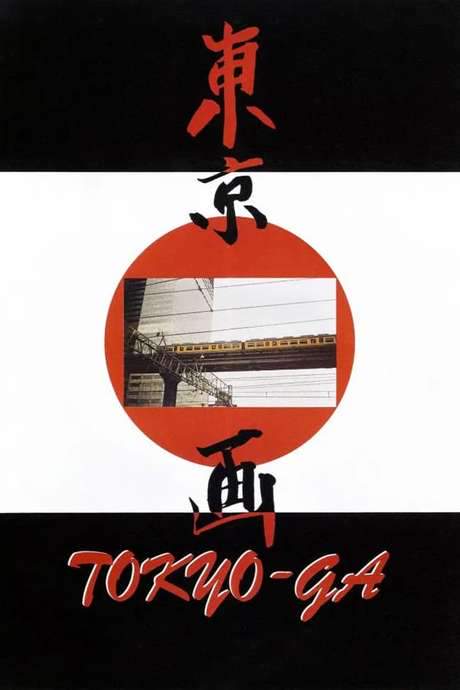
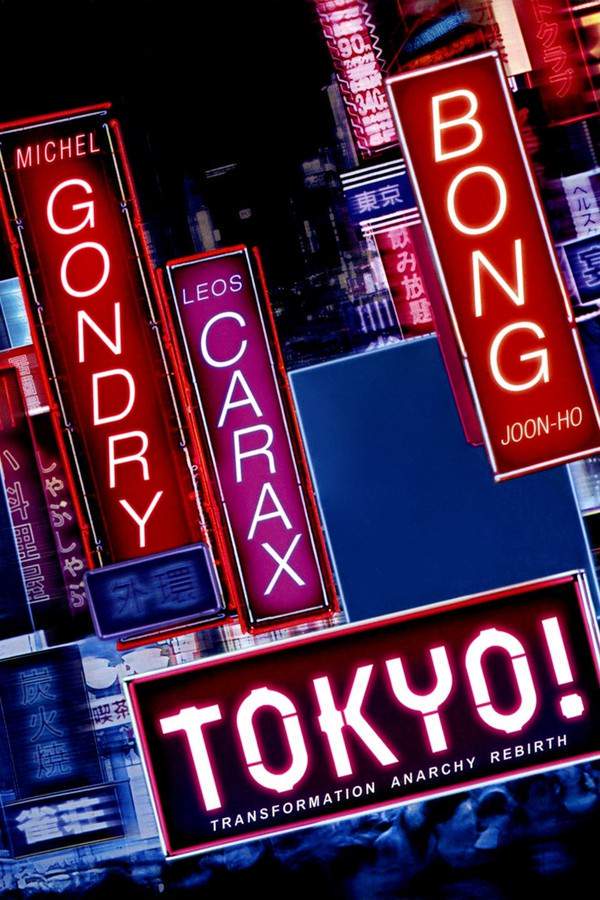
Tokyo! (2009) movie poster

Plot Summary

Tokyo! (2009) Plot Summary Explained

Release, runtime and language
2009 · 112 min · French
Directed by
Joon-ho Bong, Leos Carax

This cinematic tribute to Tokyo presents a vibrant portrait of the city through the perspectives of three directors. The film interweaves various stories, revealing the everyday lives and unexpected moments of its diverse population. From ordinary routines to surreal encounters, the movie captures the intricate connections between people and the ever-changing landscape of this dynamic metropolis, showcasing its unique spirit and defying conventional expectations.

On this page (6)
  1. 1 Where to watch
  2. 2 What happens: full plot
  3. 3 Plot questions answered
  4. 4 Movie threads
  5. 5 Movies like Tokyo!
  6. 6 Every angle

Where to watch

Where to Watch Tokyo! (2009)

Where can you watch Tokyo!? Stream, rent or buy it in the US, including on Kanopy, Amazon MX Player and Amazon Prime Video Free: current JustWatch availability with up-to-date prices.

Streaming availability powered by JustWatch

Full plot summary · contains spoilers

What Happens in Tokyo!: Full Plot Summary

The whole story of Tokyo! (2009) explained, from the opening scene to the final frame: every key event, every twist and what it all adds up to. Read it as a quick recap before the sequel, to check a scene you missed, or to finally understand what really happened.

Behind the lens of Michel Gondry, there's a deep exploration of love and resilience in his adaptation of Gabrielle Bell's poignant comic, Cecil and Jordan in New York. The narrative unfolds around Hiroko and Akira, a young couple from the provinces trying to survive in the bustling life of Tokyo, grappling with tight finances and unstable living conditions. Their bond appears rock-solid, a testament to their unwavering support for one another, but Akira, an aspiring filmmaker who wraps gifts at a department store, faces mounting pressure and frustration as he waits for his debut film to catch a break.

As they adapt to the challenges of temporary housing, they find solace in the cramped studio apartment of Hiroko's friend, Akemi. But the couple's luck runs out when Akemi's boyfriend grows tired of their presence, pushing Hiroko to seek out new living arrangements. Unfortunately, her search is met with dishearteningly high rents and undesirable accommodations. Meanwhile, Akira’s film screening garners mixed reviews, and a particularly honest comment from an audience member resonates deeply with Hiroko, who learns that many creative souls often grapple with feelings of being invisible or undervalued.

As Hiroko confronts the stark realities of her life in the bustling city, doubts about her role in the relationship begin to swirl in her mind. One morning, she wakes to a shocking discovery: a small hole in her chest illuminated by sunlight. In horror, she realizes that the hole, now hand-sized, has a wooden pole running through it.

Days go by, and her transformation becomes increasingly alarming. The hole expands, leading to her feet becoming wooden poles, until she finds herself reduced to an inanimate chair, save for her jacket draped on the back. The world around her has become oblivious to her plight, except for one man who attempts to take her home, only for Hiroko to return to her human form and flee, naked, to a nearby bus station.

In an attempt to reclaim her humanity, Hiroko chooses to sit as a chair on the street. A compassionate musician rescues her, inviting her into his home where he shows her kindness. In the quiet of the apartment, she begins composing a farewell letter to Akira, wishing him the best as he chases his dreams in filmmaking.

This heartfelt film intricately weaves themes of identity, transformation, and the delicate threads of human relationships, as Gondry’s direction brings to life a touching narrative about seeking meaning in a world that often feels disorienting.

Meanwhile, in the unflinching vision of Léos Carax, Merde rises from the depths of the Tokyo sewers, portrayed by Denis Lavant. This grotesque figure wreaks havoc on the unsuspecting public, instilling terror with his audacious thefts and heinous acts, triggering an uproar across the city. In the wake of this chaos, French magistrate Maître Voland, played by Jean-François Balmer, arrives to defend Merde in a highly publicized trial that spirals into a spectacle of surreal confusion. Despite being convicted and sentenced to death, Merde manages to evade his executioners, slipping back into the shadows of the sewer.

Contrasting this horror, Bong Joon-ho’s Shaking Tokyo presents a haunting narrative through the eyes of Teruyuki Kagawa, a hikikimori who has isolated himself in his apartment for a decade. His only lifeline to the outside world is a telephone, which connects him to delivery services, leading to a mountain of pizza boxes piling up in his cramped living space. A turning point occurs when a new delivery girl, Yū Aoi, unknowingly enchants him with her warmth. When an earthquake hits and she faints in his presence, his previously stagnant world shifts, igniting a poignant infatuation. Eventually, he learns that she too shares his reclusive tendencies, prompting him to brave the outside world in search of her, only to be met with the tremors of another quake, shedding light on the vulnerability and fleeting nature of human connections.

Last updated: November 22, 2024 at 18:53

Was this helpful?

Plot questions answered

Tokyo! Plot Explained: Your Questions Answered

The questions people ask most about Tokyo! (2009): what happens in the confusing scenes, why the characters do what they do, the twists, hidden details and what the ending means. Each answer contains spoilers.

Q1

Why does Hiroko transform into a chair in the movie?

Hiroko's transformation into a chair is triggered by her growing feelings of invisibility and worthlessness in her relationship with Akira and in Tokyo's demanding urban environment. After hearing a comment at Akira's film screening about how creative people often feel invisible, Hiroko's internal struggle manifests physically, she literally becomes furniture, symbolizing how she perceives herself as unvalued and overlooked. This surreal transformation represents her loss of identity and humanity in a city that demands constant productivity and visibility.

Foreshadowing: Earlier in the film, Hiroko is deeply affected by a comment at Akira's screening about artists feeling invisible, foreshadowing her literal disappearance.

  • hiroko transformation
  • chair
  • symbolism
  • identity loss
  • tokyo
Q2

What triggers Hiroko's transformation in Tokyo?

Hiroko's transformation begins after she wakes up to discover a small hole in her chest with a wooden pole running through it. This physical manifestation starts small but progressively worsens over several days, spreading to her feet until she completely becomes an inanimate chair. The transformation is directly linked to her emotional state, she has been grappling with feelings of worthlessness and doubt about her role in Akira's life, making her feel like she is losing her human form.

  • hiroko transformation cause
  • wooden pole
  • hole in chest
  • surreal
Q3

Why does the man try to take Hiroko home when she's a chair?

When Hiroko becomes a chair, most people in Tokyo walk past her without noticing her humanity, she has become invisible in plain sight, fitting the film's theme about feeling unseen in urban environments. However, one man recognizes there is something more to the chair and takes her home. Interestingly, when he brings her inside, Hiroko temporarily returns to her human form, suggesting her transformation may be connected to being truly seen or acknowledged by another person.

  • hiroko chair
  • man takes her home
  • return to human form
Q4

Why does Hiroko write a farewell letter to Akira?

After being rescued by a compassionate musician who takes her in, Hiroko composes a farewell letter to Akira because she realizes she can no longer be the partner he needs. Her transformation into an inanimate object has fundamentally changed her, she cannot return to her previous life. The letter is her way of releasing Akira from their relationship so he can pursue his filmmaking dreams without the burden of her condition. It represents her final act of love: selfless sacrifice rather than holding him back.

  • farewell letter
  • hiroko akira
  • love sacrifice
  • musician
Q5

What does Hiroko's transformation into a chair symbolize?

Hiroko becoming a chair symbolizes the complete loss of identity and humanity that can happen when someone feels undervalued and invisible, especially in demanding urban environments like Tokyo. The chair represents her feeling reduced to mere function, just as a chair is only useful furniture, she feels she has become nothing more than someone else's support system without being seen as a person in her own right. Her jacket remaining draped on the chair hints that her essence still exists within the object, suggesting her identity persists even as her physical form has changed.

  • symbolism
  • chair
  • identity
  • worthlessness
  • urban isolation
Q6

Who is Merde in Tokyo and where does he come from?

Merde is a grotesque creature portrayed by Denis Lavant who emerges from the Tokyo sewers. His name literally means "shit" in French, reflecting his filthy origin and chaotic nature. He appears in the city causing violent disruptions, stealing, attacking people, and creating mass panic. Despite his human-like appearance, he seems to exist somewhere between man and monster, rising from the underground to challenge the ordered surface world of Tokyo.

  • merde
  • denis lavant
  • sewers
  • creature
  • chaos
Q7

Why is Merde put on trial in Tokyo?

Merde is arrested and brought to trial because his violent outbursts and criminal acts have caused widespread terror in Tokyo. The trial becomes a major public spectacle, with French magistrate Maître Voland defending him in court. The proceedings descend into surreal confusion, highlighting the absurdity of trying to apply normal judicial logic to such an abnormal creature. Despite being convicted and sentenced to death, the trial itself serves as a commentary on how society attempts to categorize and control what it cannot understand.

  • merde trial
  • maître voland
  • french magistrate
  • court
  • surreal
Q8

Why does Merde escape execution in Tokyo?

Even though Merde is sentenced to death, he manages to evade his executioners by escaping back into the Tokyo sewers, the same underground lair from which he emerged. His ability to slip away unnoticed demonstrates his cunning and connection to the hidden underworld beneath Tokyo's organized surface. This escape reinforces the film's theme about the chaos and unpredictability that exists beneath the facade of urban order.

  • merde escape
  • sewers
  • execution
  • evade
Q9

Why has the hikikomori been isolated for 10 years in Shaking Tokyo?

In Shaking Tokyo, Teruyuki Kagawa's character has lived as a hikikomori, someone who completely withdraws from society, for an entire decade. His extreme isolation is presented as a condition rather than fully explained, reflecting the real social phenomenon of social withdrawal in Japan. His apartment has become a fortress, with deliveries being his only connection to the outside world. The film suggests his isolation stems from an inability to cope with the pressures and anxieties of urban life, making withdrawal feel safer than facing the overwhelming city.

  • hikikomori
  • teruyuki kagawa
  • isolation
  • 10 years
  • social withdrawal
Q10

What triggers the hikikomori to finally leave his apartment?

The hikikomori's transformation begins when a new pizza delivery girl arrives and unknowingly captures his heart with her warmth and kindness. However, it takes an earthquake to push him into action, when she faints during the quake, he musters the courage to go outside to help her. This moment breaks his decade-long isolation. Later, learning that she is also a recluse like himself motivates him to finally venture into the outside world in search of her, confronting his fears after years of hiding.

  • hikikomori leaves apartment
  • delivery girl
  • earthquake
  • yu aoi
  • teruyuki kagawa
Q11

Who is the delivery girl in Shaking Tokyo and why is she important?

The delivery girl in Shaking Tokyo is played by Yū Aoi and serves as the catalyst for the hikikomori's transformation. She represents the first genuine human connection he has experienced in years. Her warm, natural presence during deliveries slowly breaks through his isolated world. Importantly, the hikikomori later discovers she shares his reclusive nature, making her the only person who might understand his lifestyle. This realization compels him to overcome his fears and seek her out, establishing a potential path toward mutual understanding and connection.

  • delivery girl
  • yu aoi
  • hikikomori
  • connection
  • love
Q12

Does the hikikomori find the delivery girl at the end of Shaking Tokyo?

The hikikomori finally ventures outside in search of the delivery girl, braving the overwhelming outside world after years of isolation. However, as he wanders through Tokyo looking for her, another earthquake strikes, the ground shakes beneath him as he searches. This ambiguous ending leaves unclear whether he actually finds her, mirroring the film's overall theme about the vulnerability and fleeting nature of human connections. The earthquake at both the beginning and end of his journey symbolizes how seismic life events can force people to confront their fears.

  • hikikomori finds girl
  • ending
  • earthquake
  • tokyo search
  • ambiguous ending
Q13

How do the three stories in Tokyo! connect thematically?

Though the three segments by Gondry, Carax, and Joon-ho tell separate narratives, they are thematically connected through the film's exploration of urban isolation, identity struggles, and the search for human connection in Tokyo. Each protagonist confronts some form of withdrawal or chaos: Hiroko loses her humanity, Merde represents pure societal disruption, and the hikikomori has withdrawn completely. The anthology structure allows the film to present different facets of loneliness and transformation in the modern city, unified by the theme of people struggling to maintain their humanity amid urban pressures.

  • three stories connection
  • anthology
  • thematic link
  • tokyo
  • isolation

Movie threads

More Movies Like Tokyo!, by Mood & Story

Curated lists built around what makes Tokyo! tick: the same mood, the same kind of story or the same emotional payoff. Each list explains why these movies belong together.

Movies with urban surrealism and alienation like Tokyo!

Stories where the city itself becomes a character of surreal alienation. If you enjoyed the dreamlike exploration of Tokyo in 'Tokyo!', you'll find similar stories here. These movies use surrealism and magical realism to delve into urban alienation, identity crises, and the strange, interconnected lives found in a metropolis. Discover films that capture the quirky, isolating, and melancholic spirit of city life.

  • surreal
  • melancholic
  • quirky
  • isolating
  • dreamlike
  • anxious
  • Tone: whimsical, melancholic
  • Pacing: variable, contemplative
Why these movies?

The story pattern: Narratives often feature ordinary characters confronting extraordinary or absurd situations within a cityscape, blurring the lines between reality and dream. The structure can be episodic or focus on a singular bizarre event, using the urban environment to externalize internal feelings of isolation and the search for identity.

Why they belong together: They are grouped by their shared whimsical yet melancholic tone, their use of surreal visuals to represent psychological states, and their core thematic focus on how vast, anonymous cities can both isolate individuals and create pockets of bizarre, poignant connection.

Interconnected anthology movies with multiple stories like Tokyo!

Films that weave multiple distinct stories into a single thematic tapestry. Fans of the three-director structure of 'Tokyo!' will appreciate this collection of interconnected anthology films. These movies present multiple distinct narratives, often with different tones, that combine to explore a central theme or portray a specific world. Find similar complex stories that piece together a bigger picture from smaller, poignant parts.

  • complex
  • bittersweet
  • contemplative
  • layered
  • varied
  • interconnected
  • Tone: variable, contemplative
  • Pacing: variable, episodic
Why these movies?

The story pattern: The plot follows a non-traditional structure, presenting several self-contained yet thematically linked stories. The narrative pattern relies on juxtaposition, where the shift from one story to another creates a richer understanding of the central subject, such as a city or a human experience, than a single narrative could achieve.

Why they belong together: They share a complex narrative structure that requires active viewing, a variable pacing that shifts with each segment, and an overall ambiguous or mixed ending feel. The cohesion comes from the overarching thematic exploration rather than a linear plot.

If you liked this

Movies Like Tokyo!

Similar movies to Tokyo!: the same genre, themes or kind of story. Each one comes with its own plot summary, timeline and ending explained.

Browse all movie summaries

Every angle

Tokyo! (2009) Explained: Plot, Timeline & Characters

Everything about Tokyo! in one place: what happens in the plot summary, the timeline in chronological order, the characters and meaning and a spoiler-free summary. What's After the Movie adds the cast, box office and post-credit scenes.

Coming soon on iOS and Android

The Plot Explained Movie Summary App

Plot summaries, endings explained and timelines on your phone. Catch up on any movie in minutes, save your favorites and never miss a twist again.

Be the first to know when we launch. Your email stays private, always.

Learn more about the app