Plot Explained Spoilers guaranteed!
Plot Explained

Browse by genre

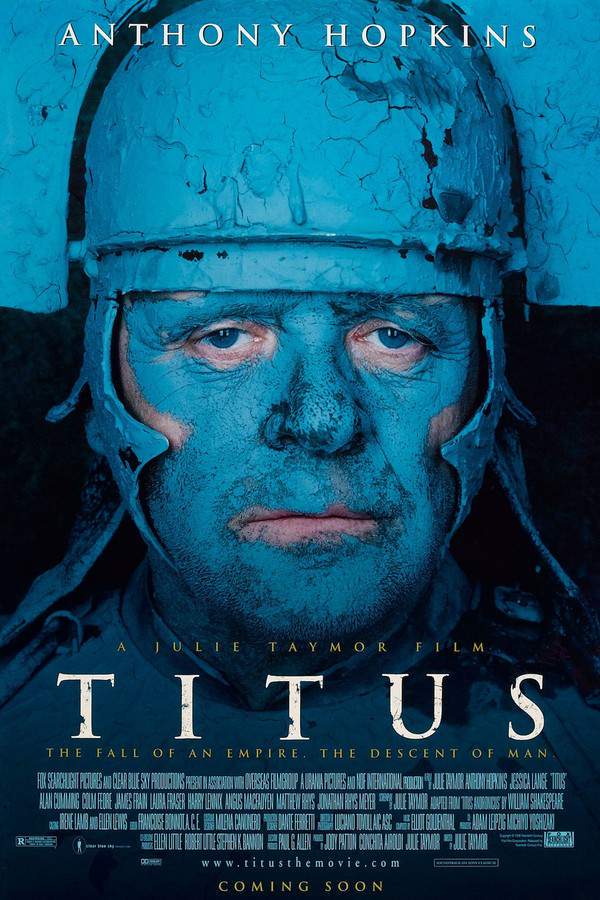
Titus (1999) movie poster

Plot Summary

Titus (1999) Plot Summary Explained

Release, runtime and language
1999 · 162 min · English
Directed by
Julie Taymor
Starring
Anthony Hopkins, Jessica Lange

Following a long and arduous campaign against the Goths, Roman general Titus Andronicus returns home. His actions, including the killing of Queen Tamora's son, ignite a devastating chain of revenge. Tamora, now married to Emperor Saturninus, seeks her own bloody retribution, leading to escalating violence and plunging the city of Rome into a terrifying descent into chaos and horror.

On this page (6)
  1. 1 What happens: full plot
  2. 2 Plot questions answered
  3. 3 The book behind the movie
  4. 4 Movie threads
  5. 5 Movies like Titus
  6. 6 Every angle

Full plot summary · contains spoilers

What Happens in Titus: Full Plot Summary

The whole story of Titus (1999) explained, from the opening scene to the final frame: every key event, every twist and what it all adds up to. Read it as a quick recap before the sequel, to check a scene you missed, or to finally understand what really happened.

In a captivating opening scene, a young boy, played by Osheen Jones, finds himself immersed in a game of war within a nostalgic 1950s-style kitchen. A sudden bomb blast disrupts his play, causing him to seek refuge under the table, only to be whisked away to a grand Roman Amphitheatre, where an unseen audience erupts in cheers. In a dramatic turn, an army reminiscent of the Terracotta Army marches in, led by the esteemed general, Titus Andronicus. The victorious Romans return from battle, bringing with them the captivating Tamora, Queen of the Goths, along with her sons and Aaron the Moor.

In a significant sacrifice, Titus takes the life of Tamora's eldest son, Alarbus, seeking solace for the spirits of his 21 fallen sons. Despite Tamora's heartfelt pleas for her son's life, Titus remains resolute. The political landscape shifts further as the Emperor of Rome passes away, igniting a fierce rivalry between his two sons, Saturninus and Bassianus. The Tribune, Marcus Andronicus, announces Titus as the people's preference for emperor, a title he promptly declines, choosing instead to honor Saturninus with the throne.

Saturninus, eager to elevate the Andronici lineage, claims Lavinia, Titus's daughter, as his bride. However, Lavinia is already promised to Bassianus, leading to a chaotic series of events where Titus mistakes his sons' loyalty. In a moment of rage, he kills his son Mutius while attempting to rescue Lavinia from Bassianus's embrace, solidifying a schism between him and his surviving sons. Subsequently, the ambitious Saturninus dishonors Titus by marrying Tamora, who cunningly plots her revenge against the Andronici clan.

As the tale unfolds, the dark seduction of vengeance takes hold. Tamora's lover, Aaron the Moor, engages her sons, Chiron and Demetrius, in a treacherous scheme to ambush and kill Bassianus, leaving Lavinia to suffer a horrific fate as they silence her with a brutal act of violence. In her desperate plea for justice, Lavinia, unable to speak, turns to the story of Philomela, prompting a serendipitous moment where she writes the names of her attackers in the dirt.

The narrative spirals into chaos as Aaron manipulates Titus's sons, framing them for murder. A heart-wrenching cycle of loss begins as the grieving father navigates treachery and deception. He sacrifices his own hand in a misguided attempt to save his remaining sons, an act that symbolizes his diminishing power and agency. Determined to enact bloody retribution, Titus organizes an insurrection against Rome, aiming to unite with the Goths for an uprising.

In a tragic turn of events, Lavinia gallantly reveals the darkness hiding in the shadows, using her limited means to identify her tormentors. Meanwhile, the specter of vengeance looms large as Tamora, now under the guise of a spirit, manipulates Titus further. The climax reveals a horrifying feast where horrific truths are unveiled. In a shocking moment, Titus insidiously kills Lavinia, igniting a deadly chain reaction that culminates in devastation and death for many key figures.

Ultimately, the aftermath leads to Lucius proclaiming himself the new Emperor, as he recounts the tragic saga of the Andronici to the populace. The tale concludes with a sense of eerie justice, as Lavinia and Titus receive their honors in death, while Aaron meets a bitter end. As young Lucius steps into the light, carrying away the innocent child of Aaron, the sun rises over a broken yet hopeful future.

Last updated: November 03, 2024 at 15:25

Was this helpful?

Plot questions answered

Titus Plot Explained: Your Questions Answered

The questions people ask most about Titus (1999): what happens in the confusing scenes, why the characters do what they do, the twists, hidden details and what the ending means. Each answer contains spoilers.

Q1

Why does Titus kill Tamora's son Alarbus?

Titus kills Alarbus as a sacrificial offering to honor the spirits of his 21 sons who died in the Gothic war. This brutal act is meant to satisfy the spirits of his fallen sons and represents Titus's willingness to commit atrocities in the name of duty and family honor, even when it means murdering a defenseless child in cold blood.

Foreshadowing: Earlier in the play, Titus's obsessive devotion to Roman martial values and his willingness to sacrifice everything for his sons' memory is established.

  • alarbus sacrifice
  • titus sons death
  • gothic war
  • roman sacrifice
Q2

Why does Titus decline the throne when offered the Roman empire?

Titus refuses the throne despite being the people's choice because he remains fiercely loyal to the idea of hereditary succession. He believes Saturninus, as the dead emperor's son, has the rightful claim to rule, and he chooses to honor that traditional hierarchy rather than seize power for himself.

Foreshadowing: Titus's rigid adherence to Roman honor and tradition is established early in the film when he returns from war seeking glory rather than political advancement.

  • titus emperor
  • saturninus
  • roman succession
  • political honor
Q3

Why does Titus kill his own son Mutius?

In a fit of rage and confusion, Titus kills Mutius when he tries to prevent Titus from rescuing Lavinia from Bassianus's embrace. Titus mistakenly believes his sons are betraying the family by supporting Bassianus's claim on Lavinia, when in fact they are trying to honor her existing betrothal. This tragic misunderstanding stems from Titus's volatile emotional state and his inability to see reason amid the chaos.

Foreshadowing: Titus's quickness to violence and his inability to control his temper is hinted at when he immediately resorts to killing Alarbus without hesitation.

  • mutius death
  • titus sons
  • family betrayal
  • lavinia betrothal
Q4

Why does Saturninus choose Tamora over Lavinia as his queen?

Saturninus chooses Tamora because she is a queen and offers political advantages - she brings the Goths as potential allies and represents a powerful marriage alliance. Additionally, Tamora cleverly manipulates Saturninus by playing to his ego and ambitions, while Lavinia's rejected suitors create political complications he wishes to avoid.

Foreshadowing: The political marriage negotiations reveal Saturninus's ambition and tendency to be easily swayed by those who stroke his ego.

  • saturninus
  • tamora marriage
  • political alliance
  • goths rome
Q5

How does Lavinia identify her attackers when she cannot speak?

After being brutalized and having her tongue cut out, Lavinia cannot speak but can still write. She uses the ancient Greek myth of Philomela (who was also raped and silenced but found a way to reveal her attacker through weaving) as inspiration. Lavinia writes the names of her attackers, Chiron and Demetrius, in the dirt, revealing their identities to her family.

Foreshadowing: The repeated references to Philomela throughout the film foreshadow Lavinia's method of revelation, as her uncle Marcus explicitly tells the story to guide her toward this solution.

  • lavinia assault
  • chiron demetrius
  • philomela myth
  • silent victim
Q6

Why does Titus cut off his own hand?

Titus cuts off his own hand in a desperate attempt to save his two remaining sons who have been framed for murder by Aaron. When Saturninus offers to spare them if Titus provides proof of his loyalty, Titus mistakenly believes cutting off his hand will convince the emperor of his sincerity. This act represents his complete loss of agency and his desperate, misguided attempt to reclaim some power in an impossible situation.

Foreshadowing: This tragic sacrifice is foreshadowed by the earlier scene where the doctor examines Titus's sons, establishing the timeline of their imprisonment and the escalating desperation of the Andronici family.

  • titus hand amputation
  • aaron framing
  • titus sons imprisoned
  • false confession
Q7

Why does Titus kill Lavinia at the climactic feast?

Titus kills Lavinia during the feast after she reveals the identities of her attackers. In a moment of twisted revenge and psychological break, Titus stabs Lavinia believing this will somehow bring him justice or satisfaction. His actions at the feast represent the complete corruption of his character - he has become the very kind of brutal force he once opposed, and his murder of his own daughter in cold blood is the tragic culmination of his descent into vengeance.

Foreshadowing: Throughout the film, Titus repeatedly speaks of killing his own flesh to exact revenge, showing his gradual acceptance of extreme violence against family as a valid tool.

  • titus kills daughter
  • feast scene
  • lavinia death
  • revenge corruption
Q8

What motivates Aaron the Moor to orchestrate such elaborate revenge?

Aaron is motivated by pure malice and a desire to cause maximum suffering to the Andronici family. Unlike Tamora whose revenge stems from losing her son, Aaron delights in manipulation and destruction for its own sake. He takes pleasure in deceiving both sides, framing the innocent, and ensuring the most brutal outcomes possible. His only redeeming quality is his loyalty to Tamora and his love for their mixed-race child, which he protects at all costs.

Foreshadowing: From his first appearance, Aaron is shown smiling at violence and manipulation, immediately establishing him as a purely malevolent force.

  • aaron the moor
  • villain motivation
  • tamora lover
  • evil manipulation
Q9

How does Lucius become the new Roman emperor?

After the bloody massacre at the feast leaves Saturninus, Tamora, and most of the Andronici family dead, Lucius is the last surviving male heir. The Roman people, traumatized by the chaos and violence of the previous reign, proclaim him emperor. He proves to be a just ruler who restores order to Rome, bringing a bittersweet conclusion to the saga.

Foreshadowing: Lucius's survival and leadership potential is established early when he consistently acts as a voice of reason among Titus's more volatile sons.

  • lucius emperor
  • new ruler rome
  • andronici succession
  • new beginning
Q10

What is the significance of the opening scene with the boy in the 1950s kitchen?

The opening scene serves as a bridge between modern audiences and the ancient story, creating an anachronistic frame that places the viewer in a child's perspective. The boy playing war games is then literally transported to the Roman amphitheater, suggesting that the violence of Titus's story is timeless - it could happen anywhere, in any era, through the eyes of an innocent child thrust into a world of brutal conflict.

Foreshadowing: This surreal opening establishes the film's stylized, almost dreamlike approach to Shakespeare's bloody tragedy, preparing viewers for a retelling that balances visceral horror with theatrical detachment.

  • opening scene
  • 1950s anachronism
  • child perspective
  • cinematic framing
Q11

What happens to Aaron's child at the end of the film?

Young Lucius, the last innocent in the film, carries away Aaron's mixed-race infant at the conclusion. This act symbolizes a potential breaking of the cycle of violence and revenge - instead of killing the child as Aaron expects, the Andronici choose to save and raise him. The child represents hope for a future where the hatred between Romans and Goths, and the cycles of revenge, might finally end.

Foreshadowing: Throughout the film, Aaron's primary concern is ensuring his child's survival and future, making this resolution both surprising and thematically resonant.

  • aaron child
  • young lucius
  • innocent child
  • hope for future
Q12

How does Titus transform from honored general to bloodthirsty avenger?

Titus's transformation follows a devastating chain of losses and betrayals - the murder of his sons, the brutalization of his daughter, his own maiming, and the framing of his remaining children. Each tragedy strips away his honor and reason until he becomes consumed by revenge. By the time he kills Lavinia, he has lost all perspective, seeing everyone as acceptable collateral in his quest for vengeance. His descent mirrors Tamora's own journey, suggesting that revenge corrupts all who embrace it.

Foreshadowing: The film carefully tracks Titus's mental deterioration through increasingly erratic behavior, from his initial sacrifice of Alarbus to his obsessive plotting with the gods.

  • titus breakdown
  • revenge corruption
  • tragedy descent
  • loss and madness

Movie threads

More Movies Like Titus, by Mood & Story

Curated lists built around what makes Titus tick: the same mood, the same kind of story or the same emotional payoff. Each list explains why these movies belong together.

Stylized Revenge Tragedies Like Titus

Vengeful tales where artistic direction meets brutal, escalating cycles of violence. Discover movies like Titus that blend high-art cinematography and directorial style with dark, brutal tales of revenge. If you enjoyed the anachronistic, theatrical presentation and the horrific cycle of violence in Titus, these films offer a similar, visually striking descent into chaos and moral decay.

  • vengeful
  • stylized
  • brutal
  • tragic
  • oppressive
  • chaotic
  • Tone: dark, tragic, stylized
  • Pacing: variable, building to chaos
Why these movies?

The story pattern: Stories in this thread typically follow a pattern where a single act of violence or betrayal sparks a chain reaction of retribution. The narrative structure is often symmetrical, with offenses and counter-offenses escalating in brutality, leading to the near-total collapse of the social or moral order. The journey is less about victory and more about the tragic cost of vengeance.

Why they belong together: Movies are grouped here because they share a commitment to a specific aesthetic that heightens the impact of their dark themes. The combination of a strong directorial voice, a focus on the mechanics and consequences of revenge, and a generally bleak or bittersweet outcome creates a cohesive and powerful viewing experience.

Movies About Moral Collapse Like Titus

Stories where personal vendettas and power struggles unravel an entire society. Explore films similar to Titus that portray the devastating unraveling of political and familial structures. If you were captivated by the way Titus shows a great empire collapsing under the weight of revenge, betrayal, and unchecked ambition, these stories explore similar themes of power corrosion and societal decay.

  • oppressive
  • chaotic
  • anxious
  • bleak
  • tragic
  • brutal
  • Tone: dark, bleak, anxious
  • Pacing: variable, accelerating chaos
Why these movies?

The story pattern: The narrative pattern involves a stable system—a kingdom, a family dynasty, a government—that is punctured by an act of hubris or vengeance. This initial rupture allows chaos to flood in, turning allies against each other and corrupting all institutions. The story arc is a downward spiral where each attempt to regain control only deepens the crisis, culminating in a Pyrrhic resolution.

Why they belong together: These films are united by their focus on the fragility of civilization and the ease with which it can be destroyed by human passions. They share a heavy emotional weight, a complex web of character motivations, and a tone that is overwhelmingly dark and anxious, making the viewer feel the oppressive weight of impending doom.

If you liked this

Movies Like Titus

Similar movies to Titus: the same genre, themes or kind of story. Each one comes with its own plot summary, timeline and ending explained.

Browse all movie summaries

Every angle

Titus (1999) Explained: Plot, Timeline & Characters

Everything about Titus in one place: what happens in the plot summary, the timeline in chronological order, the characters and meaning and a spoiler-free summary. What's After the Movie adds the cast, box office and post-credit scenes.

Coming soon on iOS and Android

The Plot Explained Movie Summary App

Plot summaries, endings explained and timelines on your phone. Catch up on any movie in minutes, save your favorites and never miss a twist again.

Be the first to know when we launch. Your email stays private, always.

Learn more about the app