Plot Explained Spoilers guaranteed!
Plot Explained

Browse by genre

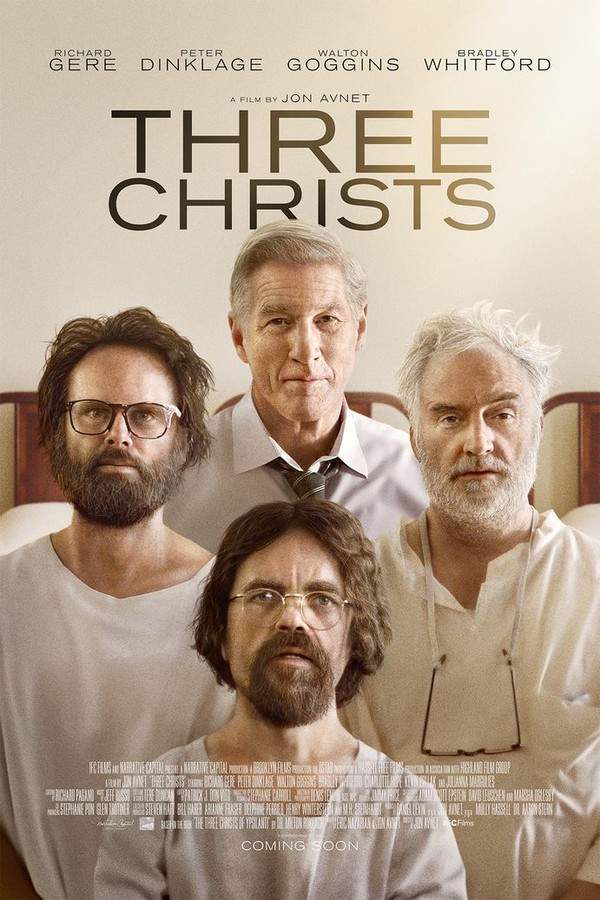
Three Christs (2017) movie poster

Characters & Themes

Three Christs (2017) Characters, Setting & Themes Explained

Release, runtime and language
2017 · 117 mins · English
Loading streaming availability…
Directed by
Jon Avnet
Starring
Peter Dinklage, Bradley Whitford, James Monroe Iglehart, Walton Goggins, Jane Alexander, Richard Gere

Dr. Alan Stone breaks new ground for treatment of the mentally ill through an experiment on three paranoid schizophrenic patients who believe they are Jesus Christ.

On this page (8)
  1. 1 Where to watch
  2. 2 Characters explained (5)
  3. 3 Where & when it takes place
  4. 4 Themes & meaning (3)
  5. 5 Character & meaning questions
  6. 6 Movie threads
  7. 7 Movies like Three Christs
  8. 8 Every angle
Loading streaming availability…

5 main characters · contains spoilers

Three Christs Characters Explained: Who Is Who

The main characters of Three Christs (2017), heroes and villains: what drives them, how they change over the course of the story and what each of them reveals about the film's bigger ideas.

  • Joseph Cassell

    played by Peter Dinklage

    An intelligent, articulate patient who believes he is Jesus. His delusions are tied to his identity and anger, and he responds to therapy with periods of cooperation punctuated by explosive outbursts. His arc tests Stone's approach and culminates in a tragic death, illustrating the high stakes of balancing empathy with safety in a coercive system.

    • 🧠 Delusional
    • ✝️ Religious Identity
    • 🗣️ Articulate
    • 🔥 Temper
  • Clyde Benson

    played by Bradley Whitford

    A gruff, grieving patient who also believes he is Jesus. His trauma centers on the death of his wife and the emotional toll of that loss, fueling his volatile behavior and religious delusions. His dynamic with Stone highlights the human costs of institutional neglect and misunderstanding.

    • 🧱 Gruff
    • 🗨️ Expressive
    • 💔 Grief
  • Leon Gabor

    played by Walton Goggins

    A patient who credits himself with a Christ-like role, shaped by a deeply religious mother and a history of sexual trauma during his military exposure. His case demonstrates how personal history and spiritual framing can shape delusion and resistance to conventional treatment.

    • 🧭 Traumatized
    • 🗝️ Religious
    • 🪖 Survivor
  • Dr. Alan Stone

    played by Richard Gere

    A progressive and idealistic psychologist who favors talk therapy and written correspondence over punishment. He clashes with the institution's leadership and faces professional and personal jeopardy as his methods challenge established practice. His efforts set the film's ethical center, even as he faces dismissal and professional setback.

    • 🧠 Empathetic
    • 🗣️ Visionary
    • 🧭 Ethical
  • Dr. Orbus

    played by Kevin Pollak

    The head of the asylum, driven by ambition and a desire for prestige. He orchestrates renewed electric shocks and manipulates outcomes to consolidate control, ultimately sidelining Stone. His actions illustrate how power can corrupt medical judgment and harm patients.

    • 🏛️ Ambitious
    • 💼 Prestige-seeker
    • ⚖️ Ethical conflict

Last updated: October 01, 2025 at 12:24

Was this helpful?

Setting

Where and When Does Three Christs Take Place?

The setting of Three Christs (2017): the year and time period, the places and locations, and how they shape the characters, the mood and the tension of the story.

Time period

1954

Set in the 1950s, a period when psychiatric care in the United States relied heavily on sedatives and physical interventions. Insulin shock therapy and electroconvulsive treatment were common, while talk therapy remained marginal and controversial. The narrative follows Dr. Stone's attempts to introduce humane methods against a backdrop of institutional resistance.

Location

Ypsilanti State Mental Asylum, Ypsilanti, Michigan, New York University, New York City, New York

The action centers on the Ypsilanti State Mental Asylum in Michigan and the clinical environment at New York University in New York City. The facility scenes reflect a mid-20th-century system where patients were largely confined and treated with electricity or insulin shock. The contrast between the two settings highlights the tension between institutional brutality and emerging talk-based therapy.

  • 🏥 Institutional Setting
  • 🗺️ United States

Last updated: October 01, 2025 at 12:24

Was this helpful?

3 major themes

Three Christs Meaning: Themes & Message Explained

What is Three Christs (2017) really about? The emotional, social and philosophical themes the film keeps returning to, its symbolism and the message beneath the surface.

  • Therapy vs Coercion

    Stone's humane, talk-based approach contrasts with the prevailing coercive methods of the institution. The three patients reveal distinct traumas, showing that madness can stem from different traumas and experiences. The film questions whether dialogue and understanding can overcome entrenched power structures and punitive practices.

  • Power & Prestige

    Orbus's hunger for recognition drives him to bypass colleagues and push perfunctory care to maintain control. The struggle over treatment and authority exposes how prestige markets influence patient care. The narrative suggests that institutional politics can undermine genuine medical progress and risk patients' lives.

  • Faith & Delusion

    All three patients claim to be Jesus, creating a thread of religious imagery that intersects with trauma and identity. Their beliefs reveal how faith can be a coping mechanism or a fragile construct under pressure. The film uses these delusions to explore why individuals cling to spiritual identities in crisis.

Last updated: October 01, 2025 at 12:24

Was this helpful?

Character & theme questions

Three Christs Characters & Meaning: Your Questions Answered

The questions people ask about Three Christs (2017): who the characters really are, their relationships, what the symbols mean, where it takes place and what the movie is really about. Each answer contains spoilers.

Q1

Where is Three Christs set?

The film takes place primarily at the Ypsilanti State Mental Asylum in Michigan, with additional scenes at New York University. The stark, institutional environment of the asylum contrasts sharply with the academic setting of NYU, highlighting the tension between emerging talk-based therapy and the prevailing coercive treatment methods of the era.

  • ypsilanti
  • michigan
  • asylum
  • setting
  • location
Q2

What time period does the movie portray?

Three Christs is set in 1954, a period when psychiatric care relied heavily on sedatives, insulin shock therapy, and electroconvulsive treatment. Talk therapy was still marginal and controversial within institutional settings, making Dr. Stone's progressive methods historically significant and professionally risky.

  • 1950s
  • 1954
  • psychiatric treatment
  • era
  • history
Q3

Why do all three patients believe they are Jesus?

Each patient's delusion stems from distinct personal traumas. Joseph's belief is tied to his identity and anger; Clyde's stems from the death of his wife; Leon's stems from sexual trauma during military service and a deeply religious mother. The film explores how faith and spiritual identity can become coping mechanisms or fragile constructs under psychological pressure.

  • jesus delusion
  • faith
  • delusion
  • patients
  • religious beliefs
Q4

What is the main theme of Three Christs?

The film's central theme is therapy versus coercion, as Dr. Alan Stone's humane, talk-based approach directly conflicts with the institution's prevailing coercive methods. The three patients reveal that madness can stem from different traumas, questioning whether dialogue and understanding can overcome entrenched institutional power structures and punitive practices.

  • therapy
  • coercion
  • treatment
  • theme
  • mental health
Q5

Who is Dr. Alan Stone?

Dr. Alan Stone is a progressive and idealistic psychologist portrayed by Richard Gere who favors talk therapy and written correspondence over punishment. He represents the film's ethical center, attempting to introduce humane psychiatric methods against institutional resistance. His methods ultimately challenge established practice, leading to professional and personal jeopardy.

  • alan stone
  • richard gere
  • psychologist
  • protagonist
Q6

Who is Dr. Orbus and what is his role?

Dr. Orbus, played by Kevin Pollak, is the head of the Ypsilanti asylum, driven by ambition and a desire for prestige. He orchestrates renewed electric shock treatments and manipulates outcomes to maintain control, ultimately sidelining Dr. Stone. His character illustrates how institutional politics and the pursuit of professional recognition can corrupt medical judgment and harm vulnerable patients.

  • orbus
  • kevin pollak
  • asylum director
  • antagonist
  • power
Q7

How does the film address institutional power?

The film explores how prestige and institutional politics undermine genuine medical progress. Dr. Orbus bypasses colleagues and pushes perfunctory care to maintain control, while the struggle over treatment methods exposes how ambition can prioritize institutional reputation over patient welfare. The narrative suggests that bureaucratic self-interest risks patient lives.

  • power
  • prestige
  • institution
  • corruption
  • politics
Q8

Who is Joseph Cassell?

Joseph Cassell, played by Peter Dinklage, is an intelligent and articulate patient who believes he is Jesus. His delusions are tied to his identity and anger, and he responds to therapy with periods of cooperation punctuated by explosive outbursts. His arc tests Dr. Stone's approach and culminates in tragedy, illustrating the high stakes of balancing empathy with safety in a coercive system.

  • joseph cassell
  • peter dinklage
  • patient
  • jesus
Q9

Who is Clyde Benson?

Clyde Benson, played by Bradley Whitford, is a gruff and grieving patient who also believes he is Jesus. His trauma centers on the death of his wife and the emotional toll of that loss, which fuels his volatile behavior and religious delusions. His dynamic with Dr. Stone highlights the human costs of institutional neglect and misunderstanding.

  • clyde benson
  • bradley whitford
  • patient
  • grief
Q10

Who is Leon Gabor?

Leon Gabor, played by Walton Goggins, is a patient who believes he has a Christ-like role, shaped by a deeply religious mother and a history of sexual trauma during his military service. His case demonstrates how personal history and spiritual framing can shape delusion and create resistance to conventional treatment.

  • leon gabor
  • walton goggins
  • patient
  • trauma
  • military
Q11

How does the film explore faith and delusion?

The three patients' claims of being Jesus create a thread of religious imagery that intersects with trauma and identity. The film uses these delusions to explore why individuals cling to spiritual identities in crisis, examining how faith can serve as both a coping mechanism and a fragile construct that breaks under institutional pressure.

  • faith
  • delusion
  • religion
  • spirituality
  • identity
Q12

What were mental health treatments like in the 1950s?

The 1950s depicted in the film represent a dark era in psychiatric care, where patients were largely confined and treated with electricity, insulin shock, and heavy sedatives. The clinical environment at Ypsilanti reflects a system where coercive methods dominated, while progressive approaches like talk therapy remained controversial and marginalized within institutional practice.

  • mental health
  • 1950s
  • treatment
  • insulin shock
  • electroconvulsive therapy

Movie threads

More Movies Like Three Christs, by Mood & Story

Curated lists built around what makes Three Christs tick: the same mood, the same kind of story or the same emotional payoff. Each list explains why these movies belong together.

Movies about ethical dilemmas in institutions like Three Christs

Stories where professionals face severe moral crises within rigid systems. If you liked the ethical tension and institutional conflict in Three Christs, you'll appreciate these movies. They feature similar stories of professionals challenging flawed systems, leading to intense moral drama and personal cost. Discover other films about ethical crises within hospitals, asylums, and other rigid establishments.

  • tense
  • thoughtful
  • procedural
  • unsettling
  • tragic
  • psychological
  • Tone: dark, tense, thoughtful
  • Pacing: steady, procedural
Why these movies?

The story pattern: A protagonist, often an expert or reformer, enters a flawed institution with a progressive idea. They clash with conservative authorities while grappling with the high-stakes consequences of their actions on vulnerable individuals. The narrative typically builds towards a tragic or bittersweet climax involving professional failure or a Pyrrhic victory.

Why they belong together: They share a focus on procedural detail, intense moral questioning, and a dark, sober tone. The central conflict is between an individual's ethics and an unyielding system, creating a consistently high-tension, thoughtful viewing experience.
Somber psychological movies with tragic endings like Three Christs

Heavy, character-driven stories that explore deep trauma and end in sorrow. For viewers who appreciated the heavy emotional weight and tragic conclusion of Three Christs. These movies offer a similar experience: intense psychological exploration, a somber and unsettling mood, and stories that deal head-on with grief, trauma, and mental illness, often ending on a note of profound sadness.

  • psychological
  • somber
  • tragic
  • unsettling
  • heavy
  • thoughtful
  • Tone: dark, tragic, unsettling
  • Pacing: steady, deliberate
Why these movies?

The story pattern: The narrative centers on characters grappling with severe psychological distress, trauma, or delusion. There is a deep focus on their internal world, often set against a bleak or confined environment. The story builds a sense of inevitable tragedy, leading to a climax of loss, suicide, or irreversible personal collapse.

Why they belong together: They are united by a dominant mood of psychological unease, a focus on tragic character arcs, and a heavy emotional payload. The pacing is often deliberate to steep the viewer in the characters' suffering, resulting in a powerfully sad and thoughtful experience.

If you liked this

Movies Like Three Christs

Similar movies to Three Christs: the same genre, themes or kind of story. Each one comes with its own plot summary, timeline and ending explained.

Browse all movie summaries

Every angle

Three Christs (2017) Explained: Plot, Timeline & Characters

Everything about Three Christs in one place: what happens in the plot summary, the timeline in chronological order, the characters and meaning and a spoiler-free summary. What's After the Movie adds the cast, box office and post-credit scenes.

Coming soon on iOS and Android

The Plot Explained Movie Summary App

Plot summaries, endings explained and timelines on your phone. Catch up on any movie in minutes, save your favorites and never miss a twist again.

Be the first to know when we launch. Your email stays private, always.

Learn more about the app