Plot Explained Spoilers guaranteed!
Plot Explained

Browse by genre

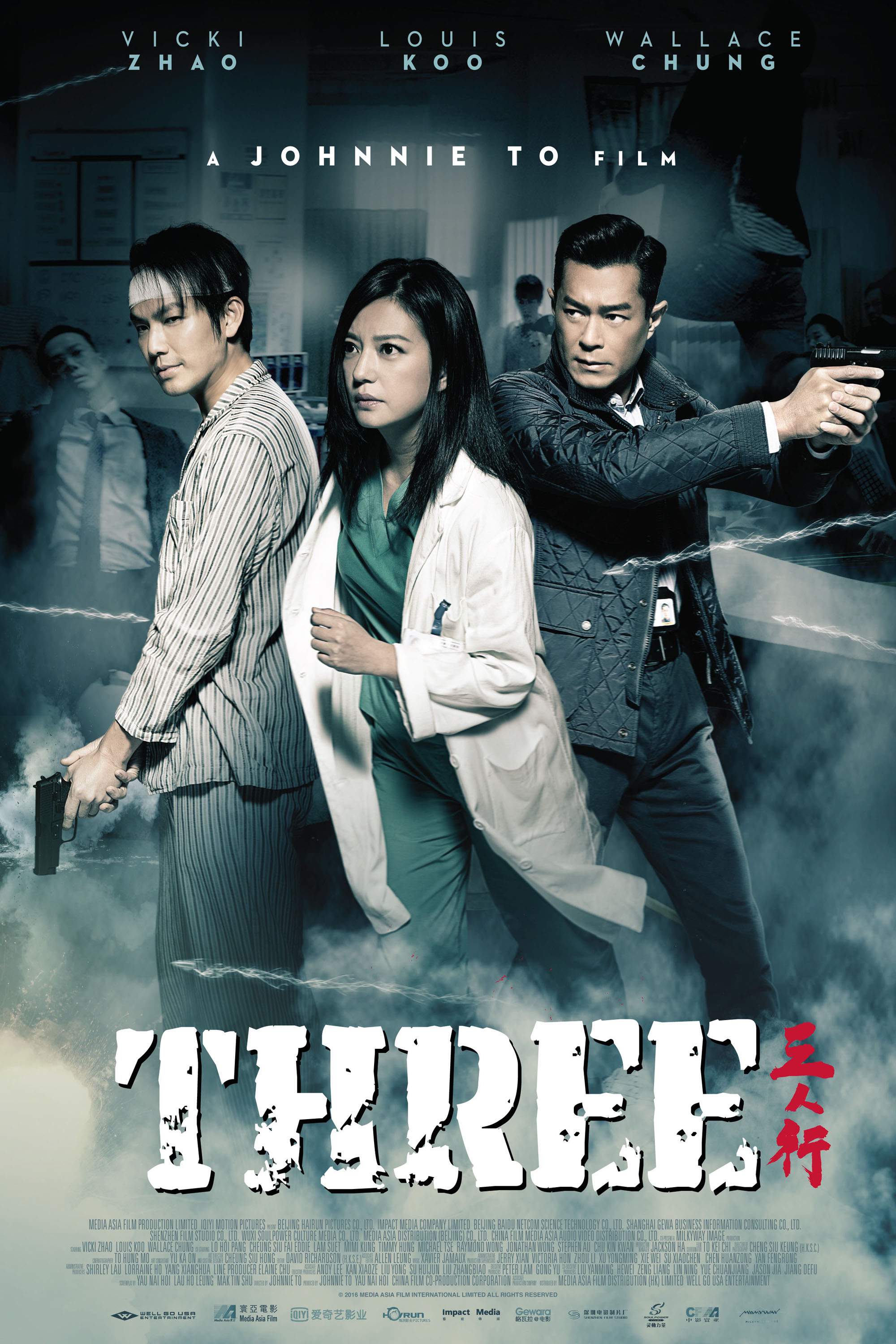
Three (2016) movie poster

Plot Summary

Three (2016) Plot Summary & Ending Explained

Release, runtime and language
2016 · 88 min · English
JustWatch #30,001 4
Directed by
Johnnie To

While recovering in a hospital after a police sting, a criminal masterminds an elaborate escape with his associates. An obsessive police officer and a conflicted surgeon find themselves drawn into a dangerous standoff as the criminal's plan unfolds, threatening to plunge the hospital into chaos and exposing hidden agendas among those involved.

On this page (7)
  1. 1 Where to watch
  2. 2 What happens: full plot
  3. 3 Plot questions answered
  4. 4 How it ends
  5. 5 Movie threads
  6. 6 Movies like Three
  7. 7 Every angle

Where to watch

Where to Watch Three (2016)

Where can you watch Three? Stream, rent or buy it in the US, including on Hi-YAH, Philo and Hoopla: current JustWatch availability with up-to-date prices.

Streaming availability powered by JustWatch

Full plot summary · contains spoilers

What Happens in Three: Full Plot Summary

The whole story of Three (2016) explained, from the opening scene to the final frame: every key event, every twist and what it all adds up to. Read it as a quick recap before the sequel, to check a scene you missed, or to finally understand what really happened.

Mildred Hayes, played by Frances McDormand, is in a state of deep sorrow as she grapples with the traumatic loss of her teenage daughter, Angela, portrayed by Kathryn Newton, who was tragically assaulted and murdered seven months earlier. Frustrated by the lack of significant progress in the investigation into Angela's death, Mildred takes a bold step to draw attention to her plight. She rents three dilapidated billboards situated near her home, emblazoned with the provocative phrases: "RD WHILE DYING", "AND STILL NO ARRESTS?", and "HOW COME, CHIEF WILLOUGHBY?"* This audacious act provokes a strong backlash from the local community, including Sheriff Bill Willoughby, played by Woody Harrelson, and the overtly racist officer Jason Dixon, portrayed by Sam Rockwell. Adding to the tension is the community's awareness of Willoughby's terminal pancreatic cancer, making Mildred's actions even more controversial, especially because Willoughby is generally respected as a good man.

Despite her son Robbie, played by Lucas Hedges, being distressed by the situation, Mildred remains steadfast in her conviction. The scrutiny and intimidation escalate as Sheriff Willoughby sympathizes with her frustrations but feels personally attacked by the billboards. In his attempt to restore order, Dixon resorts to harassment, threatening the billboard renter Red, played by Caleb Landry Jones, and falsely arresting Mildred's coworker Denise, portrayed by Amanda Warren, on minor drug charges. Compounding her trauma, Mildred also faces confrontations from her abusive ex-husband Charlie, played by John Hawkes, who irresponsibly blames her for their daughter's tragic fate.

However, the situation takes a dramatic turn when Willoughby, who appears to be understanding of Mildred’s anger, suffers a bloody coughing episode during an interview with her. Choosing to leave the hospital against medical advice, he spends one last beautiful day with his wife Anne, portrayed by Abbie Cornish, and their daughters before ultimately deciding to take his own life. In a poignant farewell, he leaves notes for multiple people, one of which reassures Mildred that she was not a reason for his demise, and he even financially supports the continued display of her billboards out of a shared sense of humor about the chaos that would ensue.

The death of Willoughby sends shockwaves through the community, and Dixon’s violent reaction towards Red and his assistant becomes a point of concern, especially as it is witnessed by Willoughby’s replacement, Abercrombie, played by Clarke Peters, who promptly dismisses Dixon. The billboards themselves face destruction via arson, compelling Mildred to retaliate by launching Molotov cocktails at the police station, under the belief that no one is inside. However, Dixon is there and uses this opportunity to reflect on a letter Willoughby left him, one that encourages a shift away from hate towards a path of love—an ironic twist given his previous actions.

After exiting the hospital, Dixon gains crucial information while eavesdropping on a bar patron boasting about a crime similar to Angela's murder. Seizing the moment, he gathers DNA from this suspect, further intertwining their fates. Meanwhile, Mildred's situation becomes increasingly complex as she finds herself on a date with James, played by Peter Dinklage, who provides her with an alibi. Unfortunately, the evening takes a painful turn when Charlie arrives with his young girlfriend Penelope, portrayed by Samara Weaving, revealing his involvement in the destruction of the billboards.

As the plot thickens, Abercrombie informs Dixon that the DNA doesn’t match any evidence from Angela's case, leading them both to suspect the man is involved in other sexual assaults. United in their quest for justice, Mildred and Dixon embark on a journey to Idaho armed with a weapon, grappling with their ethical dilemmas as they progress. The tension mounts as they navigate their conflicting emotions and contemplate their next steps on their daunting mission for truth and retribution.
Last updated: May 12, 2025 at 07:04

Was this helpful?

Plot questions answered

Three Plot Explained: Your Questions Answered

The questions people ask most about Three (2016): what happens in the confusing scenes, why the characters do what they do, the twists, hidden details and what the ending means. Each answer contains spoilers.

Q1

Why does Mildred rent the three billboards?

Mildred rents the billboards seven months after her daughter Angela was murdered, frustrated by the lack of progress in the investigation. The messages, "Raped While Dying," "And Still No Arrests?" and "How Come, Chief Willoughby?", are her way of publicly confronting the police department and demanding answers when conventional methods failed.
  • mildred billboards
  • angela hayes
  • protest
  • justice
Q2

Why does Sheriff Willoughby commit suicide?

Willoughby is suffering from terminal pancreatic cancer and only has months to live. While he sympathizes with Mildred's grief, the billboards have made his final days unbearable and personally attacked his character. He chooses to end his life on his own terms, leaving notes clarifying that Mildred's actions were not the reason for his death.

Foreshadowing: Earlier, Willoughby coughs up blood during an interview with Mildred, revealing the severity of his illness.

  • willoughby suicide
  • pancreatic cancer
  • death
  • sheriff
Q3

Who burns down the billboards?

Mildred's abusive ex-husband Charlie burns the billboards. He reveals this during a confrontation with Mildred at a restaurant, stating he did it to protect her reputation and because he was angry about her public campaign.

  • billboards burned
  • arson
  • charlie hayes
Q4

Why does Officer Dixon change sides and help Mildred?

Dixon undergoes a transformation after reading a letter Willoughby left him, which encourages him to abandon hate and choose love instead. This comes after Dixon is beaten by Red for assaulting him and is hospitalized. The letter, combined with witnessing Willoughby's death and the subsequent events, shifts Dixon's perspective.

Foreshadowing: Willoughby had shown kindness to Dixon throughout the film, mentoring him despite his racist behavior.

  • jason dixon redemption
  • willoughby letter
  • transformation
Q5

Why does Mildred throw Molotov cocktails at the police station?

Mildred attacks the police station in retaliation for the billboards being burned, believing no one was inside. Her grief and anger have escalated to the point where she sees this as the only way to fight back against a system that failed her daughter. However, Dixon is inside, leading to a dangerous confrontation.
Foreshadowing: The billboards were Mildred's only visible form of fighting back, and their destruction represents losing that outlet.

  • mildred attack
  • molotov cocktails
  • police station
  • revenge
Q6

What happens with the DNA evidence Dixon collects?

Dixon collects DNA from a man in a bar who boasts about a crime similar to Angela's murder. However, the DNA does not match any evidence from Angela's case. Further investigation reveals the man was overseas when Angela was murdered, meaning he is guilty of other sexual assaults but not specifically of killing her.

  • dna evidence
  • bar suspect
  • angela murder
Q7

What is the ending of the movie about?

The ending shows Mildred and Dixon driving to Idaho together to find the man they suspect committed other sexual assaults. They have doubts about whether killing him is morally right but decide to go anyway, leaving the outcome uncertain. The film deliberately leaves whether they will actually kill him unresolved.

  • ending
  • idaho
  • vigilante
  • justice
Q8

Why does Willoughby leave money for the billboards to stay up?

Willoughby uses his own money to ensure the billboards remain standing because he shares Mildred's dark sense of humor about the chaos they would cause. In his suicide note to her, he explains this was done partly as a joke and partly because he genuinely wants her fight for justice to continue.

  • willoughby money
  • billboards payment
  • note
Q9

Why is Officer Dixon racist and violent?

Dixon is depicted as a racist, violent cop who harbors deep-seated prejudices. His character represents the systemic racism within the police department. His transformation throughout the film is central to the story's exploration of whether people can change their fundamentally harmful beliefs.

  • jason dixon
  • racism
  • police brutality
Q10

Why does Mildred attack the dentist?

Mildred assaults her dentist when he tries to remove a billboard sign from her hand, showing how her grief has made her prone to violence. This confrontation leads to her being brought in for questioning by Willoughby, where he collapses from his illness.

  • dentist attack
  • mildred violence
Q11

What is the relationship between Mildred and her son Robbie?

Robbie, Mildred's teenage son, is deeply distressed by her billboards and her grief. He feels caught between his loyalty to his murdered sister and his frustration with his mother's increasingly aggressive methods. Their relationship reflects how trauma ripples through a family.

  • robbie hayes
  • son
  • family tension
Q12

Why is Sheriff Willoughby respected by the community?

Willoughby is generally seen as a good, fair man despite the department's failures. He has terminal cancer, which earns him sympathy. His suicide shocks the community because they didn't realize how sick he was, and many of his letters reveal his genuine desire to help people.

  • sheriff willoughby
  • respected
  • community

Ending explained

What Happens at the End of Three?

How Three (2016) ends, in short: the final scene, the last twist and what it means for the characters. The full ending explained, with every spoiler, lives on its own page.

Read the full ending explained

In the ending of Three Musketeers: Milady, the story reaches its climax with a series of dramatic and tragic events. Milady, once thought to be merely a villain, is revealed to be Athos’ wife and D’Artagnan’s former love, which complicates everything. She is captured and sentenced to death in England after a failed attempt to eliminate the Duke of Buckingham, who is aiding the Protestants against France. Despite her efforts to escape, she is ultimately executed by hanging, dying with the hope that her end will bring peace. Meanwhile, Constance, D’Artagnan’s beloved, is also captured and sadly hanged, leaving D’Artagnan devastated. Before her death, Constance manages to help Milady escape, even though it costs her her life. D’Artagnan arrives just after her death, finds her in his arms, and is left angry and heartbroken. The conflict between Milady and D’Artagnan concludes with a fierce fight inside a burning house, in which Milady escapes once again. Throughout the film, we see the complex personal entanglements among the characters—Milady’s tragic love with Athos, the sacrifice of Constance, and D’Artagnan’s unwavering loyalty. The story ends on a somber, unresolved note, with Athos losing his son and discovering that Milady has taken him, leaving the future of these characters uncertain. This ending emphasizes the cost of their passions and choices, and sets up the possibility of future conflicts in a potential continuation or trilogy.

Three ending explained in full

Movie threads

More Movies Like Three, by Mood & Story

Curated lists built around what makes Three tick: the same mood, the same kind of story or the same emotional payoff. Each list explains why these movies belong together.

Movies with a claustrophobic siege like in Three

High-stakes conflicts where a single location becomes a pressure cooker of chaos. If you enjoyed the high-stakes hospital standoff in Three, you'll like these movies. This list features crime thrillers and action dramas where a confined location becomes a battleground, forcing characters into dangerous confrontations with hidden agendas and complex motivations.

  • tense
  • claustrophobic
  • unpredictable
  • strategic
  • high-stakes
  • gritty
  • Tone: tense, dark, gritty
  • Pacing: steady, escalating
Why these movies?

The story pattern: These stories typically begin with a disruptive event that locks characters into a single, volatile location. The narrative unfolds through escalating standoffs, strategic maneuvering, and the unraveling of carefully laid plans, often exposing the true nature of those trapped inside.

Why they belong together: They share a core structure of confinement, a steady or fast-paced build-up of tension, and a dark, gritty tone. The focus is on the psychological and strategic battle within a physical bottleneck, creating a consistently intense and unpredictable experience.

Movies about vigilante justice and moral conflict like Three

Stories where broken systems force characters into ethically ambiguous crusades. For viewers who appreciated the themes of grief-driven vengeance and police corruption in Three. These films explore similar narratives of morally ambiguous protagonists pursuing justice outside the law, often with heavy emotional consequences and bleak or ambiguous outcomes.

  • morally complex
  • angry
  • tragic
  • raw
  • uncompromising
  • gritty
  • Tone: dark, tragic, uncompromising
  • Pacing: steady, deliberate
Why these movies?

The story pattern: The narrative follows a character's descent or transformation from victim or bystander to active agent of revenge. The journey is fraught with moral compromises, escalating violence, and a questioning of whether the ends truly justify the means, often leading to a tragic or unresolved conclusion.
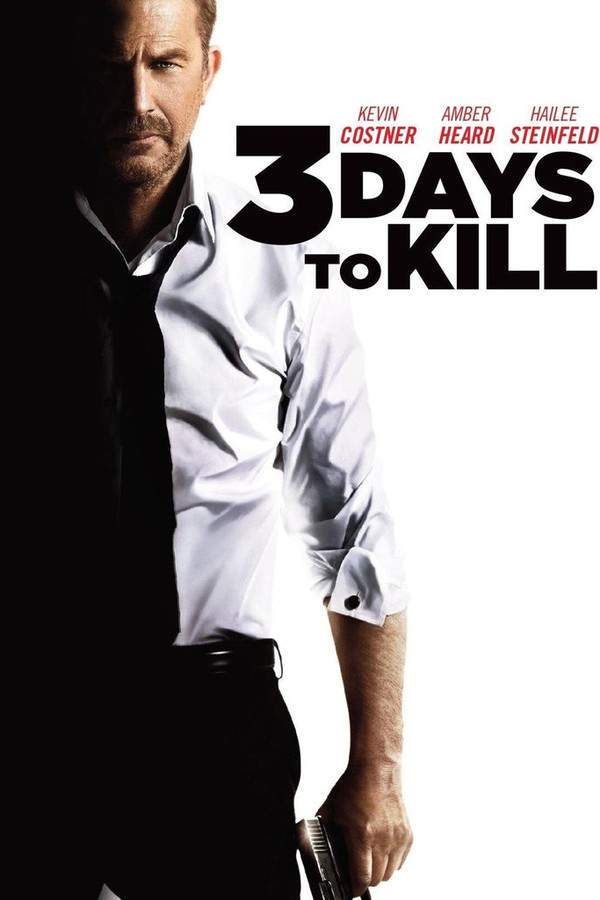
Why they belong together: They are united by a heavy emotional weight, a dark and gritty tone, and a central theme of operating outside a corrupt or ineffective legal system. The focus is on the psychological cost of vengeance and the uncomfortable moral choices the characters must make.
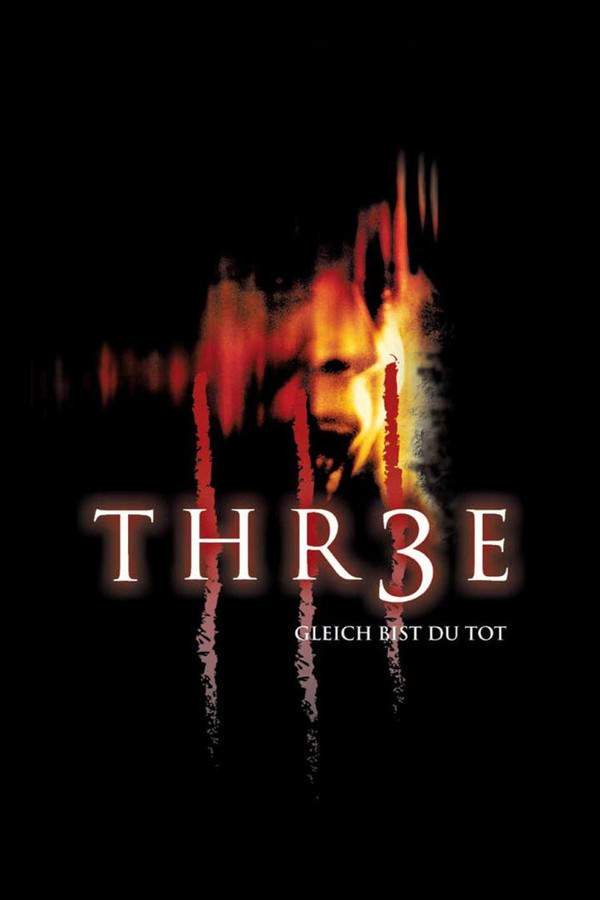
If you liked this

Movies Like Three

Similar movies to Three: the same genre, themes or kind of story. Each one comes with its own plot summary, timeline and ending explained.

Browse all movie summaries

Every angle

Three (2016) Explained: Plot, Ending, Timeline & Characters

Everything about Three in one place: what happens in the plot summary, the timeline in chronological order, the characters and meaning, the ending explained and a spoiler-free summary. What's After the Movie adds the cast, box office and post-credit scenes.

Coming soon on iOS and Android

The Plot Explained Movie Summary App

Plot summaries, endings explained and timelines on your phone. Catch up on any movie in minutes, save your favorites and never miss a twist again.

Be the first to know when we launch. Your email stays private, always.

Learn more about the app