





Plot Explained Spoilers guaranteed!
Plot Explained

Browse by genre

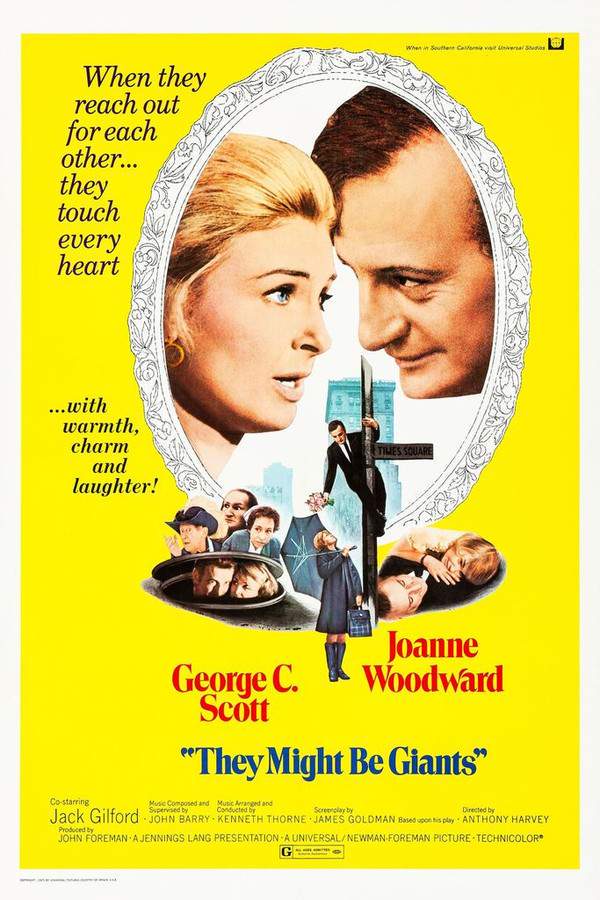
They Might Be Giants (1971) movie poster

Characters & Themes

They Might Be Giants (1971) Characters, Setting & Themes Explained

Release, runtime and language
1971 · 91 min · English
Directed by
Anthony Harvey
Starring
Jack Gilford, George C. Scott, Joanne Woodward, Oliver Clark, Al Lewis, Theresa Merritt

Following the death of his parents, a man is committed to a mental institution. There, he convinces a psychiatrist that he is the famous detective Sherlock Holmes. As she tries to treat him, she becomes drawn into his elaborate games and deductive reasoning, unsure if he’s genuinely brilliant or simply delusional. The psychiatrist finds herself increasingly involved in his invented cases and the blurring lines between their roles lead to unexpected complications.

On this page (9)
  1. 1 Where to watch
  2. 2 Characters explained (2)
  3. 3 Where & when it takes place
  4. 4 Themes & meaning (3)
  5. 5 Character & meaning questions
  6. 6 Movie threads
  7. 7 Movies like They Might Be Giants
  8. 8 Categories
  9. 9 Every angle

Where to watch

Where to Watch They Might Be Giants (1971)

Where can you watch They Might Be Giants? Stream, rent or buy it in the US, including on Amazon Video, Apple TV Store and Fandango At Home: current JustWatch availability with up-to-date prices.

Streaming availability powered by JustWatch

2 main characters · contains spoilers

They Might Be Giants Characters Explained: Who Is Who

The main characters of They Might Be Giants (1971), heroes and villains: what drives them, how they change over the course of the story and what each of them reveals about the film's bigger ideas.

  • Judge Justin Playfair (George C. Scott)

    Judge Justin Playfair is a deeply introspective character grappling with grief after his wife's death. His escape into the persona of Sherlock Holmes showcases his intelligence and wit, but also his struggle with reality. The juxtaposition of his logical prowess and whimsical escapism highlights his complex emotional state.

    • 🏛️ Judge
    • 🤷‍♂️ Grief
  • Dr. Mildred Watson (Joanne Woodward)

    Dr. Mildred Watson is a resourceful and empathetic psychiatrist drawn to Justin's strange case. Her initial skepticism transforms into fascination as she navigates his mind and learns from his unique perspective. Her character embodies resilience and adaptability as she becomes an integral part of Justin's adventures.

    • 👩‍⚕️ Doctor
    • 💡 Insightful

Last updated: October 22, 2024 at 23:16

Was this helpful?

Setting

Where and When Does They Might Be Giants Take Place?

The setting of They Might Be Giants (1971): the year and time period, the places and locations, and how they shape the characters, the mood and the tension of the story.

Time period

The events occur in contemporary times, reflecting elements of modern society intertwined with the escapism of Sherlock Holmes' fictional world. The narrative focuses on psychological exploration, making it relatable to audiences navigating personal loss and identity.

Location

City Streets, Park, Underpass

The story unfolds in a bustling city, filled with vibrant streets that serve as the backdrop for an eccentric adventure. Parks provide a serene escape from urban chaos, leading to introspective moments for the characters. The underpass symbolizes a convergence of their whimsical journey and a looming confrontation.

  • 🏙️ City
  • 🌳 Nature

Last updated: October 22, 2024 at 23:16

Was this helpful?

3 major themes

They Might Be Giants Meaning: Themes & Message Explained

What is They Might Be Giants (1971) really about? The emotional, social and philosophical themes the film keeps returning to, its symbolism and the message beneath the surface.

  • Identity

    The theme of identity is central as Judge Justin Playfair grapples with his own post-loss existence while embodying Sherlock Holmes. His interactions with Dr. Watson reveal layers of self-discovery and the masks people wear. The quest to confront Moriarty symbolizes the battle against internal and external chaos.

  • Reality vs. Fantasy

    The film blurs the lines between reality and fantasy through Justin's transformation into Sherlock Holmes. This theme highlights the refuge individuals seek in imagination as they cope with grief. Dr. Watson's growing involvement illustrates an intriguing interplay of reality as her perspective shifts alongside Justin's adventures.

  • Love

    Love is explored through the peculiar bond formed between Justin and Dr. Watson. The unconventional invitation for dinner in a wedding gown creates an unexpected romantic tension. Their journey acts as a catalyst for emotional connection amidst absurdity, suggesting love can thrive even in the strangest circumstances.

Last updated: October 22, 2024 at 23:16

Was this helpful?

Character & theme questions

They Might Be Giants Characters & Meaning: Your Questions Answered

The questions people ask about They Might Be Giants (1971): who the characters really are, their relationships, what the symbols mean, where it takes place and what the movie is really about. Each answer contains spoilers.

Q1

Where is the movie set?

The film takes place in a bustling city with vibrant urban streets as its primary setting. Key locations include city streets, a park that serves as a serene escape from urban chaos, and an underpass that becomes significant as the story unfolds. These settings reflect the film's blend of whimsical adventure and psychological exploration.

  • setting
  • locations
  • city
  • park
  • underpass
Q2

When does the story take place?

The story is set in contemporary times, reflecting modern society while incorporating the escapist elements of Sherlock Holmes' fictional Victorian world. This creates an interesting contrast between present-day reality and the romanticized detective era that Justin retreats into.

  • time period
  • contemporary
  • modern
  • setting
Q3

What is the film's theme of identity about?

Identity is central to the film, as Judge Justin Playfair grapples with his existence after losing his wife. He escapes into the persona of Sherlock Holmes, using the famous detective's identity to mask his grief. This transformation explores how people create masks to cope with loss and discover who they truly are.

  • identity
  • theme
  • grief
  • self-discovery
  • masks
Q4

How does the film explore reality versus fantasy?

The film blurs the lines between reality and fantasy as Justin fully transforms into Sherlock Holmes. His elaborate games and invented cases become increasingly convincing, making Dr. Watson question whether his deductions are genuinely brilliant or simply delusional. This theme highlights how imagination can serve as both refuge and prison when coping with grief.

  • reality
  • fantasy
  • delusion
  • mental health
  • escape
Q5

What role does love play in the story?

Love emerges through the unconventional bond between Justin and Dr. Watson. Their relationship develops from doctor-patient dynamic into something more intimate, symbolized by the bizarre dinner invitation where Justin arrives in a wedding gown. This romantic tension grows amid the absurdity, suggesting love can emerge in the most unusual circumstances.

  • love
  • romance
  • relationship
  • connection
  • wedding
Q6

Who is Judge Justin Playfair?

Judge Justin Playfair is a wealthy widower who is committed to a mental institution after his wife's death. He is intelligent and witty, using his resources to convince others he is Sherlock Holmes. His character represents a man using fantasy to escape grief, while his legal background adds depth to his analytical deductions.

  • Justin Playfair
  • character
  • Sherlock Holmes
  • grief
  • widower
Q7

Who is Dr. Mildred Watson?

Dr. Mildred Watson is the psychiatrist assigned to treat Justin at the institution. Originally skeptical of his Holmes delusion, she becomes increasingly fascinated and drawn into his world. Her character evolves from professional observer to active participant, embodying resilience and adaptability as she navigates the blurry line between treatment and involvement.

  • Dr. Watson
  • psychiatrist
  • character
  • treatment
  • involvement
Q8

Why does Justin pretend to be Sherlock Holmes?

Justin adopts the Sherlock Holmes identity as an escape from the grief of losing his wife. The fictional detective represents a world where logic triumphs over chaos and where villains like Moriarty can be defeated. By becoming Holmes, Justin creates a narrative where he can fight against something tangible rather than face the uncontrollable pain of loss.

  • Sherlock Holmes
  • motivation
  • grief
  • escape
  • imagination
Q9

What is the emotional tone of the film?

The film balances whimsy and melancholy. The premise of a man believing he is Sherlock Holmes creates playful, eccentric adventures with a deerstalker cap and imaginary villain Moriarty. However, this whimsy is grounded in the protagonist's deep grief over his wife's death, giving the story a bittersweet, introspective quality.

  • tone
  • whimsy
  • melancholy
  • mood
  • emotional
Q10

What does Moriarty represent in the film?

Moriarty serves as the symbolic antagonist representing the chaos and darkness Justin must confront. The quest to face Moriarty symbolizes the broader battle against both internal demons and external conflicts. This imaginary villain embodies the internal struggle Justin faces in dealing with grief and accepting reality.

  • Moriarty
  • villain
  • antagonist
  • symbolism
  • conflict

Movie threads

More Movies Like They Might Be Giants, by Mood & Story

Curated lists built around what makes They Might Be Giants tick: the same mood, the same kind of story or the same emotional payoff. Each list explains why these movies belong together.

Movies about therapeutic boundaries like They Might Be Giants

Stories where a caregiver becomes entangled in a patient's intricate fantasy world. If you liked the dynamic in They Might Be Giants, you'll find similar movies here. This collection features films where doctors, therapists, or caregivers become deeply involved in their patients' constructed realities, exploring themes of mental health, escapism, and the ethics of connection.

  • quirky
  • reflective
  • melancholic
  • unconventional
  • psychological
  • intimate
  • Tone: whimsical, reflective, melancholic
  • Pacing: steady, conversational
Why these movies?

The story pattern: The narrative typically centers on a professional relationship—doctor/patient, therapist/client—that gradually transforms as the caregiver is seduced by the patient's unique worldview. The story unfolds through a series of shared 'cases' or invented scenarios, creating a bubble of shared reality that challenges professional boundaries and often leads to unexpected emotional consequences for both parties.

Why they belong together: These films are grouped together because they share a specific character dynamic and thematic focus on the psychology of care. They blend drama with elements of mystery or comedy, maintaining a steady, character-driven pace while exploring the delicate balance between treatment and human connection.

Movies with a whimsical melancholy vibe like They Might Be Giants

Playful stories with a bittersweet heart, leaving reality open to interpretation. Discover films that share the distinctive bittersweet and whimsical feel of They Might Be Giants. These movies often blend comedy and drama, using eccentricity to explore deeper themes of loss and memory, and typically conclude with thoughtful, ambiguous endings that linger in the mind.

  • whimsical
  • melancholic
  • bittersweet
  • dreamlike
  • quirky
  • reflective
  • Tone: whimsical, melancholic, bittersweet
  • Pacing: steady, contemplative
Why these movies?

The story pattern: Narratives in this thread often follow eccentric protagonists using imagination or fantasy as a coping mechanism for pain or loss. The journey is not about solving a problem in a conventional way, but about the emotional experience of living in a slightly off-kilter world. The pacing is steady, allowing the mood to settle, and the conclusion often reflects the central theme of blurred lines between reality and perception.

Why they belong together: Movies are grouped here based on their unique emotional blend and tonal quality. They share a specific vibe: a surface-level whimsy that is consistently tempered by a melancholic foundation, resulting in an experience that is both charming and poignant, with a deliberate ambiguity that invites reflection.

If you liked this

Movies Like They Might Be Giants

Similar movies to They Might Be Giants: the same genre, themes or kind of story. Each one comes with its own plot summary, timeline and ending explained.

Browse all movie summaries

Categories

Movie Lists Featuring They Might Be Giants

They Might Be Giants appears in these hand-built movie categories. Each one groups movies by a specific mood, theme or story type, with their plot summaries and endings explained.

View all movie categories

Every angle

They Might Be Giants (1971) Explained: Plot, Timeline & Characters

Everything about They Might Be Giants in one place: what happens in the plot summary, the timeline in chronological order, the characters and meaning and a spoiler-free summary. What's After the Movie adds the cast, box office and post-credit scenes.

Coming soon on iOS and Android

The Plot Explained Movie Summary App

Plot summaries, endings explained and timelines on your phone. Catch up on any movie in minutes, save your favorites and never miss a twist again.

Be the first to know when we launch. Your email stays private, always.

Learn more about the app