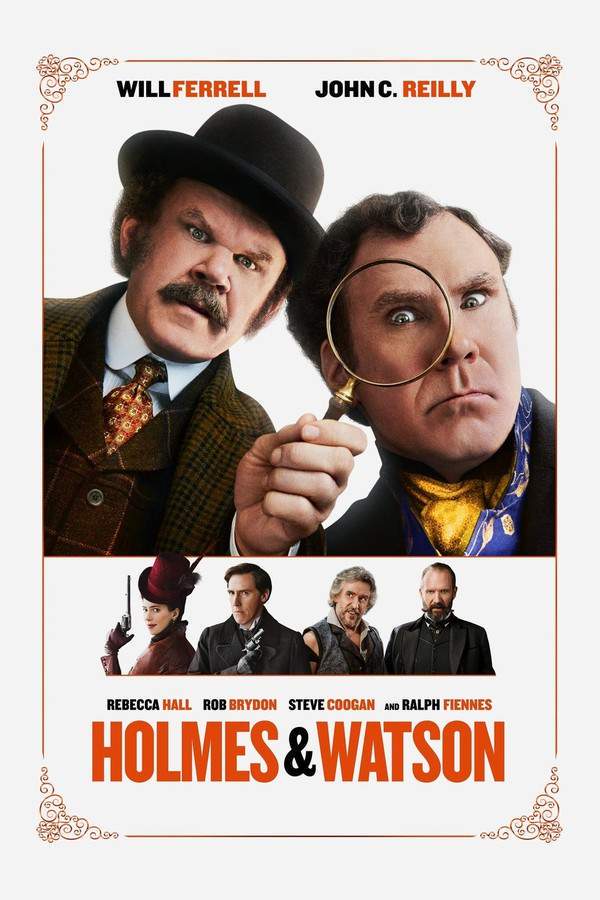
Holmes and Dr. Watson investigate a beautiful woman’s missing husband, leading them into a bizarre chain of clues that involve six vanished midgets, hostile monks, a remote Scottish castle, sightings of the Loch Ness monster, and secret naval experiments.
Find where to stream, rent, or buy The Private Life of Sherlock Holmes (1970) in the US with current JustWatch availability, up-to-date pricing, and platform listings for subscription, rental, and digital purchase options.
Warning: spoilers below!
Haven’t seen The Private Life of Sherlock Holmes yet? This summary contains major spoilers. Bookmark the page, watch the movie, and come back for the full breakdown. If you're ready, scroll on and relive the story!
Read the complete plot breakdown of The Private Life of Sherlock Holmes (1970), including all key story events, major twists, and the ending explained in detail. Discover what really happened, and what it all means.
Sherlock Holmes [Robert Stephens] is drawn into a pair of peculiar, unequal adventures that unfold with wit, danger, and a dash of Cold War–tinged intrigue, all while the ever-curious Dr. John Watson [Colin Blakely] documents the oddities of their world.
In the first, August 1887 brings an unusual proposition. Nikolai Rogozhin [Clive Revill], working on behalf of the famous Russian ballerina Madame Petrova [Tamara Toumanova], seeks Holmes’s help with a startling request: Petrova wishes to have a child by the legendary detective, hoping the offspring will inherit both beauty and intellect. Holmes deftly sidesteps the moral trap by claiming that Dr. Watson is his lover, much to Watson’s mortified protest. At Baker Street, Watson confronts Holmes about the rumors, and Holmes coolly replies that Watson is being presumptuous by asking about Holmes’s relationships with women. > being presumptuous
The film then shifts to a much grander, more fantastical case. Gabrielle Valladon [Geneviève Page] is fished from the River Thames and brought to 221B, where she begs Holmes to find her missing engineer husband. The investigation widens in startling directions, eventually steering them toward the banks of Loch Ness. On the way, the duo encounters a curious menagerie: a group of monks and a crowd of dwarfs, and Watson himself seems to glimpse the legendary Loch Ness monster. They observe canaries and a cache of sulfuric acid being carried into a castle undergoing renovation, and deduce the canaries are used to detect chlorine gas produced when the acid meets sea water.
As clues accumulate, it becomes clear that Holmes’s own brother, Mycroft Holmes [Christopher Lee], is entangled in the affair. Mycroft is overseeing a Royal Navy project to build a submersible, aided by M. Valladon’s air pump, a critical component for the vessel’s success. When tested, the craft is disguised as the Loch Ness Monster, an audacious ruse that doubles as a weapon. The crew is infiltrated by dwarfs precisely because their size helps them operate within the submarine’s confines, a detail that starkly illustrates the film’s quirky logic.
The deception unravels when Mycroft reveals the client is not a benign petitioner but a top German spy, Ilse von Hoffmanstal, sent to seize the air-pump. The “monks” guiding the ship are German sailors, and Queen Victoria [Mollie Maureen] herself arrives to inspect and ceremonially launch the vessel—yet she is troubled by its unsportsmanlike nature. She orders Mycroft to destroy it, but the vessel is left unguarded long enough for the monks to seize it, and the plan is set in motion. Fräulein von Hoffmanstal is arrested, to be exchanged for a British spy held elsewhere, bringing the espionage plot to a high-stakes pause.
Months later, Sherlock receives word that von Hoffmanstal has been captured as a spy in Japan and executed by firing squad. The revelation devastates Holmes, who retreats to his room and seeks solace in a 7% solution of cocaine, a stark counterpoint to the clever, calculating mind that propelled both cases.
The two tales weave together a tapestry of espionage, fantasy, and deduction, anchored by the iconic partnership of Holmes and Watson. They trade wry banter and shrewd observations, navigate danger that veers from the practical to the mythic, and ultimately reveal how a master detective contends with betrayal, secrecy, and the darkest intrigues of a world on the cusp of modern warfare.
Last updated: October 09, 2025 at 10:42
Explore frequently asked questions about The Private Life of Sherlock Holmes (1970) with spoiler-rich answers covering the full plot summary, major story beats, character motivations, hidden details, and ending meaning. This movie summary FAQ helps explain confusing scenes, plot twists, and narrative decisions in clear, searchable detail.
Holmes used the claim as a clever deflection to escape the awkward proposition without directly offending a famous ballerina. By inventing a romantic relationship with Watson, he created a socially acceptable reason to refuse without insulting Madame Petrova, who would have understood the situation as a polite rejection rather than a direct refusal.
The dwarfs were chosen because their small size allowed them to operate comfortably within the cramped confines of the experimental submersible. Their compact stature meant they required less oxygen and less personal space, making them ideal for the vessel's tight interior where a normal-sized crew would struggle.
The monks were not religious figures at all but German sailors disguised as monks. They were part of Ilse von Hoffmanstal's spy network, sent to infiltrate the British operation and ultimately steal the submarine. Their supposed religious appearance was merely a cover to move freely and access the sensitive naval facility.
Holmes deduced that the canaries were brought into the castle to detect chlorine gas. When sulfuric acid contacts seawater, it produces chlorine gas, which is toxic. The canaries would die if chlorine was present, serving as an early warning system for the submarine's dangerous chemical defenses or weapons systems being tested at the site.
Queen Victoria objected to the submarine on moral grounds, calling it unsportsmanlike. She believed the vessel's disguised form as the Loch Ness Monster was deceptive and unbecoming of British naval honor. Her order to destroy the craft reflected her concern that using such covert deception in warfare went against proper conduct.
The air pump was an essential component for the Royal Navy's experimental submersible, invented by the missing engineer M. Valladon. It allowed the submarine to maintain air circulation for its crew underwater, making the vessel operational. This critical technology made Valladon and his invention targets for the German spy operation.
Holmes was emotionally crushed because he had personally allowed von Hoffmanstal to be arrested and exchanged for a British spy, not realizing she would be executed. He felt responsible for her death, having believed she would survive the prisoner exchange. The realization that his own actions led to her execution haunted him deeply.
The film hints at Holmes's growing attachment to von Hoffmanstal during their interactions, making the final betrayal more painful.
The experimental submersible was fitted with a clever exterior designed to mimic the legendary Loch Ness Monster when viewed from above or at a distance. This disguise served a dual purpose: it allowed the vessel to test covertly in Loch Ness without attracting attention, and it could be used as a psychological warfare weapon to frighten enemies.
Ilse von Hoffmanstal, the German spy, orchestrated the entire operation to steal M. Valladon's air pump technology. The air pump was a breakthrough in submarine engineering, and Germany wanted to acquire this British innovation for their own naval capabilities. Stealing the pump would give Germany a significant advantage in submarine development.
Holmes's use of a 7% cocaine solution represented his psychological collapse following the emotional toll of the case. The combination of guilt over von Hoffmanstal's death, the betrayal by his own brother Mycroft, and the darker realities of espionage proved overwhelming. The drug offered escape from his despair, marking a somber conclusion to his usually triumphant detective work.
Mycroft Holmes, Sherlock's older brother, was overseeing the Royal Navy's experimental submersible project due to his connections and intelligence standing. His involvement explained the high-level security around the operation and why German interests were so concentrated on infiltrating it. Mycroft's position made him a key figure in both British intelligence and the espionage drama.
Discover curated groups of movies connected by mood, themes, and story style. Browse collections built around emotion, atmosphere, and narrative focus to easily find films that match what you feel like watching right now.
Detective stories where eccentric wit meets a reflective, bittersweet core.Find movies like The Private Life of Sherlock Holmes that mix quirky mystery-solving with a thoughtful, bittersweet mood. If you enjoyed the witty banter and eccentric investigations that reveal a hero's hidden melancholy, these similar detective adventures and character studies are for you.
These stories typically follow a brilliant but flawed investigator through a seemingly whimsical or eccentric case. The narrative unfolds steadily, revealing clues, but the true discovery is often a personal, emotional truth about the protagonist. The intellectual victory of solving the mystery is tempered by a bittersweet or melancholic realization, creating a reflective and deeply human conclusion.
They are grouped by their unique tonal blend: a surface-level wit and adventure underpinned by a consistent, reflective melancholy. Shared elements include complex investigations, idiosyncratic protagonists, and an ending that balances success with a touch of personal sadness, creating a distinct and memorable vibe.
Cases that begin with odd clues but unravel into high-stakes spy conspiracies.Discover movies similar to The Private Life of Sherlock Holmes where a peculiar case expands into a conspiracy. If you liked how a missing person investigation involving midgets and a fake monster led to Cold War spy games, you'll enjoy these stories where eccentric mysteries hide larger secrets.
The narrative pattern involves a detective or outsider being drawn into an apparently trivial or eccentric case. As they follow the clues, the scope of the mystery broadens significantly, connecting personal anomalies to systemic corruption, government experiments, or spy networks. The pacing is steady, building from a curious beginning to a complex, high-stakes climax.
They share a specific plot structure where the initial premise is a red herring for a deeper conspiracy. The tone often blends witty investigation with rising tension, and the appeal is in the clever unfolding of a seemingly small story into a world-altering secret.
Don't stop at just watching - explore The Private Life of Sherlock Holmes in full detail. From the complete plot summary and scene-by-scene timeline to character breakdowns, thematic analysis, and a deep dive into the ending - every page helps you truly understand what The Private Life of Sherlock Holmes is all about. Plus, discover what's next after the movie.
Track the full timeline of The Private Life of Sherlock Holmes with every major event arranged chronologically. Perfect for decoding non-linear storytelling, flashbacks, or parallel narratives with a clear scene-by-scene breakdown.
Discover the characters, locations, and core themes that shape The Private Life of Sherlock Holmes. Get insights into symbolic elements, setting significance, and deeper narrative meaning - ideal for thematic analysis and movie breakdowns.
Discover movies like The Private Life of Sherlock Holmes that share similar genres, themes, and storytelling elements. Whether you’re drawn to the atmosphere, character arcs, or plot structure, these curated recommendations will help you explore more films you’ll love.
The Private Life of Sherlock Holmes (1970) Scene-by-Scene Movie Timeline
The Private Life of Sherlock Holmes (1970) Movie Characters, Themes & Settings
The Private Life of Sherlock Holmes (1970) Spoiler-Free Summary & Key Flow
Movies Like The Private Life of Sherlock Holmes – Similar Titles You’ll Enjoy
Young Sherlock Holmes (1985) Spoiler-Packed Plot Recap
Sherlock Holmes (2009) Full Movie Breakdown
Holmes & Watson (2018) Story Summary & Characters
Sherlock Holmes and the Case of the Silk Stocking (2004) Detailed Story Recap
Sherlock Holmes and the Leading Lady (1991) Story Summary & Characters
The Private Eyes (1980) Film Overview & Timeline
My Dearly Beloved Detective (1986) Complete Plot Breakdown
Sherlock Holmes (1916) Story Summary & Characters
The Adventure of Sherlock Holmes’ Smarter Brother (1975) Movie Recap & Themes
The Triumph of Sherlock Holmes (1935) Ending Explained & Film Insights
Private Detective (1939) Story Summary & Characters
Sherlock Holmes Faces Death (1943) Detailed Story Recap
The Man Who Was Sherlock Holmes (1937) Plot Summary & Ending Explained
The Adventures of Sherlock Holmes (1939) Complete Plot Breakdown
Sherlock Holmes in Washington (1943) Plot Summary & Ending Explained