Plot Explained Spoilers guaranteed!
Plot Explained

Browse by genre

The Fountainhead (1949) movie poster

Timeline

The Fountainhead (1949) Timeline Explained – Every Event in Order

Release, runtime and language
1949 · 112 mins · English
Loading streaming availability…
Directed by
King Vidor
Starring
Patricia Neal, Gary Cooper, Ray Collins, Kent Smith, Moroni Olsen, Tito Vuolo

An uncompromising, visionary architect fights to preserve his artistic integrity and individuality, refusing to surrender his designs to prevailing conventions. He endures relentless personal, professional and financial pressures to conform, yet remains steadfast in his principles.

On this page (6)
  1. 1 Where to watch
  2. 2 Events in order (14)
  3. 3 Timeline questions answered
  4. 4 Movie threads
  5. 5 Movies like The Fountainhead
  6. 6 Every angle
Loading streaming availability…

14 events in order · contains spoilers

The Fountainhead Timeline: Events in Chronological Order

Every key event of The Fountainhead (1949) in order, scene by scene, with when and where it takes place. Use it to untangle flashbacks, time jumps and parallel storylines, to refresh your memory before the sequel or to find the exact scene you are thinking of.

  1. Roark begins his independent path

    Howard Roark refuses to compromise his architectural vision and cannot find clients who share it. Broke, he takes a day-laborer job in a quarry near the Francon summer home, beginning his struggle against public conformity.

    Where
    Quarry near Francon's summer home
  2. Francon spots Roark at the quarry

    Francon notices Roark's talent and is drawn to his uncompromising approach. She arranges for him to repair marble in her bedroom, but Roark mocks the pretense and sends another worker to finish the task.

    Where
    Francon's quarry and her bedroom
  3. Franco n returns in anger; attraction revealed

    Francon returns to the quarry in anger and strikes Roark with a horsewhip. Later Roark appears in her open bedroom and kisses her, revealing a powerful attraction that defies conventional boundaries.

    Where
    Francon's quarry and Francon's bedroom
  4. Roark receives a new opportunity and departs

    Roark discovers a letter offering him a new building project and packs up to pursue it. This marks a turning point from a personal encounter to a driven pursuit of his architectural ideals.

    Where
    Roark's room
  5. Wynand proposes to Francon

    Gail Wynand proposes marriage to Dominique Francon, but she is not in love with him and declines. The arrangement signals the encroachment of public power into personal loyalties.

  6. Enright House opening; Roark revealed

    At the Enright House opening, Francon is introduced to Roark and learns his true identity. The encounter deepens her conflict between loyalty to Roark's vision and desire for social acceptance.

    Where
    Enright House
  7. Francon confronts Roark about marriage

    Francon visits Roark's apartment and offers to marry him if he gives up architecture, but Roark refuses. He insists on pursuing his art on his own terms, regardless of scandal.

    Where
    Roark's apartment
  8. Francon commits to Wynand; Roark gets a commission

    Francon accepts Wynand's marriage proposal, entering a partnership of influence. Wynand then commissions Roark to design him a lavish but secluded country home, forging a complex friendship.

  9. Keating asks for Roark's help; Toohey undermines the design

    Keating asks Roark to help with a massive housing project, and Roark agrees only if the design is kept exactly as drawn. Toohey nudges the firm to alter the design into a gingerbread monstrosity, undermining Roark's work.

    Where
    Housing project site
  10. Destruction at the project site

    Roark, with Francon's help, rigs explosives to destroy the altered buildings and is arrested at the site. The act underscores his uncompromising stance and willingness to take drastic measures for his principles.

    Where
    Housing project site
  11. Trial and press warfare

    Roark goes on trial and is painted as a public enemy by most newspapers, except The Banner, where Wynand campaigns for him. Toohey's influence inside The Banner grows, threatening the newspaper's integrity.

    Where
    Courtroom; The Banner offices
  12. Roark's defense and acquittal

    Roark speaks for himself in court, defending his right to work on his own terms and his artistic autonomy. He is found innocent, vindicated by his unwavering conviction.

    Where
    Courthouse
  13. Wynand's fatal contract

    Wynand offers Roark the contract to design the Wynand Building, granting him complete freedom. After Roark leaves, Wynand shoots himself, unable to bear his own public facade and guilt.

    Where
    Wynand's offices / Wynand Building site
  14. Francon identifies as Mrs. Roark

    Months later, Dominique Francon enters the Wynand Building site and reveals herself as Mrs. Roark. She rises in the open construction elevator to glimpse Roark at the top of his heralded skyscraper, standing triumphant against the wind.

    Where
    Wynand Building site

Last updated: October 09, 2025 at 12:31

Was this helpful?

Timeline questions answered

The Fountainhead Timeline Explained: Your Questions Answered

When does it happen, and why in that order? The questions people ask about the chronology of The Fountainhead (1949): time jumps, flashbacks, cause and effect between scenes and the correct order of events, each answered with spoilers.

Q1

Why does Roark agree to help Keating with the housing project when he knows Toohey will change his design?

Roark agrees to help Keating because he believes in the project itself, he sees the housing development as an opportunity to provide genuine shelter to people. He makes one strict condition: the design must remain exactly as he drew it. He trusts Keating to protect the vision, but Toohey manipulates the firm into altering the plans into what Roark calls a 'gingerbread' monstrosity, forcing Roark's hand.

Foreshadowing: Earlier, Roark warns Keating that he will destroy the buildings if his design is altered, setting up the dramatic climax.

  • roark
  • keating
  • housing project
  • toohey
  • design compromise
  • destruction
Q2

Why does Gail Wynand commit suicide after giving Roark the Wynand Building contract?

Wynand has spent years building a powerful media empire that often promotes conformity and attacks individuals like Roark. By granting Roark complete creative freedom for the Wynand Building, Wynand finally acts on his true values, but the act exposes his decades of compromise and complicity with Toohey's corruption. Unable to live with the guilt of his own public facade, he takes his own life the moment after achieving a genuine moral victory.

Foreshadowing: The trial forces Wynand to choose between his newspaper's legacy and his personal conscience, foreshadowing the internal conflict that leads to his suicide.

  • wynand
  • suicide
  • wynand building
  • guilt
  • compromise
  • media empire
Q3

Why does Dominique Francon accept Wynd's marriage proposal after initially refusing him?

Francon loves Roark but believes society will destroy him. She sees Wynand as a powerful protector who can shield Roark from the world's hostility. When Roark refuses to compromise his principles, even for her, Francon feels she has no choice but to accept the man who offers safety and influence, even without love.

Foreshadowing: Francon's earlier visit to Roark's apartment, where she offers to marry him if he abandons architecture, reveals her internal struggle between love and practical survival.

  • dominique francon
  • wynand
  • marriage proposal
  • roark
  • sacrifice
  • societal protection
Q4

Why does Roark bomb the housing project buildings?

Roark destroys the buildings because Toohey and the firm have transformed his original design into a gaudy, conventional 'gingerbread' monstrosity that betrays the project's purpose. For Roark, a building that violates its own concept is worse than no building at all, he would rather see it in ruins than allow it to stand as a lie. He rigs explosives with Francon's help and is arrested at the scene.

Foreshadowing: Roark explicitly told Keating he would destroy the buildings if the design was changed, making the explosion a direct consequence of broken promises.

  • roark
  • destruction
  • housing project
  • bombing
  • architectural integrity
  • toohey
Q5

Why does Wynand defend Roark at trial when his own newspaper attacks him?

Wynand genuinely admires Roark's uncompromising vision and sees in him the embodiment of the individual integrity Wynand has always wanted but never possessed. Despite controlling a newspaper empire that peddles conformity, Wynand uses The Banner to champion Roark's cause during the trial. His defense comes at tremendous political cost and ultimately leads to a confrontation with Toohey, who has infiltrated Wynand's own publication.

Foreshadowing: Wynand's earlier friendship with Roark, formed through commissioning the country home, establishes their unlikely bond built on mutual respect.

  • wynand
  • trial
  • the banner
  • newspaper
  • roark defense
  • toohey
Q6

What is Toohey's real motivation for opposing Roark?

Toohey is a cultural critic who uses media and politics to promote collectivism. He believes individual genius threatens society and seeks to destroy Roark not for personal grievance, but as part of a broader campaign to enforce conformity. He infiltrates The Banner, manipulates public opinion against Roark, and pushes architectural firms to dilute innovative designs into safe, conventional structures.

Foreshadowing: Toohey's early presence as a cultural commentator establishes his role as an antagonist driven by ideology, not personal conflict.

  • toohey
  • collectivism
  • media manipulation
  • roark
  • cultural criticism
  • political agenda
Q7

Why does Roark mock Dominique Francon's request to repair marble in her bedroom?

Roark sees Francon's request as a superficial wealthy person's whim, a trivial use of architecture for pretense rather than purpose. When she arranges for him to do decorative work while she watches from bed, he treats it as an absurd performance. He sends another worker to complete the task and leaves, demonstrating that he will not perform intellectual or artistic labor for people's vanity.

Foreshadowing: This early encounter establishes the charged dynamic between them, Francon is intrigued precisely because Roark refuses to catering to her status.

  • roark
  • francon
  • marble
  • mockery
  • integrity
  • vanity
Q8

What does Francon mean when she offers to marry Roark if he gives up architecture?

Francon visits Roark's apartment and proposes: she will marry him and provide financial security if he abandons his architectural career. She believes his uncompromising nature will destroy him in a hostile world, and she offers this as a genuine escape from struggle. Roark's flat refusal confirms that his identity is inseparable from his art, he will not accept love at the cost of his principles.

Foreshadowing: This moment directly leads to Francon's decision to accept Wynand's proposal, as she sees no path to happiness with a man who won't compromise.

  • francon
  • roark
  • marriage offer
  • architecture
  • sacrifice
  • principles
Q9

Why does Wynand offer Roark complete creative freedom for the Wynand Building?

The Wynand Building represents Wynand's attempt at redemption. By granting Roark absolute artistic freedom, with no commercial demands, no committee oversight, and no compromise, Wynand gives Roark what he has always fought for: the chance to create without constraint. It is also Wynand's final statement of personal integrity before his death.

Foreshadowing: Wynand's earlier commission of a country home for Roark demonstrates his growing commitment to supporting genuine artistry, building toward this ultimate gesture.

  • wynand building
  • creative freedom
  • commission
  • redemption
  • artistic integrity
  • roark
Q10

Why does Dominique Francon strike Roark with a horsewhip at the quarry?

Francon is enraged when she returns to the quarry and finds Roark working there, having previously dismissed her with such cool disdain. The horsewhip represents her frustration, both with Roark's indifference to her and with her own attraction to a man who represents everything society rejects. The violent encounter releases tension and reveals the raw intensity of their connection.

Foreshadowing: This explosive moment is followed by Roark appearing in Francon's bedroom and kissing her, showing that the conflict masks deep attraction.

  • francon
  • roark
  • horsewhip
  • quarry
  • violence
  • passion
Q11

Why does Roark leave after kissing Francon in her bedroom?

After the charged encounter at the quarry and his appearance in her bedroom, Roark kisses Francon but then leaves. He is committed to his architectural mission and refuses to be distracted by personal relationships that might compromise his focus. His departure signals that for Roark, artistic purpose comes before romantic fulfillment, at least until he has established his work on his own terms.

Foreshadowing: The letter offering Roark a new building project arrives shortly after, providing narrative justification for his departure.

  • roark
  • francon
  • kiss
  • departure
  • commitment
  • architecture
Q12

What does the final scene with the elevator represent in The Fountainhead?

Francon ascends in an open construction elevator to reach Roark at the top of the unfinished Wynand Building. The image symbolizes her choice to stand with uncompromising individualism rather than with the safe, conventional world she once inhabited. The wind buffeting them represents the external forces of society, but their triumph, Roark's arms akimbo, Francon reaching him, confirms that love and art can survive against all pressure to conform.

Foreshadowing: The entire narrative builds to this moment: Francon's journey from wealthy socialite to Mrs. Roark mirrors her spiritual ascent toward genuine freedom.

  • final scene
  • elevator
  • wynand building
  • symbolism
  • triumph
  • individualism

Movie threads

More Movies Like The Fountainhead, by Mood & Story

Curated lists built around what makes The Fountainhead tick: the same mood, the same kind of story or the same emotional payoff. Each list explains why these movies belong together.

Movies about uncompromising visionaries like The Fountainhead

Stories of creators who risk everything to stay true to their singular vision. Explore movies like The Fountainhead that follow defiant artists and creators battling societal expectations. These powerful dramas focus on the high-stakes price of artistic integrity and the tense, passionate struggle between an individual's vision and collective pressure.

  • defiant
  • uncompromising
  • intense
  • passionate
  • philosophical
  • ideological
  • Tone: tense, defiant, passionate
  • Pacing: steady, methodical build
Why these movies?

The story pattern: Stories in this thread typically follow a protagonist with a strong, unconventional vision who faces escalating conflicts—from personal doubts to public scorn. The plot steadily builds tension around their refusal to conform, leading to a crisis point that tests their resolve, often culminating in a symbolic victory that affirms their principles.

Why they belong together: Movies are grouped here for their shared focus on a central, defiant character arc, a tense and heavy emotional tone driven by ideological conflict, and the recurring theme of individualism versus collectivism. They deliver a similarly intense and passionate viewing experience.

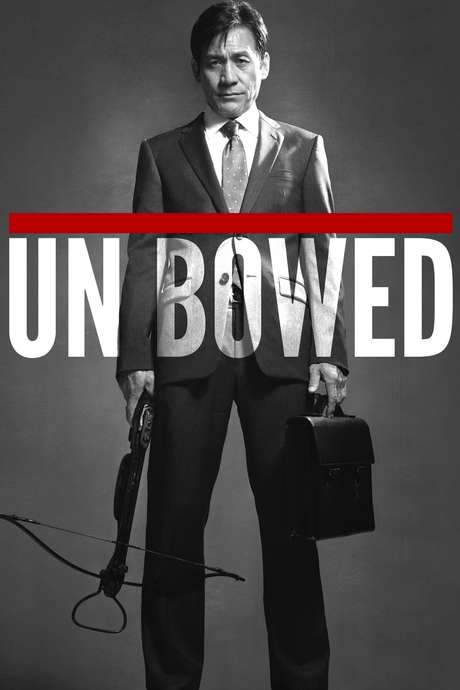
Movies about high-stakes ideological battles like The Fountainhead

Intense dramas where philosophical conflicts dictate devastating personal choices. Find powerful dramas similar to The Fountainhead, where passionate debates about principles lead to intense personal drama. These films explore the heavy cost of ideological purity, featuring tense courtroom sequences, media manipulation, and tragic personal sacrifices.

  • ideological
  • tense
  • melodramatic
  • philosophical
  • dramatic
  • high-stakes
  • Tone: tense, melodramatic, philosophical
  • Pacing: steady, escalating conflict
Why these movies?

The story pattern: The narrative pattern revolves around a core philosophical debate that is made tangible through the characters' actions. The conflict escalates from intellectual disagreement to deeply personal and public warfare, often involving elements like trials, media campaigns, or acts of sabotage, where characters' fates are directly tied to their allegiance to an idea.

Why they belong together: These movies share a high-tension, melodramatic feel centered on a battle of ideas. They are grouped by their steady pacing that builds towards a dramatic climax, their heavy emotional weight, and their focus on how abstract conflicts manifest in devastatingly real human consequences.

If you liked this

Movies Like The Fountainhead

Similar movies to The Fountainhead: the same genre, themes or kind of story. Each one comes with its own plot summary, timeline and ending explained.

Browse all movie summaries

Every angle

The Fountainhead (1949) Explained: Plot, Timeline & Characters

Everything about The Fountainhead in one place: what happens in the plot summary, the timeline in chronological order, the characters and meaning and a spoiler-free summary. What's After the Movie adds the cast, box office and post-credit scenes.

Coming soon on iOS and Android

The Plot Explained Movie Summary App

Plot summaries, endings explained and timelines on your phone. Catch up on any movie in minutes, save your favorites and never miss a twist again.

Be the first to know when we launch. Your email stays private, always.

Learn more about the app