Year: 1949
Runtime: 112 mins
Language: English
Director: King Vidor
An uncompromising, visionary architect fights to preserve his artistic integrity and individuality, refusing to surrender his designs to prevailing conventions. He endures relentless personal, professional and financial pressures to conform, yet remains steadfast in his principles.
Warning: spoilers below!
Haven’t seen The Fountainhead yet? This summary contains major spoilers. Bookmark the page, watch the movie, and come back for the full breakdown. If you're ready, scroll on and relive the story!
Read the complete plot breakdown of The Fountainhead (1949), including all key story events, major twists, and the ending explained in detail. Discover what really happened—and what it all means.
Howard Roark is a fiercely independent architect who refuses to bend his artistic vision to public taste, set against a world that prizes conformity over originality. The story follows his struggle to find builders and clients who will let him design on his own terms, a path that clashes with powerful forces in journalism, publishing, and society. At the center of the conflict is Gail Wynand, a wealthy and influential newspaper magnate who wields enormous editorial power but remains capable of surprising warmth. Wynand’s world is complicated by Dominique Francon, a glamorous socialite and columnist who admires Roark’s work from afar yet believes that society will ruin him. She is engaged to the conventional architect Peter Keating, a detail-minded professional who values success over truth in design. Into this web steps the formidable critic Elsworth Toohey, whose political use of culture and media aims to bury Roark’s uncompromising individuality.
Roark’s quest for meaningful work leads him to take a job as a day laborer in a quarry near Francon’s family property. It’s there that Francon, while vacationing near the site, first notices his remarkable talent and the magnetism of his resolve. A tense, charged sequence follows: Francon arranges for Roark to repair marble in her bedroom, but he treats the moment with cool irony, treating her pretense as inconsequential and leaving soon after. The encounter leaves Francon unsettled yet intrigued, and Roark’s decision to move on signals his unwavering commitment to making architecture free of compromise. Unbeknownst to Francon, she encounters the architect again at a party opening the Enright House, where she discovers that the man she admired in print is the very person she has kept hidden in her thoughts.
Wynand, though initially courting Francon for marriage, is drawn into a deeper connection with her and soon discovers Roark’s identity. Francon, torn between loyalty and love, eventually accepts Wynand’s proposal to wed. Wynand’s faith in Roark grows as he commissions Roark to design a lavish but secluded residence, and the two men forge a difficult, unlikely friendship that strains Francon’s jealousy. Meanwhile Keating, tasked with a massive housing project, approaches Roark with a demand: Roark will design the plan, and Keating will take all the credit. Roark agrees, but the project is sabotaged from within by Toohey’s influence, who pushes the firm toward a gaudy, conventional revival of Roark’s design into a “gingerbread” monstrosity. Frustrated by the betrayal, Roark, aided by Francon, engineers a dramatic destruction of the compromised buildings, and is arrested amid the wreckage.
The trial that follows becomes a crucible for Roark’s philosophy and for Wynand’s conscience. Toohey has insinuated himself into The Banner, Wynand’s own newspaper, pulling strings to silence dissent and shape public opinion. The press paints Roark as a public menace, while Wynand’s own courtiers attempt to force him into backing a more pliant stance. Roark, speaking on his own behalf and without witnesses, delivers a piercing defense of an artist’s right to work on his own terms. The verdict seems uncertain as Toohey’s network controls much of the media landscape, and Wynand’s loyalties are tested to their limits. In a pivotal turn, Wynand ultimately concedes to Roark’s vision by offering a contract to design the Wynand Building, a testament to absolute creative freedom. Yet the moment of triumph is overshadowed by tragedy: after Roark accepts the commission and leaves, Wynand shoots himself, unable to bear the weight of his own complicity.
Months later, Francon—now Mrs. Roark—enters the construction site of the Wynand Building. She ascends in the open elevator, looking up toward Roark, who stands at the edge of his extraordinary creation, arms akimbo as the wind buffets the skyline. The climactic image captures a man who has refused to yield to convention and a woman who has chosen to stand with him, proving that the arc of sculpture and life can rise to extraordinary heights when one dares to dream with uncompromising clarity.
Last Updated: October 09, 2025 at 12:31
Discover curated groups of movies connected by mood, themes, and story style. Browse collections built around emotion, atmosphere, and narrative focus to easily find films that match what you feel like watching right now.
Stories of creators who risk everything to stay true to their singular vision.Explore movies like The Fountainhead that follow defiant artists and creators battling societal expectations. These powerful dramas focus on the high-stakes price of artistic integrity and the tense, passionate struggle between an individual's vision and collective pressure.
Stories in this thread typically follow a protagonist with a strong, unconventional vision who faces escalating conflicts—from personal doubts to public scorn. The plot steadily builds tension around their refusal to conform, leading to a crisis point that tests their resolve, often culminating in a symbolic victory that affirms their principles.
Movies are grouped here for their shared focus on a central, defiant character arc, a tense and heavy emotional tone driven by ideological conflict, and the recurring theme of individualism versus collectivism. They deliver a similarly intense and passionate viewing experience.
Intense dramas where philosophical conflicts dictate devastating personal choices.Find powerful dramas similar to The Fountainhead, where passionate debates about principles lead to intense personal drama. These films explore the heavy cost of ideological purity, featuring tense courtroom sequences, media manipulation, and tragic personal sacrifices.
The narrative pattern revolves around a core philosophical debate that is made tangible through the characters' actions. The conflict escalates from intellectual disagreement to deeply personal and public warfare, often involving elements like trials, media campaigns, or acts of sabotage, where characters' fates are directly tied to their allegiance to an idea.
These movies share a high-tension, melodramatic feel centered on a battle of ideas. They are grouped by their steady pacing that builds towards a dramatic climax, their heavy emotional weight, and their focus on how abstract conflicts manifest in devastatingly real human consequences.
Don't stop at just watching — explore The Fountainhead in full detail. From the complete plot summary and scene-by-scene timeline to character breakdowns, thematic analysis, and a deep dive into the ending — every page helps you truly understand what The Fountainhead is all about. Plus, discover what's next after the movie.
Track the full timeline of The Fountainhead with every major event arranged chronologically. Perfect for decoding non-linear storytelling, flashbacks, or parallel narratives with a clear scene-by-scene breakdown.
Discover the characters, locations, and core themes that shape The Fountainhead. Get insights into symbolic elements, setting significance, and deeper narrative meaning — ideal for thematic analysis and movie breakdowns.
Get a quick, spoiler-free overview of The Fountainhead that covers the main plot points and key details without revealing any major twists or spoilers. Perfect for those who want to know what to expect before diving in.
Visit What's After the Movie to explore more about The Fountainhead: box office results, cast and crew info, production details, post-credit scenes, and external links — all in one place for movie fans and researchers.
Discover movies like The Fountainhead that share similar genres, themes, and storytelling elements. Whether you’re drawn to the atmosphere, character arcs, or plot structure, these curated recommendations will help you explore more films you’ll love.
The Fountainhead (1949) Scene-by-Scene Movie Timeline
The Fountainhead (1949) Movie Characters, Themes & Settings
The Fountainhead (1949) Spoiler-Free Summary & Key Flow
Movies Like The Fountainhead – Similar Titles You’ll Enjoy
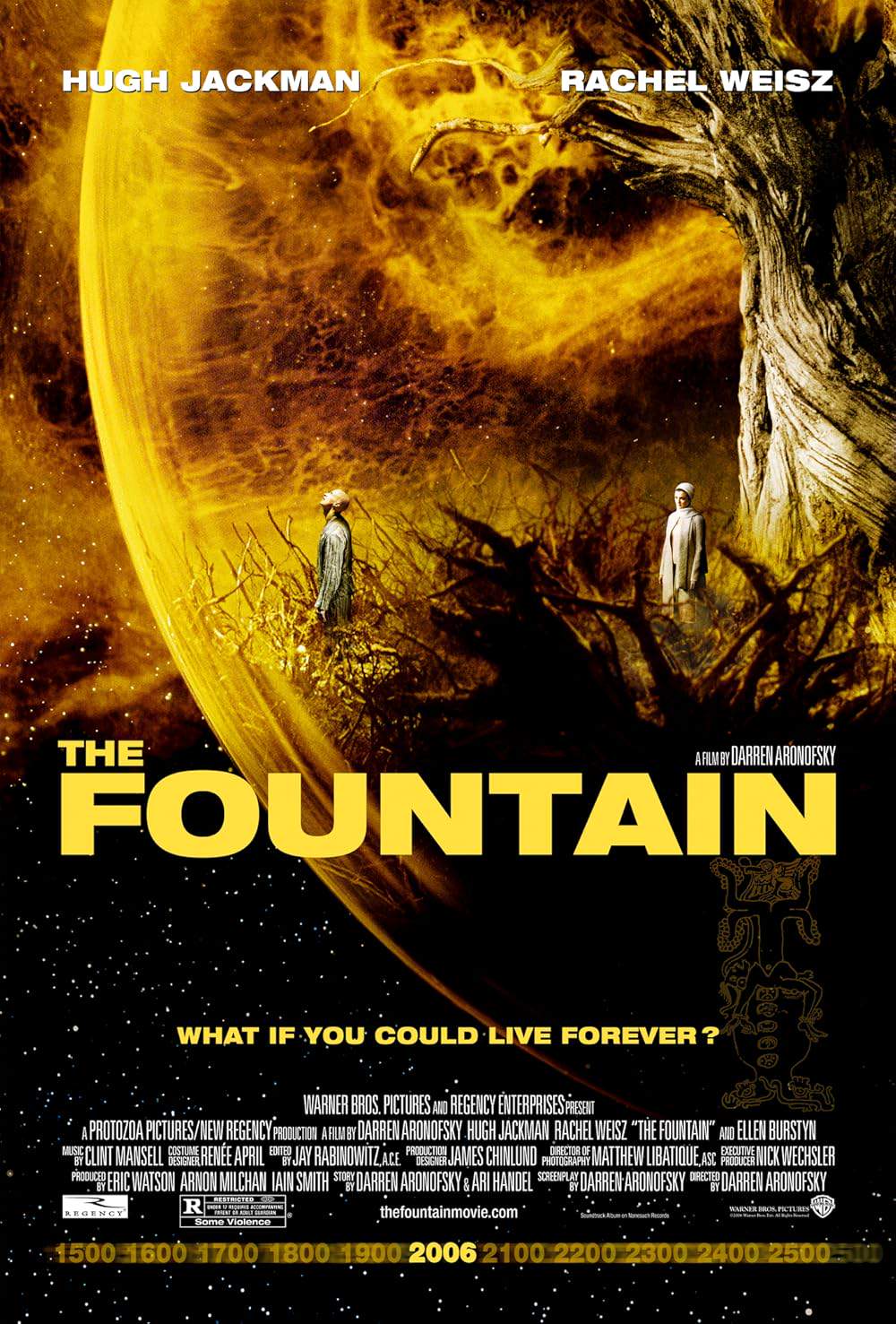
The Fountain (2006) Film Overview & Timeline
The Architect (2006) Full Movie Breakdown
Sunrise (1927) Complete Plot Breakdown
The Belly of an Architect (1987) Film Overview & Timeline
From the Submerged (1912) Spoiler-Packed Plot Recap
Contempt (1963) Plot Summary & Ending Explained
Street of Women (1932) Detailed Story Recap
Manhattan Melodrama (1934) Story Summary & Characters
Sunrise: A Song of Two Humans (1927) Full Summary & Key Details
Street Scene (1931) Film Overview & Timeline
The Fire Within (1963) Complete Plot Breakdown
The Fountain (1934) Film Overview & Timeline
Success at Any Price (1934) Ending Explained & Film Insights
The Fountain of Youth (1958) Plot Summary & Ending Explained
Skyscraper Souls (1932) Spoiler-Packed Plot Recap