






















Plot Explained Spoilers guaranteed!
Plot Explained

Browse by genre

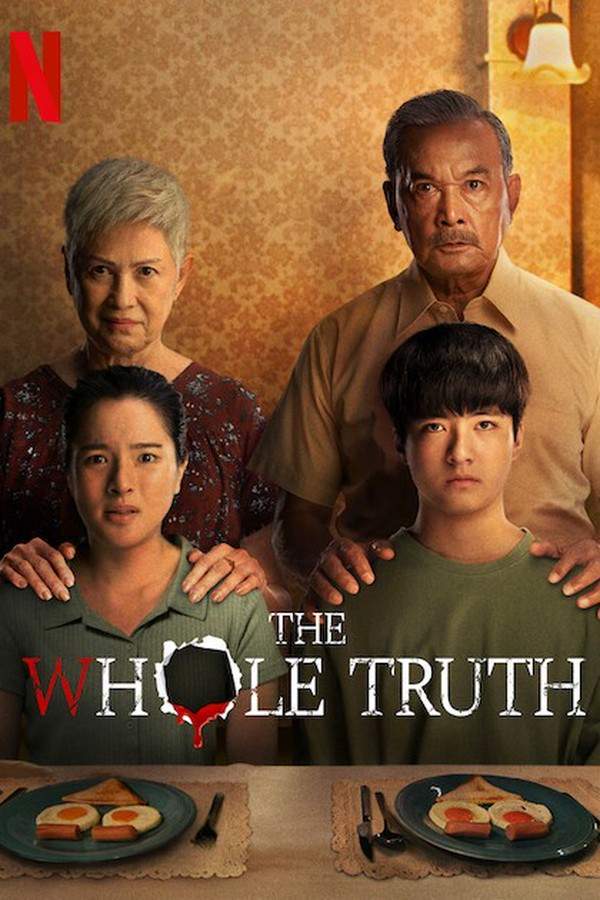
The Whole Truth (2016) movie poster

Timeline

The Whole Truth (2016) Timeline Explained – Every Event in Order

Release, runtime and language
2016 · 93 min · Thai
JustWatch #10,976
Directed by
Courtney Hunt

A defense attorney, Richard Ramsay, finds himself personally invested when a childhood friend’s son is accused of murder. As he prepares for the trial, unsettling secrets about the victim's life come to light, blurring the lines of justice. Ramsay’s belief in his client’s innocence is tested as a determined colleague begins to uncover a hidden truth that complicates the case and challenges everyone involved.

On this page (6)
  1. 1 Where to watch
  2. 2 Events in order (14)
  3. 3 Timeline questions answered
  4. 4 Movie threads
  5. 5 Movies like The Whole Truth
  6. 6 Every angle

Where to watch

Where to Watch The Whole Truth (2016)

Where can you watch The Whole Truth? Stream, rent or buy it in the US, including on Amazon Prime Video, fuboTV and Fawesome: current JustWatch availability with up-to-date prices.

Streaming availability powered by JustWatch

14 events in order · contains spoilers

The Whole Truth Timeline: Events in Chronological Order

Every key event of The Whole Truth (2016) in order, scene by scene, with when and where it takes place. Use it to untangle flashbacks, time jumps and parallel storylines, to refresh your memory before the sequel or to find the exact scene you are thinking of.

  1. The Murder of Boone Lassiter

    Seventeen-year-old Mike Lassiter is accused of murdering his wealthy father, Boone Lassiter, a prominent lawyer. The case quickly garners media attention and places significant pressure on defense attorney Richard Ramsay.

  2. Ramsay's Dilemma

    As Ramsay begins to formulate a defense, he faces an overwhelming challenge due to Mike's silence, which leaves him without critical details or evidence to effectively contest the prosecution's claims. This lack of communication intensifies the stakes and complicates his strategy.

  3. Introducing Janelle Brady

    In a strategic move to bolster his defense, Ramsay enlists Janelle Brady, a talented young attorney who resigns from her corporate job to assist in the case. Together, they work to uncover the truth behind the relationship between Mike and Boone.

  4. Testimony from Angela Morley

    Angela Morley, a flight attendant, presents crucial testimony about a flight where tension erupted between Mike and Boone. Her account provides vital insights into the fraught dynamics of their relationship, fueling the narrative of conflict leading up to the murder.

    Where
    Charter flight
  5. Discovery of Boone's Body

    Just two days following the fateful flight, Boone Lassiter is found dead in his home. The shocking discovery intensifies the investigation, leading to Mike's arrest as authorities connect him to the crime scene through circumstantial evidence.

    Where
    Boone's home
  6. Eyewitness Account

    During the investigation, a police officer recounts overhearing Mike allegedly expressing remorse with a chilling statement, *'I should've done it long ago.'* This accusation positions Mike firmly in the spotlight as the prime suspect in his father's murder.

  7. Neighbors' Insights

    As the trial unravels, neighbors provide intricate details about Mike and Boone's relationship, revealing a mix of love and discord that contributed to the eventual downfall. The courtroom witnesses’ testimonies depict a once-close bond that deteriorated amidst Boone's abusive behavior.

  8. Loretta's Testimony

    Loretta, Boone's wife, courageously shares her experiences of suffering emotional and physical abuse throughout her marriage. Her heartrending testimony reveals the harsh realities of living under Boone's tyranny, shedding light on the motivations behind the murder.

  9. Mike Takes the Stand

    In a dramatic moment, Mike Lassiter breaks his silence and chooses to testify, a decision that concerns Ramsay. He confesses to murdering Boone as an act to escape years of abuse he endured, shifting the direction of the trial considerably.

  10. Ramsay's Moral Quandary

    Following Mike's emotional testimony, Ramsay grapples with his own ethical dilemmas regarding loyalty, duty, and the pursuit of justice. He realizes the depth of the conspiracy that has unfolded and questions his prior assumptions about the case.

  11. Evidence of Abuse

    In a pivotal moment during the trial, Ramsay presents photographic evidence of Loretta's long-term abuse, corroborating her claims. The disturbing images highlight the traumatic weight of her experiences under Boone's control and aim to sway the jury’s perception.

  12. The Jury's Verdict

    In a surprising conclusion, the jury acquits Mike of the murder charges despite the overwhelming evidence against him. The verdict leaves spectators and participants in the courtroom confused, questioning the integrity of the justice system.

    Where
    Courtroom
  13. Mike's Revelation

    Following the trial, Mike confronts Ramsay, subtly implying that he knows more about the events surrounding his father’s death than he revealed. This conversation raises questions about the true nature of Mike’s intentions and the actions of others involved in the case.

  14. The Truth Unveiled

    Ramsay reflects on the reality of the murder's circumstances, acknowledging his illicit affair with Loretta and the conspiracy that led to Boone's death. The complexity of human relationships is laid bare as he identifies the painful truths underlying loyalty and betrayal.

Last updated: November 03, 2024 at 12:11

Was this helpful?

Timeline questions answered

The Whole Truth Timeline Explained: Your Questions Answered

When does it happen, and why in that order? The questions people ask about the chronology of The Whole Truth (2016): time jumps, flashbacks, cause and effect between scenes and the correct order of events, each answered with spoilers.

Q1

Why did Mike confess to killing his father if he didn't do it?

Mike confessed to protect his mother Loretta. Although Ramsay was the actual killer, Mike had discovered his mother's involvement in the conspiracy. By confessing to a crime he didn't commit, Mike ensured the case would focus on his claimed motive of escaping years of abuse, which would lead to an acquittal rather than revealing the truth about Loretta and Ramsay's conspiracy.

Foreshadowing: Earlier testimony from neighbors revealed the deteriorating relationship between Mike and Boone, hinting at the abuse that became central to Mike's confession strategy.

  • mike lassiter confession
  • why mike confessed
  • protect mother
  • cover up
Q2

Who actually killed Boone Lassiter?

Richard Ramsay, the defense attorney, was the actual killer. He carried out Boone's murder in collaboration with Loretta, Boone's wife, with whom Ramsay was having an illicit affair. When Boone discovered the affair and threatened lethal consequences, Ramsay and Loretta conspired to kill him.

Foreshadowing: Ramsay's unusual personal investment in the case and his resistance to investigating certain angles hint at his deeper involvement.

  • who killed boone lassiter
  • real killer
  • richard ramsay
  • conspiracy
Q3

Why was Mike acquitted despite confessing to murder?

Mike was acquitted because his confession reframed the case as a justified response to years of abuse. When he testified that he killed Boone to escape the torment he suffered since age twelve, the jury viewed it through the lens of self-defense and cycles of abuse. Combined with Ramsay's defense strategy and the prosecution's inability to counter this narrative effectively, the jury rejected the murder charge.

Foreshadowing: Loretta's testimony about years of domestic abuse established the pattern of violence that Mike's confession later claimed as his motive.

  • mike acquitted
  • jury verdict
  • not guilty
  • abuse defense
Q4

What was Richard Ramsay's relationship with Loretta?

Richard Ramsay was having an affair with Loretta Lassiter, Boone's wife. This hidden relationship was the true reason Ramsay took the case so personally. When Boone became suspicious and threatened lethal consequences, Ramsay and Loretta conspired to eliminate him, with Ramsay carrying out the murder.

Foreshadowing: Ramsay's immediate willingness to defend Mike and his intense focus on protecting the family despite lacking a clear defense strategy reveals his personal stakes in the case.

  • ramsay loretta affair
  • illicit relationship
  • conspiracy
Q5

Why did Mike stay silent during most of the trial?

Mike remained silent because he was protecting his mother Loretta. As the actual truth began to emerge through Janelle's investigation, Mike realized his silence was part of a larger strategy to shield his mother from being exposed as Ramsay's co-conspirator in Boone's murder.

Foreshadowing: Mike's initial silence contrasts sharply with his later dramatic decision to take the stand, signaling a calculated shift in strategy.

  • mike silent trial
  • why no testimony
  • strategy
Q6

What did the flight attendant reveal about Mike and Boone?

Flight attendant Angela Morley testified about tension between Mike and Boone during a charter flight. Her account revealed the conflict over Mike's desire to attend Reed College versus Boone's insistence on Stanford, showing the father-son conflict that would later become central to the abuse narrative.

Foreshadowing: This testimony occurred just two days before Boone's murder, establishing the immediate context of conflict that preceded his death.

  • angela morley testimony
  • flight tension
  • reed college stanford
Q7

Why did Loretta testify against her own son Mike?

Loretta testified about the abuse she suffered to establish a motive that would help Mike's defense. Though she knew Mike was covering for her, her testimony about Boone's tyranny and violence was genuine and aimed at showing the jury that anyone in that household could have been pushed to violence. Her emotional testimony about years of abuse was meant to create reasonable doubt.

Foreshadowing: Earlier neighbor testimony painted a picture of a once-close relationship that deteriorated under Boone's abusive behavior, setting up Loretta's later claims.

  • loretta testimony
  • abuse
  • motive
  • family secrets
Q8

What evidence pointed to Mike as the killer?

Several pieces of circumstantial evidence pointed to Mike: his fingerprints were found on the murder weapon, a police officer overheard him saying 'I should've done it long ago,' and he was the last known person with access to Boone. Additionally, the prosecution highlighted his motive through the tumultuous father-son relationship and the conflict over his college future.

Foreshadowing: The timeline shows the murder occurred just two days after the contentious flight where Mike's rebellion against his father's plans became apparent.

  • evidence against mike
  • fingerprints
  • murder weapon
  • eyewitness
Q9

Why did Mike decide to take the stand against his lawyer's advice?

Mike decided to take the stand because he had discovered the truth about Ramsay and Loretta's conspiracy. Rather than let the case expose his mother's involvement, Mike chose to seize control by confessing to a crime he didn't commit. This strategic move allowed him to shape the narrative around abuse as his motive, ensuring his acquittal while protecting Loretta.

Foreshadowing: This dramatic shift in strategy follows Janelle's investigation that began connecting dots about Mike's true motives.

  • mike takes stand
  • confession
  • against advice
  • trial strategy
Q10

Why did Richard Ramsay defend Mike if he knew Mike was innocent?

Ramsay defended Mike to ensure the case never revealed his own guilt. By mounting an aggressive defense focused on Mike's claimed motive of abuse, Ramsay could secure an acquittal while keeping the actual truth hidden. When Janelle began uncovering the real story, Ramsay's priority was always to exonerate Mike, not to uncover all truths, because Mike's freedom protected Ramsay's own secret.

Foreshadowing: Ramsay's ethical dilemma becomes apparent when he argues with Janelle that his objective is to exonerate Mike, not find the real truth.

  • ramsay defense strategy
  • protect himself
  • exonerate mike
Q11

What was the nature of Boone's behavior toward his family?

Boone Lassiter was depicted as an arrogant, tyrannical figure who engaged in numerous extramarital affairs and subjected his wife Loretta to years of emotional and physical abuse. The abuse extended to Mike, who testified that the torment began when he was twelve years old. Neighbors described how their close relationship deteriorated as Mike grew more distant under his father's shadow.

Foreshadowing: The flight attendant's testimony about the argument over college plans revealed how Boone's controlling behavior persisted even in Mike's late teens.

  • boone lassiter abuse
  • domestic violence
  • tyrannical father
Q12

Why was the jury confused by the not guilty verdict?

The jury was confused because despite overwhelming circumstantial evidence pointing to Mike, including his fingerprints on the weapon, his chilling statement, and the prosecution's case, Mike's emotional testimony about escaping years of abuse reframed the narrative. The defense successfully portrayed the killing as a desperate act of self-preservation rather than premeditated murder, leading to an acquittal that left observers questioning whether true justice had been served.

Foreshadowing: Ramsay's strategic presentation of Loretta's abuse photos aimed to sway the jury's emotional response.

  • jury verdict confusion
  • not guilty surprise
  • justice system

Movie threads

More Movies Like The Whole Truth, by Mood & Story

Curated lists built around what makes The Whole Truth tick: the same mood, the same kind of story or the same emotional payoff. Each list explains why these movies belong together.

Legal Thrillers About Unethical Lawyers Like The Whole Truth

Legal thrillers where the attorney's own morality is on trial. Discover movies like The Whole Truth where the line between defense attorney and accomplice blurs. These legal thrillers focus on lawyers who become morally compromised, exploring themes of professional ethics, personal betrayal, and the heavy cost of winning a case at any price.

  • morally ambiguous
  • tense
  • deceptive
  • grim
  • anxious
  • claustrophobic
  • Tone: dark, morally ambiguous
  • Pacing: steady, methodical
Why these movies?

The story pattern: Stories in this thread typically follow a defense attorney who takes on a morally ambiguous case, only to find their personal and professional integrity tested. The narrative often involves uncovering hidden truths that implicate the lawyer themselves, leading to a climax that questions the very nature of justice and the price of victory.

Why they belong together: These movies are grouped by their shared focus on the lawyer's internal moral crisis. They blend the tension of a courtroom procedural with a character study of ethical decay, creating a dark, intellectually challenging, and emotionally heavy viewing experience centered on betrayal and professional duty.
Movies About Family Secrets Like The Whole Truth

Unraveling dark truths hidden behind a seemingly normal family. If you liked The Whole Truth's exploration of domestic abuse and hidden truths, you'll find similar movies here. These dramas and thrillers center on families whose perfect facade cracks open to reveal dark secrets of betrayal, abuse, and moral compromise that lead to tragic consequences.

  • suspenseful
  • anxious
  • grim
  • claustrophobic
  • deceptive
  • tense
  • Tone: dark, tense
  • Pacing: steady, unraveling
Why these movies?

The story pattern: The narrative pattern involves a placid domestic setting disrupted by a catalyst event, triggering an investigation that peels back layers of deception. Flashbacks and revelations methodically expose a history of abuse, infidelity, or conspiracy, re-contextualizing the present-day crime and revealing that the real tragedy was festering behind closed doors all along.

Why they belong together: These films share a core focus on the destructive power of familial lies. They create a tense, claustrophobic mood by trapping characters in a web of their own making, delivering a heavy emotional impact through themes of betrayal and the stark contrast between public image and private horror.

If you liked this

Movies Like The Whole Truth

Similar movies to The Whole Truth: the same genre, themes or kind of story. Each one comes with its own plot summary, timeline and ending explained.

Browse all movie summaries

Every angle

The Whole Truth (2016) Explained: Plot, Ending, Timeline & Characters

Everything about The Whole Truth in one place: what happens in the plot summary, the timeline in chronological order, the characters and meaning, the ending explained and a spoiler-free summary. What's After the Movie adds the cast, box office and post-credit scenes.

Coming soon on iOS and Android

The Plot Explained Movie Summary App

Plot summaries, endings explained and timelines on your phone. Catch up on any movie in minutes, save your favorites and never miss a twist again.

Be the first to know when we launch. Your email stays private, always.

Learn more about the app