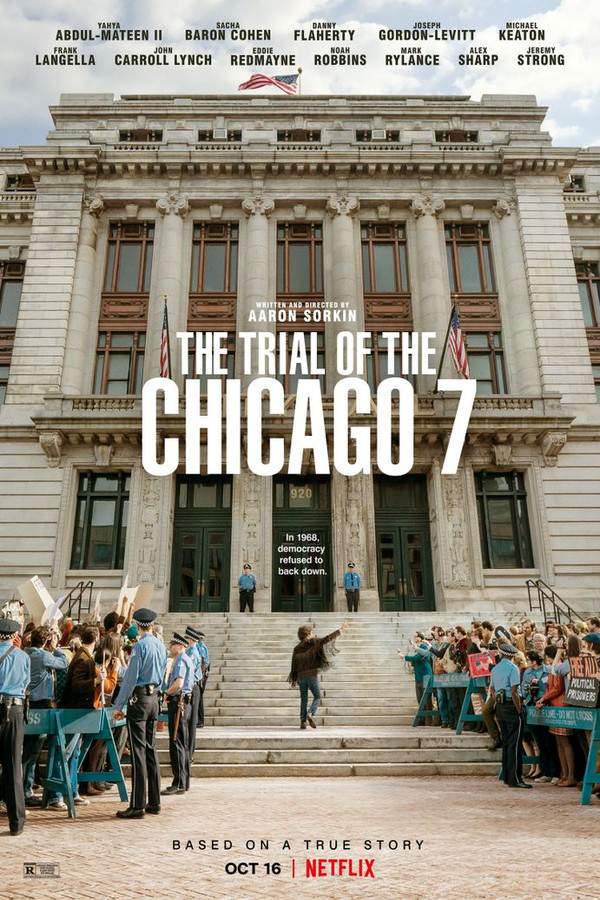
#23,7741 Year: 2020
Runtime: 129 min
Language: English
Director: Aaron Sorkin
Echo Score: 89Budget: $35M
During the 1968 Democratic National Convention, a planned demonstration turns violent, leading to clashes between protesters and police. Seven activists, known for their counterculture views and leadership in the anti-Vietnam War movement, are subsequently charged with conspiracy. Their trial becomes a high-profile legal battle, testing the boundaries of free speech and challenging the government's response to dissent during a time of significant social unrest.
Find where to stream, rent, or buy The Trial of the Chicago 7 (2020) in the US with current JustWatch availability, up-to-date pricing, and platform listings for subscription, rental, and digital purchase options.
Warning: spoilers below!
Haven’t seen The Trial of the Chicago 7 yet? This summary contains major spoilers. Bookmark the page, watch the movie, and come back for the full breakdown. If you're ready, scroll on and relive the story!
Still thinking about how The Trial of the Chicago 7 (2020) ended? Here’s a full breakdown of the ending, key final moments, major twists, and the deeper meaning behind the film’s conclusion.
The ending of The Trial of the Chicago 7 underscores the triumph of resilience and moral conviction over corruption and abuse of power. Throughout the film, we see that despite the blatant manipulation of the trial by those in authority—who blatantly distort facts, fabricate evidence, and manipulate jurors—the accused remain steadfast in their beliefs. Their fight is not just against the specific charges but against a system that seeks to silence dissent and maintain control through injustice. The final courtroom scenes reveal that even as the legal process is rigged and the verdict seems predetermined, the voices of these activists echo beyond the courtroom walls, inspiring viewers to question authority and cherish the importance of free speech and civil resistance.
In the end, the film leaves us with the powerful message that democracy’s strength lies in its ability to withstand such oppressive tactics. The characters, especially those like Abbie Hoffman and Tom Hayden, show that true activism does not end with legal battles; it’s a call for lasting change rooted in moral courage. The verdict may be unjust, but their refusal to be silenced affirms that dissent, when held with conviction, has the power to challenge even the most manipulated and corrupt systems. Ultimately, the film suggests that even in the face of systemic injustice, the true spirit of democracy endures in the collective stand for truth and justice, which can ignite change across generations.
Last updated: June 25, 2025 at 08:58
Read frequently asked questions about the ending of The Trial of the Chicago 7 (2020), including final-scene interpretation, twist explanations, character outcomes, and the deeper meaning behind the conclusion. This ending explained FAQ is designed for viewers searching for clear spoiler-heavy answers and ending breakdown insights.
The jury finds all seven defendants guilty of conspiracy and crossing state lines to incite a riot. Each defendant receives sentences ranging from several months to several years in prison. However, the judge later reduces some sentences, and all serve minimal time due to time already served and appeals.
Earlier scenes show the judge's clear bias against the defendants and the prosecution's reliance on inflammatory, manufactured evidence.
Tom Hayden's final courtroom speech serves as the emotional climax, where he transforms the trial's defeat into a moral victory. He argues that the real question is not whether they crossed state lines, but whether the American promise of dissent still holds. The speech reframes their actions as patriotic rather than criminal, earning respect from observers even as the verdict looms.
Throughout the film, Hayden consistently argues for a nonviolent, principled approach to activism, distinguishing the Chicago Seven from more radical factions.
The ending is considered a moral victory because the trial itself became a platform to expose government corruption and the weaponization of the legal system against dissent. Despite the guilty verdicts, the defendants used the courtroom to articulate their message, demonstrating that their ideas could not be silenced even through a rigged process. Their steadfastness inspired future activists and validated the principle that speaking truth to power matters more than legal outcomes.
Abbie Hoffman repeatedly states that the trial is not about whether they are guilty, but about what they stood for.
Abbie Hoffman is also found guilty alongside the other defendants. Throughout the trial, he maintains his irreverent, confrontational style, using humor and theatrical gestures to expose the absurdity of the proceedings. His refusal to take the court seriously contrasts with the gravity of the other defendants, but his commitment to the cause remains unwavering.
Hoffman consistently challenges the court's authority through his behavior, such as wearing an American flag shirt to mock the prosecution's patriotism arguments.
The prosecution manipulates the trial through several means: Judge Julius Hoffman (no relation to Abbie) shows blatant bias, ruling against defense objections and restricting testimony. The government fabricates evidence suggesting the protest was pre-planned as violent, when in reality the demonstration was meant to be peaceful. The prosecution also uses inflammatory language to bias the jury against the counterculture defendants.
Early courtroom scenes establish the judge's hostility toward the defense team and his willingness to entertain the prosecution's baseless claims.
The ending asserts that free speech and civil resistance are essential to democracy. Even when the legal system fails, when courts become tools for suppressing dissent rather than delivering justice, the act of speaking truth remains powerful. The film argues that true democracy depends on citizens' willingness to challenge authority and demand accountability, regardless of whether the system rewards them for it.
The defense repeatedly argues that their protest was a legitimate exercise of First Amendment rights, not a criminal conspiracy.
Yes, the film is broadly accurate regarding the outcome. All eight original defendants (the Chicago Seven after Bobby Seale's separation) were found guilty of conspiracy and inciting a riot in 1970. The convictions were later overturned by the Seventh Circuit Court of Appeals in 1972, which ruled that the trial judge had been biased. No defendant served significant prison time.
The film shows the judge's extreme bias throughout, which historically led to the convictions being overturned on appeal.
Judge Julius Hoffman displays bias rooted in his discomfort with the counterculture and anti-war activism represented by the defendants. He consistently rules against defense objections, restricts what testimony the jury can hear, and allows the prosecution to present inflammatory evidence without scrutiny. His bias becomes a central theme, illustrating how the judicial system itself becomes an instrument of oppression rather than justice.
From the first courtroom scene, Hoffman addresses the defendants with contempt and interrupts defense attorney William Kunstler frequently.
After the trial, the convictions were overturned on appeal in 1972 due to Judge Hoffman's obvious bias. The government chose not to retry the case. The defendants went on to continue their activism and public careers, Tom Hayden became a California state senator, Abbie Hoffman remained a political activist, and others pursued various paths in public life, though some struggled with personal challenges in subsequent years.
The film concludes with text explaining that the convictions were eventually overturned, providing historical closure to the narrative.
The film's final message is that democracy's strength lies in its capacity to endure injustice through collective resistance. The ending suggests that even when legal systems are corrupted and trials are rigged, the persistence of dissenting voices can eventually expose truth and inspire change across generations. The defendants' refusal to be silenced demonstrates that moral conviction can outlast institutional oppression.
The film's title card at the end connects the 1968 protests to subsequent movements for social change, reinforcing the idea that dissent creates lasting impact.
Discover curated groups of movies connected by mood, themes, and story style. Browse collections built around emotion, atmosphere, and narrative focus to easily find films that match what you feel like watching right now.
Tense legal battles where the system itself is on trial.If you liked the tense, frustrating legal battle in The Trial of the Chicago 7, you'll find more movies like it here. This list features high-stakes courtroom dramas and political trials where defendants fight against a biased system, perfect for fans of stories about civil rights and legal defiance.
These stories typically follow a linear court case where the defense battles not just the prosecution, but an entire prejudiced system. The narrative builds through legal maneuvering, dramatic testimonies, and overt judicial misconduct, creating a rising sense of outrage and a climax that hinges on a moral, if not always legal, victory.
Movies are grouped here for their shared focus on the courtroom as a setting for intense ideological conflict, their portrayal of judicial systems as antagonists, and their heavy emotional weight derived from witnessing a fundamentally unfair process.
Stories of defiant activism where the moral victory outweighs the cost.For viewers who enjoyed the defiant activism and historical context of The Trial of the Chicago 7, this list gathers similar movies about political protests, civil rights movements, and stories of righteous anger against authority. These films share a tense, urgent vibe and often end on a bittersweet note.
The narrative pattern follows a group or individual challenging an oppressive system through public dissent. The story builds through escalating conflict with authorities, leading to a climactic confrontation. The ending is typically bittersweet, acknowledging the personal costs and imperfect results while honoring the courage and moral necessity of the protest.
These films are connected by their focus on historical activism, a tone blending righteous anger with tense urgency, and an emotional arc that finds a bittersweet poignancy in the struggle for social change, prioritizing the moral stand over a clean victory.
Don't stop at just watching - explore The Trial of the Chicago 7 in full detail. From the complete plot summary and scene-by-scene timeline to character breakdowns, thematic analysis, and a deep dive into the ending - every page helps you truly understand what The Trial of the Chicago 7 is all about. Plus, discover what's next after the movie.
Read a complete plot summary of The Trial of the Chicago 7, including all key story points, character arcs, and turning points. This in-depth recap is ideal for understanding the narrative structure or reviewing what happened in the movie.
Track the full timeline of The Trial of the Chicago 7 with every major event arranged chronologically. Perfect for decoding non-linear storytelling, flashbacks, or parallel narratives with a clear scene-by-scene breakdown.
Discover the characters, locations, and core themes that shape The Trial of the Chicago 7. Get insights into symbolic elements, setting significance, and deeper narrative meaning - ideal for thematic analysis and movie breakdowns.
Discover movies like The Trial of the Chicago 7 that share similar genres, themes, and storytelling elements. Whether you’re drawn to the atmosphere, character arcs, or plot structure, these curated recommendations will help you explore more films you’ll love.
The Trial of the Chicago 7 (2020) Plot Summary & Movie Recap
The Trial of the Chicago 7 (2020) Scene-by-Scene Movie Timeline
The Trial of the Chicago 7 (2020) Movie Characters, Themes & Settings
The Trial of the Chicago 7 (2020) Spoiler-Free Summary & Key Flow
Movies Like The Trial of the Chicago 7 – Similar Titles You’ll Enjoy
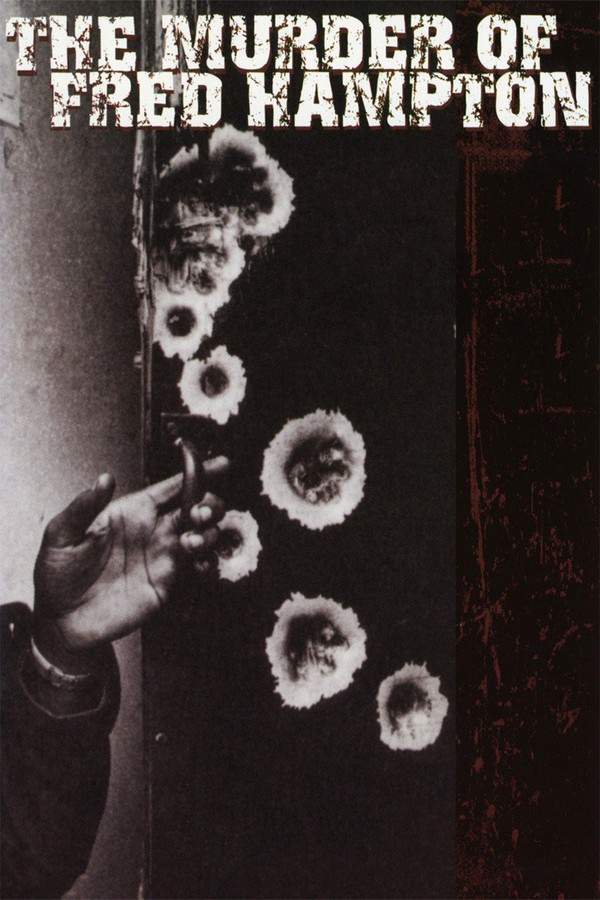
The Murder of Fred Hampton (1971) Detailed Story Recap
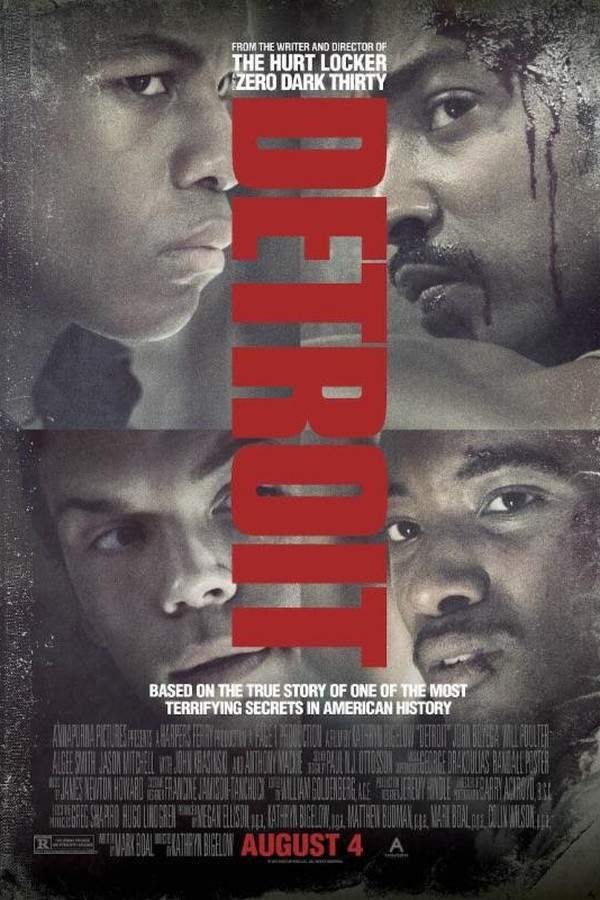
Detroit (2017) Complete Plot Breakdown
Chicago 10 (2008) Story Summary & Characters
Battle in Seattle (2008) Film Overview & Timeline
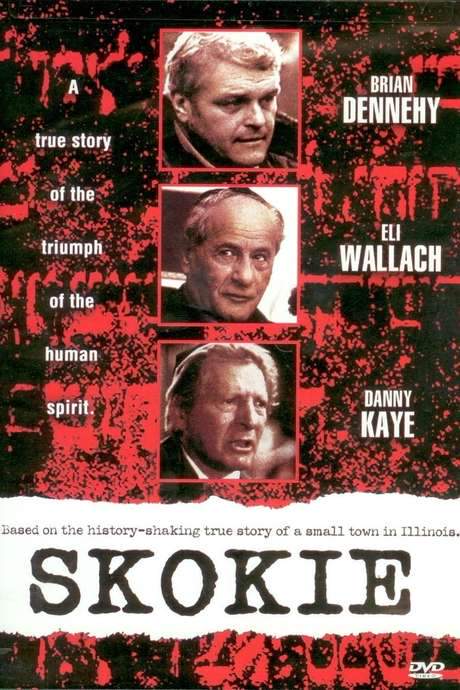
Skokie (1981) Plot Summary & Ending Explained
Conspiracy: The Trial of the Chicago 8 (1987) Detailed Story Recap
Police on Trial (2022) Film Overview & Timeline
Yippie (1968) Full Summary & Key Details
Hollywood on Trial (1976) Detailed Story Recap
The Trial of Lee Harvey Oswald (1964) Plot Summary & Ending Explained
Vladimir and Rosa (1971) Spoiler-Packed Plot Recap
The ’60s (1999) Spoiler-Packed Plot Recap
Color of Justice (1997) Spoiler-Packed Plot Recap
Black Panthers (1968) Spoiler-Packed Plot Recap
Chicago Confidential (1957) Full Summary & Key Details