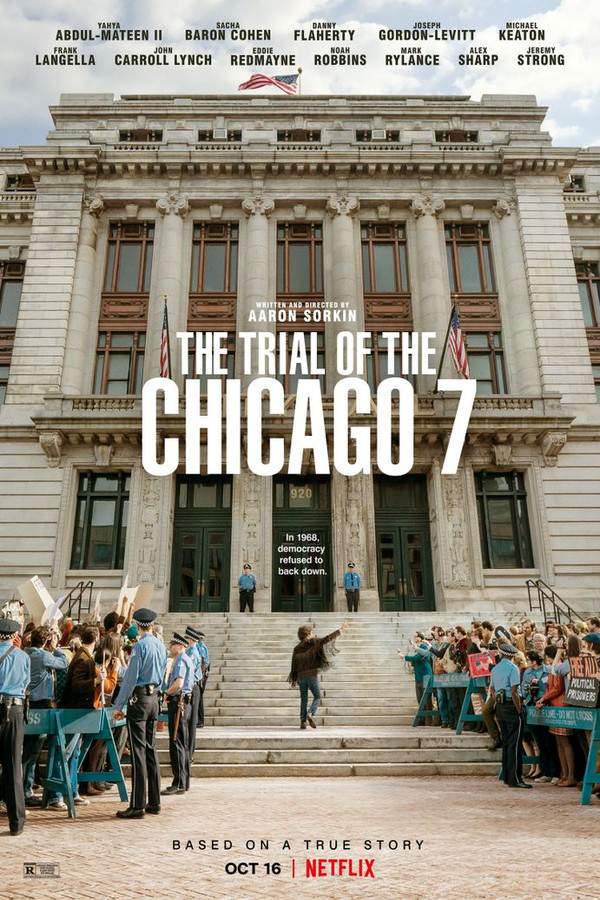
#23,7741 Year: 2020
Runtime: 129 min
Language: English
Director: Aaron Sorkin
Echo Score: 89Budget: $35M
During the 1968 Democratic National Convention, a planned demonstration turns violent, leading to clashes between protesters and police. Seven activists, known for their counterculture views and leadership in the anti-Vietnam War movement, are subsequently charged with conspiracy. Their trial becomes a high-profile legal battle, testing the boundaries of free speech and challenging the government's response to dissent during a time of significant social unrest.
Find where to stream, rent, or buy The Trial of the Chicago 7 (2020) in the US with current JustWatch availability, up-to-date pricing, and platform listings for subscription, rental, and digital purchase options.
Warning: spoilers below!
Haven’t seen The Trial of the Chicago 7 yet? This summary contains major spoilers. Bookmark the page, watch the movie, and come back for the full breakdown. If you're ready, scroll on and relive the story!
Explore the full timeline and setting of The Trial of the Chicago 7 (2020). Follow every major event in chronological order and see how the environment shapes the story, characters, and dramatic tension.
Last updated: May 04, 2025 at 18:44
Meet the key characters of The Trial of the Chicago 7 (2020), with detailed profiles, motivations, and roles in the plot. Understand their emotional journeys and what they reveal about the film’s deeper themes.
Last updated: May 04, 2025 at 18:44
Explore the central themes of The Trial of the Chicago 7 (2020), from psychological, social, and emotional dimensions to philosophical messages. Understand what the film is really saying beneath the surface.
Last updated: May 04, 2025 at 18:44
Browse frequently asked questions about The Trial of the Chicago 7 (2020) focused on characters, relationships, themes, symbols, setting, and story context. This movie info FAQ gives spoiler-aware explanations for character arcs, world details, and thematic interpretation so readers can better understand what the film is really about.
The film depicts the 1968 Democratic National Convention in Chicago, where protests against the Vietnam War turned violent. It follows the subsequent trial of seven activists who were charged with conspiracy and crossing state lines to incite a riot, representing a real case that became a landmark moment in the history of American political dissent.
The movie takes place primarily in Chicago, Illinois, during the Democratic National Convention in August 1968. The setting shifts between the courtroom where the trial occurs and flashbacks depicting the protests that took place in the city during that turbulent time.
1968 was one of the most turbulent years in American history, marked by widespread social unrest, anti-Vietnam War protests, and the civil rights movement. The assassination of Martin Luther King Jr. and Bobby Kennedy occurred that year, and the country was deeply divided over the war in Vietnam and issues of racial inequality.
The film critiques the American justice system by depicting a trial where the defendants face a biased judge and politically motivated prosecution. It highlights how the judicial process can be weaponized against activists, particularly those challenging government authority, raising questions about whether the system truly delivers fair trials for all.
The film portrays activism as a courageous act of civil disobedience against unjust policies. It depicts activists who risk their freedom to stand up for their beliefs, particularly opposing the Vietnam War. The movie shows both the power of peaceful protest and the violent consequences when authorities confront demonstrators.
Solidarity is a central theme, as the seven defendants, despite having different backgrounds and philosophies, unite against a common adversary in the legal system. Their bond strengthens through shared persecution, demonstrating how community and mutual support become essential when challenging systemic oppression.
Abbie Hoffman is depicted as a charismatic and irreverent anti-war activist who becomes one of the central figures in the trial. Known for his humor and defiance, he challenges the court's authority throughout the proceedings while advocating passionately for his beliefs and the rights of his fellow defendants.
Tom Hayden is portrayed as a passionate and committed activist who represents the anti-war movement's ideals. Throughout the trial, he grapples with the consequences of his activism and demonstrates personal growth, striving for justice while confronting the harsh realities of political persecution.
Bobby Seale appears as the founder of the Black Panther Party, depicted as a powerful and steadfast leader who faces severe prejudice in court. His storyline highlights the intersection of race and justice in America, illustrating how the legal system disproportionately targets people of color and marginalized groups.
Judge Julius Hoffman is depicted as the presiding judge over the trial, portrayed as overtly biased against the defendants. His prejudiced rulings and disruptive courtroom behavior serve to amplify the film's critique of systemic injustice, showing how authority figures can abuse their power to undermine fair proceedings.
The film carries a consistently tense and heavy emotional tone, driven by the high-stakes courtroom setting and the clear judicial bias against the defendants. The mood blends tension with moments of sadness and frustration, as the characters face political persecution and the sobering consequences of dissent.
The film examines the tension between free speech rights and government authority, particularly how the state responded aggressively to protesters in 1968. It questions whether the government's harsh reaction to peaceful dissent was truly about maintaining order or about silencing opposition to the Vietnam War.
Discover curated groups of movies connected by mood, themes, and story style. Browse collections built around emotion, atmosphere, and narrative focus to easily find films that match what you feel like watching right now.
Tense legal battles where the system itself is on trial.If you liked the tense, frustrating legal battle in The Trial of the Chicago 7, you'll find more movies like it here. This list features high-stakes courtroom dramas and political trials where defendants fight against a biased system, perfect for fans of stories about civil rights and legal defiance.
These stories typically follow a linear court case where the defense battles not just the prosecution, but an entire prejudiced system. The narrative builds through legal maneuvering, dramatic testimonies, and overt judicial misconduct, creating a rising sense of outrage and a climax that hinges on a moral, if not always legal, victory.
Movies are grouped here for their shared focus on the courtroom as a setting for intense ideological conflict, their portrayal of judicial systems as antagonists, and their heavy emotional weight derived from witnessing a fundamentally unfair process.
Stories of defiant activism where the moral victory outweighs the cost.For viewers who enjoyed the defiant activism and historical context of The Trial of the Chicago 7, this list gathers similar movies about political protests, civil rights movements, and stories of righteous anger against authority. These films share a tense, urgent vibe and often end on a bittersweet note.
The narrative pattern follows a group or individual challenging an oppressive system through public dissent. The story builds through escalating conflict with authorities, leading to a climactic confrontation. The ending is typically bittersweet, acknowledging the personal costs and imperfect results while honoring the courage and moral necessity of the protest.
These films are connected by their focus on historical activism, a tone blending righteous anger with tense urgency, and an emotional arc that finds a bittersweet poignancy in the struggle for social change, prioritizing the moral stand over a clean victory.
Don't stop at just watching - explore The Trial of the Chicago 7 in full detail. From the complete plot summary and scene-by-scene timeline to character breakdowns, thematic analysis, and a deep dive into the ending - every page helps you truly understand what The Trial of the Chicago 7 is all about. Plus, discover what's next after the movie.
Read a complete plot summary of The Trial of the Chicago 7, including all key story points, character arcs, and turning points. This in-depth recap is ideal for understanding the narrative structure or reviewing what happened in the movie.
Track the full timeline of The Trial of the Chicago 7 with every major event arranged chronologically. Perfect for decoding non-linear storytelling, flashbacks, or parallel narratives with a clear scene-by-scene breakdown.
What really happened at the end of The Trial of the Chicago 7? This detailed ending explained page breaks down final scenes, hidden clues, and alternate interpretations with expert analysis and viewer theories.
Discover movies like The Trial of the Chicago 7 that share similar genres, themes, and storytelling elements. Whether you’re drawn to the atmosphere, character arcs, or plot structure, these curated recommendations will help you explore more films you’ll love.
The Trial of the Chicago 7 (2020) Plot Summary & Movie Recap
The Trial of the Chicago 7 (2020) Scene-by-Scene Movie Timeline
The Trial of the Chicago 7 (2020) Ending Explained & Theories
The Trial of the Chicago 7 (2020) Spoiler-Free Summary & Key Flow
Movies Like The Trial of the Chicago 7 – Similar Titles You’ll Enjoy
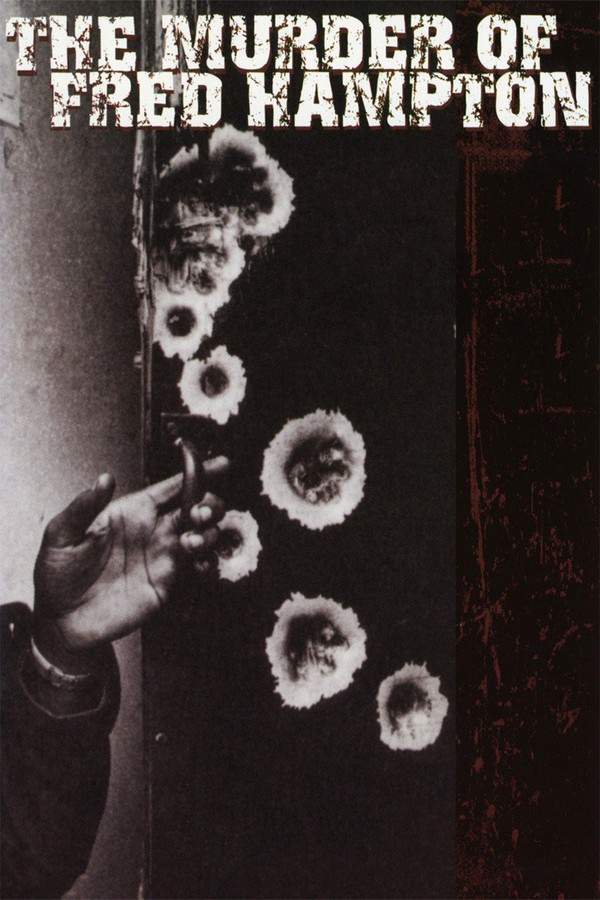
The Murder of Fred Hampton (1971) Complete Plot Breakdown
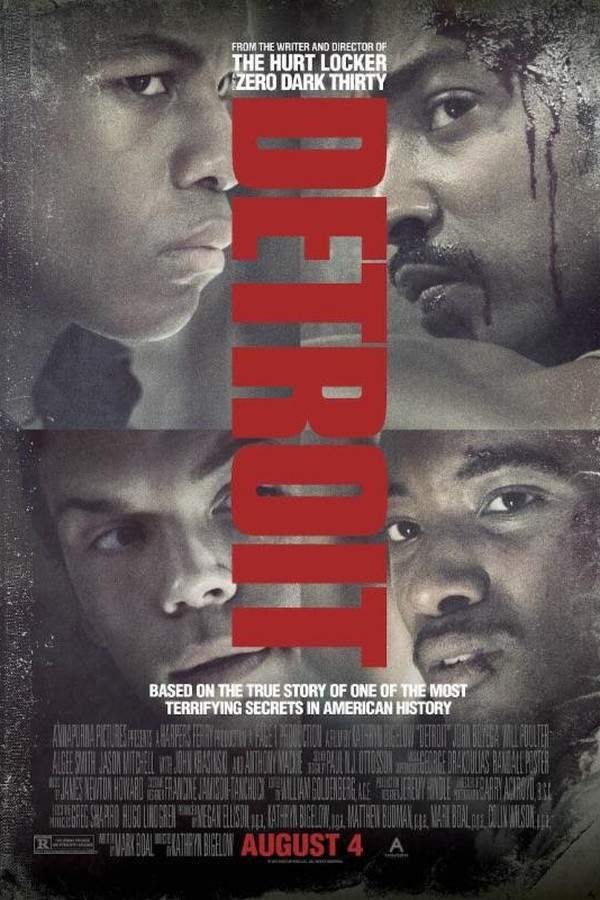
Detroit (2017) Story Summary & Characters
Chicago 10 (2008) Complete Plot Breakdown
Battle in Seattle (2008) Full Summary & Key Details
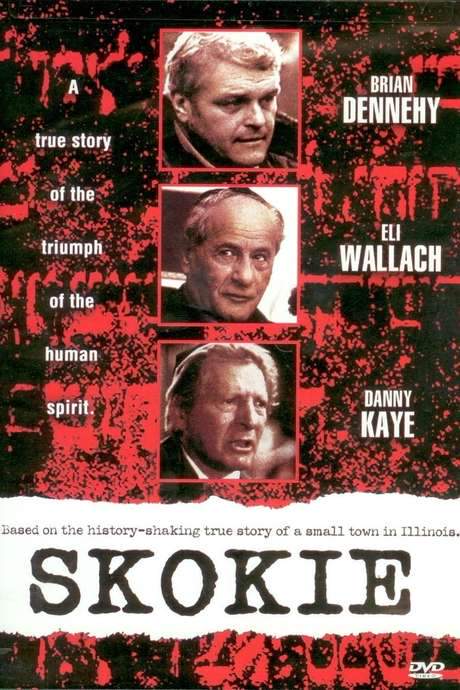
Skokie (1981) Film Overview & Timeline
Conspiracy: The Trial of the Chicago 8 (1987) Detailed Story Recap
Police on Trial (2022) Film Overview & Timeline
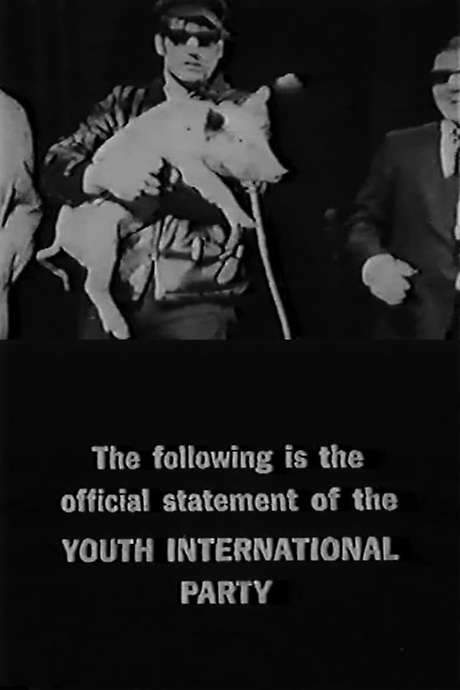
Yippie (1968) Plot Summary & Ending Explained
Hollywood on Trial (1976) Film Overview & Timeline
The Trial of Lee Harvey Oswald (1964) Spoiler-Packed Plot Recap
Vladimir and Rosa (1971) Full Movie Breakdown
The ’60s (1999) Ending Explained & Film Insights
Color of Justice (1997) Ending Explained & Film Insights
Black Panthers (1968) Movie Recap & Themes
Chicago Confidential (1957) Full Summary & Key Details