Runaway Jury

Runaway Jury

Year: 2003

Runtime: 127 min

Language: English

Director: Gary Fleder

Budget: $60M

DramaThriller

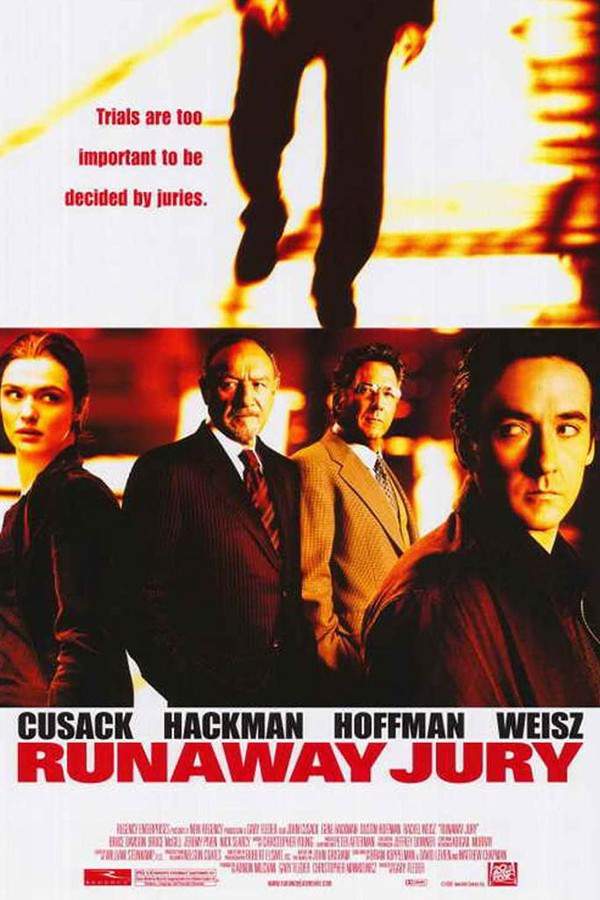
A high-stakes trial unfolds in a New Orleans courtroom as a lawyer fights for justice against a gun manufacturer. A jury consultant attempts to manipulate the proceedings, but a charming juror and his girlfriend have their own agenda, exploiting the legal system for personal gain. Their actions trigger a dangerous game of deception and pursuit, where everyone has something to hide and the pursuit of truth becomes increasingly perilous.

Where to Watch Runaway Jury?

Find where to stream, rent, or buy Runaway Jury (2003) in the US with current JustWatch availability, up-to-date pricing, and platform listings for subscription, rental, and digital purchase options.

Warning: spoilers below!

Haven’t seen Runaway Jury yet? This summary contains major spoilers. Bookmark the page, watch the movie, and come back for the full breakdown. If you're ready, scroll on and relive the story!

Runaway Jury (2003) – Full Plot Summary & Ending Explained

Read the complete plot breakdown of Runaway Jury (2003), including all key story events, major twists, and the ending explained in detail. Discover what really happened, and what it all means.

In the lively streets of New Orleans, a tragic event unfolds when a disgruntled ex-employee launches a catastrophic attack at a stock brokerage, resulting in the loss of eleven lives and leaving a permanent mark on many others. Among those affected is Celeste (widow of the late Jacob Wood), who must navigate her grief and seek justice. Joining her in this mission is attorney Wendell Rohr, as they set their sights on Vicksburg Firearms, holding them accountable for their suspected negligence.

Fast forward two years, and the case is finally up for trial. Durwood Cable, the defense attorney, banks on advanced surveillance technology to gather sensitive information about the jurors, aided by jury consultant Rankin Fitch, who has ties to Vicksburg. Meanwhile, potential juror Nick Easter tries to escape the duty but is thwarted by Judge Frederick Harkin, who insists that Nick's civic responsibilities are far from over. Nick's charm wins over many jurors, but it also draws the ire of Frank Herrera, a grizzled Marine vet with scant tolerance for his positive attitude.

Adding to the tension is the enigmatic figure known only as Marlee, who approaches both Fitch and Rohr with a tantalizing proposition – a promise to deliver the verdict they desire, but only to the highest bidder. Rohr remains skeptical, suspecting Fitch's ulterior motives are aimed at orchestrating a mistrial. However, Fitch demands evidence of Marlee's claims, which she delivers in a way that interrogates his loyalty and even secures an allegiance from the jurors.

As the trial presses onward, intrigue builds when Marlee's actions lead to the dismissal of one of Fitch's jurors. In retaliation, Fitch resorts to blackmail against three others, which culminates in a drastic attempt on the life of juror Rikki Coleman, who wishes to keep her past abortion private. Fitch’s team rummages through Nick's apartment, but their search yields no incriminating evidence, leaving their plans in disarray.

The stakes escalate when Rohr's key witness fails to show up, leading him to face the harsh reality of abandoning the case. In a bid to remain steadfast to his principles, Rohr refuses to meet Marlee's steep demand for $15 million, opting instead to take on Fitch directly in a fierce struggle for justice. As the courtroom drama unfolds, an emotionally charged cross-examination unravels the CEO of Vicksburg Firearms, prompting Fitch to accept Marlee's conditions to secure a predetermined verdict and protect the corporation's interests.

Amid this chaos, an investigator named Doyle digs deep into the true identity of Jeff Kerr, learning that he is none other than Nick, whose shadowy past is intertwined with the heart of Gardner, Indiana. By conversing with Gabby's mother, Doyle uncovers a haunting secret related to the community, detailing the tragic loss of Gabby's sister during a school shooting—an event that left an indelible mark on the town and had implications for the families entangled in this complex narrative.

Nick's seemingly innocuous proposition to settle the case out of court is ultimately unmasked as a shrewd maneuver crafted to expose Fitch's corruption. Despite Doyle's attempts to warn of the impending fallout, Nick's plan is executed too late, and the payment goes through, igniting fierce debates among the jurors. Herrera’s passionate defense of the gun manufacturer further alienates support for Celeste Wood.

In the climax of the trial, Nick ingeniously prompts the jury to make their decision based on empathy for Celeste and the heart-wrenching loss she endured. This emotional appeal guides the jury to render a remarkable verdict, awarding $110 million in damages to the grieving widow. In the aftermath of this victory, Nick and Marlee confront Fitch, armed with evidence of his intended bribes, threatening to expose him unless he resigns.

Fitch, stunned and incredulous, cannot fathom how Nick outmaneuvered his meticulous plans. Nick's reply is succinct yet profound; he emphasizes that he prevented Fitch from manipulating the trial by inspiring the jury to cast their votes from the heart rather than bends to coercion. Consequently, the $15 million fee is arranged to aid the families affected by the tragedy in Gardner.

As Celeste and her son bask in their hard-fought triumph alongside Wendell Rohr, Nick and Marlee share a moment watching children play, their knowing glances hinting at the possibilities that lie ahead. With a renewed sense of purpose, they resolve to return to Gardner—where their journey toward justice continues to unfold.
Last updated: November 19, 2024 at 16:48

Was this helpful?

Runaway Jury (2003) Plot Questions Answered – Summary FAQ

Explore frequently asked questions about Runaway Jury (2003) with spoiler-rich answers covering the full plot summary, major story beats, character motivations, hidden details, and ending meaning. This movie summary FAQ helps explain confusing scenes, plot twists, and narrative decisions in clear, searchable detail.

Q1

Why did Nick Easter want to manipulate the jury?

A.

Nick Easter was actually working to expose jury consultant Rankin Fitch's corruption rather than truly trying to manipulate the verdict for money. His goal was to demonstrate that the jury could reach an authentic decision based on empathy for Celeste's loss, rather than being coerced by Fitch's tampering. By inspiring the jury to vote with their hearts, Nick prevented Fitch from controlling the outcome.

Early in the trial, Nick's charm and unusual behavior toward the other jurors set him apart from typical jurors, hinting at an ulterior motive.

nick eastermotivationjury manipulationfitchexpose corruption
Q2

What was Nick Easter's connection to Gardner, Indiana?

A.

Nick Easter's real identity was Jeff Kerr, and he had a deep personal connection to Gardner, Indiana. Investigator Doyle discovered that Nick was tied to the community through a tragic school shooting that killed Gabby's sister. This traumatic event had profoundly affected the town and the families involved, which is why the $15 million fee was ultimately earmarked to help the families affected by that tragedy.

Doyle's investigation in Gardner, piecing together details about the community's painful past, foreshadows the revelation of Nick's true identity and motives.

nick easterjeff kerrgardner indianaidentityschool shooting
Q3

Why did Marlee help both the defense and the prosecution?

A.

Marlee was a neutral manipulator who sold her ability to control the jury to the highest bidder. She approached both Fitch (representing Vicksburg Firearms) and attorney Wendell Rohr (representing Celeste) with offers to deliver the verdict they wanted. Her actual loyalty belonged to whoever paid her price, but her ultimate play was to work with Nick Easter to expose the corruption in the system rather than truly deliver a verdict to either side.

Marlee's mysterious proposition to both sides from the start, demanding proof of their claims, establishes her as an opportunist with no genuine allegiance.

marleeverdictfitchrohrjury manipulation
Q4

How did Nick Easter manage to outsmart Rankin Fitch?

A.

Nick outsmarted Fitch by inspiring the jury to make their decision based on genuine empathy for Celeste's loss rather than succumbing to any form of manipulation. While Fitch spent millions on surveillance, blackmail, and bribery to control individual jurors, Nick simply convinced them to vote with their hearts. This approach was something Fitch never anticipated because he couldn't conceive of people making decisions based on conscience rather than coercion.

Fitch's overconfidence in his elaborate manipulation schemes and his inability to understand Nick's true intentions allowed Nick to operate undetected.

nick easterrankin fitchoutsmartjurymanipulation
Q5

Why did the jury award $110 million to Celeste Wood?

A.

The jury awarded $110 million in damages because Nick Easter persuaded them to base their decision on empathy for Celeste's devastating loss. Rather than getting caught up in complex legal arguments about gun manufacturer negligence, Nick asked the jurors to consider the human cost of the tragedy, the grieving widow and her son left behind. This emotional appeal resonated with the jury and led them to hold Vicksburg Firearms accountable.

The final jury deliberations focused heavily on the emotional testimony about Celeste's loss, shifting the trial's momentum decisively toward the plaintiff.

jury verdict$110 millionceleste wooddamagesempathy appeal
Q6

What was the significance of the Gardner shooting in the story?

A.

The Gardner school shooting, which killed Gabby's sister, served as the emotional core connecting Nick Easter to the case's stakes. This tragedy had devastated the community and created a personal dimension to Nick's involvement beyond just being a juror. The money ultimately awarded or promised was meant to help the families who had already suffered from such senseless violence, adding weight to the question of corporate responsibility for weapons that enable such attacks.

Doyle's investigation in Gardner gradually revealed how the community's trauma was intertwined with the larger legal battle over gun violence.

gardner shootingschool shootinggabbycommunity traumagun violence
Q7

Why did Wendell Rohr refuse Marlee's $15 million bribe?

A.

Wendell Rohr refused Marlee's $15 million offer because accepting it would have meant compromising his ethical principles and essentially buying a verdict. Rohr genuinely believed in holding Vicksburg Firearms accountable for their negligence and wanted to win the case through legitimate legal means rather than through the same kind of corruption Marlee represented. His refusal demonstrated his commitment to justice, even when faced with the temptation of an easy victory.

From his first appearance, Rohr is portrayed as an earnest attorney genuinely fighting for Celeste, contrasting with Fitch's manipulative tactics.

wendell rohr$15 million bribeethicsmarleejustice
Q8

What did Nick and Marlee threaten to expose about Fitch?

A.

Nick and Marlee threatened to expose that Fitch had planned to bribe the jury to secure a favorable verdict for Vicksburg Firearms. They possessed evidence of his intended bribes and used this information to force Fitch to resign from his position as jury consultant. This confrontation occurred after the trial ended, when Nick revealed that he had outmaneuvered Fitch by ensuring the jury made their decision authentically rather than through coercion.

Fitch's escalating tactics throughout the trial, blackmailing jurors and attempting to rig the outcome, built toward his ultimate exposure.

fitch briberyexpose corruptionnick marlee confrontationresignation
Q9

Why did Nick propose an out-of-court settlement?

A.

Nick proposed an out-of-court settlement as a strategic move to expose Fitch's corruption. By offering to settle the case, Nick forced Fitch to reveal whether he was truly manipulating the jury for the defense. If Fitch agreed to the settlement, it would prove he was bought. The timing was meant to catch Fitch in the act, though Doyle's warning came too late to stop the payment from going through and triggering chaos among the jurors.

Nick's settlement proposal created tension in the juror deliberation room, with Herrera's passionate defense of the gun manufacturer further complicating the dynamics.

settlementexpose fitchstrategyjuror manipulation
Q10

How did Marlee manipulate the jury members?

A.

Marlee's exact methods for manipulating the jury remained somewhat mysterious, but she demonstrated clear influence over several jurors. She orchestrated the dismissal of one of Fitch's jurors and communicated directly with the jury foreman, suggesting she had developed relationships with multiple jury members. Her threats to expose Fitch's blackmail of other jurors further demonstrated her reach within the jury box.

Marlee's ability to approach both sides with confidence about delivering a verdict hinted at her direct access to juror communications throughout the trial.

marleejury controlmanipulation methodsjuror influence
Q11

Why did Fitch try to have juror Rikki Coleman killed?

A.

Fitch attempted to have Rikki Coleman killed because he discovered she had previously had an abortion and he planned to use this information to blackmail her into voting according to his interests. When his team couldn't find other leverage against her, Fitch escalated to extreme measures, ordering an assassination attempt to remove her from the jury and prevent her from potentially voting against Vicksburg Firearms.

Fitch's escalating tactics throughout the trial, starting with surveillance and progressing to blackmail, built toward increasingly dangerous actions.

rikki colemanfitch assassination attemptblackmailabortion
Q12

Why did Frank Herrera defend Vicksburg Firearms so passionately?

A.

Frank Herrera, the Marine veteran juror, defended Vicksburg Firearms passionately because he represented a perspective that blamed individual responsibility rather than corporate negligence. His military background and worldview led him to believe that people, not gun manufacturers, were responsible for how weapons were used. This position put him at odds with Nick Easter and made him a natural ally for the defense's interests within the jury deliberations.

From the beginning, Herrera's hostility toward Nick's positive attitude and his grizzled demeanor established him as a stubborn, principled figure with strong opinions.

frank herreraveterans perspectivegun manufacturer defensejury deliberation
Mobile App Preview

Coming soon on iOS and Android

The Plot Explained Mobile App

From blockbusters to hidden gems - dive into movie stories anytime, anywhere. Save your favorites, discover plots faster, and never miss a twist again.

Sign up to be the first to know when we launch. Your email stays private, always.

Explore Movie Threads

Discover curated groups of movies connected by mood, themes, and story style. Browse collections built around emotion, atmosphere, and narrative focus to easily find films that match what you feel like watching right now.

High-Stakes Manipulation Movies like Runaway Jury

Stories where cunning players manipulate a system for immense personal or ideological gain.If you liked the cunning strategies and system manipulation in Runaway Jury, explore these movies featuring high-stakes games of deception. This list includes legal thrillers, corporate cons, and heist films where masterminds attempt to outwit powerful adversaries in a tense battle of intellect and nerve.

cunninghigh-stakesmethodicalsuspensefulmorally ambiguousthrillingdeviousstrategic

Narrative Summary

These narratives revolve around a central plot to manipulate a sophisticated system from within. The protagonist, often an anti-hero or someone with a hidden agenda, uses insider knowledge and psychological tactics to bend the rules. The story unfolds as a tense cat-and-mouse game, where each move is met with a countermove, escalating the risk and stakes until the final, unpredictable conclusion.

Why These Movies?

Movies in this thread are grouped by their focus on intellectual, systemic manipulation as the primary driver of suspense. They share a tense tone, fast pacing, and morally complex characters who operate in grey areas, creating a consistent feeling of high-risk, high-reward cerebral combat.

Morally Complex Courtroom Dramas like Runaway Jury

Legal thrillers where the pursuit of justice is tainted by personal motives and ethical compromise.For viewers who enjoyed the ethical ambiguity and personal vendettas fueling the case in Runaway Jury, this list highlights similar movies where courtroom battles are driven by morally grey characters. These films explore how personal trauma, greed, and corruption complicate the search for truth within the legal system.

morally ambiguoustensegrippingthought-provokinganxiousdramatichigh-stakes

Narrative Summary

The story follows a major trial where the lawyers, clients, or jurors are motivated by factors beyond the case itself—such as grief, revenge, or greed. The pursuit of a legal victory is intertwined with a personal mission, forcing characters to employ questionable tactics. The outcome often feels bittersweet, as justice is served but at a significant moral cost.

Why These Movies?

These films are connected by their setting within the legal world and their exploration of moral ambiguity. They share a heavy emotional weight, a tense atmosphere, and a focus on how personal demons and systemic flaws corrupt the idealized process of law, resulting in a complex and thought-provoking experience.

Unlock the Full Story of Runaway Jury

Don't stop at just watching - explore Runaway Jury in full detail. From the complete plot summary and scene-by-scene timeline to character breakdowns, thematic analysis, and a deep dive into the ending - every page helps you truly understand what Runaway Jury is all about. Plus, discover what's next after the movie.

Runaway Jury Timeline

Track the full timeline of Runaway Jury with every major event arranged chronologically. Perfect for decoding non-linear storytelling, flashbacks, or parallel narratives with a clear scene-by-scene breakdown.

Runaway Jury Timeline

Characters, Settings & Themes in Runaway Jury

Discover the characters, locations, and core themes that shape Runaway Jury. Get insights into symbolic elements, setting significance, and deeper narrative meaning - ideal for thematic analysis and movie breakdowns.

Characters, Settings & Themes in Runaway Jury

Runaway Jury Spoiler-Free Summary

Get a quick, spoiler-free overview of Runaway Jury that covers the main plot points and key details without revealing any major twists or spoilers. Perfect for those who want to know what to expect before diving in.

Runaway Jury Spoiler-Free Summary

More About Runaway Jury

Visit What's After the Movie to explore more about Runaway Jury: box office results, cast and crew info, production details, post-credit scenes, and external links - all in one place for movie fans and researchers.

More About Runaway Jury