Plot Explained Spoilers guaranteed!
Plot Explained

Browse by genre

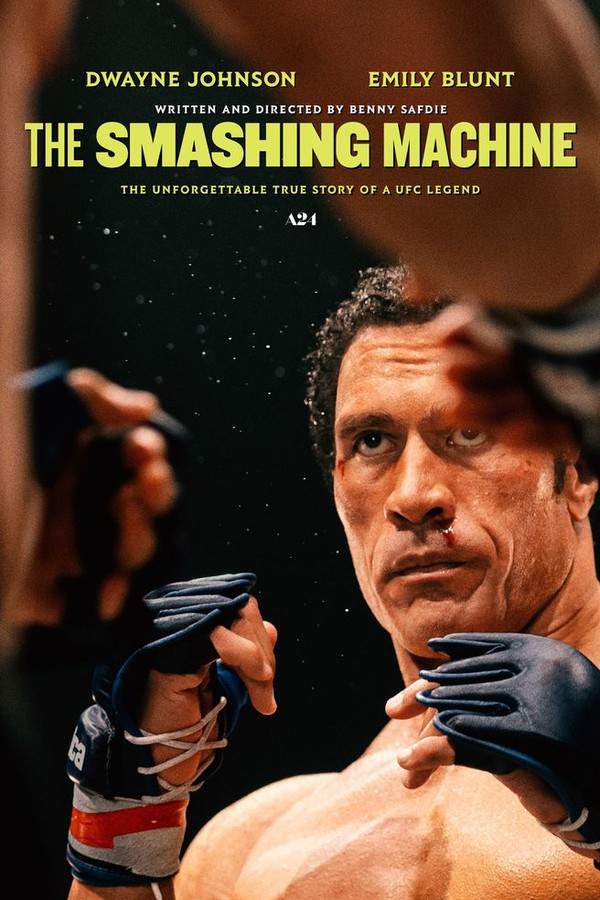
The Smashing Machine (2025) movie poster

Plot Summary

The Smashing Machine (2025) Plot Summary & Ending Explained

Release, runtime and language
2025 · 2 h 3 m · English
Echo score 48
Directed by
Benny Safdie
Starring
Dwayne Johnson, Bethany Brown, Emily Blunt, Bas Rutten, Andre Tricoteux, James McSweeney
Budget
$40M

Mark Kerr, an American mixed‑martial‑arts legend, is hailed as one of the sport’s greatest talents. Inside the ring he appears unbeatable, yet outside he battles addiction, inner demons and the pressure of his fame. His girlfriend Dawn wrestles with finding her place in the chaotic world of combat sports and in Mark’s life.

On this page (6)
  1. 1 What happens: full plot
  2. 2 Plot questions answered
  3. 3 How it ends
  4. 4 Movie threads
  5. 5 Movies like The Smashing Machine
  6. 6 Every angle

Full plot summary · contains spoilers

What Happens in The Smashing Machine: Full Plot Summary

The whole story of The Smashing Machine (2025) explained, from the opening scene to the final frame: every key event, every twist and what it all adds up to. Read it as a quick recap before the sequel, to check a scene you missed, or to finally understand what really happened.

Mark Kerr is at the center of this portrait of a fighter whose career in the late 1990s unfolds against a backdrop of adrenaline, ambition, and vulnerability. The film opens with a candid interview in which Kerr details his view of the Ultimate Fighting Championship and his dedication to the sport. A battle in Sao Paulo in 1997 showcases his raw, fearless freestyle wrestling as he defeats a formidable opponent, illustrating the drive that would define his public persona. The interview continues, weaving together Kerr’s thoughts on competition, discipline, and the costs that come with chasing glory in a sport that thrives on intensity.

The story then shifts to more intimate ground. In a Phoenix clinic waiting room, Kerr speaks with a woman and her grandson about the UFC’s violence, but he makes a point of saying he doesn’t hate his opponents, signaling a complex mix of respect and restraint beneath the ruthless exterior. He even signs an autograph for the boy, a small gesture that humanizes a fighter who lives in the glare of the spotlight. At home, Kerr shares a tense dynamic with his girlfriend, Dawn Staples. Their relationship has tenderness and friction in equal measure: he chides her over a milk selection for his protein shake, yet his concern and affection for her remain evident even as darker struggles simmer beneath the surface. The film does not shy away from Kerr’s private battles, including opioid use that haunts him away from public view.

The narrative broadens to the international stage as Kerr travels to Tokyo with his coach, the formidable Mark Coleman. In the lead-up to Pride 7, he negotiates the logistics and the financial side of fighting, asking officials questions about payment and the stakes of competing on a global stage. After a tense interview, Kerr confronts a hypothetical question about losing, revealing a rare doubt in a man who typically projects unwavering confidence. Dawn makes a surprise trip to Tokyo, hoping to support him, but the moment unsettles Kerr in the locker room as he worries her presence might disrupt his focus. The bout itself ends in controversy: Kerr faces an opponent who employs moves deemed illegal, and the match is ruled a “no contest.” Even so, there is room for sportsmanship, as Kerr reaches out to his rival afterward and takes a friendly photograph, showing that respect can coexist with the tremors of defeat.

Back home, the relationship with Dawn again becomes a focal point. A heated argument erupts, culminating in Kerr smashing a door in a moment of uncontrolled anger. The next morning brings a life-threatening turn: Dawn calls Coleman in tears after Kerr overdoses and ends up in the hospital. Coleman visits, offering steady support as Kerr begins the long path to recovery through rehab. The rehab process strains their relationship, and Dawn, feeling increasingly distant from a man who has cycled through sobriety and relapse, ultimately leaves him.

With the support of a new training ally, Kerr heads to Hollywood in 2000 to work with Bas Rutten on rebuilding his body and technique. The sessions test him physically and emotionally, and there is a stark moment when Bas endures a painful injury during training; Kerr's presence—along with careful care and focus—helps him push through the strain to regain peak form. The bond with Rutten becomes a catalyst for Kerr’s renewal as a fighter, even as the personal toll of his past continues to echo in his life.

Returning to competition, Kerr enters the Pride 2000 Grand Prix with renewed resolve. He delivers a performance that proves he is capable of enduring and adapting, and Dawn—now back in his life—reappears with a simple, symbolic gift: a repaired bowl she had broken in an argument. The gesture marks a fragile reconciliation, though Bas remains wary of Kerr’s decision to leave the training camp and return home with Dawn.

Yet the relationship remains combustible. An explosive dispute reaches a peak when Dawn resents Kerr’s reluctance to have her travel with him to Japan for his next bout, and another crisis looms: Dawn, in a moment of desperation, nearly shoots herself. Kerr intervenes to restrain her, and emergency responders are called, highlighting the perilous emotional terrain the couple is navigating.

The final round of the Grand Prix in Japan tests Kerr’s concentration in a way the film has been building toward. Distracted by flashbacks to happier times, he suffers a crushing defeat, a moment that is tempered by the support of Coleman in the locker room. Coleman secures the belt in his own final round, while Kerr, left to process the loss, sits in the shower and laughs through a mix of relief, relief, and perhaps a dawning clarity about what comes next.

The film closes with a flashforward to 2025 in Scottsdale, where the real story of Kerr is anchored in a quiet grocery run. The closing text notes that Kerr and Dawn reconciled shortly after his loss and married, only to eventually divorce but raise a son together. Kerr retires from fighting in 2009, and the narrative positions him and Coleman as pioneers who helped lay the groundwork for the sport’s evolution, even as the world moves on to new stars and new stories. The ending leaves a portrait of a man shaped by triumph and turbulence, defined as much by his persistence and his relationships as by the trophies he collected.
Last updated: November 22, 2025 at 16:00

Was this helpful?

Plot questions answered

The Smashing Machine Plot Explained: Your Questions Answered

The questions people ask most about The Smashing Machine (2025): what happens in the confusing scenes, why the characters do what they do, the twists, hidden details and what the ending means. Each answer contains spoilers.

Q1

Why did Mark Kerr start using opioids?

Mark Kerr developed an opioid addiction primarily as a way to manage the chronic pain from his fighting career. The film shows his use escalating behind closed doors while he maintained his public persona as a fearsome competitor. His prescription medications were visible even in public settings like the Phoenix clinic, indicating the addiction had become entrenched by the late 1990s.

Foreshadowing: The film hints at his pain management struggles early through scenes showing him obtaining prescription medications.

  • opioid addiction
  • pain management
  • prescription drugs
  • dope
Q2

Why did Dawn leave Mark after his overdose?

Dawn left Mark during his rehabilitation because she felt the relationship had become emotionally distant. Even as Mark worked through sobriety, Dawn perceived that he was less loving and present, and she could no longer handle the cycle of addiction and recovery. She made the painful decision to leave him while he was still in treatment.

Foreshadowing: Earlier scenes show Dawn crying and calling Mark's coach Coleman for help, signaling the emotional toll the addiction was taking on her.

  • dawn staples
  • relationship
  • rehab
  • addiction
  • breakup
Q3

What happened in Mark Kerr's Pride 7 fight?

In Pride 7, Mark Kerr faced an opponent who used moves deemed illegal under the promotion's rules. The match was ultimately ruled a "no contest" rather than a win or loss, leaving the outcome disputed. Despite the controversy and his disappointment, Kerr showed sportsmanship afterward by reaching out to his rival and taking a friendly photograph.

Foreshadowing: Earlier in Tokyo, Mark expressed rare doubt about losing for the first time when asked in an interview, hinting at the pressure building.

  • pride 7
  • no contest
  • Tokyo
  • illegal moves
Q4

Why did Mark Kerr lose the final Grand Prix round?

Mark Kerr lost the final round of the Pride 2000 Grand Prix because he was emotionally distracted by flashbacks to happier times with Dawn. The film shows his mind wandering to memories of their reconciliation rather than staying focused on the fight, and this psychological distraction led to his crushing defeat in Japan.

Foreshadowing: The earlier reconciliation scene with the repaired bowl, while hopeful, foreshadows how deeply his relationship with Dawn affected his mental state.

  • pride 2000 grand prix
  • loss
  • japan
  • distraction
  • dawn
Q5

What was the significance of the repaired bowl Dawn gave Mark?

The repaired bowl symbolized Dawn and Mark's fragile reconciliation after their earlier conflicts. Dawn had broken the bowl during one of their arguments, and presenting it fixed represented her hope that their relationship could also be mended. The gesture marked a moment of peace between them, though Bas Rutten expressed wariness about Mark leaving the training camp to return home with her.

Foreshadowing: Earlier arguments and the door-smashing incident established the destructiveness of their relationship, making the repaired bowl a meaningful contrast.

  • repaired bowl
  • reconciliation
  • gift
  • dawn
Q6

Why did Dawn nearly shoot herself?

Dawn nearly shot herself during an explosive argument with Mark when he discouraged her from traveling with him to Japan for his next bout. The film depicts this as a moment of extreme emotional desperation, showing the depth of turmoil in their relationship. Mark intervened to restrain her, and emergency responders were called to ensure her safety.

Foreshadowing: Their relationship had been building toward crisis throughout the film, with escalating arguments and Dawn's earlier departure from Mark during rehab.

  • dawn
  • suicide attempt
  • argument
  • domestic conflict
Q7

How did Mark Coleman's coaching influence Mark Kerr's career?

Mark Coleman served as Kerr's coach and was a pivotal support system throughout Kerr's career and personal struggles. He accompanied Kerr to Tokyo for Pride 7, negotiated fight logistics, and was the person Dawn called in tears after Kerr's overdose. Coleman visited him in the hospital and supported his recovery, eventually winning his own championship belt in the final Grand Prix round.

Foreshadowing: Coleman was introduced as Kerr's formidable coach during the Tokyo trip, establishing his role as both mentor and emotional anchor.

  • mark coleman
  • coach
  • support
  • training
Q8

Why was training with Bas Rutten important for Mark Kerr?

Training with Bas Rutten in Hollywood in 2000 was crucial for Mark Kerr's career revival after his rehab and breakup with Dawn. Rutten helped him rebuild both his body and technique, pushing him physically and emotionally to regain peak fighting form. The training sessions were challenging but ultimately prepared Kerr to compete successfully in the Pride 2000 Grand Prix.

Foreshadowing: The film positions this Hollywood training as a turning point that enabled Kerr's return to competitive fighting.

  • bas rutten
  • hollywood
  • training
  • comeback
Q9

Did Mark and Dawn get back together after the film ended?

Yes, Mark and Dawn reconciled eleven days after his final Grand Prix loss, eventually married, and had a son together. However, they ultimately divorced but continued co-raising their son. The flashforward to 2025 shows the real Mark Kerr living in Scottsdale, with the film noting his retirement from fighting in 2009.

Foreshadowing: The repaired bowl scene and their reconciliation before the final loss hinted at their ability to find their way back to each other, at least temporarily.

  • marriage
  • reconciliation
  • divorce
  • son
  • scottsdale
Q10

Why did Mark Kerr smash the door in anger?

Mark Kerr smashed a door during a heated argument with Dawn, displaying a moment of uncontrolled anger that shocked viewers. This explosive incident occurred shortly after returning home from Tokyo, where his Pride 7 fight had already ended in controversy and emotional distress. The violent outburst foreshadowed the more serious crisis to come, his overdose the following morning.

Foreshadowing: Earlier scenes showed tension building in their relationship, including arguments about trivial matters like milk for his protein shake.

  • door
  • anger
  • argument
  • violence

Ending explained

What Happens at the End of The Smashing Machine?

How The Smashing Machine (2025) ends, in short: the final scene, the last twist and what it means for the characters. The full ending explained, with every spoiler, lives on its own page.

Read the full ending explained

In the film’s closing moments Mark (played by Dwayne Johnson) and Dawn (Emily Blunt) finally confront the damage their turbulent relationship has caused. After reuniting just before Mark’s biggest bout in Japan, Dawn demands that he listen to her concerns – she sees his trainer and close friend urging her to stay away, and she knows he is still battling a crippling opioid addiction. Their conversation erupts into a ferocious argument, and Mark lashes out, accusing Dawn of holding him back from recovery. Overcome with despair, Dawn threatens to take her own life, but Mark intervenes and prevents her from doing so. The police arrive, and Dawn is escorted away for a psychiatric evaluation, leaving the couple suspended in a painful, uncertain limbo.

The fight in Japan itself ends in defeat for Mark, yet the loss is portrayed as a turning point rather than a collapse. Though he fails to win, he walks away with a sense of calm that was absent after his earlier setbacks, suggesting he has begun to confront his inner demons rather than hide behind them.

Continue reading the ending (1 more paragraphs)

A brief epilogue reveals that the pair eventually reconciles: they marry, spend six years together, and raise a son. This resolution underscores the film’s message that even the most damaged relationships can find redemption when both people finally accept responsibility for their actions and choose a path toward healing.

The Smashing Machine ending explained in full

Movie threads

More Movies Like The Smashing Machine, by Mood & Story

Curated lists built around what makes The Smashing Machine tick: the same mood, the same kind of story or the same emotional payoff. Each list explains why these movies belong together.

Raw biographical dramas of human struggle like The Smashing Machine

Unflinching biographical dramas about real people battling intense personal demons. If you appreciated the unflinching honesty of 'The Smashing Machine,' explore more movies like it. This list features intense biographical stories and dramas that delve into the raw, real-life struggles of athletes and public figures, focusing on themes of addiction and personal crisis.

  • gritty
  • raw
  • vulnerable
  • unsettling
  • somber
  • introspective
  • Tone: dark, raw, vulnerable
  • Pacing: steady, character-driven
Why these movies?

The story pattern: These narratives typically follow a linear biographical path, but their depth comes from juxtaposing public success with private collapse. The central conflict is often internal, pitting talent and ambition against self-destructive tendencies, creating a steady, emotionally heavy journey toward a bittersweet or unresolved conclusion.

Why they belong together: Movies are grouped here for their shared commitment to authenticity and emotional rawness. They create a similar viewing experience defined by high emotional weight, a dark tone, and a focus on the unsettling reality of battling personal demons behind a facade of strength.

Movies about the cost of glory like The Smashing Machine

Stories where professional triumph comes at a devastating personal price. Fans of 'The Smashing Machine' who are interested in stories about the personal cost of professional success will find similar movies here. These films often feature athletes or performers whose public achievements are shadowed by private turmoil, addiction, and broken relationships.

  • somber
  • gritty
  • tragic
  • introspective
  • unsettling
  • anxious
  • Tone: dark, bittersweet, somber
  • Pacing: steady, tragic unfolding
Why these movies?

The story pattern: The narrative pattern involves a rise to the top driven by immense talent and determination, which is paralleled by a descent into personal chaos. The external victories are hollowed out by internal failures, leading to a climax where the character must confront the true cost of their ambition, often resulting in a bittersweet ending where survival is the only victory.

Why they belong together: These films are united by their central theme: the tragic irony of public success and private ruin. They share a high intensity from the juxtaposition of competitive highs and personal lows, a steady pacing that builds emotional weight, and a dark, somber mood that questions the very definition of winning.

If you liked this

Movies Like The Smashing Machine

Similar movies to The Smashing Machine: the same genre, themes or kind of story. Each one comes with its own plot summary, timeline and ending explained.

Browse all movie summaries

Every angle

The Smashing Machine (2025) Explained: Plot, Ending, Timeline & Characters

Everything about The Smashing Machine in one place: what happens in the plot summary, the timeline in chronological order, the characters and meaning, the ending explained and a spoiler-free summary. What's After the Movie adds the cast, box office and post-credit scenes.

Coming soon on iOS and Android

The Plot Explained Movie Summary App

Plot summaries, endings explained and timelines on your phone. Catch up on any movie in minutes, save your favorites and never miss a twist again.

Be the first to know when we launch. Your email stays private, always.

Learn more about the app