Plot Explained Spoilers guaranteed!
Plot Explained

Browse by genre

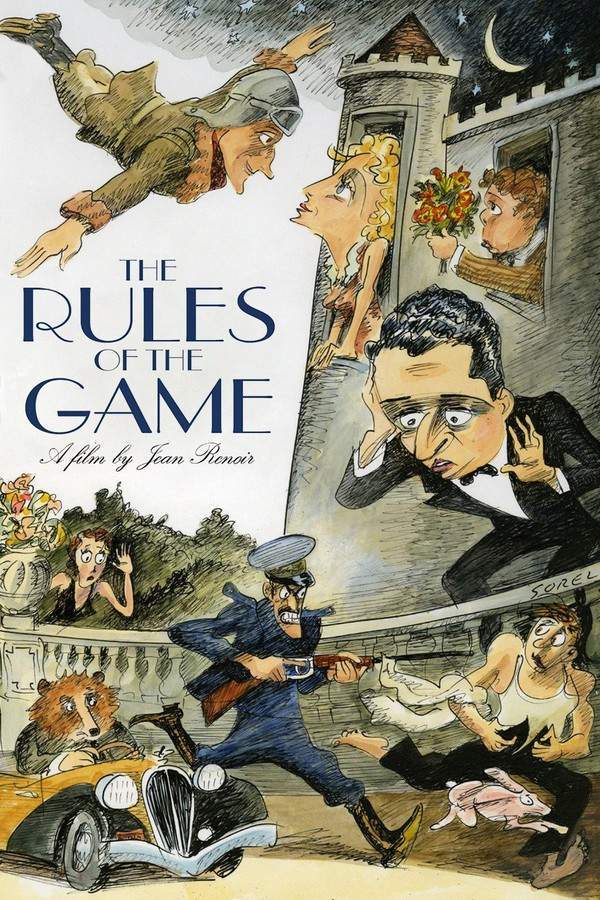
The Rules of the Game (1950) movie poster

Characters & Themes

The Rules of the Game (1950) Characters, Setting & Themes Explained

Release, runtime and language
1950 · 110 min · French
Loading streaming availability…
Directed by
Jean Renoir
Starring
Anne Mayen, Claire Gérard, Julien Carette, Lise Elina, Marcel Dalio, Mila Parély

During a weekend hunting party, a group of wealthy Parisians finds their lives and relationships exposed as societal facades begin to fall away. Hidden desires and romantic entanglements surface, threatening to unravel the carefully constructed order of their privileged world. As the lines between the upper class and the servants become increasingly blurred, a web of secrets and deception leads to unexpected and dramatic consequences for everyone involved.

On this page (7)
  1. 1 Where to watch
  2. 2 Characters explained (4)
  3. 3 Where & when it takes place
  4. 4 Themes & meaning (2)
  5. 5 Character & meaning questions
  6. 6 Movie threads
  7. 7 Every angle
Loading streaming availability…

4 main characters · contains spoilers

The Rules of the Game Characters Explained: Who Is Who

The main characters of The Rules of the Game (1950), heroes and villains: what drives them, how they change over the course of the story and what each of them reveals about the film's bigger ideas.

  • André Jurieux

    André is a passionate aviator grappling with intense feelings for Christine, which leave him vulnerable and heartbroken. His emotional turmoil drives him to confront his love openly, leading to a series of complicated interactions with other characters. His journey reflects the agony of unreciprocated love and the lengths one may go for happiness.

    • 🪂 Aviator
    • 💔 Love-stricken
    • 🌪️ Vulnerability
  • Christine

    Christine is an Austrian-French noblewoman entangled in a marriage that undermines her desires. She displays grace and charm as a hostess but secretly battles her own feelings for André while navigating the complexities of her relationships with both her husband and Octave. Her character embodies the conflict between societal expectation and personal passion.

    • 👸 Noblewoman
    • 🌹 Graceful
    • 😢 Torn
  • Octave

    Octave is a clever and resourceful friend who harbors feelings for Christine, playing a pivotal role in the emotional dynamics of the story. He is both a confidant and manipulator, facilitating encounters between André and Christine while grappling with his own affections. His actions reflect the theme of friendship intertwined with romantic rivalry.

    • 🤵 Friend
    • 🎭 Manipulator
    • ❤️ Unrequited
  • Robert, Marquis de la Chesnaye

    Robert is Christine's husband, who remains oblivious to the depth of her feelings for André. His character illustrates the dissonance between his marital duties and personal desires, often responding defensively to the emotional chaos surrounding him. His relationship with Geneviève adds further layers to his character's complexity.

    • 👨‍💼 Marquis
    • 🥃 Jealous
    • 📉 Disillusioned

Last updated: October 22, 2024 at 21:28

Was this helpful?

Setting

Where and When Does The Rules of the Game Take Place?

The setting of The Rules of the Game (1950): the year and time period, the places and locations, and how they shape the characters, the mood and the tension of the story.

Time period

Location

Le Bourget Airfield, Paris, La Colinière, Sologne

Le Bourget Airfield near Paris is a historic site known for its significance in aviation history, marking the arrival of pioneers in flight. La Colinière, the family estate in Sologne, serves as a picturesque yet tense backdrop for the unfolding drama, surrounded by nature and hunting grounds that symbolize both leisure and conflict among its guests.

  • ✈️ Airfield
  • 🏰 Estate
  • 🌳 Nature

Last updated: October 22, 2024 at 21:28

Was this helpful?

2 major themes

The Rules of the Game Meaning: Themes & Message Explained

What is The Rules of the Game (1950) really about? The emotional, social and philosophical themes the film keeps returning to, its symbolism and the message beneath the surface.

  • Unreciprocated Love

    The central theme of unreciprocated love weaves through the relationships in the film, particularly affecting André, who is tormented by his feelings for Christine. This love is emblematic of longing, isolation, and emotional turmoil, leading characters to make decisions that provoke jealousy and strife. As misunderstandings mount, the consequences of these feelings spark chaos and ultimately tragedy within the close-knit group.

  • Deception

    The theme of deception is prevalent as characters engage in a web of lies and manipulations, with Octave orchestrating events under the guise of friendship. The weekend retreat is a façade, where hidden motives and secret desires lead to misunderstandings and betrayals. This duplicity culminates in chaotic revelations during the masked ball, where identities and intentions blur.

Last updated: October 22, 2024 at 21:28

Was this helpful?

Character & theme questions

The Rules of the Game Characters & Meaning: Your Questions Answered

The questions people ask about The Rules of the Game (1950): who the characters really are, their relationships, what the symbols mean, where it takes place and what the movie is really about. Each answer contains spoilers.

Q1

Where does The Rules of the Game take place?

The film is set primarily at La Colinière, a family estate in Sologne, a rural region southwest of Paris. The story begins at Le Bourget Airfield near Paris, marking the arrival of the guests by airplane, before shifting entirely to the estate for the weekend. The contrast between the sophisticated airfield and the secluded estate establishes the isolated world where the drama unfolds.

  • la colinière
  • sologne
  • paris
  • estate
  • setting
Q2

What time period is the movie set in?

The film is set in the interwar period of 1930s France, during a era when the French aristocracy still maintained grand country estates and hunting traditions. This pre-World War II context is significant because it captures a dying social order, wealthy Parisians retreating to their country properties to escape the modernizing world, clinging to outdated rituals and class distinctions that are about to be disrupted.

  • 1930s
  • interwar
  • france
  • time period
  • aristocracy
Q3

What are the main themes of The Rules of the Game?

The film centers on two interconnected themes: unreciprocated love and deception. André Jurieux's unrequited love for Christine drives much of the emotional turmoil, representing longing and emotional isolation. Meanwhile, deception runs through the weekend as characters hide motives and engage in manipulations, most notably Octave orchestrating encounters under the guise of friendship. These themes intersect during the masked ball, where identities blur and hidden truths surface.

  • themes
  • love
  • deception
  • betrayal
  • manipulation
Q4

Who is André Jurieux in the movie?

André Jurieux is a passionate aviator who arrives at the estate during the weekend hunting party. He is deeply in love with Christine, the wife of the Marquis Robert de la Chesnaye, but his feelings are not reciprocated. His emotional vulnerability and public declaration of love for Christine create tension among the guests and contribute to the film's melancholy tone, reflecting the theme of unrequited longing.

  • andre jurieux
  • aviator
  • love
  • protagonist
Q5

Who is Christine and what is her role in the story?

Christine is an Austrian-French noblewoman married to Robert, the Marquis de la Chesnaye. She serves as the emotional center of the film, torn between her societal role as a hostess and her personal desires. Christine harbors secret feelings for André while navigating her complicated relationships with both her husband and her friend Octave, embodying the conflict between societal expectations and personal passion.

  • christine
  • aristocrat
  • wife
  • love triangle
Q6

What role does Octave play in the movie?

Octave is a clever, resourceful friend to both Christine and her husband Robert, who secretly harbors romantic feelings for Christine. He acts as both confidant and manipulator in the story, orchestrating meetings between André and Christine while pursuing his own interests. His dual role as friend and secret rival illustrates the theme of deception, as表面善意 conceals hidden motives.

  • octave
  • friend
  • manipulator
  • deception
Q7

Who is Robert, Marquis de la Chesnaye?

Robert is Christine's husband, the Marquis de la Chesnaye who hosts the weekend hunting party at La Colinière. He remains largely oblivious to the emotional dynamics swirling around him, particularly André's love for Christine and Octave's hidden intentions. His character represents the blind spots of the privileged class, more concerned with social formalities than the authentic feelings of those around him.

  • robert
  • marquis
  • husband
  • aristocrat
Q8

What is the significance of the masked ball in the film?

The masked ball serves as the film's symbolic climax where deception reaches its peak. During the ball, characters hide behind disguises, allowing hidden desires and secret motives to surface. The anonymity enables confrontations that would otherwise be impossible in polite society, leading to revelations that expose the true nature of relationships and ultimately trigger the tragic events of the film.

  • masked ball
  • disguise
  • revelation
  • climax
Q9

What does the La Colinière estate represent thematically?

La Colinière functions as a contained world where social facades are maintained but ultimately collapse. The estate's hunting grounds symbolize both leisure and conflict, mirroring the tensions among the guests. Its isolation from Paris creates a pressure cooker environment where the rules of society, normally maintained through distance and propriety, break down, allowing true feelings and rivalries to emerge.

  • estate
  • symbolism
  • isolation
  • social class
Q10

Why is the hunting party important to the story?

The weekend hunting party serves as the structural framework that brings together characters who would normally remain separated by social distance. It creates an excuse for the gathering while providing opportunities for both formal interaction and secret encounters. The hunting itself becomes a metaphor for the social predation occurring among the guests, each pursuing their own desires while maintaining the appearance of civilized leisure.

  • hunting party
  • gathering
  • social occasion
  • metaphor
Q11

How does the film portray class relations between upstairs and downstairs?

The film uses the contrast between the aristocratic guests and the servants to explore themes of social deception and blurred boundaries. As the weekend progresses, the lines between masters and servants become increasingly unclear, with servants witnessing and sometimes participating in the guests' emotional dramas. This dynamic reflects the broader theme of how societal facades crumble when private passions surface.

  • class
  • servants
  • social hierarchy
  • aristocracy
Q12

What is the tone and mood of The Rules of the Game?

The film carries a melancholic, cynical tone regarding human relationships despite its comedic elements. While the surface depicts elegant parties and sophisticated banter, the underlying mood is one of emotional futility, characters pursuing desires that cannot be fulfilled, trapped by social conventions. The ending, involving a senseless death presented coldly as an accident, reinforces this bittersweet, detached quality rather than deep tragedy.

  • tone
  • mood
  • melancholy
  • satire
  • comedy

Movie threads

More Movies Like The Rules of the Game, by Mood & Story

Curated lists built around what makes The Rules of the Game tick: the same mood, the same kind of story or the same emotional payoff. Each list explains why these movies belong together.

Ensemble Comedies of Manners like The Rules of the Game

Witty and melancholic tales dissecting the social rituals of the upper class. If you enjoyed the sharp social critique and intricate character web of The Rules of the Game, explore more movies that delve into the sophisticated, often melancholic world of the elite. These films share a similar focus on societal facades, romantic entanglements, and the satirical unraveling of privileged lives.

  • sophisticated
  • satirical
  • melancholic
  • reflective
  • tense
  • claustrophobic
  • Tone: melancholic, satirical, cynical
  • Pacing: steady, dialogue-driven
Why these movies?

The story pattern: These narratives typically unfold in a confined setting, such as a country estate or a weekend gathering, where a large ensemble cast navigates a series of romantic misunderstandings, infidelities, and class tensions. The plot is driven by dialogue and character interaction rather than external action, building steadily towards a climax that exposes the fragility of their social world.

Why they belong together: They are grouped together for their shared tone of sophisticated melancholy, their complex, multi-character plots, and their primary focus on satirizing social conventions and the intricate dance of manners within a specific, often insulated, class of society.


Upstairs, Downstairs Dramas like The Rules of the Game

Stories where the lives of masters and servants intertwine with dramatic consequences. Fans of The Rules of the Game will appreciate these movies that mirror its exploration of class dynamics. Discover similar stories where the intimate dramas of the upper class are reflected and complicated by the lives of the servants, leading to tension, deception, and poignant cross-class connections.

  • reflective
  • tense
  • claustrophobic
  • melancholic
  • sophisticated
  • dramatic
  • Tone: reflective, tense, bittersweet
  • Pacing: steady, observational
Why these movies?

The story pattern: The narrative structure often cuts between the 'upstairs' world of the owners and the 'downstairs' world of the staff, showing how their lives are mirrored and intertwined. Romantic entanglements frequently cross class boundaries, and secrets known to the servants can dramatically impact the fate of their masters, creating a rich tapestry of interconnected drama.

Why they belong together: These films share a central thematic focus on class division and the complex, often hidden relationships between different social strata. They create a specific mood of reflective tension and claustrophobia, set within the microcosm of a single household or estate.

Every angle

The Rules of the Game (1950) Explained: Plot, Timeline & Characters

Everything about The Rules of the Game in one place: what happens in the plot summary, the timeline in chronological order, the characters and meaning and a spoiler-free summary. What's After the Movie adds the cast, box office and post-credit scenes.

Coming soon on iOS and Android

The Plot Explained Movie Summary App

Plot summaries, endings explained and timelines on your phone. Catch up on any movie in minutes, save your favorites and never miss a twist again.

Be the first to know when we launch. Your email stays private, always.

Learn more about the app