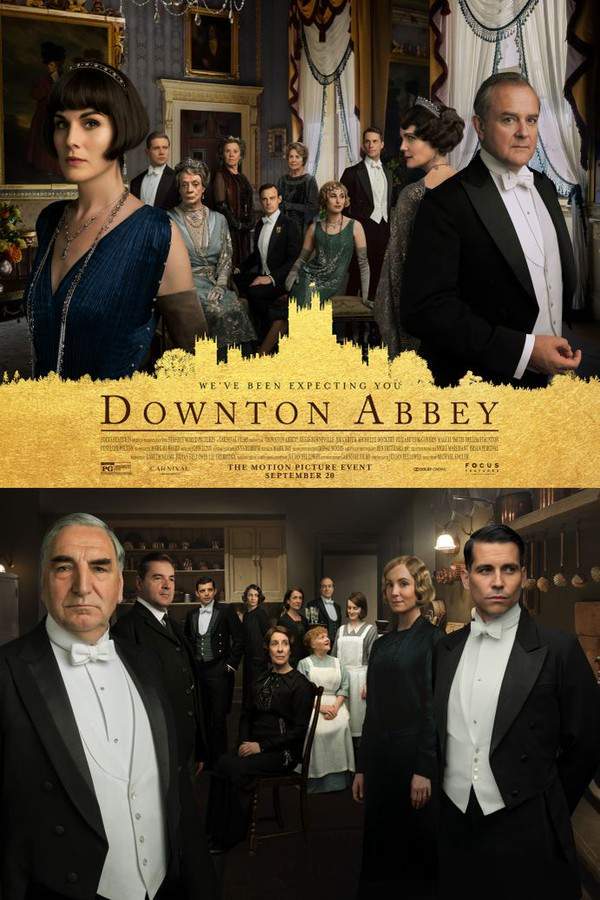
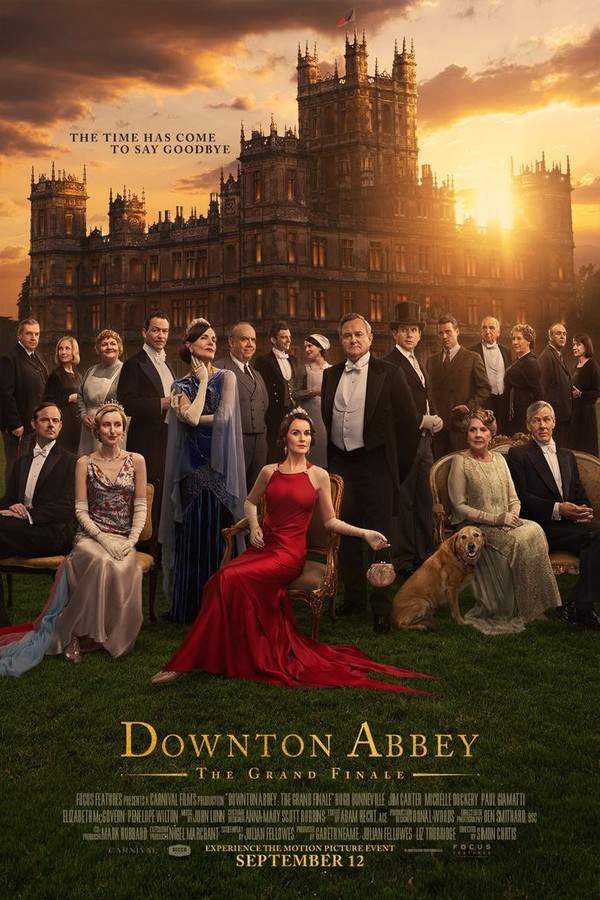
Downton Abbey: The Grand Finale

Downton Abbey: The Grand Finale

JustWatch#7,6146

Year: 2025

Runtime: 2 h 3 m

Language: english

Director: Simon Curtis

Echo Score: 75

Budget: $50M

Drama

Set in the 1930s, the Crawley family and their staff confront upheaval as Mary becomes the focus of a public scandal and the estate suffers financial strain that threatens its reputation. Facing possible social disgrace, the Crawleys must accept change while the servants ready themselves for a new era under the next generation at Downton Abbey.

Where to Watch Downton Abbey: The Grand Finale?

Find where to stream, rent, or buy Downton Abbey: The Grand Finale (2025) in the US with current JustWatch availability, up-to-date pricing, and platform listings for subscription, rental, and digital purchase options.

Warning: spoilers below!

Haven’t seen Downton Abbey: The Grand Finale yet? This summary contains major spoilers. Bookmark the page, watch the movie, and come back for the full breakdown. If you're ready, scroll on and relive the story!

Downton Abbey: The Grand Finale (2025) – Full Plot Summary & Ending Explained

Read the complete plot breakdown of Downton Abbey: The Grand Finale (2025), including all key story events, major twists, and the ending explained in detail. Discover what really happened, and what it all means.

In 1930 London, the Crawleys head out to a theatre night featuring Dominic West as Guy Dexter, with Noël Coward, the playwright himself, also in the spotlight. Backstage they cross paths with Dexter, Coward, and Thomas Barrow, Dexter’s assistant and partner-in-life. The next day, the family gathers at Lady Petersfield’s ball where startling news breaks: Mary Talbot and Henry Talbot have decided to divorce, and Mary is briefly asked to leave as royal appearances loom on the horizon.

Robert and Cora return to Downton Abbey while Mary stays behind at Grantham House to host Cora’s brother, Harold Levinson, who has just arrived from America following their mother Martha’s death. Harold’s accompanying financial adviser, Gus Sambrook, is credited with saving Harold from financial ruin by pulling investments before the 1929 crash. Sambrook’s arrival stirs an uneasy mix of mutual attraction and tension, as he and Mary share a night of drinking and passion. The pair’s closeness unsettles Downton’s residents, especially when Harold, unaware of the full consequences, reveals that he squandered their mother’s fortune on risky ventures and now intends to invest Downton’s remaining assets to recoup losses and repay his debt to Sambrook.

The divorce casts a chill over Downton’s social circle; neighbors glance away, and social invitations dwindle as the once-proud family finds itself shunned. Robert, still smarting from Mary’s broken marriage and Harold’s ill-advised decisions, resists Mary’s proposal to sell Grantham House in London to raise capital. When the family rejects Sambrook’s plan to invest Downton’s income, he digs in, attempting to blackmail Mary over their affair. Into this tense mix arrives Tom Branson with his daughter Sybbie, adding another layer of complexity to the household.

At Royal Ascot, an acquaintance warns Tom that Sambrook is a fraudster who has swindled others and narrowly avoided imprisonment. Realizing that Sambrook may have embezzled Harold’s fortune, Tom alerts the Crawleys and Harold to the peril. Edith Hexham, Laura Carmichael by the makeup of the family, confronts Sambrook and forces him to depart. Before leaving, Sambrook tries one final conversation with Mary, who coolly dismisses him. A remorseful Harold makes amends with Cora before returning to America, attempting to repair the damage his misjudgments caused.

Tom Branson and Bertie Pelham convince Robert that Mary is acting in Downton Abbey’s best interests, and Mary is entrusted with running the estate. Robert and Cora decide to move to the Downton dower house, taking along John Bates and Anna Bates as part of the household, with Anna moving into Cora’s service as a lady’s maid while Baxter remains Mary’s confidante. Meanwhile, Dexter, Coward, and Barrow plot their return to Downton Abbey, and Edith and Cora see an opportunity to rehabilitate Mary’s reputation by circulating hopeful news about the impending visit in the village.

Back in the kitchens, Daisy Parker—now Downton’s head cook following Mrs Patmore’s retirement—prepares her first grand dinner, while Isobel, Lady Merton, becomes a driving force on the county fair’s organizing committee. Isobel clashes with the traditionalist Sir Hector Moreland over the fair’s direction, and she brings in Daisy and Downton’s retired butler, Thomas Barrow to lend a modern perspective to the proceedings. They support Isobel, and she skillfully outmaneuvers the opposition when Sir Hector inadvertently blocks Mary’s plan for the fair’s main award. Mary ultimately presents the honor to Mr. Mason, Mrs Patmore’s husband and Daisy’s former father-in-law, signaling a cautious return of Downton’s standing.

As the main household settles into this new rhythm, Robert and Cora express renewed confidence in Mary’s ability to manage Downton Abbey. The elder couple prepare to depart to the Dower House, walking the grounds with a sense of cautious optimism. In a mid-credits moment, the couples in Downton Abbey are shown enjoying each other’s company, with Mary softly reading to her children, hinting at a hopeful future despite the upheavals that have shaken the estate.

Throughout the unfolding drama, the characters navigate shifting loyalties, evolving social expectations, and the delicate balance between duty and personal happiness. With wit, resilience, and a renewed sense of purpose, the Crawleys reassess their roles, the estate’s finances, and the meaning of family, all while the echoes of the past—love, loss, and the ever-present judgment of society—linger in the corridors of Downton Abbey.
Last updated: October 14, 2025 at 04:08

Was this helpful?

Downton Abbey: The Grand Finale (2025) Plot Questions Answered – Summary FAQ

Explore frequently asked questions about Downton Abbey: The Grand Finale (2025) with spoiler-rich answers covering the full plot summary, major story beats, character motivations, hidden details, and ending meaning. This movie summary FAQ helps explain confusing scenes, plot twists, and narrative decisions in clear, searchable detail.

Q1

Why is Mary's divorce such a scandal for the Crawley family?

A.

Mary's divorce creates a scandal because in 1930s British high society, divorce carried severe social stigma, especially for women. At Lady Petersfield's ball, Mary is asked to leave when royals are expected to attend, signaling that her presence would embarrass the establishment. The neighbouring gentry begin shunning the Crawleys, and social invitations dry up, threatening the family's standing in their community.

mary talbotdivorcesocial scandalcrawley family reputation1930s society
Q2

Who is Gus Sambrook and why is he dangerous?

A.

Gus Sambrook is a financial adviser who accompanied Harold Levinson to Downton Abbey. He claims to have saved Harold from the 1929 crash by pulling investments early, but at Royal Ascot, an acquaintance reveals he is actually a fraudster who has swindled others and narrowly avoided imprisonment. Tom Branson uncovers that Sambrook likely embezzled Harold's inherited fortune, making him both a financial and social threat to the family.

gus sambrookfraudsterfinancial adviserharold levinsoncon artist
Q3

Why does Mary have an affair with Gus Sambrook?

A.

Mary and Sambrook are mutually attracted and share a night of passion after drinking together at Grantham House. The affair appears to be driven by physical attraction and perhaps Mary's emotional vulnerability following her divorce. However, the liaison becomes a liability when Sambrook attempts to blackmail Mary over their relationship after the family rejects his investment plan.

mary affairgus sambrookblackmailgrantham house
Q4

What does Harold Levinson's financial situation mean for Downton?

A.

Harold reveals he squandered his mother Martha's fortune on risky investments and now wants to invest Downton Abbey's remaining assets to recoup his losses and repay his debt to Sambrook. When the family rejects this plan, Harold's poor judgment threatens Downton's financial stability, forcing the Crawleys to consider selling properties like Grantham House to protect the estate.

harold levinsonfinancial ruindownton abbey financesinvestment scheme1929 crash
Q5

How does Tom Branson uncover Sambrook's fraud?

A.

At Royal Ascot, an acquaintance warns Tom that Sambrook is a fraudster who has swindled other wealthy clients and narrowly escaped prison. Tom immediately alerts the Crawleys and Harold to the danger, enabling them to act before Sambrook causes further damage. This warning leads to Edith confronting Sambrook and forcing him to leave Downton.

tom bransonsambrook exposedroyal ascotfraud warning
Q6

Why does Robert resist Mary's plan to sell Grantham House?

A.

Robert resists selling Grantham House because he is still smarting from Mary's broken marriage and Harold's reckless financial decisions. Additionally, the house represents family legacy and status. However, the neighbours' social shun and mounting financial pressure eventually force Robert to accept that selling the London property may be necessary to save Downton Abbey.

robert crawleygrantham houseselling estatefamily pridefinancial pressure
Q7

How does Mary end up running Downton Abbey?

A.

After Tom Branson and Bertie Pelham convince Robert that Mary is acting in the estate's best interests, the family entrusts her with running Downton Abbey. This marks a significant shift in leadership as the next generation takes control. Robert and Cora prepare to move to the Dower House, with Mary assuming the responsibility of managing the estate and restoring its reputation.

mary downton leaderestate managementnext generationcrawley family leadership
Q8

Why do Robert and Cora move to the dower house?

A.

Robert and Cora decide to move to the Downton dower house as part of the family succession plan, allowing Mary to take over running the main estate. They take John and Anna Bates with them, with Anna becoming Cora's lady's maid. This transition represents the elder generation stepping back while Mary assumes leadership, though it is portrayed with cautious optimism rather than forced eviction.

robert coradower housesuccessiondownton transitionfamily moving
Q9

What is the significance of the county fair subplot?

A.

Isobel, Lady Merton, organizes the county fair and brings Daisy and retired butler Mr Carson onto the committee. When traditionalist Sir Hector objects to Mary presenting the main award to Mr Mason (Mrs Patmore's husband), Isobel outmaneuvers him. Mary ultimately presents the honour to Mr Mason, signalling a cautious restoration of Downton's social standing in the community after the scandal.

county fairmary mason awardisobelsir hectordaisydownton reputation
Q10

What does the mid-credits scene imply about the future?

A.

The mid-credits scene shows the various couples enjoying each other's company, with Mary softly reading to her children. This suggests that despite the upheavals, scandals, and financial struggles, the Crawleys have found a path forward. Mary now leads the estate with renewed purpose, and the family enjoys relative peace, hinting at a hopeful future under her guidance.

mid-creditsmary childrenhopeful endingdownton futurefamily peace
Q11

How does Edith help resolve the Sambrook crisis?

A.

After Tom warns the family about Sambrook's fraud, Edith Hexham confronts Sambrook at Downton Abbey and forces him to leave. Before his departure, Sambrook attempts one final conversation with Mary, but she coolly dismisses him, asserting her resolve to move forward. Edith's intervention helps protect the family from further manipulation.

edith hexhamsambrook confrontationfamily protectionmary resolution
Q12

What is Thomas Barrow's role in the finale?

A.

Thomas Barrow, now retired from butler duties, appears in the theatre opening scene as Guy Dexter's assistant and partner-in-life, showing his successful transition to a new life outside Downton. Later, he joins Isobel's county fair committee, bringing a modern perspective alongside Daisy. His presence underscores the theme of change and acceptance at Downton.

thomas barrowguy dextercounty fair committeedownton staff evolution

Ending Explained – What Happens at the End of Downton Abbey: The Grand Finale?

Still wondering what the ending of Downton Abbey: The Grand Finale (2025) really means? Here’s a spoiler-heavy breakdown of the final scene, major twists, and the deeper themes that shape the film’s conclusion.

The film closes with the Crawley estate finally passing to the next generation. After a painful divorce that threatens her reputation, Lady Mary is publicly restored at a lively dinner party and the county fair, where the whole community rallies around her. With her standing secure, Robert decides it is time to step back: he and Cora move out of the main house and take up residence in the Dower House— a role once held by Robert’s mother— leaving Mary as the true mistress of Downton.

Downstairs, the long‑time custodians of the household also change places. Mrs. Patmore and Mr. Carson retire, handing the kitchen and the house’s daily running to Daisy and Andy, while Anna and Bates relocate to the Dower House, where Bates will continue his work for Robert and Anna becomes Cora’s lady’s maid. With Edith and Tom already settled elsewhere, Mary is left in the great hall with only her two young children beside her.

Alone in the hall beneath Violet’s portrait, Mary’s grief turns into a tender reverie. A cascade of memories washes over her: the quiet moments she shared with her late husband Matthew, a lively party where the Dowager Countess Violet appears once more, and finally a brief, luminous glimpse of Sybil, the youngest Crawley sister who died years earlier. These flash‑backs serve as a visual tribute to the characters who shaped the series and, poignantly, to Maggie Smith, whose passing preceded the film’s release.

The credits roll over a series of short scenes showing beloved couples—Carson and Mrs. Hughes, Thomas and Guy—while the final image lingers on Mary curled up with her children in the great hall. The ending affirms that, although the show is ending, the family and the estate have found a new, peaceful equilibrium, with Mary poised to guide Downton Abbey into its next chapter.

Last updated: December 28, 2025 at 10:50

Was this helpful?
Mobile App Preview

Coming soon on iOS and Android

The Plot Explained Mobile App

From blockbusters to hidden gems - dive into movie stories anytime, anywhere. Save your favorites, discover plots faster, and never miss a twist again.

Sign up to be the first to know when we launch. Your email stays private, always.

Explore Movie Threads

Discover curated groups of movies connected by mood, themes, and story style. Browse collections built around emotion, atmosphere, and narrative focus to easily find films that match what you feel like watching right now.

Estate dramas like Downton Abbey: The Grand Finale

Stories where grand estates face financial ruin and shifting social tides.For viewers who enjoyed Downton Abbey: The Grand Finale, this thread features movies and series centered on aristocratic families and their staff. Discover similar dramatic stories of financial strain, social scandal, and the bittersweet transition of legacy estates into a modern world.

dramaticnostalgictensereflectivehopefulresilientensemble cast

Narrative Summary

These narratives typically focus on a central, prestigious location (like an estate or manor) as a microcosm of society. Multiple character arcs—both 'upstairs' and 'downstairs'—intertwine as external pressures like financial woes or scandal force the inhabitants to confront change, defend their reputation, and ultimately adapt or face decline.

Why These Movies?

They are grouped by their shared setting of a privileged household in crisis, a multi-character ensemble cast, and themes of class, duty, and legacy. The tone is often dramatic and reflective, with a steady pace that allows for rich character development against a backdrop of historical change.

Stories of scandal and resilience like Downton Abbey: The Grand Finale

Character-driven stories where public disgrace tests personal and family fortitude.If you liked the themes of reputation and recovery in Downton Abbey: The Grand Finale, explore these movies about characters facing public disgrace. Find similar dramas where resilience is tested by financial threats and social scandal, leading to a hopeful but hard-won resolution.

dramatictenseresilienthopefulreflectiveemotional straincharacter-driven

Narrative Summary

The plot follows a central character or family unit as they navigate a crisis that damages their social standing. The conflict is often internal and interpersonal, involving tough choices between duty and desire. The journey is challenging, but concludes with a sense of renewal and strength forged through adversity.

Why These Movies?

They share a core narrative of protecting one's reputation against external threats, balanced with a tone that is dramatic yet ultimately hopeful. The pacing is steady, allowing for deep exploration of character resilience, and the emotional weight is substantial but not overwhelming.

Unlock the Full Story of Downton Abbey: The Grand Finale

Don't stop at just watching - explore Downton Abbey: The Grand Finale in full detail. From the complete plot summary and scene-by-scene timeline to character breakdowns, thematic analysis, and a deep dive into the ending - every page helps you truly understand what Downton Abbey: The Grand Finale is all about. Plus, discover what's next after the movie.

Downton Abbey: The Grand Finale Timeline

Track the full timeline of Downton Abbey: The Grand Finale with every major event arranged chronologically. Perfect for decoding non-linear storytelling, flashbacks, or parallel narratives with a clear scene-by-scene breakdown.

Downton Abbey: The Grand Finale Timeline

Characters, Settings & Themes in Downton Abbey: The Grand Finale

Discover the characters, locations, and core themes that shape Downton Abbey: The Grand Finale. Get insights into symbolic elements, setting significance, and deeper narrative meaning - ideal for thematic analysis and movie breakdowns.

Characters, Settings & Themes in Downton Abbey: The Grand Finale

Downton Abbey: The Grand Finale Ending Explained

What really happened at the end of Downton Abbey: The Grand Finale? This detailed ending explained page breaks down final scenes, hidden clues, and alternate interpretations with expert analysis and viewer theories.

Downton Abbey: The Grand Finale Ending Explained

Downton Abbey: The Grand Finale Spoiler-Free Summary

Get a quick, spoiler-free overview of Downton Abbey: The Grand Finale that covers the main plot points and key details without revealing any major twists or spoilers. Perfect for those who want to know what to expect before diving in.

Downton Abbey: The Grand Finale Spoiler-Free Summary

More About Downton Abbey: The Grand Finale

Visit What's After the Movie to explore more about Downton Abbey: The Grand Finale: box office results, cast and crew info, production details, post-credit scenes, and external links - all in one place for movie fans and researchers.

More About Downton Abbey: The Grand Finale

Similar Movies to Downton Abbey: The Grand Finale

Discover movies like Downton Abbey: The Grand Finale that share similar genres, themes, and storytelling elements. Whether you’re drawn to the atmosphere, character arcs, or plot structure, these curated recommendations will help you explore more films you’ll love.