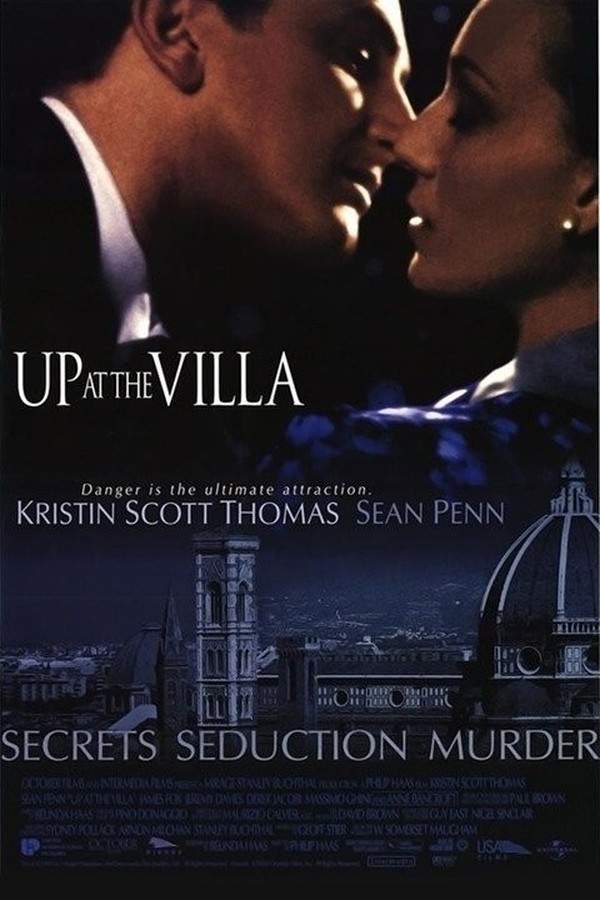
Up at the Villa

Up at the Villa

Year: 2000

Runtime: 115 min

Language: English

Director: Philip Haas

Drama

In the Italian countryside, recently widowed Mary Panton finds unexpected attention from a wealthy diplomat. As she adjusts to her new circumstances, she meets Rowley Flint, an American living abroad, and a passionate affair begins. This forbidden romance threatens to disrupt the diplomat's plans and expose secrets within Mary's carefully ordered world.

Warning: spoilers below!

Haven’t seen Up at the Villa yet? This summary contains major spoilers. Bookmark the page, watch the movie, and come back for the full breakdown. If you're ready, scroll on and relive the story!

Up at the Villa (2000) – Full Plot Summary & Ending Explained

Read the complete plot breakdown of Up at the Villa (2000), including all key story events, major twists, and the ending explained in detail. Discover what really happened—and what it all means.

A recently bereaved Englishwoman, Mary Panton, portrayed by Kristin Scott Thomas, finds herself residing at the opulent villa of affluent friends just outside Florence, Italy, amidst the turbulent backdrop of 1938. The day after a gathering to celebrate the Munich Agreement, her old acquaintance, Sir Edgar Swift, played by James Fox, unexpectedly proposes marriage. Although taken aback, Mary requests a few days to contemplate his offer, which he graciously accepts, promising to return from Rome for their discussion.

That evening, as she attends a soirée hosted by her friend, the Princess San Ferdinando, enchanting depicted by Anne Bancroft, Mary crosses paths with the charming but married American, Rowley Flint, brought to life by Sean Penn, known for his roguish demeanor. During the festivities, the entertainment—a violinist, acted by Jeremy Davies, is so inept that the Princess has him dismissed. Moved by compassion, Mary discreetly tips him generously. Rowley offers Mary a ride home, en route to which, they stop at a quaint church. Here, Mary reveals her painful history of being married to an abusive alcoholic who perished in a car accident, leaving her in dire straits. Attempting to get closer, Rowley leans in to kiss her, but she recoils and drives off, her frustration boiling over as she narrowly avoids hitting the young violinist from earlier, who turns out to be Karl Richter.

Feeling a sense of sympathy for Karl, a starving refugee from Austria fleeing Nazi oppression, Mary invites him for dinner. After an emotionally charged evening, she succumbs to temptation, sharing an intimate moment with him, only for him to depart the following morning. The very same day, Mary attends a meeting with fellow English expatriates and local authorities, where Beppino Leopardi, the Fascist official, sternly informs them they must legally register their stay in Italy. Later that night, much to her astonishment, Karl breaks into her room professing his love. However, when she confesses her earlier act was one of “pity,” he erupts with rage, resulting in a chaotic confrontation that tragically culminates in his suicide with the gun she had received from Sir Edgar.

In a frantic state, Mary enlists Rowley’s help to conceal the incident, leading to a heart-pounding moment where they dispose of Karl’s body in the woods, manipulating the evidence to avert any implication of her involvement. Yet their relief is short-lived when Leopardi soon shows up to inform Mary that Rowley has been arrested for possessing an unregistered firearm belonging to Sir Edgar. Fearing for Rowley’s fate, as well as the repercussions for Edgar, Mary cleverly seeks out the Princess. In a bold move, she gets the Princess intoxicated, coaxing her into revealing a past of blackmail against Leopardi involving incriminating financial documents.

Seizing the opportunity, Mary visits Leopardi’s office, brandishing the documents as leverage to secure Rowley’s release. Though he is furious, Leopardi complies, allowing her to bring a wounded Rowley back home. Confession lays heavy on Mary as she admits her feelings for Rowley, yet they acknowledge the impossibility of fidelity and part ways. Later, Mary confides in Edgar, sharing the tumultuous experiences she has faced in recent days. Surprisingly empathetic, he still desires to marry her, albeit acknowledging that accepting her would require relinquishing his esteemed position to prevent a scandal. Realizing she does not love him and fearing for his career, Mary ultimately declines his proposal.

The following day at the station, as Mary embarks on her journey back to London, she is taken aback when Rowley joins her in the train car. Announcing his own plans to travel to Paris, they mutually decide to embark on this adventure together, suggesting a fresh start for their relationship amidst the ebbs and flows of life’s chaos.
Last Updated: November 16, 2024 at 11:47

Mobile App Preview

Coming soon on iOS and Android

The Plot Explained Mobile App

From blockbusters to hidden gems — dive into movie stories anytime, anywhere. Save your favorites, discover plots faster, and never miss a twist again.

Sign up to be the first to know when we launch. Your email stays private — always.

Explore Movie Threads

Discover curated groups of movies connected by mood, themes, and story style. Browse collections built around emotion, atmosphere, and narrative focus to easily find films that match what you feel like watching right now.

Tense Period Romance Scandals like in Up at the Villa

Forbidden affairs in high society settings sparking dangerous secrets and moral crises.Discover movies like Up at the Villa featuring forbidden romance stories set against a backdrop of high society and political intrigue. If you enjoyed the tense drama of a secret affair leading to a dangerous cover-up, these films offer similar stories of passion, risk, and moral compromise.

tenseromanticdramaticsuspensefulmelancholicmoral dilemmahigh societyscandal

Narrative Summary

The narrative typically follows a protagonist, often someone vulnerable or new to a powerful social circle, who becomes involved in a passionate but forbidden romance. This relationship quickly escalates into a high-stakes situation—often involving a death, a crime, or damning evidence—that must be concealed from influential figures, leading to a tense cat-and-mouse game and a morally complex resolution.

Why These Movies?

These films are grouped by their core formula: a compelling romance is inextricably linked with a suspenseful plot driven by a secret. They share a specific mood that mixes the urgency of a thriller with the emotional depth of a drama, all within a glamorous yet oppressive period or elite setting.

Movies about Bittersweet New Beginnings like Up at the Villa

Characters weighed down by grief or scandal find a fraught fresh start.Find films similar to Up at the Villa where characters seek a new life after a personal tragedy. If you liked Mary's story of escaping widowhood only to face a new moral crisis, these movies explore the complex, bittersweet nature of starting over.

melancholicreflectivebittersweetdramaticstarting overgrief and lossmoral dilemmaemotionally complex

Narrative Summary

The narrative pattern follows a protagonist attempting to rebuild their life after a significant loss or trauma. Their pursuit of a new identity or relationship in a different setting is disrupted by an unforeseen event or a difficult choice, forcing them to confront new moral challenges. The ending offers a form of escape or partnership, but it is tempered by the consequences of their actions and the memories of what was left behind.

Why These Movies?

These movies are united by a specific emotional arc: the pursuit of renewal is inextricably linked with confronting new or old demons. They share a melancholic and reflective mood, a steady pacing that allows for character introspection, and a consistently bittersweet conclusion where hope is balanced with regret.

Unlock the Full Story of Up at the Villa

Don't stop at just watching — explore Up at the Villa in full detail. From the complete plot summary and scene-by-scene timeline to character breakdowns, thematic analysis, and a deep dive into the ending — every page helps you truly understand what Up at the Villa is all about. Plus, discover what's next after the movie.

Up at the Villa Timeline

Track the full timeline of Up at the Villa with every major event arranged chronologically. Perfect for decoding non-linear storytelling, flashbacks, or parallel narratives with a clear scene-by-scene breakdown.

Up at the Villa Timeline

Characters, Settings & Themes in Up at the Villa

Discover the characters, locations, and core themes that shape Up at the Villa. Get insights into symbolic elements, setting significance, and deeper narrative meaning — ideal for thematic analysis and movie breakdowns.

Characters, Settings & Themes in Up at the Villa

Up at the Villa Spoiler-Free Summary

Get a quick, spoiler-free overview of Up at the Villa that covers the main plot points and key details without revealing any major twists or spoilers. Perfect for those who want to know what to expect before diving in.

Up at the Villa Spoiler-Free Summary

More About Up at the Villa

Visit What's After the Movie to explore more about Up at the Villa: box office results, cast and crew info, production details, post-credit scenes, and external links — all in one place for movie fans and researchers.

More About Up at the Villa

Similar Movies to Up at the Villa

Discover movies like Up at the Villa that share similar genres, themes, and storytelling elements. Whether you’re drawn to the atmosphere, character arcs, or plot structure, these curated recommendations will help you explore more films you’ll love.