Plot Explained Spoilers guaranteed!
Plot Explained

Browse by genre

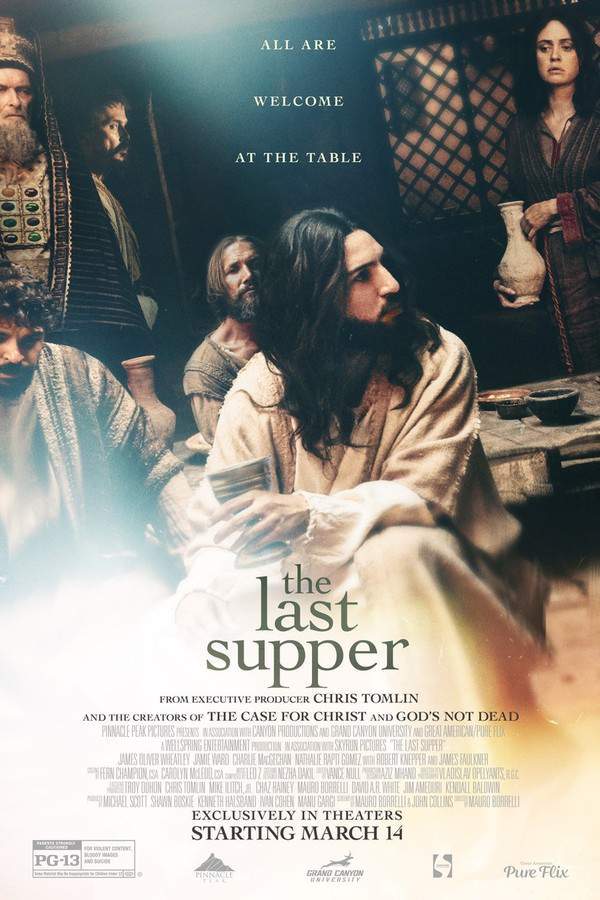
The Last Supper (1995) movie poster

Characters & Themes

The Last Supper (1995) Characters, Setting & Themes Explained

Release, runtime and language
1995 · 92 mins · English
Directed by
Stacy Title
Starring
Ron Perlman, Courtney B. Vance, Cameron Diaz, Mark Harmon, Bill Paxton, Charles Durning

Love, sex, life and death circle a house where every desire is laid bare. A group of idealistic yet frustrated liberals, tired of their impotence, plot to murder right‑wing pundits whose views they despise, revealing how political zeal can blur the line between conviction and murder.

On this page (7)
  1. 1 Characters explained (9)
  2. 2 Where & when it takes place
  3. 3 Themes & meaning (4)
  4. 4 Character & meaning questions
  5. 5 Movie threads
  6. 6 Movies like The Last Supper
  7. 7 Every angle

9 main characters · contains spoilers

The Last Supper Characters Explained: Who Is Who

The main characters of The Last Supper (1995), heroes and villains: what drives them, how they change over the course of the story and what each of them reveals about the film's bigger ideas.

  • Jude (Cameron Diaz)

    A psychology student among the five graduate peers whose dinner conversation anchors the liberal voice of the group. She participates in the plan but shows awareness of the moral boundaries later, even warning Norman about the tainted wine. Her empathy contrasts with the escalating brutality around the table.

    • 🎭 Drama
    • 🧠 Psychological
    • 💬 Dialogue-driven
  • Marc (Jonathan Penner)

    An aspiring painter who becomes the first to physically threaten and later fatally stab Zack. He embodies the slippery slope from debate to action, struggling with guilt as the group doubles down on their murderous scheme.

    • 🎨 Artist
    • 🧠 Intense
    • ⚖️ Morally conflicted
  • Luke (Courtney B. Vance)

    A doctoral student in political science who grows increasingly unhinged and embraces the group’s violent logic. He is the driving force behind several decisions and ultimately contributes to setting the moral tone of the dinner.

    • 🎭 Drama
    • 🧠 Intellectual
    • 🗡️ Violence
  • Pete (Ron Eldard)

    A law student from a wealthy family who participates in the murderous dinners and inflicts instability as the plan unfolds. He confronts the consequences of their actions and suffers physical peril during the struggle with Zack.

    • 🎭 Drama
    • 🧠 Intellectual
    • 💪 Physical
  • Paulie (Annabeth Gish)

    A social work student who witnesses the chilling events and later regrets Zack’s death despite his threats. She embodies a humane counterpoint to the group’s escalating violence.

    • 🎭 Drama
    • 🧠 Compassion
    • 💬 Dialogue-driven
  • Zack (Bill Paxton)

    A Desert Storm veteran and truck driver who arrives as the dangerous catalyst—racist, xenophobic, and a Holocaust denier. His volatile presence sparks the conflict that spirals into murder.

    • 🗡️ Violence
    • 🧠 Bigotry
    • 🌟 Extremism
  • Norman Arbuthnot (Ron Perlman)

    A famous conservative pundit who appears to challenge the group's arguments with calm, persuasive rhetoric. He exposes the gap between public bravado and private beliefs, hinting at a potential presidential run.

    • 🎭 Drama
    • 🧠 Charisma
    • 🗨️ Persuasive
  • Jenny Tyler (Elisabeth Moss)

    The missing girl around whom the sheriff’s investigation centers. Her absence is the external impetus for the unfolding drama and the group’s mounting paranoia.

    • 🧭 Mystery
    • 🕵️ Investigation
    • 🚨 Missing Person
  • Sheriff Alice Stanley (Nora Dunn)

    The investigating sheriff who questions the students about Jenny Tyler’s disappearance. Her presence adds tension, and she becomes a target when Luke acts against her.

    • 🕵️ Investigation
    • 🗺️ Mystery
    • 🗡️ Violence

Last updated: October 04, 2025 at 15:22

Was this helpful?

Setting

Where and When Does The Last Supper Take Place?

The setting of The Last Supper (1995): the year and time period, the places and locations, and how they shape the characters, the mood and the tension of the story.

Time period

Early 1990s

The events unfold in the early 1990s, a period of polarized political discourse. The characters’ discussions mirror the era's clashes between liberal academia and conservative rhetoric. The presence of a Desert Storm veteran among the guests anchors the story in that timeframe.

Location

Iowa, USA

Set in a house in Iowa, the film follows a tight-knit group of graduate students. The Midwest setting provides a quiet backdrop that contrasts with intense ideological debates inside. The house acts as a crucible where philosophy, politics, and personal tensions escalate into violence.

  • 🏡 Small-town Iowa
  • 🎓 Academic setting
  • 🏠 Shared graduate student house

Last updated: October 04, 2025 at 15:22

Was this helpful?

4 major themes

The Last Supper Meaning: Themes & Message Explained

What is The Last Supper (1995) really about? The emotional, social and philosophical themes the film keeps returning to, its symbolism and the message beneath the surface.

  • Moral Decay

    Intellectual certainty is used to justify terrible acts, showing how ideas can erode basic empathy. The dinner conversations progressively strip away moral constraints, turning violence into a rationalized experiment.

  • Groupthink

    The five students’ camaraderie evolves into a pattern of consent and compliance that enables extreme violence. Rationalizations pile up as dissent is silenced and everyone defers to a shared ideology. The plot exposes how a group can normalize murder through mutual reinforcement.

  • Ideology vs Humanity

    Beliefs are treated as a test of loyalty and intellect rather than a guide to humane action. The characters debate, dehumanize, and instrumentalize others in service of their worldview. The conflict reveals the danger of abstract ideals divorced from compassion.

  • Consequences & Guilt

    As the body count rises, guilt and doubt infiltrate the group’s decisions. The tension between justification and remorse becomes palpable, culminating in fractured relationships and a chilling sense of accountability.

Last updated: October 04, 2025 at 15:22

Was this helpful?

Character & theme questions

The Last Supper Characters & Meaning: Your Questions Answered

The questions people ask about The Last Supper (1995): who the characters really are, their relationships, what the symbols mean, where it takes place and what the movie is really about. Each answer contains spoilers.

Q1

Where does the story take place?

The movie is set primarily in a shared graduate student house located in Iowa, USA. This small-town Midwest setting provides a quiet backdrop that contrasts sharply with the intense ideological debates occurring inside. In The Last Supper, the house acts as a crucible where philosophy and personal tensions escalate into violence.

Foreshadowing: The isolated house setting hints at the group's separation from societal norms.

  • iowa
  • setting
  • location
  • house
  • midwest
Q2

When is the movie set?

The events unfold in the early 1990s, reflecting a period of polarized political discourse in America. The presence of a Desert Storm veteran among the guests anchors the story firmly in that timeframe. The Last Supper uses this era to mirror clashes between liberal academia and conservative rhetoric.

Foreshadowing: References to Desert Storm establish the specific historical context early on.

  • time period
  • 1990s
  • era
  • desert storm
  • history
Q3

Who are the five graduate students?

The core group consists of Jude, Marc, Luke, Pete, and Paulie, all idealistic yet frustrated liberals. They represent different academic disciplines including psychology, law, and political science. In The Last Supper, their camaraderie evolves into a pattern of consent that enables extreme violence.

Foreshadowing: Their initial dinner conversations hint at their shared ideological rigidity.

  • students
  • characters
  • jude
  • luke
  • marc
  • pete
  • paulie
Q4

Who is the main antagonist among the guests?

Norman Arbuthnot, a famous conservative pundit, appears to challenge the group's arguments with calm persuasive rhetoric. He exposes the gap between public bravado and private beliefs while hinting at a potential presidential run. The Last Supper positions him as the intellectual catalyst who ultimately outsmarts the group.

Foreshadowing: Norman's calm demeanor contrasts with the students' rising agitation.

  • norman arbuthnot
  • antagonist
  • pundit
  • ron perlman
  • conservative
Q5

What role does Jude play in the group?

Jude is a psychology student who anchors the liberal voice of the group but shows awareness of moral boundaries later. Her empathy contrasts with the escalating brutality around the table, even leading her to warn others about tainted wine. In The Last Supper, she represents the lingering conscience within the collective.

Foreshadowing: Jude's early hesitation signals her eventual moral conflict.

  • jude
  • cameron diaz
  • psychology
  • empathy
  • conscience
Q6

What role does Luke play in the group?

Luke is a doctoral student in political science who grows increasingly unhinged and embraces the group's violent logic. He serves as the driving force behind several decisions and contributes to setting the moral tone of the dinner. The Last Supper uses him to illustrate the shift from debate to action.

Foreshadowing: Luke's aggressive debating style foreshadows his willingness to use force.

  • luke
  • courtney b vance
  • political science
  • leader
  • violence
Q7

What is the central thematic conflict?

The story centers on the tension between ideology and humanity, treating beliefs as a test of loyalty rather than a guide to humane action. Characters dehumanize others in service of their worldview, revealing the danger of abstract ideals divorced from compassion. The Last Supper argues that intellectual certainty can erode basic empathy.

Foreshadowing: Early debates show the prioritization of logic over human life.

  • theme
  • ideology
  • humanity
  • conflict
  • morality
Q8

How does the film depict groupthink?

The five students' camaraderie evolves into a pattern of consent and compliance that enables extreme violence. Rationalizations pile up as dissent is silenced and everyone defers to a shared ideology. The Last Supper exposes how a group can normalize murder through mutual reinforcement and social pressure.

Foreshadowing: Initial agreement on minor points builds toward major complicity.

  • groupthink
  • conformity
  • pressure
  • compliance
  • dynamics
Q9

What does the setting symbolize?

The house acts as a crucible where philosophy, politics, and personal tensions escalate into violence. It represents an isolated intellectual bubble detached from real-world consequences. In The Last Supper, the confined space intensifies the pressure cooker effect of their ideological experiments.

Foreshadowing: The locked doors and private dining room emphasize isolation.

  • symbolism
  • house
  • setting
  • isolation
  • crucible
Q10

What is the overall tone of the movie?

The tone is consistently dark, blending satirical elements with a grim exploration of moral corruption. Intensity remains high due to the constant threat of violence and the psychological toll of the characters' actions. The Last Supper maintains a steady pacing that builds dread through ritualistic dinner structures.

Foreshadowing: Early humor gives way to increasingly serious threats.

  • tone
  • mood
  • satire
  • dark
  • thriller
Q11

How does the movie reflect 1990s politics?

The characters' discussions mirror the era's clashes between liberal academia and conservative rhetoric during a time of polarized discourse. The presence of specific cultural references anchors the story in the early 1990s political climate. The Last Supper uses this context to critique how political zeal can blur the line between conviction and murder.

Foreshadowing: News clips and dialogue reference contemporary political tensions.

  • politics
  • 1990s
  • discourse
  • liberalism
  • conservatism
Q12

Who is the sheriff character?

Sheriff Alice Stanley is the investigating officer who questions the students about a missing girl named Jenny Tyler. Her presence adds tension to the narrative, and she eventually becomes a target when Luke acts against her. In The Last Supper, she represents the external legal pressure closing in on the group.

Foreshadowing: Police lights or knocks at the door signal her approaching investigation.

  • sheriff
  • alice stanley
  • law
  • investigation
  • nora dunn
Q13

What motivates the students' actions?

The group is motivated by frustration with their own impotence and a desire to act against right-wing pundits whose views they despise. They plot to murder these guests as a way to enforce their ideological convictions physically. The Last Supper reveals how political zeal can transform abstract anger into lethal action.

Foreshadowing: Complaints about societal inaction precede their radical plan.

  • motivation
  • impotence
  • ideology
  • action
  • frustration
Q14

What message does the film send about conviction?

The movie suggests that intellectual certainty is often used to justify terrible acts, showing how ideas can erode basic empathy. Beliefs are treated as a test of loyalty rather than a guide to humane action, leading to dangerous outcomes. The Last Supper warns against the danger of abstract ideals divorced from compassion.

Foreshadowing: Philosophical quotes are twisted to support violent decisions.

  • conviction
  • belief
  • certainty
  • justification
  • message
Q15

How does the film handle moral consequences?

As the body count rises, guilt and doubt infiltrate the group's decisions, fracturing relationships and creating a chilling sense of accountability. The tension between justification and remorse becomes palpable throughout the narrative. The Last Supper culminates in a bleak view where crimes remain undiscovered but moral decay is complete.

Foreshadowing: Early signs of hesitation predict later psychological breakdown.

  • consequences
  • guilt
  • remorse
  • accountability
  • ending

Movie threads

More Movies Like The Last Supper, by Mood & Story

Curated lists built around what makes The Last Supper tick: the same mood, the same kind of story or the same emotional payoff. Each list explains why these movies belong together.

Movies about radical idealists like The Last Supper

Stories where political or moral conviction spirals into murderous action. If you liked The Last Supper, explore more movies about political extremism and vigilante justice. These films feature characters whose strong beliefs lead them down a dark path, blurring the line between conviction and crime, perfect for fans of tense, morally complex dramas.

  • unsettling
  • ideological
  • tense
  • moral decay
  • fanatical
  • claustrophobic
  • Tone: dark, tense, morally ambiguous
  • Pacing: steady, deliberate
Why these movies?

The story pattern: These narratives typically follow a group or individual whose deep-seated beliefs are challenged by an opposing force. Frustration and a sense of moral superiority lead them to justify increasingly extreme actions, often violence, creating a plot that examines the psychology of fanaticism and the collapse of ethical boundaries.

Why they belong together: Movies in this thread are united by their central theme of ideological corruption. They share a dark tone, high tension, and a heavy emotional weight, focusing on the psychological descent of characters who believe their cause justifies any means, resulting in a gripping and thought-provoking experience.


Claustrophobic moral thrillers like The Last Supper

Tense stories where secrets and guilt consume characters in confined spaces. Find more movies like The Last Supper that master claustrophobic tension and moral decay. These thrillers often use limited settings to amplify paranoia and anxiety, perfect for viewers who enjoy stories about secrets, lies, and the psychological toll of crime in a confined world.

  • claustrophobic
  • paranoid
  • anxious
  • unsettling
  • grim
  • secretive
  • Tone: dark, bleak, paranoid
  • Pacing: steady, building dread
Why these movies?

The story pattern: The narrative pattern involves a group confined to a primary location—a house, an apartment, an isolated space—where a terrible secret or a series of crimes binds them together. The plot unfolds through rising paranoia, mistrust, and the psychological deterioration of the characters as they grapple with the consequences of their actions within their tight-knit circle.

Why they belong together: These films are grouped by their shared mood of claustrophobia and paranoia, a steady pacing that builds dread, and a bleak tone. They prioritize psychological tension over action, exploring how guilt and secrecy can destroy relationships from the inside out in a constrained environment.

If you liked this

Movies Like The Last Supper

Similar movies to The Last Supper: the same genre, themes or kind of story. Each one comes with its own plot summary, timeline and ending explained.

Browse all movie summaries

Every angle

The Last Supper (1995) Explained: Plot, Timeline & Characters

Everything about The Last Supper in one place: what happens in the plot summary, the timeline in chronological order, the characters and meaning and a spoiler-free summary. What's After the Movie adds the cast, box office and post-credit scenes.

Coming soon on iOS and Android

The Plot Explained Movie Summary App

Plot summaries, endings explained and timelines on your phone. Catch up on any movie in minutes, save your favorites and never miss a twist again.

Be the first to know when we launch. Your email stays private, always.

Learn more about the app