Plot Explained Spoilers guaranteed!
Plot Explained

Browse by genre

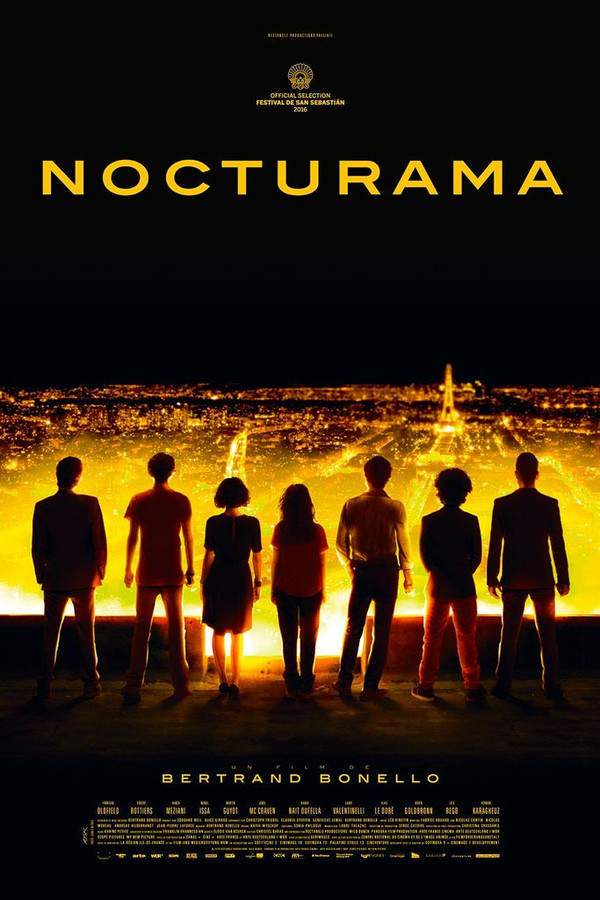
Nocturama (2017) movie poster

Plot Summary

Nocturama (2017) Plot Summary Explained

Release, runtime and language
2017 · 130 min · French
Echo score 70
JustWatch #26,070 2
Directed by
Bertrand Bonello
Starring
Finnegan Oldfield, Jamil McCraven, Manal Issa, Hamza Meziani, Ilias Le Doré, Laure Valentinelli
Budget
$5.6M

A group of Parisian teenagers, each grappling with personal frustrations, find their lives converging in a shocking act of violence. Following a bombing, they seek refuge within a luxurious shopping mall, becoming trapped within its glittering environment. As they navigate the surreal situation, they confront consumerism and the complexities of their own circumstances, all while facing an uncertain future and the dangers that surround them.

On this page (6)
  1. 1 Where to watch
  2. 2 What happens: full plot
  3. 3 Plot questions answered
  4. 4 Movie threads
  5. 5 Movies like Nocturama
  6. 6 Every angle

Where to watch

Where to Watch Nocturama (2017)

Where can you watch Nocturama? Stream, rent or buy it in the US, including on MUBI, Philo and Cineverse: current JustWatch availability with up-to-date prices.

Streaming availability powered by JustWatch

Full plot summary · contains spoilers

What Happens in Nocturama: Full Plot Summary

The whole story of Nocturama (2017) explained, from the opening scene to the final frame: every key event, every twist and what it all adds up to. Read it as a quick recap before the sequel, to check a scene you missed, or to finally understand what really happened.

The film centers on a tight-knit group of young, idealistic rebels who hatch a meticulously planned wave of attacks across Paris, aiming to shake the foundations of a society they view as hollow. When the story unfolds in a non-linear fashion, a flashback reveals that the bombs—made from semtex—were supplied to the group, largely composed of teenagers and university students, by Greg, the sole adult who remains outside the core circle. The plan threads through several high-stakes targets: cars, towering office buildings, government structures, and even a symbolic strike at Jeanne d’Arc. The tension is built as the youths coordinate their actions with surgical precision, trusting their own urban insurgency to bring about a dramatic reckoning.

In the early hours, three members—Sarah, her partner David, and Yacine—embark on a dangerous mission to infiltrate the floor of a gleaming skyscraper and plant a device, with Fred serving as an external ally who works as a security guard at the site. The atmosphere crackles with a sense of urgency as they move through marble corridors and glass facades, careful to stay one step ahead of the building’s security network. A brutal moment interrupts the plan when Fred, while searching David’s floor, shoots an innocent office worker who answered a call. The moment underscores the precarious line between zeal and collateral damage. The subsequent response from another guard is swift and deadly, and Fred himself is killed in a desperate plea for mercy. David, hearing the gunfire from a neighboring corridor, is forced to improvise, and he discards his bomb rather than let it become a fatal liability.

After the bombs detonate remotely, the group converges on a central department store in the heart of Paris, intending to ride out the manhunt through the night and into the following day. A larger, more ominous element enters the scene as the younger insurgents are joined by others—André, Samir, Samir’s sister Sabrina, and Mika—who contribute their own anxieties, ambitions, and loyalties to the precarious dynamic. The whereabouts of Greg and Fred become central concerns, as is Omar, who turns out to be an inside man whose loyalty complicates the security landscape. Omar reveals that he has bound and gagged the rest of the security team and cut power to the cameras, and a chilling detail is revealed: the guards have been killed. Yet the fate of Greg, whose assignment was to assassinate a bank executive, remains shrouded in mystery, a question that gnaws at the group as they huddle in the store’s aisles.

As the night wears on, the insurgents live off groceries from the store, swap clothes from boutiques, and watch the outside world flicker on the display televisions. The siege atmosphere deepens as a sense of isolation settles over them while the city outside debates the unfolding crisis. A homeless man and his wife appear, their presence unsettling yet oddly humanizing, as David shows a glimmer of protective feeling while continuing to rationalize their survival strategy. A cyclist offers a blunt, street-level view of the authorities’ relentless search, describing a city that seems inexorably driven toward a dramatic blow. The cyclist’s blunt assessment—echoing a line of dialogue earlier between André and Sarah—frames civilization itself as a fragile condition that teeters on collapse: “Civilization is a condition for the downfall of civilization.”

Within the enclosed world of the department store, the group’s nerves tighten further as the tension between fear and solidarity intensifies. Mika experiences a troubling dream in which Greg reappears, claiming he forgot to hide his gun and asking whether Mika would have done the same, only to vanish, leaving behind a lifelike mannequin as a disturbing placeholder for a living threat. The dream hints at unresolved guilt and the fragility of belief within the cause they have embraced. When the homeless couple briefly becomes part of the group’s fragile sense of humanity, the others watch in anxious, almost reverent silence as David and Sarah share a moment of tenderness, trying to ground themselves in something human amid the looming storm.

As authorities close in, André advises restraint and cautions against rash declarations, while the remaining insurgents prepare the final, deadly leverage—semtex placed along the pillars of the store to compel a cautious, if grim, surrender. The moment of decision arrives as the police finally storm the department store, calling for surrender even as the group raises their hands in a shaky gesture of compliance. The response is cold and unyielding: the police shoot, without hesitation, every person who presents a threat, including the homeless couple who had briefly found shelter among the aisles. One by one, the young conspirators fall, their pleas and bargaining attempts silenced in a rapid succession of gunfire, and the interior of the store becomes a silent, grim tableau of fallen lives.

The film ends with a stark meditation on the human consequences of extremist action and the cost of despair that can drive youth toward violence. What begins as a bold, idealistic gamble ends as an unflinching, brutal confrontation with the realities of power, fear, and the fragility of communal bonds under siege. The narrative never shies away from the chaotic aftermath that such choices unleash, leaving viewers with a lingering sense of tragedy and the moral ambiguity at the heart of ideological radicalism.

Cast: Finnegan Oldfield, Jamil McCraven, Manal Issa, Hamza Meziani, Ilias Le Doré, Laure Valentinelli, Martin Petit-Guyot, Rabah Nait Oufella, Robin Goldbronn, Vincent Rottiers
Last updated: October 09, 2025 at 16:23

Was this helpful?

Plot questions answered

Nocturama Plot Explained: Your Questions Answered

The questions people ask most about Nocturama (2017): what happens in the confusing scenes, why the characters do what they do, the twists, hidden details and what the ending means. Each answer contains spoilers.
Q1

Why did Fred shoot the innocent office worker during the skyscraper mission?

Fred shot the office worker who answered a phone call because he was trying to prevent any alert that could compromise their bombing operation. However, this act directly led to a secondary security guard killing Fred when he responded to the shooting, demonstrating how the group's violence quickly escalated beyond their original plan and directly caused Fred's death.

Foreshadowing: Earlier, the group had rehearsed their plan with military precision, but Fred's impulsive act showed how quickly the operation devolved into chaos.

  • fred
  • office worker
  • skyscraper
  • bombing
  • security guard
  • death
Q2

What happened to Greg after the bombings?

Greg's fate remains deliberately ambiguous throughout the film. He was assigned to assassinate a bank executive but never returned to the group. The only hint comes through Mika's nightmare, where Greg appears saying he forgot to hide his gun and implying he committed suicide on the streets, though this could represent guilt or paranoia rather than literal truth.
Foreshadowing: Mika's dream of Greg asking whether he would have done the same suggests Greg's psychological break from the operation.

  • greg
  • bank executive
  • assassination
  • missing
  • fate
Q3

Why did police shoot all the teenagers in the department store?

When police stormed the department store, the youths attempted to surrender with their hands raised. However, the officers shot every person present without hesitation, including those surrendering and even the homeless couple who had sought shelter there. This brutal ending reflects the film's dark commentary on how authorities respond to perceived terrorism with overwhelming, indiscriminate force.

Foreshadowing: Earlier dialogue about civilization being a condition for its own downfall foreshadows this complete breakdown of mercy.

  • police
  • shooting
  • department store
  • surrender
  • homeless couple
  • massacre
Q4

What was Omar's role in the group and why did he help them?

Omar served as an inside man working within the department store's security team. He bound and gagged the remaining security personnel and cut power to the cameras, enabling the group to enter and hide undetected. His motivation appears to be sympathy with their ideological cause, though his character remains largely unexplained.

Foreshadowing: The revelation that Omar had neutralized security without the group knowing initially creates tension about whether he could be trusted.

  • omar
  • security
  • cameras
  • inside man
  • betrayal
Q5

Why did David discard his bomb during the skyscraper operation?

David heard gunfire from an adjoining corridor after Fred shot the office worker and a guard killed Fred. Realizing the situation had turned fatal and compromised, David improvised by discarding his bomb rather than risk it detonating accidentally or alerting more security. This decision highlighted how the plan fell apart under pressure and represented a moment of self-preservation.

Foreshadowing: The group's meticulous planning quickly deteriorated as each member faced unexpected complications.

  • david
  • bomb
  • skyscraper
  • discard
  • gunfire
Q6

Why did the group choose to hide in a department store after the bombings?

The department store offered ideal concealment: it was centrally located in Paris, had multiple exits, allowed them to blend in with shoppers during the day, and provided access to food and clothing without leaving the building. They planned to wait out the manhunt until things calmed down, using the store's resources to survive overnight.

Foreshadowing: The decision marked a shift from offensive action to defensive survival mode.

  • department store
  • hide
  • manhunt
  • survival
  • paris
Q7

What was the significance of the homeless couple in the department store?

The homeless couple represented humanity and innocence within the otherwise ideological group. David invited them inside as an act of compassion, and they briefly became part of the group's fragile community. Their inclusion, and subsequent death alongside the youths, underscored the film's message about the cost of violence affecting even those disconnected from the conflict.

Foreshadowing: David's earlier encounter with the homeless man outside showed his conflicting impulses between survival and humanity.

  • homeless
  • couple
  • david
  • innocence
  • compassion
Q8

What did Mika's nightmare about Greg and the mannequin mean?

Mika dreamed that Greg appeared saying he forgot to hide his gun and asked if Mika would have done the same, then transformed into a mannequin. The dream represented Mika's guilt, paranoia, and unresolved questions about Greg's fate. It reflected the psychological fragility of the group as they waited in the store, unsure whether Greg was alive, dead, or betraying them.

Foreshadowing: The mannequin, a human-like but inanimate object, symbolized how the violence had dehumanized them all.

  • mika
  • dream
  • greg
  • mannequin
  • guilt
  • paranoia
Q9

Why did the group plan to target Jeanne d'Arc?

The group planned to set fire to Jeanne d'Arc as a symbolic attack on French national identity and historical mythology. Targeting this iconic historical figure represented their broader goal of striking at what they perceived as the hollow foundations of French society and challenging established institutions.

Foreshadowing: This symbolic target revealed the ideological motivations behind their broader wave of attacks.

  • jeanne d'arc
  • symbolic
  • attack
  • french
  • identity
Q10

What role did semtex play in the group’s operation?

Semtex was the explosive material supplied by Greg, the sole adult in the group. It was used to make the bombs planted in cars, buildings, and government structures. Later, André rigged remaining semtex against store pillars as leverage during the police standoff, hoping to force authorities to negotiate. The semtex represented both their destructive capability and the deadly seriousness of their ideological cause.

Foreshadowing: The semtex was introduced early as the fuel for their coordinated attacks across Paris.

  • semtex
  • bombs
  • explosives
  • greg
  • weapons
Q11

Why does the film use a non-linear narrative structure?

The film opens with the aftermath and then uses flashbacks to reveal how the group planned and executed their bombings. This structure creates tension by showing consequences before causes, building mystery around Greg's role and the group's coordination while allowing viewers to understand how events unfolded despite knowing the ultimate outcome.

Foreshadowing: The non-linear approach emphasizes that the story is about consequences as much as actions.

  • non-linear
  • flashback
  • structure
  • narrative
  • storytelling

Movie threads

More Movies Like Nocturama, by Mood & Story

Curated lists built around what makes Nocturama tick: the same mood, the same kind of story or the same emotional payoff. Each list explains why these movies belong together.

Claustrophobic siege films like Nocturama

Characters find shelter then become prisoners in an ironically safe space. If you liked the tense atmosphere of Nocturama, where characters are trapped in a shopping mall, you'll appreciate these movies. This list features films with similar siege situations, where a supposed safe haven becomes a prison, creating a potent mix of suspense and social commentary.

  • claustrophobic
  • tense
  • anxious
  • paranoid
  • urgent
  • siege
  • Tone: tense, bleak, paranoid
  • Pacing: variable, starting fast then slowing to a deliberate burn
Why these movies?

The story pattern: These narratives often begin with a deliberate act that forces characters into confinement. The focus then shifts from external action to internal pressure, as the characters navigate their opulent prison, confront their choices, and face an inevitable, often bleak, confrontation.

Why they belong together: They share a core structure of entrapment within a symbolically charged space, leading to a slow-burn examination of tension, ideology, and the breakdown of group dynamics under pressure, all while maintaining a high level of dread.

Bleak ideological thrillers about youth like Nocturama

Young idealists execute a radical plan that leads to tragic consequences. For viewers who appreciated Nocturama's exploration of political extremism and youthful disillusionment. This collection groups movies with similar themes of radical action, moral ambiguity, and the tragic consequences faced by young characters who challenge the system.

  • bleak
  • cold
  • urgent
  • tense
  • ideological
  • radical
  • Tone: dark, cold, bleak
  • Pacing: variable, intricate planning followed by slow deliberation
Why these movies?

The story pattern: The narrative often follows a group of young protagonists as they plan and carry out an act of ideological violence. The story then delves into the aftermath, focusing on their psychological state, the collapse of their unity, and the inescapable, bleak outcome of their actions.

Why they belong together: They are united by a focus on the journey from radical ideology to violent action, a cold and unsentimental tone, a heavy emotional weight centered on tragedy, and a narrative that questions the futility of extremism.

If you liked this

Movies Like Nocturama

Similar movies to Nocturama: the same genre, themes or kind of story. Each one comes with its own plot summary, timeline and ending explained.

Browse all movie summaries

Every angle

Nocturama (2017) Explained: Plot, Timeline & Characters

Everything about Nocturama in one place: what happens in the plot summary, the timeline in chronological order, the characters and meaning and a spoiler-free summary. What's After the Movie adds the cast, box office and post-credit scenes.

Coming soon on iOS and Android

The Plot Explained Movie Summary App

Plot summaries, endings explained and timelines on your phone. Catch up on any movie in minutes, save your favorites and never miss a twist again.

Be the first to know when we launch. Your email stays private, always.

Learn more about the app