







Plot Explained Spoilers guaranteed!
Plot Explained

Browse by genre

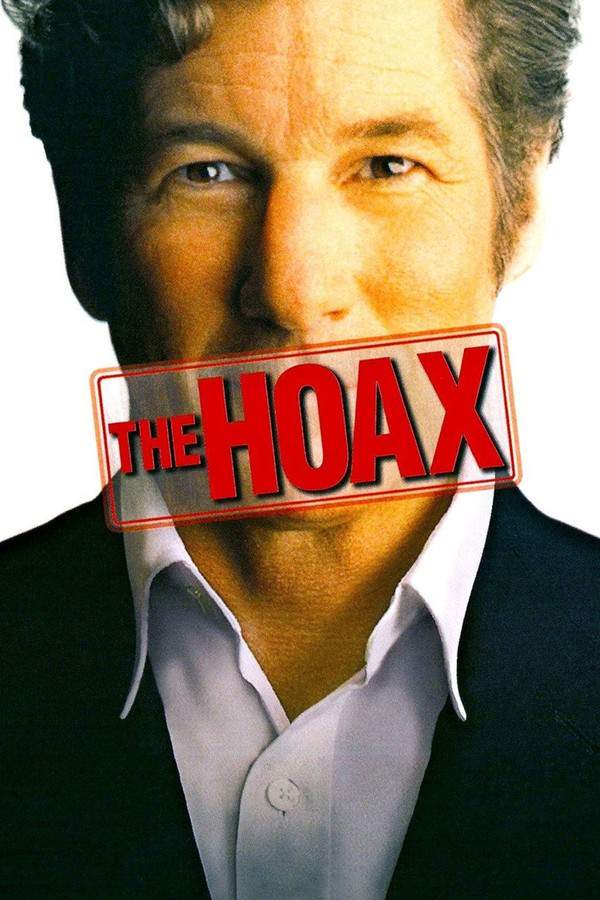
The Hoax (2007) movie poster

Timeline

The Hoax (2007) Timeline Explained – Every Event in Order

Release, runtime and language
2007 · 116 min · English
Directed by
Lasse Hallstrom
Starring
Alfred Molina, Richard Gere
Budget
$25M

A skeptical psychiatrist investigates a patient who has turned violent, attempting to discern genuine trauma from elaborate deception. As the psychiatrist delves deeper into the patient's psyche, the boundaries between reality and illusion become increasingly blurred. The professional finds himself questioning his own understanding of sanity and the nature of truth, struggling to maintain his objectivity in the face of disturbing revelations.

On this page (6)
  1. 1 Where to watch
  2. 2 Events in order (15)
  3. 3 Timeline questions answered
  4. 4 Movie threads
  5. 5 Movies like The Hoax
  6. 6 Every angle

Where to watch

Where to Watch The Hoax (2007)

Where can you watch The Hoax? Stream, rent or buy it in the US, including on Hoopla, YouTube Free and Amazon Video: current JustWatch availability with up-to-date prices.

Streaming availability powered by JustWatch

15 events in order · contains spoilers

The Hoax Timeline: Events in Chronological Order

Every key event of The Hoax (2007) in order, scene by scene, with when and where it takes place. Use it to untangle flashbacks, time jumps and parallel storylines, to refresh your memory before the sequel or to find the exact scene you are thinking of.

  1. Publisher's Interest

    In 1971, McGraw-Hill executives show interest in Clifford Irving's novel *Rudnick's Problem*, following the disappointing reception of his previous work, *Fake!*. Despite Irving's hopes for success, the publisher decides against its release due to an unsatisfactory review from a Life editor.

    When
    1971
  2. Hotel Evacuation

    During a vacation with friend Richard Suskind, Clifford Irving faces an abrupt evacuation from their hotel at the order of the eccentric billionaire Howard Hughes. This unexpected disruption forces Irving and Suskind to return to New York City earlier than planned.

    Where
    Hotel
  3. Boardroom Storm

    Back in New York, Irving grows frustrated with the lack of attention from the publisher's executives and storms into a boardroom. He boldly claims to have a project that could be the 'book of the century,' challenging them to take him seriously.

    Where
    New York City Boardroom
  4. Discovery of Hughes

    While searching for a compelling subject, Irving stumbles upon a cover story about Howard Hughes. Instantly captivated by Hughes's reclusive nature and wealth, he decides to pursue him as the focus for his new work.

  5. The Forged Deal

    Irving fabricates a story claiming that Hughes has commissioned him to write his autobiography, presenting forged handwritten notes as evidence. To his shock, handwriting experts authenticate these notes, leading McGraw-Hill to seal a $500,000 deal for the book.

  6. Personal Strain

    As Irving's professional life flourishes, his personal life deteriorates due to marital problems with his artist wife, Edith, intensified by his affair with Nina van Pallandt. Despite this, Irving reassures Edith of his loyalty while conducting research trips with Richard Suskind.

  7. Research and Deception

    Irving and Suskind undertake exhaustive research into Hughes's life, even resorting to illegally obtaining a draft biography from one of Hughes's former aides. They gather extensive information, solidifying the fabrications they plan to present.

  8. The Mysterious Box

    Irving receives a mysterious box containing scandalous information about potential illegality involving Hughes and President Nixon. Convinced this is a sign of Hughes's support, Irving seamlessly weaves this sensitive information into his manuscript.

  9. Phony Meeting Setup

    As the publication date approaches, Irving stages a fake meeting between the publishers and Hughes to validate the authenticity of his work. Despite Hughes publicly denying any connection to the book, McGraw-Hill executives remain optimistic about its potential success.

  10. Financial Scheming

    Irving negotiates additional payments for himself while plotting with Edith to deposit a check labeled 'H. R. Hughes' into a Swiss bank account created under a false identity, 'Helga R. Hughes.' This scheme reflects their growing desperation as tensions mount.

  11. Paranoia Escalates

    As the pressure of the deception takes a toll, Irving spirals into paranoia, grappling with guilt from his affair and the length he must go to maintain appearances with Edith. The mounting stress clouds his judgment and heightens his anxiety.

  12. Televised Denial

    Following a televised conference call where Hughes vehemently denies any association with the book, Irving finds himself engulfed in despair and hopelessness. This public repudiation challenges the credibility of his fabricated narrative.

  13. Arrest and Cooperation

    After the truth begins to unravel, Irving is arrested and attempts to negotiate immunity for Edith in exchange for his cooperation. The gravity of the deception and the consequences of their actions start to feel inevitable.

  14. Legal Outcomes

    In the aftermath of the scandal, Irving, Edith, and Suskind receive only minor sentences for their fabrications. The legal outcomes highlight the risks associated with their ambitious and dishonest project.

  15. Historical Implications

    A radio broadcast hints at favorable legal rulings for Hughes, leading Irving to ponder the potential entanglement of his book with President Nixon's administration. This suggests that Hughes's story might have unforeseen implications tied to the Watergate scandal.

Last updated: November 08, 2024 at 07:24

Was this helpful?

Timeline questions answered

The Hoax Timeline Explained: Your Questions Answered

When does it happen, and why in that order? The questions people ask about the chronology of The Hoax (2007): time jumps, flashbacks, cause and effect between scenes and the correct order of events, each answered with spoilers.

Q1

Why did Clifford Irving choose Howard Hughes for his scam?

Irving chose Hughes because he was known for extreme reclusiveness and was unlikely to contest any publication about himself. Hughes had not given an interview in years and was famously reclusive, making it seem unlikely he would publicly deny or challenge Irving's claim that he had commissioned an autobiography. Additionally, Irving assumed that if issues arose, he could point to Hughes's erratic behavior as reasons for confusion.

Foreshadowing: The movie opens with Irving being forced to vacate his hotel when Hughes orders everyone out, setting up Hughes as a powerful, unpredictable figure.

  • clifford irving
  • howard hughes
  • autobiography scam
  • recluse
Q2

How did the handwriting experts authenticate Irving's forged notes?

Irving created forged handwritten notes claiming to be from Hughes by carefully studying samples of Hughes's handwriting he obtained during his research. He practiced mimicking Hughes's distinctive style and then created notes purporting to be from the billionaire. The experts were fooled because they had limited samples of Hughes's handwriting to compare against, and Irving's forgeries were sufficiently convincing when examined out of context.

Foreshadowing: Earlier, Irving and Suskind illegally obtain a draft biography from a former Hughes aide, giving Irving access to Hughes's writing samples.

  • handwriting forgery
  • expert authentication
  • clifford irving
  • howard hughes
Q3

What was in the mysterious box Irving received?

Irving received a box containing scandalous information about illegal dealings between Howard Hughes and President Richard Nixon. The materials suggested corrupt connections between the two figures. Irving interpreted this as a sign that Hughes supported his project and wanted the information included, so he integrated these sensitive details into his manuscript.

  • mysterious box
  • richard nixon
  • hughes
  • scandal
  • manuscript
Q4

Why didn't Howard Hughes stop the book sooner?

Hughes's extreme reclusiveness worked in Irving's favor. Rather than actively pursuing legal action to stop the book, Hughes chose to simply deny any involvement publicly when confronted. This was consistent with his decades-long pattern of avoiding publicity. When Hughes finally issued a public denial through a televised conference call, it was already too late, Irving had already collected significant payments and the scheme was underway.

Foreshadowing: The movie establishes early on that Hughes has not given an interview in years and lives in seclusion.

  • howard hughes
  • public denial
  • book authenticity
  • hoax
Q5

How did Irving stage the fake meeting with Hughes for the publishers?

As the release date approached, Irving staged an elaborate fake meeting between the publishers and someone posing as Hughes. He orchestrated this phony meeting to convince McGraw-Hill that the autobiography was legitimate. Despite Hughes publicly denying any knowledge of the book, the publishers believed Irving's fabricated scenario and remained optimistic about the book's success.

  • fake meeting
  • publishers
  • clifford irving
  • deception
Q6

What was the connection between Irving's book and the Watergate scandal?

The movie suggests that Irving's book, which exposed alleged Hughes-Nixon connections, may have created political problems for President Nixon during a time when his administration was already facing scrutiny. A radio broadcast at the end hints at favorable legal rulings for Hughes, leading Irving to believe his book may have contributed to Nixon's mounting political troubles, though historians debate whether this connection was real or coincidental.

Foreshadowing: The mysterious box Irving received contained information about illegal dealings between Hughes and Nixon.

  • watergate
  • richard nixon
  • political scandal
  • hughes
  • connection
Q7

What happened to Clifford Irving after his arrest?

After the hoax unraveled, Irving was arrested. He attempted to negotiate immunity for his wife Edith in exchange for his cooperation. Ultimately, Irving, Edith, and his researcher Richard Suskind all received relatively minor sentences for their roles in the fraud. The light sentences reflected the non-violent nature of the crime and the public's fascination with the story itself.

Foreshadowing: Irving's paranoia escalates dramatically in the final act as the truth begins to unravel.

  • arrest
  • sentence
  • prison
  • clifford irving
  • legal consequences
Q8

How did the Swiss bank account scheme work?

Irving and his wife Edith plotted to deposit a check from Hughes into a Swiss bank account. They created a false identity called "Helga R. Hughes" and had the check made out to "H. R. Hughes," which they believed could be deposited under this forged identity. This scheme was designed to siphon money from the supposed autobiography deal, but it also added to the complexity of their fraud.

  • swiss bank account
  • helga hughes
  • check
  • edith irving
  • fraud
Q9

Why did Irving include the Nixon information in his manuscript?

Irving believed the mysterious box was sent by Hughes as a sign of approval and an endorsement of his work. Convinced that Hughes wanted this information exposed, Irving incorporated the sensitive material about Hughes and Nixon into his manuscript. He thought this would add credibility and sensationalism to the book, making it more marketable and seemingly more authentic.

Foreshadowing: Irving receives the mysterious box and interprets it as a message of support from Hughes.

  • nixon information
  • manuscript
  • clifford irving
  • hughes
Q10

How did Irving's affair affect his marriage to Edith?

Irving's affair with Nina van Pallandt created significant tension in his marriage to his artist wife Edith. Despite the strain, Irving continued to reassure Edith of his faithfulness while conducting research trips with Suskind. The guilt from his affair contributed to his growing paranoia as the hoax intensified, adding psychological pressure to an already stressful situation.

  • affair
  • nina van pallandt
  • edith irving
  • marriage
  • infidelity

Movie threads

More Movies Like The Hoax, by Mood & Story

Curated lists built around what makes The Hoax tick: the same mood, the same kind of story or the same emotional payoff. Each list explains why these movies belong together.

Deception Spiral Movies like The Hoax

Stories where a lie grows out of control, blurring reality for the liar. If you enjoyed the tense, methodical build-up of lies in The Hoax, you'll find similar movies here. These films feature ambitious characters whose elaborate deceptions spiral into paranoia and moral collapse, creating stories of high-stakes fraud and identity crises.

  • deceptive
  • anxious
  • unraveling
  • paranoid
  • desperate
  • fraud
  • Tone: tense, paranoid
  • Pacing: steady, methodical
Why these movies?

The story pattern: The narrative typically begins with a seemingly manageable falsehood, motivated by ambition or desperation. As the lie gains traction and requires increasingly complex maintenance, the protagonist's grip on reality weakens, leading to a climax where the deception inevitably unravels, resulting in legal, personal, or psychological fallout.

Why they belong together: These movies are grouped by their shared focus on the psychological toll of sustained deception. They share a tense tone, steady pacing that mirrors the meticulous construction of a lie, and a medium-to-high intensity driven by the constant risk of exposure.
Movies with Moral Uncertainty like The Hoax

Films that challenge the protagonist's ethics and perception of truth. Fans of The Hoax's exploration of a psychiatrist's crumbling objectivity will appreciate these films. They feature similar character studies where professionals face situations that test their ethics and reality, leading to mixed, thought-provoking endings.

  • unraveling
  • psychological
  • questioning
  • ethical dilemma
  • introspective
  • doubt
  • Tone: tense, questioning
  • Pacing: steady, deliberate
Why these movies?

The story pattern: A stable, rational character is confronted with a subject or situation that defies easy explanation. Their investigation leads them down a path where their professional certainty erodes, forcing them to grapple with ambiguity and their own potential fallibility. The journey is internal, focusing on the character's psychological evolution rather than external action.

Why they belong together: These films are connected by their deep dive into a protagonist's psychological and ethical crisis. They share a moderate complexity, a medium emotional weight, and a tense or melancholic tone driven by intellectual and moral dilemmas rather than physical danger.

If you liked this

Movies Like The Hoax

Similar movies to The Hoax: the same genre, themes or kind of story. Each one comes with its own plot summary, timeline and ending explained.

Browse all movie summaries

Every angle

The Hoax (2007) Explained: Plot, Timeline & Characters

Everything about The Hoax in one place: what happens in the plot summary, the timeline in chronological order, the characters and meaning and a spoiler-free summary. What's After the Movie adds the cast, box office and post-credit scenes.

Coming soon on iOS and Android

The Plot Explained Movie Summary App

Plot summaries, endings explained and timelines on your phone. Catch up on any movie in minutes, save your favorites and never miss a twist again.

Be the first to know when we launch. Your email stays private, always.

Learn more about the app