Plot Explained Spoilers guaranteed!
Plot Explained

Browse by genre

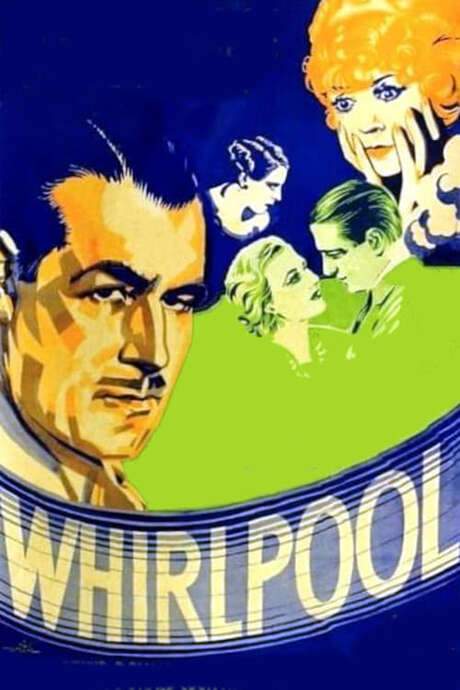
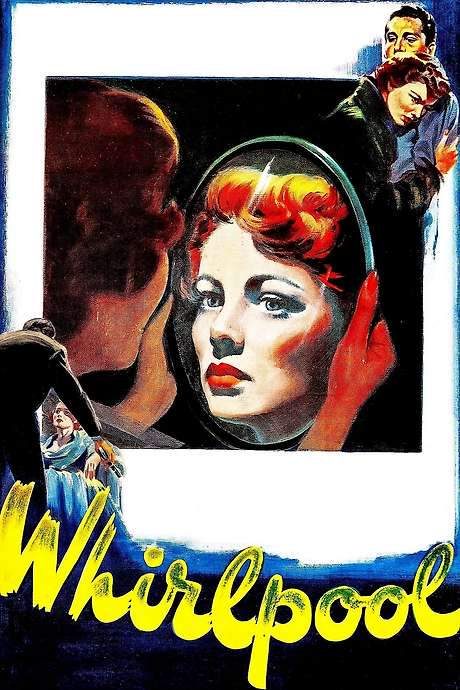
Whirlpool (1950) movie poster

Plot Summary

Whirlpool (1950) Plot Summary Explained

Release, runtime and language
1950 · 98 mins · English
Directed by
Otto Preminger
Starring
Roger Moore, Charles Bickford, Lawrence Dobkin, Randy Stuart, Gene Tierney, Ian Macdonald

She is the wife of a psychoanalyst who becomes the target of a deceitful self‑styled hypnotist after he discovers her habit of shoplifting. When a former patient of the charlatan, now under the care of the real doctor, is found murdered with her still at the scene, all evidence points to her, forcing her to confront the consequences of her night‑time actions tomorrow.

On this page (7)
  1. 1 Where to watch
  2. 2 What happens: full plot
  3. 3 Plot questions answered
  4. 4 Movie threads
  5. 5 Movies like Whirlpool
  6. 6 Categories
  7. 7 Every angle

Where to watch

Where to Watch Whirlpool (1950)

Where can you watch Whirlpool? Stream, rent or buy it in the US, including on YouTube TV: current JustWatch availability with up-to-date prices.

Streaming availability powered by JustWatch

Full plot summary · contains spoilers

What Happens in Whirlpool: Full Plot Summary

The whole story of Whirlpool (1950) explained, from the opening scene to the final frame: every key event, every twist and what it all adds up to. Read it as a quick recap before the sequel, to check a scene you missed, or to finally understand what really happened.

Ann Sutton, Gene Tierney, the wife of Richard Conte Dr. William Sutton, a successful psychoanalyst, is caught shoplifting in an upscale Los Angeles department store and loses consciousness when apprehended. She is saved from scandal by the smooth-talking hypnotist David Korvo, Jos Ferrer, who persuades the store officials to put the mermaid pin she stole on her credit account and not prosecute. Korvo pressures Ann into coming to lunch with him, and she is relieved when, instead of accepting the blackmail payment she thinks he is after, he tears up her check and the store record of her shoplifting, and promises to help her.

Overcome with shame surrounding her secret, Ann begins experiencing insomnia. She attends a sophisticated party with Korvo, where she meets Theresa Randolph, Barbara O'Neil, a former lover of Korvo's and one of her husband’s patients. Korvo hypnotizes Ann at the party and instructs her to sleep, which works, but she does not respond to other orders. Ann meets Korvo at the hotel where he lives for further therapy sessions, but refuses to go up to his suite and insists on talking in public in the hotel bar. Korvo distracts her and takes the martini glass with her fingerprints on it, as well as her scarf.

Later that night, Ann enters a trance, takes two vinyl records from her husband’s patient archives and brings them to Theresa’s house, where she hides them in a closet before discovering Theresa's murdered body in the den. Ann's entry into the home sets off a silent alarm, and police arrive moments later. Before regaining full lucidity, Ann confesses to hating Theresa. Her scarf is found in the home, and the martini glass is found in Korvo's apartment. Police charge her with murder, presuming she strangled Theresa out of jealousy over Korvo.

Ann's husband, Dr. William Sutton, and his lawyer, Martin Avery, believe she is innocent and that Korvo framed her. William recalls that Theresa had informed him during their therapy sessions that Korvo had extorted her for $60,000. It is found, however, that Korvo has a cast-iron alibi: at the time of the murder and ever since, he has been in the hospital weak and prostrate after a gall bladder operation. The police lieutenant in charge of the case, Colton, is sure this rules him out as a suspect.

When William leaves the police station, Avery and Colton persuade Ann to confess her real guilt. Instead, she only confesses to her kleptomania, stemming from her indigent childhood; when William wanted her to ignore her own riches and live on his small salary at the beginning of their marriage, he triggered Ann's childhood trauma, and she returned to her habit of shoplifting. William's theory accounts for Korvo's apparent spike in body temperature observed by the medical personnel on the day of Theresa's murder. William presents his theory to Colton and suggests they bring Ann to Theresa's home to find the records, but Colton dismisses him.

In the hospital, a nurse casually comments to Korvo about the search for Theresa's patient records. Korvo hypnotizes himself again, sneaks out of the hospital, and drives to Theresa's house, where he retrieves the records and starts playing them: They reveal Theresa's voice implicating Korvo in her extortion. Simultaneously, after some contemplation, Colton comes to believe William's theory may be true, and he accompanies him and Ann to Theresa's house. Once there, Korvo menaces Ann with a gun, attempting to force William and Colton out of the room. As his trance begins to wear off, Korvo realizes he is bleeding to death from his surgical wound. In a moment of bravado, he tries to flee the house, but collapses and dies. Colton releases Ann into the care of her husband, and they happily embrace.

Last updated: October 09, 2025 at 11:06

Was this helpful?

Plot questions answered

Whirlpool Plot Explained: Your Questions Answered

The questions people ask most about Whirlpool (1950): what happens in the confusing scenes, why the characters do what they do, the twists, hidden details and what the ending means. Each answer contains spoilers.

Q1

Why did Ann develop insomnia after the shoplifting incident?

Ann developed insomnia because she was overwhelmed with shame over her shoplifting arrest. Korvo had saved her from scandal by convincing the store not to prosecute, but his help came with psychological manipulation. The secret weighe d heavily on her, causing her to lose sleep as she struggled with the guilt and her growing dependence on a man she barely knew.

Foreshadowing: Earlier scenes establish her nervous state and vulnerability to psychological manipulation.

  • insomnia
  • shame
  • psychological stress
  • kleptomania
Q2

How did Korvo frame Ann for Theresa's murder?

Korvo planted evidence to make Ann appear guilty. He took her martini glass fingerprints and her scarf during their hotel bar meeting. Later, while Ann was in a trance, he directed her to bring patient records to Theresa's house, where she unknowingly set up the scene. Her scarf was found at the crime scene, and her fingerprints were on the glass in Korvo's apartment, creating false evidence against her.

Foreshadowing: At the hotel bar, Korvo deliberately distracted Ann and took the glass and scarf while she refused to go up to his suite.

  • frame job
  • evidence
  • hypnosis
  • manipulation
  • martini glass
  • scarf
Q3

What was the connection between Ann's kleptomania and her marriage to William?

Ann's kleptomania stemmed from childhood trauma related to poverty. When William asked her to ignore her wealth and live on his modest psychoanalyst salary early in their marriage, it triggered her childhood insecurity about lacking material things. This trauma resurrected her shoplifting habit, which she had managed for years before the incident.

Foreshadowing: The timeline notes mention her kleptomania originates from her indigent childhood.

  • kleptomania
  • childhood trauma
  • marriage
  • poverty
  • financial insecurity
Q4

How was Korvo able to murder Theresa while supposedly being in the hospital?

Korvo used self-hypnosis to temporarily override his recovery from gall bladder surgery. After the nurse mentioned that police were searching for Theresa's patient records, Korvo hypnotized himself, sneaked out of the hospital, drove to Theresa's house, murdered her, and returned before anyone noticed. His weakened state from the surgery eventually contributed to his death when he bled out from his surgical wound during the final confrontation.

Foreshadowing: William's theory about Korvo using self-hypnosis was initially dismissed but later proven correct.

  • self-hypnosis
  • hospital alibi
  • gall bladder surgery
  • murder method
Q5

What were the vinyl records Ann brought to Theresa's house?

The records were Theresa's therapy session recordings from her treatment with Dr. William Sutton. Ann, while in a trance, was directed by Korvo to steal them from William's patient archives. These records contained Theresa's voice implicating Korvo in extorting $60,000 from her. Korvo killed Theresa to recover these incriminating records before the police could find them.

Foreshadowing: The timeline introduces Theresa as a former lover of Korvo and one of William's patients, establishing the record connection.

  • patient records
  • extortion
  • therapy sessions
  • evidence
  • vinyl records
Q6

Why did Korvo target Ann after discovering her shoplifting?

Korvo saw Ann as an easy target to manipulate and potentially extort. When she was caught shoplifting, he intervened not out of kindness but to gain psychological leverage over her. He used his help to pressure her into social engagements, eventually using hypnosis to control her actions and frame her for murder. His pattern suggests he had done this before with other vulnerable women.

Foreshadowing: Theresa Randolph was introduced as a former lover of Korvo, showing his history with women he could manipulate.

  • blackmail
  • manipulation
  • hypnosis
  • psychological control
  • prey
Q7

How did Ann end up at Theresa's house the night of the murder?

Ann was in a hypnotic trance when she went to Theresa's house. Korvo had previously hypnotized her at the party and likely gave her post-hypnotic instructions. While in this trance, she took the patient records from William's office and delivered them to Theresa's home, unknowingly walking into the murder scene she would be framed for.

Foreshadowing: At the party, Korvo hypnotized Ann and instructed her to sleep, showing his ability to control her actions remotely.

  • trance
  • hypnosis
  • night visit
  • controlled behavior
  • unconscious action
Q8

What evidence pointed to Ann as Theresa's killer?

Two key pieces of evidence made Ann the prime suspect: her scarf was found at Theresa's house, and her martini glass with fingerprints was discovered in Korvo's apartment. Police also assumed jealousy as a motive, since Ann had been seen with Korvo and Theresa was his former lover. The circumstantial evidence, combined with Ann's confused confession to hating Theresa, made the case appear straightforward to investigators.

Foreshadowing: Korvo deliberately took her scarf and glass at the hotel bar, planting evidence for this moment.

  • circumstantial evidence
  • scarf
  • fingerprints
  • jealousy motive
  • false accusation
Q9

How did William figure out Korvo was the real murderer?

William connected several clues to identify Korvo. Theresa had told him during therapy that Korvo had extorted $60,000 from her, giving him motive. William also knew Korvo was a skilled hypnotist capable of self-hypnosis, which explained how he could leave the hospital. He noticed that Korvo's body temperature had spiked on the day of the murder, indicating unusual activity. When the nurse mentioned the search for records, William realized Korvo would act to destroy the evidence.

Foreshadowing: William's theory about Korvo's self-hypnosis was initially rejected by Lieutenant Colton but became the key to solving the case.

  • investigation
  • detective work
  • self-hypnosis
  • extortion
  • motive
Q10

What did the patient records reveal about Korvo?

The vinyl records were recordings of Theresa's therapy sessions with William. When Korvo played them at Theresa's house, the police heard Theresa's voice describing how Korvo had extorted $60,000 from her. These recordings were the reason Korvo murdered Theresa, to prevent this evidence of his extortion from being discovered. The records ultimately proved his guilt and exposed his criminal activities.

Foreshadowing: Theresa was established as a patient of William who had been extorted by Korvo.

  • extortion evidence
  • confession
  • patient records
  • therapy recordings
  • proof of guilt
Q11

Why did Korvo die from his surgical wound?

Korvo had recently undergone gall bladder surgery and was supposed to remain weak in the hospital. When he used self-hypnosis to leave the hospital and commit murder, he exerted himself beyond what his recovering body could handle. During the final confrontation at Theresa's house, his surgical wound reopened and he began bleeding internally. As his trance wore off and his body gave out, he tried to flee but collapsed and died from blood loss.

Foreshadowing: The timeline establishes Korvo's weakened post-surgery condition as critical to the plot's logic.

  • surgical wound
  • internal bleeding
  • death
  • hypnosis collapse
  • physical deterioration

Movie threads

More Movies Like Whirlpool, by Mood & Story

Curated lists built around what makes Whirlpool tick: the same mood, the same kind of story or the same emotional payoff. Each list explains why these movies belong together.

Movies about framed innocents like Whirlpool

Ordinary people caught in a web of deceit, forced to prove their innocence. If you liked the high-stakes suspense of Whirlpool, explore more movies where characters are falsely accused. These crime and thriller stories focus on the psychological terror of being framed, creating a tense puzzle as the protagonist fights to clear their name.

  • suspenseful
  • anxious
  • paranoid
  • claustrophobic
  • tense
  • psychological
  • Tone: tense, paranoid, anxious
  • Pacing: steady, methodical build
Why these movies?

The story pattern: The narrative typically begins with an ordinary life disrupted by a shocking false accusation, often orchestrated by a cunning antagonist. The middle act is a tense cat-and-mouse game as the protagonist, whose credibility is destroyed, gathers clues while evading authorities. The climax often involves a confrontation that exposes the true manipulator and the elaborate scheme behind the frame-up.

Why they belong together: These movies are grouped together because they share a central, gripping premise of an innocent person fighting against a rigged system. The experience is defined by sustained tension, audience empathy for the wrongfully accused, and the intellectual satisfaction of seeing a complex frame-job unravel.

Claustrophobic noir thrillers with manipulation like Whirlpool

Sinister stories where vulnerability is preyed upon by master manipulators. For viewers who enjoyed the manipulative hypnotist and psychological tension of Whirlpool, this list features similar noir and thriller movies. These stories often involve vulnerable characters, sinister antagonists, and a palpable sense of claustrophobia as the walls of deception close in.

  • sinister
  • psychological
  • claustrophobic
  • suspenseful
  • anxious
  • manipulative
  • Tone: sinister, tense, psychological
  • Pacing: steady, deliberate buildup
Why these movies?

The story pattern: These narratives often center on a vulnerable character with a hidden flaw or secret, which a cunning antagonist discovers and exploits. The story unfolds as a battle of wits and wills, where psychological control is the main weapon. The atmosphere is consistently oppressive, with a steady pacing that methodically tightens the noose around the protagonist, leading to a high-stakes confrontation.

Why they belong together: These films share a specific, potent mood blend: a tense, anxious, and psychologically claustrophobic atmosphere driven by themes of manipulation, deceit, and hidden vulnerabilities. The similarity lies in the feeling of watching a character's mind and life be systematically dismantled by a predator.

If you liked this

Movies Like Whirlpool

Similar movies to Whirlpool: the same genre, themes or kind of story. Each one comes with its own plot summary, timeline and ending explained.

Browse all movie summaries

Categories

Movie Lists Featuring Whirlpool

Whirlpool appears in these hand-built movie categories. Each one groups movies by a specific mood, theme or story type, with their plot summaries and endings explained.

View all movie categories

Every angle

Whirlpool (1950) Explained: Plot, Timeline & Characters

Everything about Whirlpool in one place: what happens in the plot summary, the timeline in chronological order, the characters and meaning and a spoiler-free summary. What's After the Movie adds the cast, box office and post-credit scenes.

Coming soon on iOS and Android

The Plot Explained Movie Summary App

Plot summaries, endings explained and timelines on your phone. Catch up on any movie in minutes, save your favorites and never miss a twist again.

Be the first to know when we launch. Your email stays private, always.

Learn more about the app