












Plot Explained Spoilers guaranteed!
Plot Explained

Browse by genre

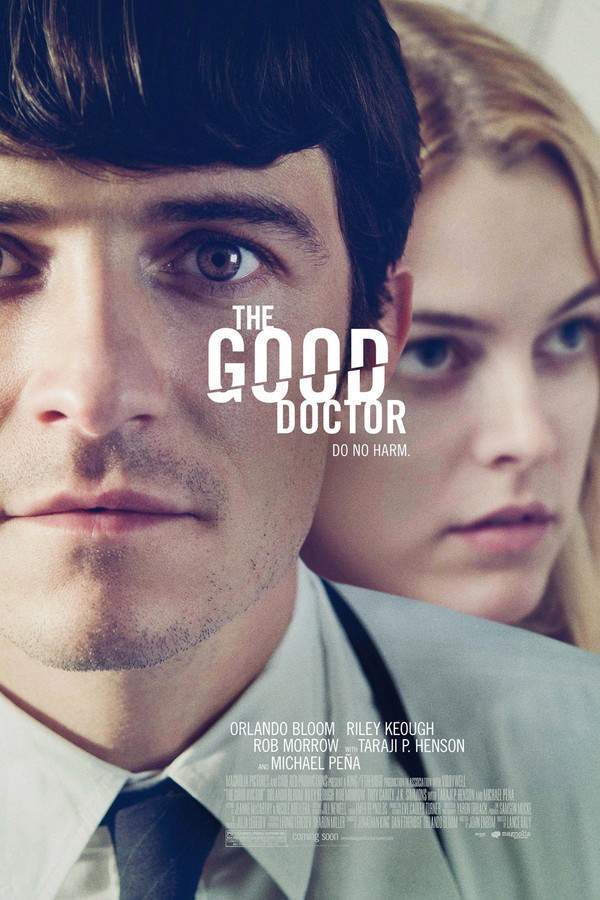
The Good Doctor (2012) movie poster

Plot Summary

The Good Doctor (2012) Plot Summary Explained

Release, runtime and language
2012 · 93 min · English
JustWatch #10,499 21
Directed by
Lance Daly
Starring
Michael Peña, Riley Keough, Taraji P. Henson, Orlando Bloom, Rob Morrow

Aspiring doctor Martin Blake faces challenges proving himself within a hospital setting, battling both political maneuvering and his own insecurities. His professional confidence is bolstered when he takes on the care of 18-year-old patient Diane, but his intense focus on her case begins to consume him. The film explores the complexities of medical dedication and the potential for obsession within the demanding world of healthcare, examining the difficult choices and emotional toll faced by those in positions of responsibility.

On this page (6)
  1. 1 Where to watch
  2. 2 What happens: full plot
  3. 3 Plot questions answered
  4. 4 Movie threads
  5. 5 Movies like The Good Doctor
  6. 6 Every angle

Where to watch

Where to Watch The Good Doctor (2012)

Where can you watch The Good Doctor? Stream, rent or buy it in the US, including on Philo, Hoopla and Kanopy: current JustWatch availability with up-to-date prices.

Streaming availability powered by JustWatch

Full plot summary · contains spoilers

What Happens in The Good Doctor: Full Plot Summary

The whole story of The Good Doctor (2012) explained, from the opening scene to the final frame: every key event, every twist and what it all adds up to. Read it as a quick recap before the sequel, to check a scene you missed, or to finally understand what really happened.

Martin E. Blake is a British medical student who arrives in Southern California to begin a residency at a busy hospital. On the surface, he is charming and confident, but beneath that veneer lies a narcissist who craves control and uses others to feed his need for power. He quickly alienates the nursing staff, who sense that he does not treat them with the respect they deserve, and his early interactions with patients leave him on thin ice with his superiors.

When 18-year-old Diane Nixon is admitted with a kidney infection, Martin treats her and her grateful family hails him as a heroic clinician. As Diane’s condition improves, a dangerous shift occurs: he begins to manipulate her care, distorting medications and sabotaging treatments while maintaining the illusion that he is tirelessly nursing her back to health. The line between confidence and recklessness blurs, and as Diane stabilizes, his overreach grows until he unintentionally causes her death after dozing off while monitoring her in a critical moment.

An orderly, Jimmy, uncovers Diane’s diary, a private collection of sexual fantasies about Martin. Realizing that even a hint of an improper doctor-patient relationship could ruin his career, Jimmy uses the diary as leverage to demand narcotics from Martin. When Jimmy reveals that he won’t surrender the diary, Martin takes drastic steps: he tamely but decisively laces the drugs with potassium cyanide and murders Jimmy, later breaking into Jimmy’s locker to steal the diary.

As investigators interrogate Martin about Jimmy’s death, a police detective visits his home. Martin experiences a panic surge, isolates himself in the bathroom, and tries to flush the diary down the toilet. When the toilet clogs, he escapes through a window and heads toward the sea, contemplating suicide. He then slips back into his apartment and hides the diary in the garbage, effectively removing the critical piece of evidence from the scene. With the diary out of sight and no immediate proof tying him to the crime, the detective leaves.

Time passes, and Martin resumes his duties at the hospital. He reassures a young patient with a calm, unsettling line that echoes through the story: > I'm getting better all the time.

Last updated: October 09, 2025 at 16:20

Was this helpful?

Plot questions answered

The Good Doctor Plot Explained: Your Questions Answered

The questions people ask most about The Good Doctor (2012): what happens in the confusing scenes, why the characters do what they do, the twists, hidden details and what the ending means. Each answer contains spoilers.

Q1

Why does Martin manipulate Diane's medications?

Martin begins tampering with Diane's medications because his narcissism requires constant validation. After her family hails him as a hero for treating her kidney infection, he becomes obsessed with maintaining that image. Rather than allowing her to recover normally and lose his spotlight, he sabotages her treatment so he can appear to be endlessly working to save her, feeding his need for control and admiration.

Foreshadowing: Early in his residency, Martin already overestimates his competence and strains relationships with staff, hinting at his willingness to prioritize his ego over proper patient care.

  • martin blake
  • diane nixon
  • medication tampering
  • narcissism
  • patient care
Q2

What causes Diane's death?

Diane dies from kidney failure directly caused by Martin's manipulation of her medications. While treating her kidney infection, he distorts her medications and sabotages her treatments. Her condition deteriorates to a critical point, and when she needs close monitoring during the night, Martin falls asleep on duty, allowing her to die from the complications he created.

Foreshadowing: The timeline shows Martin progressively tampering with her care as her health improves, building toward the fatal night when his negligence becomes fatal.

  • diane nixon death
  • cause of death
  • medical negligence
  • kidney failure
Q3

Why does Jimmy blackmail Martin with the diary?

Jimmy discovers Diane's diary containing sexual fantasies about Martin. He realizes that even the implication of an improper doctor-patient relationship could end Martin's medical career. Rather than reporting it, Jimmy uses the diary as leverage to demand narcotics from Martin, exploiting Martin's vulnerability and desire to protect his reputation.

Foreshadowing: The diary exists as evidence of the inappropriate psychological boundary Martin created with his patient, which Jimmy recognizes as Martin's weakness.

  • jimmy
  • diane diary
  • blackmail
  • narcotics
  • doctor patient relationship
Q4

How does Martin kill Jimmy?

Martin kills Jimmy by lacing his drugs with potassium cyanide. When Jimmy refuses to hand over the diary and continues his blackmail, Martin provides Jimmy with drugs he has tampered with. Jimmy dies from the poisoned substances, and Martin then breaks into Jimmy's locker to retrieve the diary, eliminating both the blackmailer and the evidence.

Foreshadowing: The timeline shows Martin progressing from manipulating patient care to directly murdering someone to protect his facade, indicating how far his criminality has escalated.

  • martin kills jimmy
  • potassium cyanide
  • murder
  • diary
  • hospital
Q5

What happens when Martin tries to flush the diary?

When a police detective questions Martin at his home about Jimmy's death, Martin panics and locks himself in the bathroom to destroy the diary. He attempts to flush it down the toilet, but the toilet clogs and won't drain. Realizing he can't destroy the evidence, Martin escapes through a window, goes to the ocean contemplating suicide, then returns to retrieve the diary from the clogged toilet and hides it in the garbage instead.

Foreshadowing: This panic response reveals Martin's true nature, he prioritizes self-preservation over everything, even contemplating suicide when his control slips.

  • diary flush
  • police interrogation
  • martin panic
  • evidence destruction
Q6

Does Martin get caught at the end?

No, Martin does not get caught. The police detective questions him but leaves without sufficient evidence to make an arrest. The diary, the key piece of evidence that could connect Martin to Jimmy's murder and to the earlier patient tampering, is successfully hidden in the garbage. With no direct proof tying him to the crimes, Martin resumes his medical career and returns to work at the hospital.

Foreshadowing: The ending reinforces Martin's capacity for deception, he maintains his professional facade while his crimes remain hidden, suggesting his pathological behavior will continue.

  • martin arrested
  • ending
  • justice
  • escape
  • hospital resume
Q7

What does the ending line mean?

The final line 'I'm getting better all the time' carries deeply disturbing implications. Martin says this to reassure a young patient, but the context of the film reveals he is speaking from his own psychological reality, he has evaded consequences for murder and professional misconduct, effectively 'getting better' at maintaining his deceptive facade. The line underscores that his narcissism remains intact and unrepentant, making him more dangerous, not less.

Foreshadowing: This line echoes the entire film where Martin's confidence masks his destructive nature, suggesting his pathology is cyclical rather than resolved.

  • ending meaning
  • i'm getting better all the time
  • interpretation
  • psychological meaning
Q8

Why does Martin go to the ocean after the police visit?

After attempting to flush the diary and escaping through the window, Martin walks to the ocean contemplating suicide. This moment represents a crisis of control, when his carefully maintained facade threatens to collapse, his instinct is to escape entirely. However, he pulls back from suicide and instead returns to his apartment to strategically hide the diary in the garbage, proving his will to survive and maintain control ultimately outweighs his momentary despair.

Foreshadowing: The ocean scene reveals Martin's primary motivation is self-preservation; even when considering death, he chooses to continue manipulating rather than face consequences.

  • ocean scene
  • suicide contemplation
  • martin escape
  • police visit
Q9

Why is Martin so obsessed with Diane?

Martin becomes obsessed with Diane because she represents the perfect source of narcissistic supply. Her kidney infection gave him a platform to be needed and celebrated as a hero by her grateful family. Unlike his frustrating residency where colleagues question his competence, Diane's situation allowed him to feel powerful and in control. Rather than letting that validation end when she recovered, he manufactured ongoing crises to keep himself indispensable.

Foreshadowing: Martin's early interactions with patients and staff already show he craves recognition and control more than genuine care, making his fixation on Diane a natural extension of his personality.

  • martin obsession
  • diane nixon
  • narcissism
  • medical student
  • control
Q10

Why does Martin need to recover the diary so badly?

The diary represents two devastating threats to Martin. First, it contains evidence of an improper doctor-patient relationship that could end his medical career even without proof of his tampering. Second, Jimmy used it to blackmail him, creating a direct link between Martin and criminal conduct. Recovering the diary eliminates the blackmail material and removes the evidence that could connect him to both Diane's death and Jimmy's murder.

Foreshadowing: Jimmy's discovery of the diary and subsequent blackmail already established it as Martin's critical vulnerability, making his extreme measures to recover it consistent with his character.

  • diary evidence
  • martin crimes
  • blackmail
  • recovery
  • hospital reputation

Movie threads

More Movies Like The Good Doctor, by Mood & Story

Curated lists built around what makes The Good Doctor tick: the same mood, the same kind of story or the same emotional payoff. Each list explains why these movies belong together.

Medical Thrillers with Ethical Dilemmas like The Good Doctor

Tense stories of power and obsession in the high-stakes medical world. Find more movies like The Good Doctor that explore the dark side of healthcare. These tense thrillers feature medical professionals who cross ethical lines, driven by obsession or a thirst for power, creating stories fraught with psychological manipulation and moral decay.

  • clinical
  • unsettling
  • paranoid
  • obsessive
  • claustrophobic
  • anxious
  • Tone: tense, dark, unsettling
  • Pacing: steady, methodical
Why these movies?

The story pattern: Stories in this thread typically follow a medical professional—a doctor, nurse, or therapist—whose initial dedication or insecurity morphs into a dangerous obsession. This obsession often centers on a patient or a colleague, leading them to manipulate situations, commit malpractice, and ultimately spiral into criminal acts, all while navigating the bureaucratic and politically charged hospital setting.

Why they belong together: These movies are grouped by their specific setting and thematic core. They share a high-stakes, clinical atmosphere where the inherent trust in medical institutions is violated, creating a profound sense of unease and exploring the frightening potential for corruption within positions of responsibility.

Movies with a Slow Burn Moral Collapse like The Good Doctor

Stories where a character's flaws lead to a steady, unnerving collapse into darkness. If you liked The Good Doctor's portrayal of a character's steady descent into darkness, you'll find similar stories here. These films follow protagonists whose flaws slowly consume them, leading to moral corruption, manipulation, and often, ambiguous or bleak endings that offer no easy redemption.

  • unsettling
  • anxious
  • obsessive
  • dark
  • dread
  • psychological
  • Tone: tense, dark, bleak
  • Pacing: steady, slow burn
Why these movies?

The story pattern: The narrative pattern involves a linear, steady progression from minor ethical compromises to major transgressions. The pacing is deliberate, allowing the audience to witness each rationalization and bad decision, building a palpable sense of dread. The climax often lacks catharsis, instead leaving the character trapped in their corrupted state, suggesting the cycle may continue.

Why they belong together: These films are united by their specific character arc and pacing. They provide a gripping, anxiety-inducing experience by focusing on the psychology of a fall from grace, making the viewer complicit in watching the slow-motion tragedy of a person being destroyed by their own worst traits.

If you liked this

Movies Like The Good Doctor

Similar movies to The Good Doctor: the same genre, themes or kind of story. Each one comes with its own plot summary, timeline and ending explained.

Browse all movie summaries

Every angle

The Good Doctor (2012) Explained: Plot, Timeline & Characters

Everything about The Good Doctor in one place: what happens in the plot summary, the timeline in chronological order, the characters and meaning and a spoiler-free summary. What's After the Movie adds the cast, box office and post-credit scenes.

Coming soon on iOS and Android

The Plot Explained Movie Summary App

Plot summaries, endings explained and timelines on your phone. Catch up on any movie in minutes, save your favorites and never miss a twist again.

Be the first to know when we launch. Your email stays private, always.

Learn more about the app