Plot Explained Spoilers guaranteed!
Plot Explained

Browse by genre

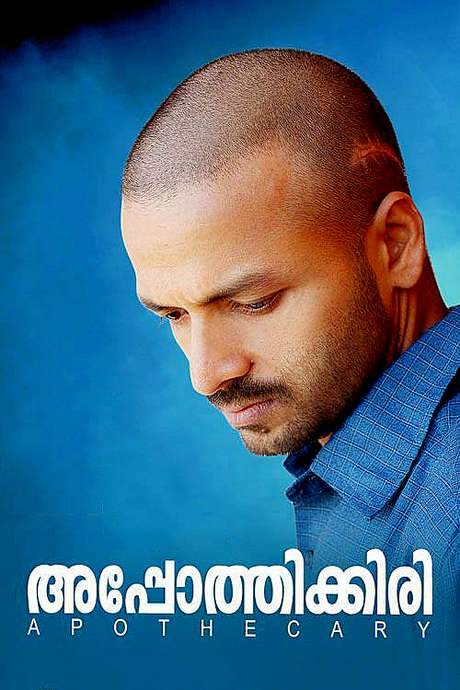
Apothecary (2014) movie poster

Plot Summary

Apothecary (2014) Plot Summary Explained

Release, runtime and language
2014 · 145 mins · Malayalam
Loading streaming availability…
Directed by
Madhav Ramadasan
Starring
Asif Ali, Abhirami, Jayasurya, Antony Thekkek, Arun, Indrans

Dr. Vijay Nambiar, a renowned neurosurgeon, and his wife, Dr. Nalini Nambiar, a gynecologist, lead a seemingly contented and busy family life within a hospital primarily driven by financial gain. The story explores the complex and intriguing challenges that arise, impacting their professional lives and personal relationships as they navigate the hospital's focus on profit over patient well-being.

On this page (5)
  1. 1 Where to watch
  2. 2 What happens: full plot
  3. 3 Plot questions answered
  4. 4 Movie threads
  5. 5 Every angle
Loading streaming availability…

Full plot summary · contains spoilers

What Happens in Apothecary: Full Plot Summary

The whole story of Apothecary (2014) explained, from the opening scene to the final frame: every key event, every twist and what it all adds up to. Read it as a quick recap before the sequel, to check a scene you missed, or to finally understand what really happened.

Dr. Vijay Nambiar is a renowned neurosurgeon who shares his life with his wife, Dr. Nalini Nambiar, and their two children, both working as doctors at Apothecary Hospital. The story opens with a shocking turn: the doctor is rushed to the same hospital after a motor vehicle accident, sustaining a serious brain injury that leaves his survival uncertain. Among the visitors is a patient from his care, Subin Joseph, who arrives to recount the events and the pressures that shaped his treatment.

As Subin speaks, the audience is pulled into a sharper view of the hospital itself. What at first looks like a beacon of healing begins to reveal a murky underbelly. The facility is portrayed as being driven by greed, with patients pushed through a system that favors expensive, often unnecessary tests and medicines. The management pressures the medical team to conduct clinical trials for new drugs, presenting them as a path to progress while sidestepping strict ethical protocols. The clash between scientific advancement and patient welfare becomes a daily wrestle for the doctors, and for Dr. Vijay Nambiar, the conflict cuts deep.

The doctor finds himself caught in a moral vise: the trials may push medicine forward, but they come with costs. Side effects mount, and the balance between hope and harm grows increasingly fragile. This ethical gray area gnaws at him, turning his professional duties into a difficult, almost haunting dilemma. He experiences vivid, unsettling visions—hallucinations of the very patients who took part in the trials—placing his conscience in a surreal battle between right and wrong, progress and protection. The tension comes to a head after a crisis triggered by one such episode, a panic that culminates in his fall onto a road and his near-fatal accident.

In time, a shift begins. He awakens with a renewed clarity about the impact of his work. He recognizes that his efforts have saved thousands of lives, even as some lives were endangered in the process. This hard-won redemption convinces him that he can continue to heal, but in a way that honors patient safety above all. With a renewed sense of purpose, he returns to life as a changed man, ready to confront the people who shaped his career’s darker side. He challenges the hospital’s board to rethink their practices and to remember the true essence of healing.

The turning point includes a reframing of the term “Apothecary”—an old label once used to describe doctors who treated village folk with medicine—reminding everyone that the hospital’s current practices had strayed from that core ideal. This moment catalyzes a public shift in his outlook: rather than remain within the high-pressure system, he chooses to leave the hospital and establish a charitable institution dedicated to accessible, ethical care. His decision is not made alone; Nalini and a number of hospital staff and patients stand by him, accompanying him on this new journey toward a kinder, more equitable form of medical practice.
Last updated: October 09, 2025 at 16:05

Was this helpful?

Plot questions answered

Apothecary Plot Explained: Your Questions Answered

The questions people ask most about Apothecary (2014): what happens in the confusing scenes, why the characters do what they do, the twists, hidden details and what the ending means. Each answer contains spoilers.

Q1

Why was Apothecary Hospital focused on making money instead of patient care?

Apothecary Hospital operated as a profit-driven institution where patients were pushed through a system favoring expensive, often unnecessary tests and medicines. The management prioritized financial gain over patient welfare, creating an environment where medical decisions were influenced by revenue rather than health outcomes.

Foreshadowing: The hospital's greedy nature is first revealed when Subin Joseph describes his own experience as a patient undergoing unnecessary treatments.

  • hospital greed
  • patient exploitation
  • medical ethics
  • money over patients
Q2

What drug trials was Dr. Vijay Nambiar pressured to conduct?

Hospital management pressured Dr. Vijay to run clinical trials for new drugs, presenting them as paths to medical progress while sidestepping strict ethical protocols. These trials lacked proper ethical safeguards and caused adverse side effects in patients, putting patient safety at risk for the sake of advancement.

Foreshadowing: The pressure to run trials was introduced in the boardroom scene where management framed it as progress despite ethical concerns.

  • drug trials
  • clinical trials
  • unethical experiments
  • medical research
Q3

Why did Dr. Vijay Nambiar experience hallucinations of trial patients?

Dr. Vijay experienced vivid, unsettling hallucinations of the patients who participated in the drug trials as a manifestation of his guilt and moral conflict. These surreal visions represented the battle between his duty as a physician and the profit-driven system that demanded unethical practices from him.

Foreshadowing: The hallucinations began during periods of increased pressure from hospital management about the trials.

  • hallucinations
  • guilt
  • psychological distress
  • trial patients
Q4

What caused Dr. Vijay Nambiar's motor vehicle accident?

Dr. Vijay's accident was triggered by a panic episode caused by the psychological toll of his moral crisis. The overwhelming guilt and stress from the unethical trials led to his breakdown, which culminated in him falling onto a road and sustaining severe brain injuries.

Foreshadowing: His hallucinations and mental distress built up throughout the period of running the trials, foreshadowing the panic that caused his accident.

  • motor vehicle accident
  • brain injury
  • panic attack
  • breakdown
Q5

Why did Dr. Vijay decide to leave Apothecary Hospital?

After surviving his accident, Dr. Vijay gained clarity about the harmful impact of his work. He recognized that while his efforts saved thousands of lives, some decisions endangered patients for profit. This realization convinced him to leave the hospital and establish a charitable institution dedicated to accessible, ethical care.

Foreshadowing: His survival and recovery marked the turning point where he shifted from working within the system to challenging it.

  • resignation
  • charitable hospital
  • ethical practice
  • new beginning
Q6

What does the term Apothecary mean in the movie?

The movie reframes 'Apothecary' as an old term describing doctors who treated village folk with medicine, serving their communities with compassion. Dr. Vijay uses this historical meaning to remind everyone that the hospital had strayed from its core healing mission, retaining only the name without upholding its ethical duty to patients.

Foreshadowing: This reframing occurs during his confrontation with the hospital board, tying the title to the theme of ethical versus profit-driven medicine.

  • apothecary meaning
  • village healers
  • healing tradition
  • medical ethics
Q7

How did the accident change Dr. Vijay Nambiar's perspective on his work?

After surviving his severe brain injury, Dr. Vijay recognized that his work had saved thousands of lives despite some harmful decisions. This hard-won redemption gave him clarity that he could continue healing but must prioritize patient safety above all. He returned as a transformed physician determined to challenge the system.

Foreshadowing: His near-death experience forced him to reassess the consequences of his professional choices.

  • transformation
  • redemption
  • patient safety
  • recovery
Q8

Why did Dr. Vijay publicly confront the hospital board?

Dr. Vijay publicly confronted the hospital board to hold them accountable for exploiting patients and prioritizing profit over welfare. He demanded ethical standards in medical practice and asserted that patient welfare must come before financial interests, marking a decisive turn toward transparency and accountability.

Foreshadowing: This confrontation followed his transformation after the accident and his renewed sense of purpose.

  • hospital board
  • confrontation
  • accountability
  • patient exploitation
Q9

What was the ethical conflict with the drug trials?

The ethical conflict centered on whether medical progress justified risking patient safety. While the trials had potential to advance medicine, they lacked proper ethical protocols, caused severe side effects, and turned patients' lives into suffering. This dilemma trapped Dr. Vijay between his professional duty to advance medicine and his moral obligation to protect patients.

Foreshadowing: The conflict was introduced early when management first presented the trials as progress.

  • medical ethics
  • dilemma
  • progress vs safety
  • clinical trials
Q10

What happened to patients who participated in the drug trials?

The patients who participated in the drug trials suffered adverse side effects, with their lives turned into a living hell due to the lack of ethical safeguards. Their suffering manifested in Dr. Vijay's hallucinations, representing the moral weight of the harm caused in the name of medical progress.

Foreshadowing: Subin Joseph's testimony revealed the patient experience under the hospital's profit-driven system.

  • patient harm
  • side effects
  • trial victims
  • medical negligence

Movie threads

More Movies Like Apothecary, by Mood & Story

Curated lists built around what makes Apothecary tick: the same mood, the same kind of story or the same emotional payoff. Each list explains why these movies belong together.

Movies about professional redemption like Apothecary

Stories of professionals pushed to their ethical limits, seeking redemption. If you liked the ethical struggle and redemptive arc in Apothecary, you'll find similar movies here. These films explore professionals facing moral collapse due to corporate greed or personal ambition, ultimately seeking a path to redemption and a renewed sense of purpose.

  • moral conflict
  • redemptive
  • ethical dilemma
  • corporate greed
  • existential crisis
  • tense
  • Tone: tense, morally conflicted, ultimately hopeful
  • Pacing: steady, character-driven
Why these movies?

The story pattern: Stories in this thread typically follow a 'rise, fall, and rise again' structure. A successful professional becomes corrupted by external pressures, experiences a major crisis that shatters their world, and then embarks on a difficult journey to atone for their mistakes and reclaim their ethical core.

Why they belong together: These movies are grouped together because they share a heavy emotional weight, a central theme of moral conflict, and a narrative arc that moves from ethical compromise through a crisis point to a hopeful, redemptive conclusion, offering a cathartic experience.

Movies with institutional pressure like Apothecary

A tense exploration of psychological breakdown under systemic pressure. This collection features movies like Apothecary that explore psychological distress within high-pressure systems. If you enjoyed the tense atmosphere of a hospital driven by corporate greed and the protagonist's resulting hallucinations, you'll find similar immersive and uneasy stories here.

  • anxious
  • psychological distress
  • uneasy
  • hallucinatory
  • corporate greed
  • tense
  • Tone: tense, uneasy, hallucinatory
  • Pacing: steady, building dread
Why these movies?

The story pattern: The narrative pattern involves a character deeply embedded in a flawed system. The constant pressure and ethical dissonance of the institution lead to visible psychological distress, often manifesting as hallucinations or a fractured sense of reality, before a breaking point forces a confrontation.

Why they belong together: Movies in this thread share a high-intensity, tense tone and a steady pacing that builds psychological unease. They are united by their focus on a claustrophobic institutional setting as a source of conflict and the protagonist's subsequent mental and emotional unraveling.

Every angle

Apothecary (2014) Explained: Plot, Timeline & Characters

Everything about Apothecary in one place: what happens in the plot summary, the timeline in chronological order, the characters and meaning and a spoiler-free summary. What's After the Movie adds the cast, box office and post-credit scenes.

Coming soon on iOS and Android

The Plot Explained Movie Summary App

Plot summaries, endings explained and timelines on your phone. Catch up on any movie in minutes, save your favorites and never miss a twist again.

Be the first to know when we launch. Your email stays private, always.

Learn more about the app