Plot Explained Spoilers guaranteed!
Plot Explained

Browse by genre

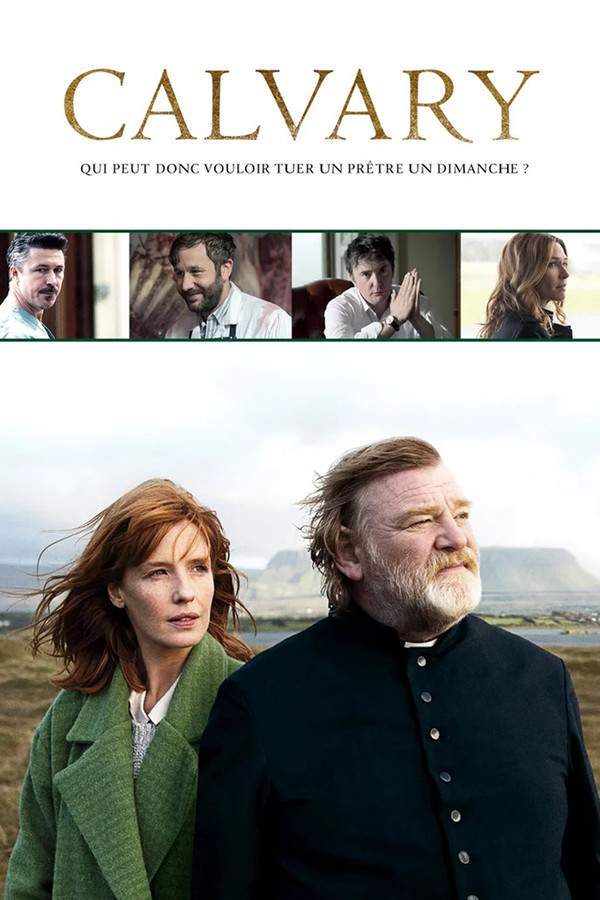
Calvary (2014) movie poster

Plot Summary

Calvary (2014) Plot Summary Explained

Release, runtime and language
2014 · 100 min · English
Directed by
John Michael McDonagh

A compassionate priest's peaceful existence is disrupted when a troubled parishioner reveals a shocking secret, forcing him to confront a painful past. As Father James offers support to his struggling daughter and others in need, he grapples with his own vulnerabilities and the growing threat of a sinister figure determined to destroy him, testing his faith and challenging his resolve.

On this page (6)
  1. 1 Where to watch
  2. 2 What happens: full plot
  3. 3 Plot questions answered
  4. 4 Movie threads
  5. 5 Movies like Calvary
  6. 6 Every angle

Where to watch

Where to Watch Calvary (2014)

Where can you watch Calvary? Stream, rent or buy it in the US, including on Amazon Video, Apple TV Store and Fandango At Home: current JustWatch availability with up-to-date prices.

Streaming availability powered by JustWatch

Full plot summary · contains spoilers

What Happens in Calvary: Full Plot Summary

The whole story of Calvary (2014) explained, from the opening scene to the final frame: every key event, every twist and what it all adds up to. Read it as a quick recap before the sequel, to check a scene you missed, or to finally understand what really happened.

In a shadowy Catholic confessional, an anonymous man confides in Father James, portrayed by Brendan Gleeson, revealing the horrifying sexual abuse he suffered as a child at the hands of a priest. This man vows to kill James at the beach the following Sunday, stating that, although their abuser is deceased, the indifferent response from the Catholic community will propel his decision to murder an innocent priest to incite outrage. Father James, being a righteous man whose demise would reverberate more significantly through the church than that of an abusive priest, finds himself with merely a week to settle his affairs.

Empowered with the decision to notify the police resting squarely on his shoulders, James grapples with the ethical implications of breaking the seal of confession, especially since no forgiveness was sought for the impending sin. Compounding his struggles, his daughter Fiona, played by Kelly Reilly, has recently attempted suicide, feeling neglected after both her mother's death and her father's choice to enter the priesthood. As he performs his pastoral duties, James faces hostility from many members of the community.

Among the local residents, the butcher Jack Brennan, portrayed by Chris O'Dowd, is a source of confrontation after hitting his unfaithful wife, Veronica. When James confronts Jack, he hears Jack's unfounded accusations against Veronica's African lover, Simon. Simon, played by Isaach De Bankole, refuses to talk, alluding to violent memories from his homeland. James wrestles with the challenge of addressing Simon's actions and seeks solace and guidance from Father Leary, who suggests ignoring the matter entirely, given the potential for accusations of racism.

Continuing with his parish duties, James becomes involved in the life of an elderly American writer, Gerald, who grapples with suicidal thoughts. In a shocking twist, James borrows an antique revolver linked to The Troubles from Inspector Stanton, which brings an unsettling tangibility to his situation. Stanton reveals his own conflicted history involving a priest accused of rape, adding layers to the pervasive themes of sin and guilt coursing through this tale.

As Father James navigates through turbulent interactions with people such as millionaire Michael Fitzgerald, who offends him by showing blatant disrespect through vandalism of a rare painting, and a grieving widow named Teresa, portrayed by Marie-Josée Croze, who finds solace in James's comforting words, he faces a pivotal moment in reflecting upon guilt, virtue, and the fragility of human life.

One night, tragedy strikes when James witnesses the burning of his church, an act that compels him to examine his connection to community grievances. In the wake of these events, James confronts Fiona about feeling abandoned, and later expresses his commitment to not forsake Veronica spiritually. This turmoil rises further when James finds his beloved dog deceased, prompting a sorrowful burial while hiding the incident from Fiona.

As the fateful Sunday approaches, James engages in a series of meaningful interactions, including a heartwarming conversation with Gerald, learning to appreciate the duality of sin and virtue, ultimately resulting in mutual forgiveness with his daughter over the phone. After discarding his revolver into the sea, fate leads him back to the beach where Jack, consumed by fury and resentment, approaches him with a gun.

In a stirring final confrontation, Jack accuses James of indifference regarding the trauma suffered by children at the hands of priests. Their exchange leads to a tragic moment that culminates in violence as Jack shoots James.

In poignant vignettes, the community continues its daily rhythms while Fiona confronts Jack in prison, both grasping the telephone as they attempt to connect across the glass barrier, symbolizing the myriad threads of trauma, loss, and the quest for understanding that linger long after the events of that fateful beach encounter.

Last updated: November 03, 2024 at 22:25

Was this helpful?

Plot questions answered

Calvary Plot Explained: Your Questions Answered

The questions people ask most about Calvary (2014): what happens in the confusing scenes, why the characters do what they do, the twists, hidden details and what the ending means. Each answer contains spoilers.

Q1

Why does the man in confession want to kill Father James instead of the priest who actually abused him?

The anonymous man explains that since his original abuser is already dead, killing that priest would have no impact. Instead, he chooses to kill an innocent priest, Father James, because his death would generate more outrage and attention toward the Catholic Church's systemic indifference to child abuse. He wants his act to expose the church's failure to address the trauma inflicted on victims.

  • confession
  • death threat
  • abuse
  • catholic church
  • innocent priest
Q2

Why can't Father James report the death threat to the police?

The threat was made during confession, which is sealed by the sacrament of the confessional. Catholic priests are bound by ecclesiastical law to keep the contents of confession strictly confidential. Even though no forgiveness was sought for the intended murder, Father James considers breaking the seal but ultimately cannot bring himself to violate this sacred obligation, even to save his own life.

  • seal of confession
  • confidentiality
  • police
  • catholic priest
Q3

Why does Father James borrow a revolver from Inspector Stanton?

Father James borrows the antique revolver as a response to his mounting despair and the existential threat hanging over him. The revolver represents both his temptation to take matters into his own hands and his struggle with faith amid the crisis. However, he ultimately discards it into the sea the day before the confrontation, symbolizing his choice to accept his fate rather than resort to violence.

  • revolver
  • inspector stanton
  • despair
  • church
Q4

What is happening with Father James's daughter Fiona?

Fiona recently attempted suicide, leaving Father James deeply affected. Her crisis stems from feeling abandoned after her mother's death and her father's decision to dedicate his life to the priesthood rather than raise her. This personal tragedy compounds James's moral dilemma as he grapples with his calling versus his paternal responsibilities.

  • fiona
  • daughter
  • suicide
  • priesthood
  • abandonment
Q5

Why does Jack Brennan shoot Father James at the end?

Jack Brennan shoots Father James because he believes the priest has been indifferent to the suffering of children abused by priests. Although Jack was not the anonymous man from confession, he shares similar rage toward the Catholic Church's institutional failures. Jack confronts James on the beach, accusing him of neglecting victims' trauma, and in a moment of fury, pulls the trigger.

  • jack brennan
  • shooting
  • beach
  • accusation
  • priest abuse
Q6

Why is Father James's church burned down?

The church burning represents the community's collective anger and grievances against the Catholic institution. While the specific arsonist is not explicitly identified, the act symbolizes the broader violence and resentment festering within the parish. The burning forces James to confront how deeply the community's pain runs and how his role as a priest connects him to these grievances.

  • church
  • burning
  • community
  • anger
  • catholic
Q7

Why does someone kill Father James's dog?

Father James discovers his beloved dog deceased and buries it privately, hiding the incident from Fiona to protect her from additional grief. The dog's death serves as another loss in an already devastating week, symbolizing the pervasive darkness consuming James's life. The perpetrator is never identified, adding to the sense of vulnerability and random cruelty.

  • dog
  • death
  • burial
  • grief
  • violence
Q8

Who is Gerald and why does Father James help him?

Gerald is an elderly American writer living in the parish who is struggling with suicidal thoughts. Father James befriends him and engages in meaningful conversations about sin, virtue, and forgiveness. Their relationship helps James reflect on his own crisis and ultimately leads to a moment of mutual understanding, with Gerald learning to appreciate the duality of human nature.

  • gerald
  • writer
  • suicide
  • forgiveness
  • conversation
Q9

What is the conflict between Jack, Veronica, and Simon?

Jack Brennan physically assaults his wife Veronica after discovering her affair with Simon, an African man. Jack then makes baseless accusations against Simon, claiming he is involved in criminal activity. When Father James tries to mediate, Simon remains silent, alluding to violent memories from his homeland. The situation reflects the community's racial tensions and cycles of domestic violence.

  • jack brennan
  • veronica
  • simon
  • domestic violence
  • race
Q10

What happens in the final scene between Fiona and Jack?

After Father James is shot, Fiona visits Jack in prison. They attempt to connect through a telephone, both grasping the receiver while separated by glass. This poignant image symbolizes their shared trauma and the lingering cycle of pain, Fiona lost her father to Jack's violence, yet both are left grasping for understanding across an unbridgeable divide.

  • fiona
  • jack
  • prison
  • ending
  • glass
  • connection
Q11

Who is Teresa and why does she seek out Father James?

Teresa is a grieving widow who finds solace in Father James's comforting presence. She represents one of the many parishioners who rely on James for emotional support during their darkest moments. Her interactions with James highlight his role as a compassionate shepherd despite his own mounting personal troubles.

  • teresa
  • widow
  • grief
  • comfort
  • pastoral
Q12

What is the incident with Michael Fitzgerald and the painting?

Millionaire Michael Fitzgerald vandalizes a rare painting in the church as an act of blatant disrespect toward Father James and the Catholic institution. This incident further illustrates the社区's hostility toward the Church and adds to the mounting pressures James faces as he tries to maintain his faith and pastoral duties amid growing antagonism.

  • michael fitzgerald
  • painting
  • vandalism
  • disrespect

Movie threads

More Movies Like Calvary, by Mood & Story

Curated lists built around what makes Calvary tick: the same mood, the same kind of story or the same emotional payoff. Each list explains why these movies belong together.

Moral Crisis Stories like Calvary

Stories where unwavering integrity is tested by a cynical and failing system. Movies like Calvary feature protagonists facing profound ethical challenges in hostile environments. If you liked the story of Father James grappling with his faith against a backdrop of communal cynicism, you'll find similar powerful dramas exploring integrity, institutional failure, and the burden of goodness.

  • moral dilemma
  • contemplative
  • somber
  • tense
  • melancholic
  • anxious
  • Tone: dark, contemplative, bleak
  • Pacing: steady, methodical
Why these movies?

The story pattern: These stories often follow a linear, character-driven path where the protagonist's resolve is systematically tested. The central conflict is less about external action and more about an internal, spiritual or moral struggle against a pervasive sense of decay, leading to a climax that tests their core principles.

Why they belong together: Movies in this thread share a heavy emotional weight, a dark or bleak tone, and a focus on character over plot. They are united by the core theme of an individual's goodness being pitted against a morally bankrupt or indifferent world, creating a consistently intense and contemplative viewing experience.

Slow Burn Dread Movies like Calvary

A slow-building narrative where an unavoidable, grim outcome casts a shadow over every scene. If you liked the tense, foreboding atmosphere of Calvary, where Father James has one week before a promised murder, explore more movies built around a known tragic outcome. These films masterfully use steady pacing to build unbearable tension and deep character study under the shadow of fate.

  • slow burn
  • tense
  • dread
  • fatalistic
  • somber
  • melancholic
  • Tone: tense, melancholic, bleak
  • Pacing: steady slow burn
Why these movies?

The story pattern: The narrative pattern is defined by a clock ticking down to a tragic event revealed early on. This structure creates a pervasive sense of fatalism, where everyday interactions are charged with subtext and dread. The focus shifts from 'what' will happen to 'how' the characters endure the waiting and what their final moments reveal about them.

Why they belong together: These films are grouped by their unique pacing and tone. They share a high-tension, melancholic mood driven by the certainty of a sad or bleak ending. The experience is less about surprise and more about the psychological weight of anticipation and the exploration of grace or despair under pressure.

If you liked this

Movies Like Calvary

Similar movies to Calvary: the same genre, themes or kind of story. Each one comes with its own plot summary, timeline and ending explained.

Browse all movie summaries

Every angle

Calvary (2014) Explained: Plot, Timeline & Characters

Everything about Calvary in one place: what happens in the plot summary, the timeline in chronological order, the characters and meaning and a spoiler-free summary. What's After the Movie adds the cast, box office and post-credit scenes.

Coming soon on iOS and Android

The Plot Explained Movie Summary App

Plot summaries, endings explained and timelines on your phone. Catch up on any movie in minutes, save your favorites and never miss a twist again.

Be the first to know when we launch. Your email stays private, always.

Learn more about the app