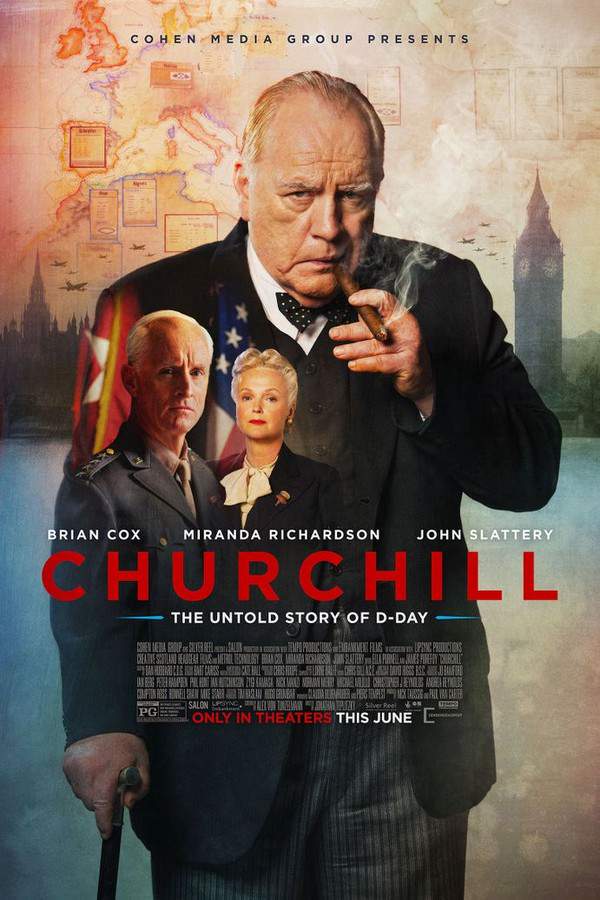
In the mid‑1930s Britain, a nation still nursing the wounds of the Great War finds itself caught between uneasy peace and an ominous horizon. Amid this unsettled backdrop, Winston Churchill wrestles with a period historians later label his “wilderness years,” striving to finish a scholarly biography while the household finances dwindle. The film opens on his restless mind, alternating between the clatter of parliamentary debates—where his voice is often drowned by a tide of appeasement—and the quiet of his country estate, where the pressure to secure a stable future presses on him from every side.
At home, the marriage between Winston and his steadfast partner, Clementine Churchill, provides both refuge and friction. Their conversations, sharp and intimate, reveal a partnership tested by ambition, financial strain, and the ever‑present shadow of public duty. Their son, Randolph Churchill, adds another layer of complexity, his youthful impatience and divergent aspirations stirring further tension among the family’s tightly knit walls. The domestic sphere is rendered with a gentle, almost tactile reverence, inviting the audience to linger on the small moments that define love’s durability under pressure.
Beyond the personal, the political landscape hums with its own quiet urgency. Ralph Wigram, a diligent civil servant, navigates the labyrinth of government bureaucracy, his growing alarm over the rise of a rearmed Germany offering a subtle counterpoint to the official policy of cautious diplomacy. Across the aisle, Stanley Baldwin presides over a government wary of confrontation, his measured demeanor contrasting with the simmering unease that permeates the capital. Interwoven with these machinations are the supporting figures of Ava Wigram, Violet Pearman, and Sarah Churchill, whose fleeting appearances enrich the social tapestry of the era, while Lord Moyne embodies the lingering aristocratic authority that still colors British life.
The film’s tone is intimate yet expansive, blending the muted palette of a period drama with an undercurrent of quiet resolve. Through careful composition and lingering glances, it paints a portrait of a leader whose personal storms mirror the gathering clouds over Europe, leaving the audience to wonder how love, duty, and conviction will shape the days to come.