
Plot Summary
Into the Storm (2009) Plot Summary Explained
- Release, runtime and language
- 2009 · 100 mins · English
- Loading streaming availability…
- Directed by
- Thaddeus O'Sullivan
- Starring
- James D'Arcy, Brendan Gleeson, Adrian Scarborough, Bill Paterson, Andrew Havill, Robert Pugh
Chronicles Winston Churchill’s leadership from the darkest days of 1940 through the end of World War II in 1945, depicting his relentless effort to steer a battered Britain to victory while his personal life, particularly his marriage to Clementine, faces increasing strain.
On this page (4)
Full plot summary · contains spoilers
What Happens in Into the Storm: Full Plot Summary
The whole story of Into the Storm (2009) explained, from the opening scene to the final frame: every key event, every twist and what it all adds up to. Read it as a quick recap before the sequel, to check a scene you missed, or to finally understand what really happened.
The Second World War has recently ended in Europe, and the people of the United Kingdom are awaiting the results of the 1945 general election. During this time, Winston Churchill goes to France for a holiday with his wife Clemmie. Through a series of flashbacks, Churchill recalls some of his most glorious moments during the war, and the effect it had on their marriage.
Into the Storm continues on from The Gathering Storm. It is set against the backdrop of World War II, and looks at how Churchill's success as a great wartime leader ultimately undermined his political career and threatened his marriage to "Clemmie" - Clementine Hozier.
The film proper begins shortly after the Second World War commences in September 1939, as Prime Minister Neville Chamberlain calls Churchill and Edward Wood, 1st Earl of Halifax, to a private meeting. Chamberlain informs Halifax and Churchill that he knows he will be condemned by the British public for failing to recognize Hitler as a threat in time, and therefore intends to resign from office. Asked if he would be willing to hold the office of Minister for War under Lord Halifax as the new Prime Minister, Churchill remains silent until Halifax reluctantly speaks up, indicating Churchill would be the better choice as Prime Minister. Churchill then intones, "Yes. I think so, too."
Churchill immediately moves to take charge of a confused, overworked government and lead the British people into a second world war. He argues bitterly with some members of his cabinet, including Lord Halifax, as the situation in Continental Europe rapidly deteriorates. As country after country falls to the German invaders, Churchill adamantly maintains that no deal with Hitler will ever be considered, let alone accepted. Though much-criticized for it at the time within his government, Churchill's decision hardens British resolve: with any idea of parley with the Nazis out of the question, the only route forward is to fight on until the end. Churchill gathers influential members of the leftist Labour Party and convinces them to forge a coalition government, arguing that political and personal differences must be set aside to win the war. He meets then-unknown Major General Bernard Montgomery at a static gun emplacement on the British coastline, and approves the stern-faced Montgomery's demand that his division be provided with buses in order to rapidly move to wherever German forces might land.
Because night bombing on continental Europe with restricted and specific targets has been ineffective, Air Marshal Arthur Harris urges Churchill to commence bombing German factories. Clement Attlee argues against this due to the inevitable heavy collateral damage that this would cause, but is overruled by Churchill, who tells Harris to "Let them have it." Churchill soon after visits a Royal Air Force fighter squadron in the midst of the Battle of Britain, where he is well received by the young pilots until they are interrupted by a scramble call. As the pilots sprint to their fighters and take off, Churchill solemnly removes his cap in salute. As he returns to his car, he tells an aide, "They're so young. There's so few of them. Never in the field of human conflict have so many owed so much to so few." Churchill is fascinated by the impossible odds facing Britain in the battle and the war overall; they drive him to be utterly indomitable in the face of the Nazi threat, seeming to Churchill as the fulfillment of a personal wish to protect the British Empire in its greatest hour of need.
The film periodically shows Churchill's counterpart in the United States, President Franklin Delano Roosevelt, with whom he steadily establishes a strong friendship despite Roosevelt's early dislike for Churchill as a hawkish imperialist. Churchill works relentlessly to persuade Roosevelt to bring the United States into the war, although this does not fully happen until the Japanese attack on Pearl Harbor on 7 December 1941. King George VI, initially dismayed at having to deal with Churchill instead of Halifax, also is won over by Churchill's courage and personal charm over the years. When a naval aide finally brings Churchill the news that Germany has surrendered unconditionally as of midnight on 8 May 1945, Churchill is invited to join the King and his family on the balcony at Buckingham Palace before a jubilant crowd of thousands that has gathered in the street outside.
An end to the war does not mean all is well, however. Labour leader Clement Attlee soon comes to Churchill and resigns from the cabinet, dissolving the coalition government. Churchill fights against both the Labour Party, whom he privately despises, and any discussion of considering the war as truly over while Japan remains undefeated. The British people have had enough of war, however, and the Labour Party gains traction as Churchill continues to insist on staying on a war footing until the Pacific campaign is finished. Against his wife's strong objections, Churchill goes on the air and in a live radio speech condemns the Labour Party as being no different from communists and says that they would have to "resort to some form of Gestapo" to maintain control if they were voted into office. The result is predictable: both leftist Britons and Britons weary of a long and bloody war vote Churchill out of office, replacing him with Clement Attlee. Churchill broods over his fate, over the changing of the times and the gradual dissipation of the old way of life he holds dear, and admits that he feels lonely without a war to bring him purpose. When asked if he would want to relive the war again, Churchill tells an aide, "1940. Just 1940."
The war's end also brings about a renewed push for independence by British colonial possessions, and their inevitable success means the permanent dissolution of one of Churchill's most beloved institutions, the British Empire. Out of office, feeling lost and betrayed by the very people he fought so hard to defend, Churchill is resentful and bitter while Clementine brings them both to attend a play in London one night. The Churchills' presence in the theater does not go unnoticed, however; at the conclusion of the play, one of the actors announces Churchill, hailing him as "the savior of our nation." The entire theater stands to applaud and cheer as Churchill rises with Clementine, giving the "V for Victory" salute. The film closes with Churchill's personal motto for leadership in government: "In War: Resolution. In Defeat: Defiance. In Victory: Magnanimity. In Peace: Good Will."
Last updated: November 25, 2026 at 02:54
If you liked this
Movies Like Into the Storm
Similar movies to Into the Storm: the same genre, themes or kind of story. Each one comes with its own plot summary, timeline and ending explained.
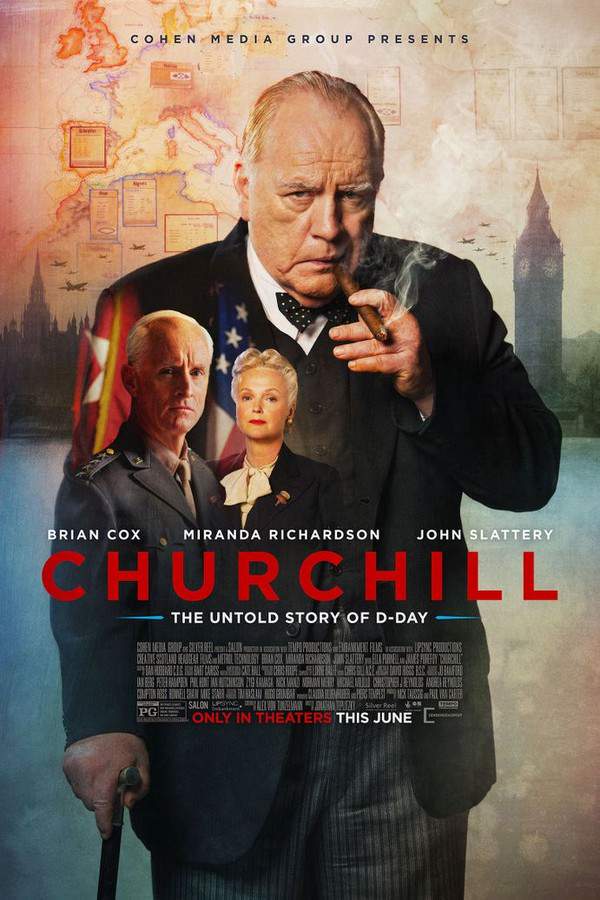
Churchill
2017

The Gathering Storm
1974

The Gathering Storm
2002

Darkest Hour
2017
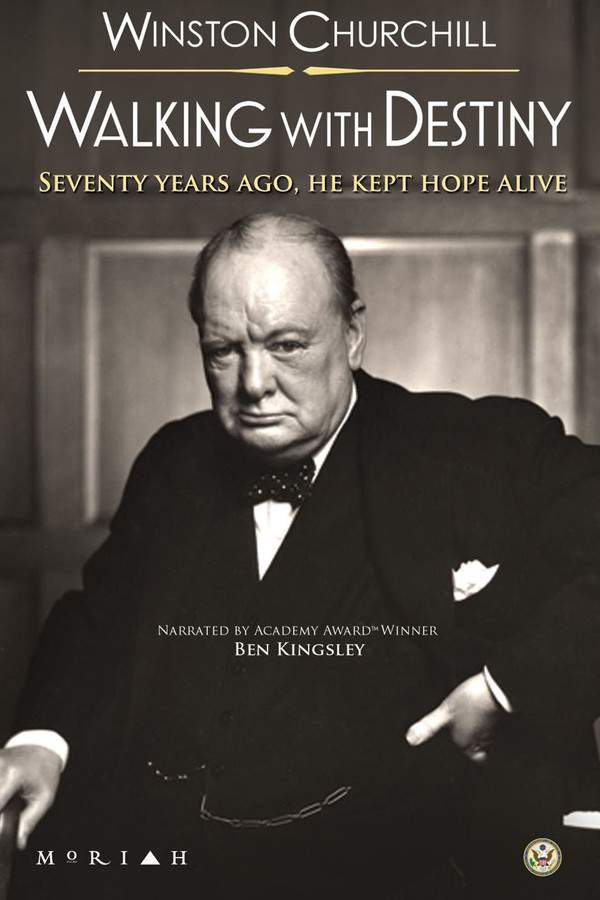
Winston Churchill: Walking with Destiny
2010

The Finest Hours
1964

Churchill at War
1000

The Eagle and the Lion: Hitler vs Churchill
2017

The Winds of War
1000

Churchill’s Island
1941

World War II: When Lions Roared
1000

Countdown to War
1989
Every angle
Into the Storm (2009) Explained: Plot, Timeline & Characters
Everything about Into the Storm in one place: what happens in the plot summary, the timeline in chronological order, the characters and meaning. What's After the Movie adds the cast, box office and post-credit scenes.
Coming soon on iOS and Android
The Plot Explained Movie Summary App
Plot summaries, endings explained and timelines on your phone. Catch up on any movie in minutes, save your favorites and never miss a twist again.
Be the first to know when we launch. Your email stays private, always.
Learn more about the app