






Plot Explained Spoilers guaranteed!
Plot Explained

Browse by genre

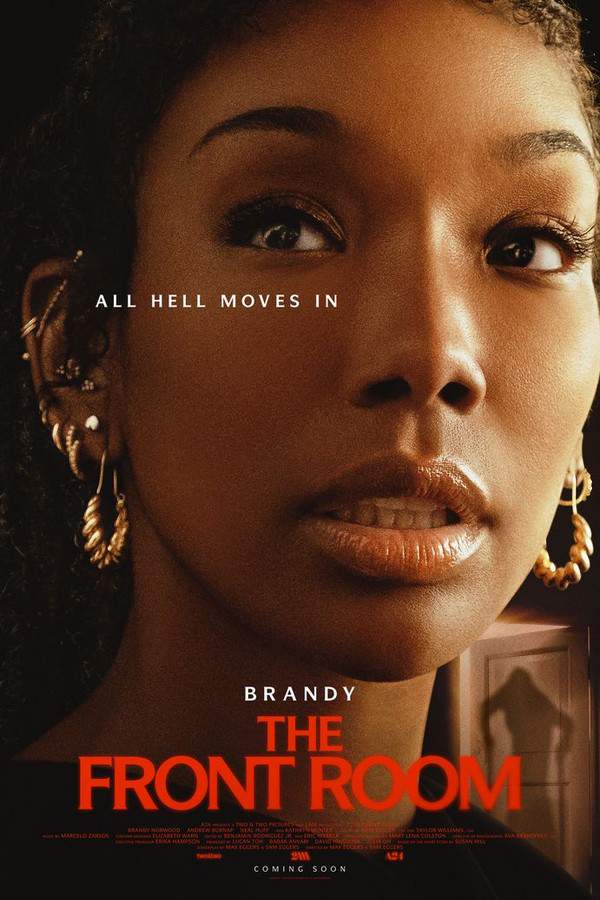
The Front Room (2024) movie poster

Ending Explained

The Front Room (2024) Ending Explained – Final Scene & Meaning

Release, runtime and language
2024 · 1 h 34 m · English
Echo score 45
Directed by
Max Eggers, Sam Eggers
Starring
Kerry Flanagan, Neal Huff, Scottie DiGiacomo, Kathryn Hunter, Brandy Norwood, Andrew Burnap
Budget
$3.5M

Belinda's life is upended when her intimidating mother-in-law moves in during her pregnancy. As the older woman's manipulative nature and true intentions become apparent, Belinda finds herself in a terrifying struggle to protect her unborn child from a sinister force threatening to destroy them both.

On this page (7)
  1. 1 Where to watch
  2. 2 What happens at the end
  3. 3 Final events in order
  4. 4 Ending questions answered
  5. 5 Movie threads
  6. 6 Movies like The Front Room
  7. 7 Every angle

Where to watch

Where to Watch The Front Room (2024)

Where can you watch The Front Room? Stream, rent or buy it in the US, including on Amazon Video, Apple TV Store and Fandango At Home: current JustWatch availability with up-to-date prices.

Streaming availability powered by JustWatch

Ending explained · contains spoilers

What Happens at the End of The Front Room?

How The Front Room (2024) ends, what the final scene means, which earlier moments set it up and how to read the ending if the film leaves it open. The full ending explained, with every spoiler.

In the end, Belinda, overwhelmed by the manipulations and threats posed by her stepmother-in-law Solange, makes the drastic decision to kill her. When she suffocates Solange with a pillow, it represents her taking control of her life and breaking free from the oppressive hold Solange had over her. This act of murder may seem extreme, but in the context of the story, it symbolizes Belinda’s final act of liberation—an attempt to reclaim her agency and protect her family from the destructive influence of Solange. After Solange’s death, Belinda feels a sense of relief and triumph, finally free from the nightmare that had haunted her house. She moves on to a new life, with her children and a fresh start, leaving behind the horrors of the past. The film leaves some ambiguity about whether Solange might return as a ghost, haunting her family, but the hopeful interpretation suggests that Belinda has succeeded in defending her home and her future, having finally taken control of her own destiny.

Last updated: June 25, 2025 at 08:44

Was this helpful?

The last 4 events

How The Front Room Ends: The Final Events in Order

The last events of The Front Room (2024) in chronological order, the run-up to the ending explained above. The complete timeline has all 15 events, scene by scene.

Open the full timeline
  1. The Disturbing Revelation

    Belinda wakes to find marks on Laurie’s arm, indicating that Solange’s behavior has crossed a troubling line. This discovery transforms Solange from a supposed caregiver into a legitimate threat to Belinda and her family.

  2. The Climax of Tension

    As the confrontations culminate, Norman finally stands up to Solange about Laurie's bite incident, seeking to protect his family. Unfortunately, Solange's chaotic pleas for death echo through the night, amplifying the already fraught atmosphere.

  3. A Tragic End

    The following morning, Belinda experiences a moment of relief when she discovers Laurie successfully latching. The moment takes a dark turn when Solange is found lifeless in her room, leaving Belinda to grapple with complex emotions.

  4. A New Chapter

    Years later, Belinda prepares to move to a new home while pregnant with twins. As she sings 'No Regrets' by Edith Piaf during her job interview, a flashback reveals the haunting memory that she smothered Solange, marking both liberation and lingering trauma.

Ending questions answered

The Front Room Ending: Your Questions Answered

The questions people ask most about the ending of The Front Room (2024): what the final scene means, how the twist works, what happens to each character and how to read the ending. Each answer contains spoilers.

Q1

Why does Belinda kill Solange at the end?

Belinda kills Solange because she has become overwhelmed by months of relentless manipulation, psychological abuse, and threats to her unborn child. Solange's invasive presence and controlling behavior have stripped Belinda of her autonomy and sanity. The killing represents Belinda's desperate attempt to reclaim control over her life and protect her family from Solange's destructive influence. While extreme, the act is framed as her only way out of an unbearable situation.

Foreshadowing: Earlier scenes show Solange making increasingly threatening remarks about Belinda's pregnancy and asserting control over the household.

  • belinda
  • solange
  • killing
  • murder
  • ending
  • final scene
Q2

What does Belinda killing Solange with a pillow symbolize?

The pillow killing symbolizes Belinda's reclamation of agency and domestic power. Throughout the film, Solange has invaded Belinda's home and dominated her personal space. By using an object associated with comfort and rest, a pillow, Belinda transforms something peaceful into a weapon, mirroring how Solange twisted the household into a nightmare. The act represents her breaking free from psychological captivity and taking extreme measures to protect her maternal instincts.

Foreshadowing: Solange repeatedly invades Belinda's bedroom and personal space, establishing the home as a site of psychological conflict.

  • pillow
  • symbolism
  • agency
  • liberation
  • domestic
Q3

Does Solange come back as a ghost at the end?

The film leaves this ambiguous. After Belinda kills Solange and begins her new life, the movie suggests the possibility of supernatural return through subtle hints. However, the hopeful interpretation is that Belinda has truly succeeded in defending her home and that any ghostly presence is merely implied, not confirmed. The ambiguity serves to maintain tension while allowing the audience to choose whether they believe Belinda is actually free.

  • ghost
  • haunting
  • supernatural
  • return
  • ambiguity
Q4

Is Belinda free at the end of the movie?

Yes, Belinda appears free at the end. After killing Solange, she experiences relief and triumph, then moves to a new house with her children for a fresh start. The film presents this as her successful escape from Solange's psychological tyranny. However, the lingering ambiguity about whether Solange might return as a ghost adds a layer of uncertainty to whether her freedom is permanent or temporary.

  • belinda
  • freedom
  • new life
  • escape
  • resolution
Q5

Is the ending of The Front Room happy or bittersweet?

The ending is bittersweet. Belinda achieves peace and freedom by committing murder, which is morally complicated. She wins, her family is safe and she starts fresh, but the victory comes through an act of violence. The film acknowledges this tension by allowing Belinda relief while not fully resolving the psychological toll of what she's done. The bittersweet tone reflects the dark themes of maternal protection gone to extreme lengths.

  • bittersweet
  • ending
  • meaning
  • interpretation
  • moral
Q6

Why does the movie leave the ending ambiguous about Solange?

The ambiguity serves multiple purposes. It keeps the horror element alive, suggesting that Solange's evil might transcend death. It also reflects the psychological nature of the film, Belinda may never fully escape the trauma of her experience. Additionally, the uncertainty allows the audience to interpret whether Belinda's liberation is real or if she'll be haunted by what she's done, adding depth to the thematic exploration of trauma and survival.

  • ambiguity
  • interpretation
  • horror
  • psychological
  • resolution
Q7

What happens to Belinda and her children after Solange dies?

After killing Solange, Belinda moves to a new house with her children, beginning a fresh life away from the traumatic environment. The film shows her experiencing relief and a sense of triumph, suggesting she has successfully protected her family from Solange's influence. This represents her transition from a victim of psychological warfare to someone who has taken decisive action to secure her family's future.

  • belinda
  • children
  • new life
  • family
  • future
Q8

How does the ending reflect the movie's themes of maternal protection?

The ending crystallizes the film's exploration of maternal instinct taken to dark extremes. Belinda's transformation from a grieving woman who previously lost a child to someone capable of murder demonstrates the depth of her protective drive. The killing is framed not as random violence but as a final, desperate act of defending her unborn child. This extreme portrayal examines how far a mother might go when she perceives her child is in danger, making the ending thematically consistent with the movie's central concerns.

  • maternal
  • protection
  • instinct
  • pregnancy
  • theme
Q9

Is Belinda's decision to kill Solange realistic given the psychological abuse?

The film presents Belinda's decision as the culmination of sustained psychological warfare rather than a sudden breakdown. Solange's months of manipulation, racist remarks, and threats create an unbearable situation that escalates steadily. The movie frames her action as an extreme but understandable response to prolonged torment, exploring how psychological abuse can push someone to desperate measures. The intensity and pacing support this interpretation as a logical character arc rather than an unrealistic leap.

  • psychological
  • abuse
  • breakdown
  • realistic
  • motivation

Movie threads

More Movies Like The Front Room, by Mood & Story

Curated lists built around what makes The Front Room tick: the same mood, the same kind of story or the same emotional payoff. Each list explains why these movies belong together.

Claustrophobic Domestic Horror movies like The Front Room

Stories where the home becomes a terrifying trap of psychological manipulation. If you liked the suffocating tension and domestic setting of The Front Room, you'll find similar stories here. This collection features movies where family homes become sites of psychological terror, home invasion horror, and unsettling family secrets, all creating a palpable sense of claustrophobia.

  • claustrophobic
  • oppressive
  • anxious
  • sinister
  • domestic unease
  • psychological dread
  • Tone: dark, oppressive, tense
  • Pacing: steady, methodical build
Why these movies?

The story pattern: Narratives in this thread often revolve around a protagonist, frequently a pregnant woman or new mother, trapped within their own home by a sinister force—be it a malevolent family member, an intruder, or a supernatural presence. The plot steadily escalates the psychological pressure within the confined space, leading to a desperate struggle for survival and protection of the family unit.

Why they belong together: These movies are grouped together because they share a core focus on the home as a source of dread. They utilize tight, confined settings to build suspense, emphasize themes of familial betrayal and psychological abuse, and deliver a viewing experience defined by sustained anxiety and a feeling of being trapped.

Maternal instinct thrillers similar to The Front Room

Thrillers exploring the dark extremes a mother will go to protect her child. For viewers who appreciated The Front Room's exploration of a mother's desperate fight, this section highlights similar thrillers. Discover movies about mothers facing unimaginable threats, where protecting their child requires confronting dark forces and making devastating moral choices.

  • harrowing
  • disturbing
  • tense
  • desperate
  • protective
  • morally complex
  • Tone: dark, heavy, harrowing
  • Pacing: steady, escalating tension
Why these movies?

The story pattern: The narrative pattern involves a mother (or mother-to-be) whose child is directly threatened. The antagonist's menace forces a profound transformation in the protagonist, catalyzing a journey from vulnerability to a state of fierce, calculated, or even brutal resilience. The climax often involves a morally ambiguous or bittersweet victory achieved through extreme measures.

Why they belong together: These films are united by their intense focus on the psychological and physical extremes of motherhood under duress. They share a heavy emotional weight, a dark tone, and a central theme of sacrifice, exploring how far a parent will go when their child's safety is on the line.

If you liked this

Movies Like The Front Room

Similar movies to The Front Room: the same genre, themes or kind of story. Each one comes with its own plot summary, timeline and ending explained.

Browse all movie summaries

Every angle

The Front Room (2024) Explained: Plot, Ending, Timeline & Characters

Everything about The Front Room in one place: what happens in the plot summary, the timeline in chronological order, the characters and meaning, the ending explained and a spoiler-free summary. What's After the Movie adds the cast, box office and post-credit scenes.

Coming soon on iOS and Android

The Plot Explained Movie Summary App

Plot summaries, endings explained and timelines on your phone. Catch up on any movie in minutes, save your favorites and never miss a twist again.

Be the first to know when we launch. Your email stays private, always.

Learn more about the app