Plot Explained Spoilers guaranteed!
Plot Explained

Browse by genre

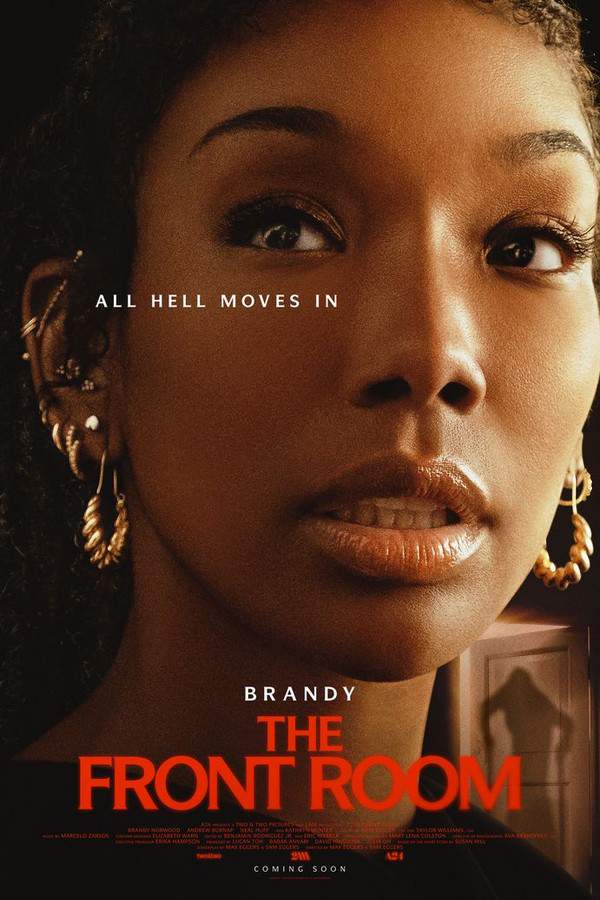
The Front Room (2024) movie poster

Plot Summary

The Front Room (2024) Plot Summary & Ending Explained

Release, runtime and language
2024 · 1 h 34 m · English
Echo score 45
Directed by
Max Eggers, Sam Eggers
Starring
Kerry Flanagan, Neal Huff, Scottie DiGiacomo, Kathryn Hunter, Brandy Norwood, Andrew Burnap
Budget
$3.5M

Belinda's life is upended when her intimidating mother-in-law moves in during her pregnancy. As the older woman's manipulative nature and true intentions become apparent, Belinda finds herself in a terrifying struggle to protect her unborn child from a sinister force threatening to destroy them both.

On this page (7)
  1. 1 Where to watch
  2. 2 What happens: full plot
  3. 3 Plot questions answered
  4. 4 How it ends
  5. 5 Movie threads
  6. 6 Movies like The Front Room
  7. 7 Every angle

Where to watch

Where to Watch The Front Room (2024)

Where can you watch The Front Room? Stream, rent or buy it in the US, including on Amazon Video, Apple TV Store and Fandango At Home: current JustWatch availability with up-to-date prices.

Streaming availability powered by JustWatch

Full plot summary · contains spoilers

What Happens in The Front Room: Full Plot Summary

The whole story of The Front Room (2024) explained, from the opening scene to the final frame: every key event, every twist and what it all adds up to. Read it as a quick recap before the sequel, to check a scene you missed, or to finally understand what really happened.

The story unfolds with Belinda (Brandy Norwood), an anthropology professor, who faces considerable challenges as she lectures to a class filled with indifferent students. Pregnant with her second child, she grapples with the emotional weight of her firstborn son, Wallace, whose heartbreaking stillbirth continues to haunt her and her husband, Norman (Andrew Burnap). After a distressing ultrasound appointment, the couple's grief resurfaces when Norman receives a surprising call from his estranged stepmother, Solange (Kathryn Hunter), announcing the imminent passing of his father. Yet, old wounds run deep; Norman's memories of Solange are tainted with tales of emotional and spiritual turmoil inflicted during his upbringing, leading him to decline the opportunity to reconcile.

As the days pass, the pressures mount; Belinda, feeling underappreciated and sidelined in her academic role, decides to quit her job. Returning home, she learns of her father-in-law's death, and the couple attends the funeral where the dynamics shift dramatically. Solange, who shares a complicated history with both, makes her entrance, struggling to navigate with the aid of canes. It is here that their late family member's last wish is disclosed — that Norman and Belinda take Solange into their home for her remaining days. It's a deal laced with a bitter irony, as Solange promises to bequeath her possessions to the young couple upon her death.

After much internal conflict, particularly concerning their precarious financial situation, Belinda reluctantly agrees to Solange moving in. However, the transition proves to be anything but smooth. The vibrant front room, initially intended as a nursery for their baby, transforms into Solange's new domain. Upon discovering Solange’s Daughters of the Confederacy certificate, Belinda realizes the foundations of their living arrangement are overshadowed by deep-seated prejudices and an unsettling atmosphere. Throughout the evening meals, Solange's barbed remarks about Belinda's cooking and her disapproval of the baby's name — Fern — heighten the tension. Solange's suggestion to rename the child Laurie, after Belinda’s late father, further complicates the situation.

Days blur into a disturbing routine filled with unsettling incidents; Solange's bouts of incoherence, religious fervor, and errant behavior consume Belinda's life. During one particularly intense night, Solange's fervent prayers appear to trigger Belinda into labor, leading to the arrival of their daughter, now named Laurie. Tragically, post-birth, Belinda returns only to find a home filled with Solange’s decor and remnants of Norman's father. The subsequent prayer meeting ignites Belinda’s frustration, leading her to expel her friends who were praying fervently over her and her newborn.

The real challenges solidify in the aftermath of Solange’s insensitivity during dinner, where microaggressions surface, resulting in an explosive confrontation. Calling Solange out for her racism leads to an altercation that ends with Belinda pushing Solange down in frustration. As their tumultuous relationship spirals, Belinda witnesses Solange's manipulative nature first-hand, as she pretends to incapacitate herself, forcing Belinda into further emotional turmoil.

Continued confrontations between Belinda and Solange escalate when Pastor Lewis (Neal Huff) appears with revelations about Solange’s financial maneuvers, such as paying the mortgage without consent. A shift in power dynamics occurs when Belinda reacts in anger, pouring water over Solange. Yet the most shocking moment comes when Belinda wakes to find marks on Laurie's arm, exposing Solange's disturbing behavior as she becomes a threat rather than a caregiver.

As tension comes to a head with Norman standing up to Solange after the bite incident, the fraught atmosphere reaches a chilling climax. Norman’s confrontation ends abruptly with Solange's chaotic pleas for death echoing into the night. When dawn breaks, solace appears as Belinda discovers Laurie successfully latching, only to find Solange lifeless in her room shortly thereafter. Solange's cremation occurs with a strangely placid Belinda observing, contemplating the many shadows cast by their relationship.

The story reaches a poignant conclusion years later as Belinda prepares for a move into a new home while pregnant with twins. On her way to a job interview, she exuberantly sings "No Regrets" by Edith Piaf, exuding a sense of liberation. During the interview, when prompted about her past experiences, Belinda confidently declares she has "never felt better in her entire life." A haunting flashback reveals the depths of her desperation — she had smothered Solange, a revelation that culminates the film in a strikingly unsettling manner. As the screen fades to black, Belinda's smile echoes a peculiar mix of relief and buried secrets, sealing the film’s chilling exploration of trauma, family, and the lengths one will go to find peace.

Last updated: November 05, 2024 at 15:35

Was this helpful?

Plot questions answered

The Front Room Plot Explained: Your Questions Answered

The questions people ask most about The Front Room (2024): what happens in the confusing scenes, why the characters do what they do, the twists, hidden details and what the ending means. Each answer contains spoilers.

Q1

Why does Belinda agree to let Solange move in despite disliking her?

Belinda reluctantly agrees because of their precarious financial situation and Solange's promise to bequeath her possessions to the couple upon her death. The inheritance, combined with Norman being unable to afford the mortgage alone, makes Belinda feel she has no other choice despite her deep reservations about Solange's presence.

Foreshadowing: The couple's financial struggles are established early when Belinda decides to quit her teaching job, making them vulnerable to Solange's offer.

  • solange move in
  • financial struggle
  • inheritance
  • belinda agreement
Q2

What triggers Belinda's labor?

During an intense night, Solange's fervent religious prayers appear to trigger Belinda into early labor. The scene depicts Solange in a state of religious fervor while Belinda goes into contractions, suggesting a supernatural or psychological connection between Solange's actions and Belinda's body.

Foreshadowing: Earlier scenes show Solange's increasing religious fervor and erratic behavior, building toward this climactic moment.

  • belinda labor
  • solange prayers
  • premature birth
  • laurie born
Q3

What does Solange's Daughters of the Confederacy certificate reveal about her character?

The certificate reveals Solange's deep-seated racist beliefs and white supremacist affiliations, explaining her constant microaggressions toward Belinda throughout the film. This discovery establishes that the conflict between Belinda and Solange is not merely generational or personal but rooted in racial prejudice.

Foreshadowing: This explains why Solange disapproves of Belinda's cooking, criticizes her choices, and wants to rename the baby, underlying all her behavior is racial animosity.

  • daughters of confederacy
  • solange racism
  • certificate
  • racial prejudice
Q4

Why does Belinda push Solange during the dinner confrontation?

Belinda pushes Solange after an explosive confrontation where she calls Solange out for her persistent racial microaggressions. The tension has been building throughout Solange's stay, her criticism of Belinda's cooking, her insistence on renaming the baby, and her general disrespect. The final dinner incident becomes the breaking point where Belinda's frustration and anger culminate in physical action.

Foreshadowing: Earlier confrontations about the baby's name (Fern vs. Laurie) and Solange's dismissive attitude toward Belinda build toward this violent release.

  • belinda pushes solange
  • racism confrontation
  • dinner fight
  • physical altercation
Q5

What does Pastor Lewis reveal about Solange's financial actions?

Pastor Lewis reveals that Solange has been making mortgage payments on the house without the couple's consent or knowledge. This underhanded financial maneuver gives her a sense of power and control over Belinda and Norman, reinforcing her manipulative nature and creating another layer of dependency.

Foreshadowing: Solange's manipulative tendencies have been established throughout, but this revelation shows the extent to which she will use money as a tool of control.

  • pastor lewis
  • solange mortgage payments
  • financial manipulation
  • control
Q6

What do the marks on Laurie's arm represent?

The marks on Laurie's arm indicate that Solange has crossed a dangerous line, transitioning from passive-aggressive manipulator to an active threat to the baby. This discovery transforms the narrative from a toxic family dynamic into a horror scenario where Belinda's child is in genuine physical danger from Solange.

Foreshadowing: The escalating confrontations and Solange's erratic behavior have been building toward this moment where she becomes a direct threat.

  • laurie arm marks
  • solange threat
  • baby danger
  • physical harm
Q7

How does Solange actually die in the movie?

While Solange appears to die naturally in her room overnight after pleading for death, the ending reveals a shocking truth, Belinda smothered Solange with a pillow. The film initially presents Solange's death as natural, but a flashback during Belinda's job interview years later reveals she committed murder to protect her family.

Foreshadowing: Belinda's earlier confrontations and desperate statements about protecting her child foreshadow her willingness to take extreme action.

  • solange death
  • belinda smothered
  • murder
  • ending reveal
Q8

Why does Belinda smile and say she feels better than ever at the end?

Belinda's smile reflects a twisted sense of liberation and peace. Having smothered Solange to protect her unborn child, Belinda has eliminated the source of her trauma. The ending shows her pregnant with twins, moving on with her life, and declaring she has never felt better, sealed by the secret that she committed murder to achieve this peace.

Foreshadowing: The entire film traces Belinda's transformation from a grieving, pressured woman into someone capable of extreme violence to protect her family, making this 'peace' the culmination of her arc.

  • belinda smile ending
  • liberation
  • peace
  • trauma
  • twins pregnancy
Q9

Why does Norman finally confront Solange about Laurie's bite?

Norman stands up to Solange after she bites Laurie, finally taking action to protect his daughter from direct physical harm. Throughout the film, Norman has been largely passive, but the bite incident crosses a line that forces him to confront Solange directly, ending with her chaotic pleas for death echoing through the night.

Foreshadowing: Norman's passivity has been a source of tension throughout, making this confrontation a long-awaited turning point.

  • norman confrontation
  • solange bites laurie
  • protecting daughter
  • family conflict
Q10

Why does Solange insist on renaming the baby Laurie instead of Fern?

Solange wants to rename the baby Laurie after Belinda's late father, a gesture that initially seems generous but is actually another form of control and manipulation. The name change represents Solange's attempt to assert dominance over Belinda's family and erase Belinda's choices in favor of her own preferences.

Foreshadowing: This power struggle over the baby's name sets up the larger theme of Solange trying to control every aspect of Belinda's life.

  • baby name fern laurie
  • solange control
  • renaming baby
  • family conflict

Ending explained

What Happens at the End of The Front Room?

How The Front Room (2024) ends, in short: the final scene, the last twist and what it means for the characters. The full ending explained, with every spoiler, lives on its own page.

Read the full ending explained

In the end, Belinda, overwhelmed by the manipulations and threats posed by her stepmother-in-law Solange, makes the drastic decision to kill her. When she suffocates Solange with a pillow, it represents her taking control of her life and breaking free from the oppressive hold Solange had over her. This act of murder may seem extreme, but in the context of the story, it symbolizes Belinda’s final act of liberation—an attempt to reclaim her agency and protect her family from the destructive influence of Solange. After Solange’s death, Belinda feels a sense of relief and triumph, finally free from the nightmare that had haunted her house. She moves on to a new life, with her children and a fresh start, leaving behind the horrors of the past. The film leaves some ambiguity about whether Solange might return as a ghost, haunting her family, but the hopeful interpretation suggests that Belinda has succeeded in defending her home and her future, having finally taken control of her own destiny.

The Front Room ending explained in full

Movie threads

More Movies Like The Front Room, by Mood & Story

Curated lists built around what makes The Front Room tick: the same mood, the same kind of story or the same emotional payoff. Each list explains why these movies belong together.

Claustrophobic Domestic Horror movies like The Front Room

Stories where the home becomes a terrifying trap of psychological manipulation. If you liked the suffocating tension and domestic setting of The Front Room, you'll find similar stories here. This collection features movies where family homes become sites of psychological terror, home invasion horror, and unsettling family secrets, all creating a palpable sense of claustrophobia.

  • claustrophobic
  • oppressive
  • anxious
  • sinister
  • domestic unease
  • psychological dread
  • Tone: dark, oppressive, tense
  • Pacing: steady, methodical build
Why these movies?

The story pattern: Narratives in this thread often revolve around a protagonist, frequently a pregnant woman or new mother, trapped within their own home by a sinister force—be it a malevolent family member, an intruder, or a supernatural presence. The plot steadily escalates the psychological pressure within the confined space, leading to a desperate struggle for survival and protection of the family unit.

Why they belong together: These movies are grouped together because they share a core focus on the home as a source of dread. They utilize tight, confined settings to build suspense, emphasize themes of familial betrayal and psychological abuse, and deliver a viewing experience defined by sustained anxiety and a feeling of being trapped.

Maternal instinct thrillers similar to The Front Room

Thrillers exploring the dark extremes a mother will go to protect her child. For viewers who appreciated The Front Room's exploration of a mother's desperate fight, this section highlights similar thrillers. Discover movies about mothers facing unimaginable threats, where protecting their child requires confronting dark forces and making devastating moral choices.

  • harrowing
  • disturbing
  • tense
  • desperate
  • protective
  • morally complex
  • Tone: dark, heavy, harrowing
  • Pacing: steady, escalating tension
Why these movies?

The story pattern: The narrative pattern involves a mother (or mother-to-be) whose child is directly threatened. The antagonist's menace forces a profound transformation in the protagonist, catalyzing a journey from vulnerability to a state of fierce, calculated, or even brutal resilience. The climax often involves a morally ambiguous or bittersweet victory achieved through extreme measures.

Why they belong together: These films are united by their intense focus on the psychological and physical extremes of motherhood under duress. They share a heavy emotional weight, a dark tone, and a central theme of sacrifice, exploring how far a parent will go when their child's safety is on the line.

If you liked this

Movies Like The Front Room

Similar movies to The Front Room: the same genre, themes or kind of story. Each one comes with its own plot summary, timeline and ending explained.

Browse all movie summaries

Every angle

The Front Room (2024) Explained: Plot, Ending, Timeline & Characters

Everything about The Front Room in one place: what happens in the plot summary, the timeline in chronological order, the characters and meaning, the ending explained and a spoiler-free summary. What's After the Movie adds the cast, box office and post-credit scenes.

Coming soon on iOS and Android

The Plot Explained Movie Summary App

Plot summaries, endings explained and timelines on your phone. Catch up on any movie in minutes, save your favorites and never miss a twist again.

Be the first to know when we launch. Your email stays private, always.

Learn more about the app