Year: 2017
Runtime: 115 min
Language: French
Director: Albert Serra
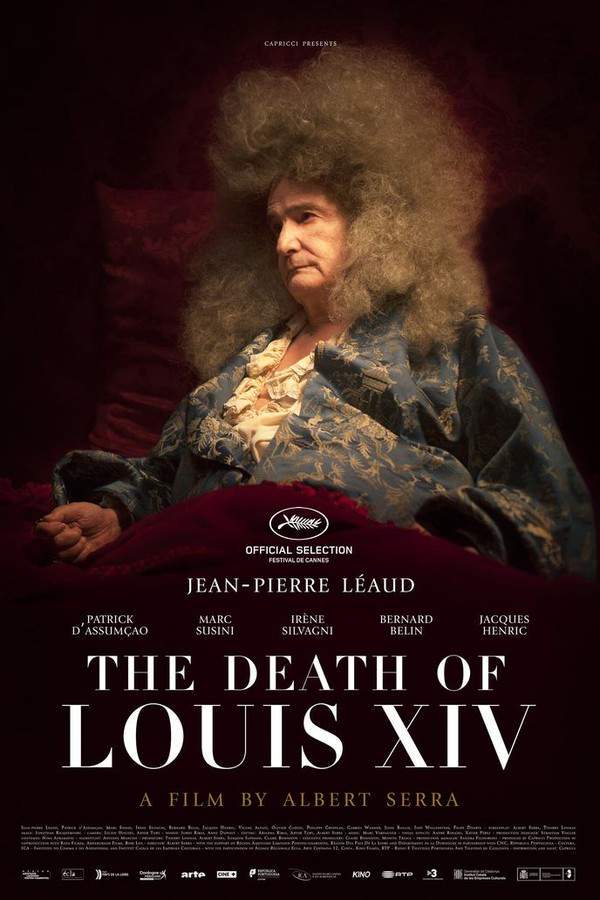
As a debilitating fever grips him, the reign of Louis XIV, the "Sun King," begins to decline within the lavish surroundings of Versailles. Bedridden and weakened, the once-powerful monarch finds himself confronting his mortality as his advisors and physicians gather, keenly aware of the looming power struggle. Louis must grapple with the end of his era and the fragility of his legacy while facing the prospect of his death.
Find where to stream, rent, or buy The Death of Louis XIV (2017) in the US with current JustWatch availability, up-to-date pricing, and platform listings for subscription, rental, and digital purchase options.
Warning: spoilers below!
Haven’t seen The Death of Louis XIV yet? This summary contains major spoilers. Bookmark the page, watch the movie, and come back for the full breakdown. If you're ready, scroll on and relive the story!
Trace every key event in The Death of Louis XIV (2017) with our detailed, chronological timeline. Perfect for unpacking nonlinear stories, spotting hidden connections, and understanding how each scene builds toward the film’s climax. Whether you're revisiting or decoding for the first time, this timeline gives you the full picture.
Last updated: November 15, 2024 at 18:26
Find frequently asked questions about the The Death of Louis XIV (2017) timeline, including chronological order, nonlinear jumps, cause-and-effect links, and scene sequence clarifications. This timeline FAQ helps explain when key events happen, how moments connect, and why the story unfolds in that specific order.
Louis XIV refused amputation because he chose to accept his mortality rather than undergo the drastic procedure. Despite his chief physician Georges Mareschal's recommendation to amputate the gangrenous leg to potentially save his life, the King refused. He instead focused on spiritual preparation and organizing his affairs for death, demonstrating his acceptance of his fate.
Louis XIV died from gangrene that spread throughout his body. The infection originated from an embolism in his leg that became gangrenous. Despite medical attempts by various physicians, including the four doctors from the University of Paris, the gangrene continued to spread, causing his condition to deteriorate until he slipped into a coma on August 30 and died on September 1, 1715.
The hunting expedition on August 9 that triggered the embolism was the initial event that led to his eventual death.
Louis XIV was succeeded by his great-grandson, Louis XV, who was only five years old at the time of the King's death. Since Louis XV was a minor, Louis XIV had already organized a regency to govern the kingdom until the young heir came of age.
Louis XIV appointed Louis Auguste, Duke of Maine, one of his older illegitimate sons, as regent because he trusted him to oversee the kingdom until Louis XV reached adulthood. This choice was significant because it placed royal blood, albeit illegitimate, in a position of power during the succession crisis, with Francois de Villeroy designated as Louis XV's legal guardian.
Louis XIV requested that his heart and intestines be separated from the rest of his body after death. This was revealed during the post-mortem examination. The request reflected his personal contemplation of mortality and his desire for a specific burial arrangement, separate from the traditional royal entombment.
The royal family attempted to suppress information about the King's declining health. As rumors began circulating within the Court of Versailles, the royal family censored the flow of information to control the narrative and maintain their reputation. The chief physician also forbade any further travels, keeping the King confined to Versailles as his condition worsened.
Madame Maintenon was Louis XIV's mistress, and she played a key role in his final days. The King enlisted her help in organizing the regency for his great-grandson Louis XV, indicating her influence and trusted position within the royal household during his declining health.
In a poignant gesture, Louis XIV imparted wisdom on governance to his successor while dying. He shared guidance about ruling the kingdom, demonstrating his enduring commitment to the throne and his concern for France's future even as he faced his own mortality.
A post-mortem examination was performed on Louis XIV to document the cause of death and to fulfill his specific wishes regarding the disposition of his body. The examination revealed his desire to have his heart and intestines separated from the rest of his body, which was carried out as part of his burial arrangements.
Louis XIV's decline was rapid despite a brief rally in his condition. After returning from hunting on August 9, 1715 with an embolism in his leg, he deteriorated quickly over approximately three weeks. His condition worsened from the initial embolism to gangrene, then fever, coma, and finally death on September 1, 1715.
The hunting trip that triggered the embolism set in motion the rapid decline that followed.
Louis XIV was buried at the Basilica of Saint-Denis on September 9, 1715, after lying in state for public mourning. This royal necropolis had been the traditional burial site for French monarchs for centuries, marking the final resting place of the Sun King.
Discover curated groups of movies connected by mood, themes, and story style. Browse collections built around emotion, atmosphere, and narrative focus to easily find films that match what you feel like watching right now.
Contemplative films that intimately observe the process of dying with dignity and sorrow.If you appreciated the reflective and intimate portrayal of dying in The Death of Louis XIV, explore other movies that share this focus on mortality. These films offer similar slow, somber journeys, often set against the backdrop of fading power or personal legacy, creating a deeply melancholic and thought-provoking viewing experience.
Stories in this thread are typically linear and character-centered, following a person's final days as they and those around them grapple with the end. The conflict is internal and existential, centered on acceptance, legacy, and the physical reality of decay, rather than external action.
These films are grouped together because they share a primary focus on the theme of death, executed with a slow, deliberate pace and a heavy, melancholic tone. They prioritize atmosphere and emotional weight over complex plotting, offering a similarly profound and somber viewing experience.
Stories where power becomes a gilded cage, and tension builds in confined spaces.For viewers who were drawn to the constrained, oppressive atmosphere of Versailles in The Death of Louis XIV, this collection features similar films. Discover stories where powerful figures are confined by their roles, leading to a slow-burn tension and an exploration of fragility within grandeur, perfect for fans of intense character studies.
The narrative pattern involves a powerful individual becoming physically or psychologically confined, often in a single lavish or symbolic location. The story charts their gradual loss of control, with tension arising from the quiet power struggles and personal unraveling that occur within these tight quarters.
These movies share a specific mood and setting: a slow-burn, claustrophobic feel generated by confining powerful characters. The similarity lies in the oppressive atmosphere, the pacing that mirrors a gradual decline, and the thematic focus on the fragility of authority.
Don't stop at just watching - explore The Death of Louis XIV in full detail. From the complete plot summary and scene-by-scene timeline to character breakdowns, thematic analysis, and a deep dive into the ending - every page helps you truly understand what The Death of Louis XIV is all about. Plus, discover what's next after the movie.
Read a complete plot summary of The Death of Louis XIV, including all key story points, character arcs, and turning points. This in-depth recap is ideal for understanding the narrative structure or reviewing what happened in the movie.
Discover the characters, locations, and core themes that shape The Death of Louis XIV. Get insights into symbolic elements, setting significance, and deeper narrative meaning - ideal for thematic analysis and movie breakdowns.
Discover movies like The Death of Louis XIV that share similar genres, themes, and storytelling elements. Whether you’re drawn to the atmosphere, character arcs, or plot structure, these curated recommendations will help you explore more films you’ll love.
The Death of Louis XIV (2017) Plot Summary & Movie Recap
The Death of Louis XIV (2017) Scene-by-Scene Movie Timeline
The Death of Louis XIV (2017) Spoiler-Free Summary & Key Flow
Movies Like The Death of Louis XIV – Similar Titles You’ll Enjoy
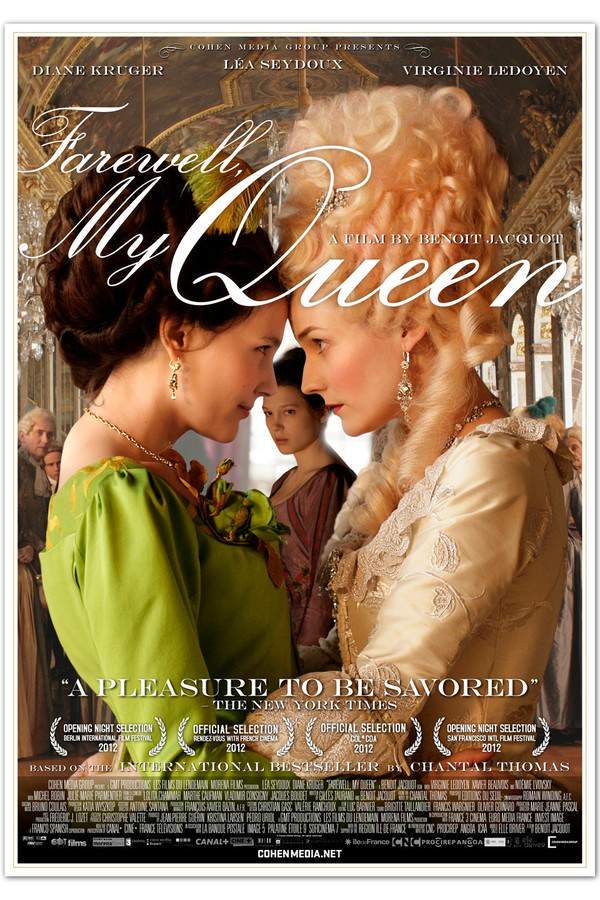
Farewell, My Queen (2012) Plot Summary & Ending Explained
Molière (2007) Complete Plot Breakdown
Vatel (2000) Full Movie Breakdown
The King Is Dancing (2000) Ending Explained & Film Insights
Molière’s Last Stage (2024) Story Summary & Characters
The Case of Poisons (1955) Movie Recap & Themes
L’Allée du roi (1000) Movie Recap & Themes
Marie-Antoinette Queen of France (1956) Film Overview & Timeline
Marquise (1997) Story Summary & Characters
Molière (1978) Movie Recap & Themes
Voltaire (1933) Film Overview & Timeline
The Taking of Power by Louis XIV (1966) Film Overview & Timeline
Versailles: The Dream of a King (2008) Plot Summary & Ending Explained
Louis, the Child King (1993) Story Summary & Characters
Royal Affairs in Versailles (1954) Ending Explained & Film Insights