





Plot Explained Spoilers guaranteed!
Plot Explained

Browse by genre

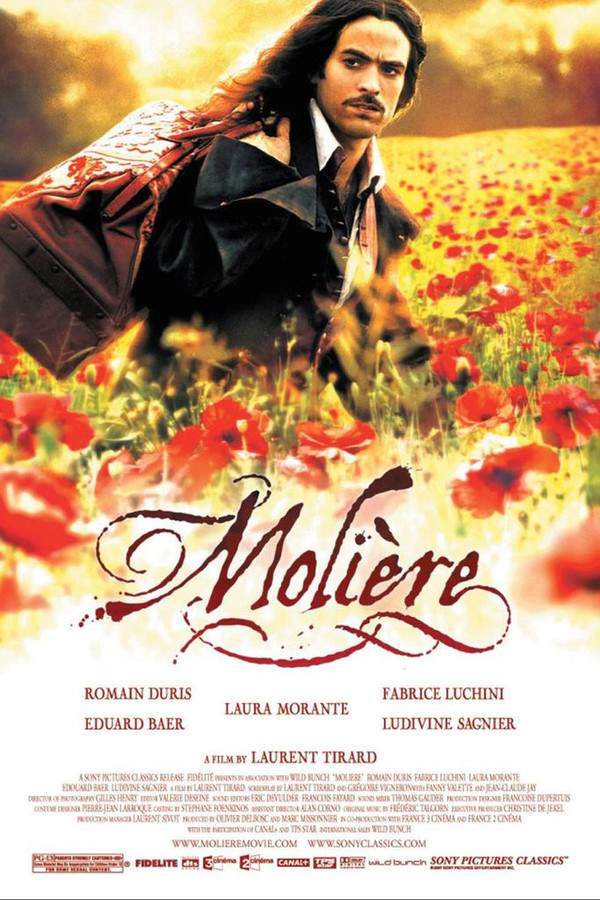
Molière (2007) movie poster

Plot Summary

Molière (2007) Plot Summary Explained

Release, runtime and language
2007 · 120 min · French
Directed by
Laurent Tirard
Starring
Romain Duris, Laura Morante, Fabrice Luchini

During the Restoration era in France, the struggling playwright Molière accepts a commission from the wealthy Monsieur Jourdain, who desires to learn the art of theater. As Molière guides his patron, he finds himself entangled in the complex and often dangerous world of the aristocracy. He encounters Climene, a captivating figure who hosts a salon where intrigue and veiled threats abound. Through these experiences, Molière begins to recognize the absurdities of the elite and discovers his own unique artistic perspective.

On this page (6)
  1. 1 Where to watch
  2. 2 What happens: full plot
  3. 3 Plot questions answered
  4. 4 Movie threads
  5. 5 Movies like Molière
  6. 6 Every angle

Where to watch

Where to Watch Molière (2007)

Where can you watch Molière? Stream, rent or buy it in the US, including on Amazon Video, Apple TV Store and Fandango At Home: current JustWatch availability with up-to-date prices.

Streaming availability powered by JustWatch

Full plot summary · contains spoilers

What Happens in Molière: Full Plot Summary

The whole story of Molière (2007) explained, from the opening scene to the final frame: every key event, every twist and what it all adds up to. Read it as a quick recap before the sequel, to check a scene you missed, or to finally understand what really happened.

The film opens in 1658 with Molière, Romain Duris, returning to Paris with his theatrical troupe to perform in a theatre the king’s brother has granted him, signaling a triumphant return to the stage.

Most of the narrative unfolds as a flashback to 1645, tracing the precarious path that leads the young actor from debt to opportunity.

Molière is freed from debtor’s prison by Monsieur Jourdain, a wealthy but socially ambitious commoner who agrees to cover the actor’s debts if Molière agrees to teach him how to act. The arrangement pits a man eager to elevate himself against a man who wields performance as both craft and weapon.

Jourdain, a married man with two daughters, hopes to use this new talent to win the affection of Célimène, a recently widowed aristocrat with whom he has become obsessed, and he imagines presenting a short play he has written for the occasion. The irony thickens as Molière, instead, is introduced to the Jourdains as Tartuffe, a fictional priest who is to tutor the younger daughter, a deception that foreshadows the troupe’s later explorations of truth, power, and theater.

As the story advances, Molière finds himself drawn to Jourdain’s neglected wife Elmire, unlocking a dangerous attraction that complicates loyalty, art, and ambition. Subplots sharpen the tension: the elder daughter’s budding romance, and the sharp, cynical Dorante’s schemes against the gullible Jourdain, a web of desire and deception that tests everyone involved.

The tale remains largely fictional, yet it mirrors and echoes actual scenes and lines from Molière’s own plays, including Tartuffe, Le Misanthrope, Le Malade imaginaire and Le Bourgeois gentilhomme, whose principal character shares the name Jourdain. It is implied that these “real-life” threads fed profoundly into the playwright’s mature works, blending a biographical glimmer with the timeless theater he would come to define.

The film features a notable ensemble, with Duris in the title role alongside Laura Morante and Fabrice Luchini, whose performances anchor the saga’s humor, tension, and introspective spark.

Last updated: February 17, 2026 at 19:57

Was this helpful?

Plot questions answered

Molière Plot Explained: Your Questions Answered

The questions people ask most about Molière (2007): what happens in the confusing scenes, why the characters do what they do, the twists, hidden details and what the ending means. Each answer contains spoilers.

Q1

Why does Monsieur Jourdain pay Molière's debts?

Monsieur Jourdain, a wealthy but socially ambitious commoner, agrees to pay Molière's debts because he wants to learn acting. His ultimate goal is to win the affection of Célimène, a recently widowed aristocrat he has become obsessed with. He plans to perform a play he has written to impress her, and he needs Molière's theatrical expertise to pull off this social scheme.

  • jourdain
  • moliere
  • debt
  • prison
  • acting lessons
  • célimène
Q2

Why is Molière presented as Tartuffe to the Jourdain family?

Molière is introduced to the Jourdain family as Tartuffe, a fictional pious priest, so he can serve as a tutor for the younger daughter while maintaining his cover. This deception allows him to live in the household and teach acting lessons to Jourdain without revealing the true arrangement. The name Tartuffe would later become the title of one of Molière's most famous plays about a religious hypocrite.

Foreshadowing: The film later stages scenes from Molière's actual play Tartuffe, connecting the fictional deception to his real artistic creation.

  • tartuffe
  • deception
  • tutor
  • jourdain family
  • hypocrisy
Q3

Why does Molière become attracted to Elmire?

Molière falls in love with Elmire, Jourdain's wife, because she is neglected and overlooked by her husband who is too busy pursuing Célimène. As Molière spends time in the household tutoring the family, he develops a genuine emotional connection with Elmire, creating a dangerous personal conflict with the professional deception he must maintain.

  • elmire
  • moliere
  • love affair
  • jourdain wife
  • neglect
Q4

Why is Célimène significant to Jourdain's plans?

Célimène is a recently widowed aristocrat whom Jourdain is obsessed with winning over. She represents his social aspirations - by attracting a noblewoman, he would elevate his status in French society. This obsession drives his entire arrangement with Molière and his willingness to invest in learning acting, making her central to his character motivation throughout the film.

  • célimène
  • jourdain
  • aristocrat
  • social ambition
  • obsession
Q5

What is Dorante's scheme against Jourdain?

Dorante is a penniless and cynical aristocrat who manipulates situations to profit from Jourdain's gullibility and social ambition. He schemes at court and in high society, taking advantage of Jourdain's desire to be accepted by the nobility. His maneuvers expose the fragility of social pretensions and add another layer of deception to the complex social web surrounding Molière.

  • dorante
  • scheme
  • aristocrat
  • jourdain
  • gullibility
  • deception
Q6

How do the events with Jourdain inspire Molière's later plays?

The film implies that Molière's experiences with Jourdain - the social pretensions, the deception, the romantic entanglements, and the hypocrisy he witnesses - directly fed into his mature works. The character of Jourdain in Le Bourgeois gentilhomme shares the name of his patron, and moments from Tartuffe, Le Misanthrope, and Le Malade imaginaire are staged throughout, suggesting his real-life experiences shaped his satirical masterpieces.

Foreshadowing: The film intermittently stages scenes from Tartuffe, Le Misanthrope, and Le Bourgeois gentilhomme, connecting Molière's life to his works.

  • moliere
  • plays
  • inspiration
  • tartuffe
  • le misanthrope
  • le bourgeois gentilhomme
  • legacy
Q7

Why does Molière return to Paris in 1658?

In 1658, Molière returns to Paris with his theatrical troupe to perform in a theatre granted to him by the king's brother. This marks a triumphant return to the stage and signals the start of his public career. The film uses this present-day setting to frame the flashback narrative, showing how his earlier struggles with Jourdain led to his eventual success.

  • moliere
  • paris
  • 1658
  • return
  • troupe
  • theatre career
Q8

Why does the story rely so heavily on deception?

The deception serves multiple purposes - it allows Jourdain to pursue Célimène while maintaining his family obligations, it provides Molière access to the household and acting lessons, and it creates the comedic tension that drives the plot. More importantly, the film uses these deceptions to explore themes of truth, power, and theater that would become central to Molière's satirical works about hypocrisy.

  • deception
  • tartuffe
  • hypocrisy
  • truth
  • theater
  • society
Q9

Why does Jourdain neglect his wife Elmire?

Jourdain neglects his wife Elmire because he is entirely consumed by his obsession with Célimène. Rather than investing in his existing marriage, he spends his energy pursuing the aristocratic widow, believing that winning her favor would elevate his social standing. His neglect creates the emotional vacuum that allows Molière to develop feelings for Elmire.

  • elmire
  • jourdain
  • neglect
  • célimène
  • marriage
  • social ambition
Q10

What role does the older Jourdain daughter play in the story?

The older Jourdain daughter's budding romance serves as a parallel subplot that adds social pressure and dramatic irony to the main narrative. Her pursuit of love intersects with her father's ambitions and Molière's precarious position in the household, enriching the film's exploration of social relationships and deception in 17th-century France.

  • older daughter
  • jourdain
  • romance
  • subplot
  • social pressure

Movie threads

More Movies Like Molière, by Mood & Story

Curated lists built around what makes Molière tick: the same mood, the same kind of story or the same emotional payoff. Each list explains why these movies belong together.

Movies like Molière: Witty Farces and Artistic Inspiration

Charming comedies where deception inspires a creator's signature work. If you enjoyed the clever deceptions and artistic journey in Molière, you'll love these witty period comedies. Discover similar stories about poets, painters, and playwrights whose greatest works are inspired by comedic mishaps, romantic foibles, and a satirical view of society's absurdities.

  • witty
  • charming
  • satirical
  • playful
  • clever
  • romantic
  • Tone: witty, romantic, satirical
  • Pacing: steady, character-driven
Why these movies?

The story pattern: The narrative typically revolves around an artist who accepts a dubious commission or enters a world of pretense, leading to a farcical plot of mistaken identities and secret agendas. Through these comedic experiences, the protagonist gains a deeper understanding of human nature, which directly fuels their future masterpieces.

Why they belong together: These movies are grouped by their shared focus on a lighthearted, artistic origin story. They blend comedy, romance, and social satire with a steady pace, avoiding heavy drama in favor of a charming and intellectually playful tone. The central theme is the comedic process of finding inspiration.

Movies with Social Satire and Disguise like Molière

Humorous stories where disguises expose the absurdities of social climbing. Fans of Molière's witty take on class and deception will enjoy these similar films. Explore other charming stories where characters use secret identities to infiltrate high society, exposing its absurdities through a blend of romance, comedy, and clever social commentary.

  • satirical
  • charming
  • witty
  • playful
  • clever
  • romantic
  • Tone: light, satirical, charming
  • Pacing: steady
Why these movies?

The story pattern: The plot often involves a character of lower status who adopts a disguise to interact with the elite, leading to a series of comedic misunderstandings and near-scandals. The narrative uses this device to satirize social climbing, arranged marriages, and the frivolity of the upper class, culminating in a happy resolution that reinforces the value of authenticity.

Why they belong together: These films share a specific comedic tone that is more intellectual than slapstick. The focus is on verbal wit, situational irony, and the humorous contrast between genuine feeling and social artifice. The pacing is steady, allowing the social critique and romantic tensions to develop without becoming overly frantic or dark.

If you liked this

Movies Like Molière

Similar movies to Molière: the same genre, themes or kind of story. Each one comes with its own plot summary, timeline and ending explained.

Browse all movie summaries

Every angle

Molière (2007) Explained: Plot, Timeline & Characters

Everything about Molière in one place: what happens in the plot summary, the timeline in chronological order, the characters and meaning and a spoiler-free summary. What's After the Movie adds the cast, box office and post-credit scenes.

Coming soon on iOS and Android

The Plot Explained Movie Summary App

Plot summaries, endings explained and timelines on your phone. Catch up on any movie in minutes, save your favorites and never miss a twist again.

Be the first to know when we launch. Your email stays private, always.

Learn more about the app