Plot Explained Spoilers guaranteed!
Plot Explained

Browse by genre

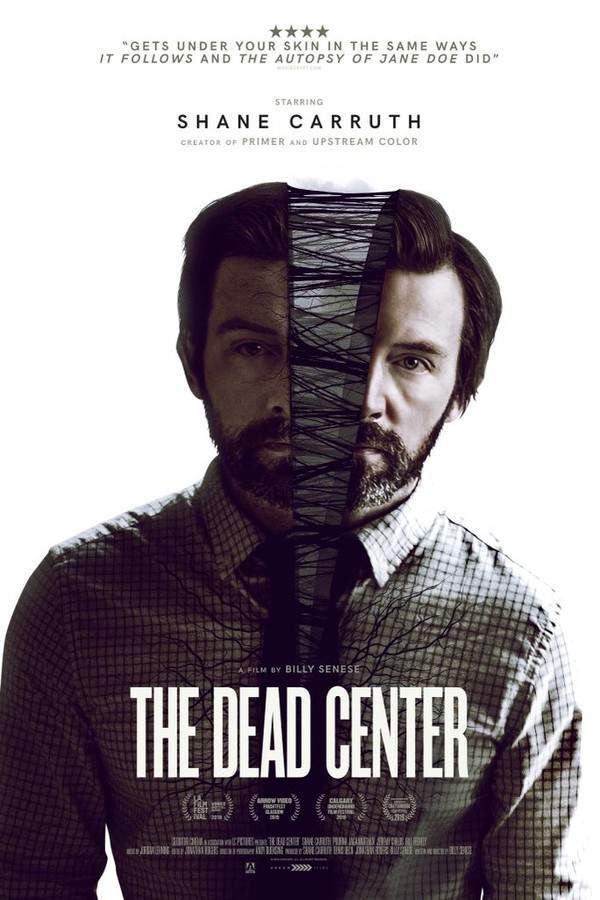
The Dead Center (2019) movie poster

Plot Summary

The Dead Center (2019) Plot Summary Explained

Release, runtime and language
2019 · 92 min · English
Echo score 60
JustWatch #11,550 10
Directed by
Billy Senese
Starring
Poorna Jagannathan, Shane Carruth, Jeremy Childs, Andy McPhee, Bill Feehely, Brandon Boyd

A psychiatrist’s professional life takes a dark turn when he begins treating a mysterious patient suffering from amnesia. As the doctor explores the patient's troubled past, the man claims to have returned from the afterlife, blurring the line between reality and delusion. The psychiatrist finds himself increasingly entangled in a dangerous search for answers, leading him and his patient into a suspenseful and unsettling game.

On this page (6)
  1. 1 Where to watch
  2. 2 What happens: full plot
  3. 3 Plot questions answered
  4. 4 Movie threads
  5. 5 Movies like The Dead Center
  6. 6 Every angle

Where to watch

Where to Watch The Dead Center (2019)

Where can you watch The Dead Center? Stream, rent or buy it in the US, including on Amazon Prime Video, Amazon Video and Apple TV Store: current JustWatch availability with up-to-date prices.

Streaming availability powered by JustWatch

Full plot summary · contains spoilers

What Happens in The Dead Center: Full Plot Summary

The whole story of The Dead Center (2019) explained, from the opening scene to the final frame: every key event, every twist and what it all adds up to. Read it as a quick recap before the sequel, to check a scene you missed, or to finally understand what really happened.

An unidentified male corpse is transported to a hospital morgue after dying in an ambulance, suspected to have committed suicide. This man, who is referred to as John Doe, unexpectedly revives and stumbles out of the morgue, seeking refuge in an adjacent hospital room where he collapses into sleep.

Dr. Edward Graham, a diligent medical investigator, is summoned to the morgue only to discover that the body that was brought in the previous night has inexplicably vanished. The mystery deepens when nurses encounter John Doe the following morning in a catatonic state, his body marred with numerous scars.

In response to the unusual occurrence, Dr. Daniel Forrester, a psychologist at the hospital, is called to evaluate John Doe. With an air of misleading authority, he informs the nurse Travis that this catatonic patient is making self-harm threats, thus enabling Forrester to admit him under a 5150 hold. Meanwhile, Graham investigates John Doe's autopsy images, spotting a uniquely shaped spiral scar that piques his curiosity.

As events unfold at the hospital, Travis checks on John Doe and is suddenly met with an unexpected attack when John Doe's face twitches. Forrester intervenes, managing to calm him down and administer a dose of benzodiazepine.

Later that evening, after moving John Doe into a seclusion room, Travis wrestles with paperwork but is interrupted as the lights flicker and go out, along with the security camera feed. Struggling to breathe and experiencing terrifying hallucinations of screaming faces, he exits the room. Simultaneously, John Doe endures the same horrific visions, suggesting a deep, unsettling connection between the two.

Graham investigates the motel where John Doe's suicide occurred and discovers a similar spiral pattern carved into the bathtub floor, alongside a driver's license that has been marked over with black ink. Through his investigation, he learns from the license that John Doe is Michael Clark. He also examines a suicide note inscribed with the chilling words, "I am the mouth of death. None are beyond my REACH. Forgive me," prompting him to visit Clark's family.

In another intense scene at the hospital, Forrester successfully hypnotizes Clark, who reveals harrowing details of his past. He confides that a malevolent force, born from a fire that nearly claimed his life, now resides within him—something dark and insatiable. As he recalls his gruesome attempts to rid himself of this entity through self-mutilation, he ultimately acknowledges that he inadvertently made it stronger. During this vulnerable moment, he claims that the dark entity compels him to commit terrible atrocities, leaving him helpless as he drifts back into catatonia. Tragically, Travis is later found dead.

The following night, Clark manages to break free from his restraints and brutally attacks another patient, drawing a shadowy smoke from her mouth. When morning comes, the lifeless body of the patient is discovered, her face frozen in a grotesque expression echoing the other victims.

Graham, determined to uncover the truth, visits Clark's home and learns about the tragic fire that claimed his wife’s life. Strangely, Clark survived, raising questions about the nature of his existence. Amidst his discoveries, he stumbles upon a sinister collage of images related to mass death events, many displaying frozen visages eerily similar to those of the deceased in the hospital. In the basement, he finds a large, ominous black circular stain on the floor, signifying the dark mystery enveloping Clark.

In an effort to probe deeper, Forrester administers sodium thiopental to interrogate Clark once more. In his altered state, Clark confesses that the entity within him is growing stronger, threatening to obliterate him. Desperately, he orders Forrester to end his suffering, culminating in a chaotic struggle where Clark's darkness attempts to pull the very essence from Forrester's being through hallucinations of his past victims. This horrifying spectacle is halted when hospital staff intervene, and Dr. Sarah Grey reprimands Forrester for his reckless handling of the situation.

After this confrontation, Forrester becomes a danger to himself, lunging at Clark but is subdued and sedated. Meanwhile, Clark's malevolence emerges once again, this time attacking Dr. Grey, putting her in a perilous state akin to that of his previous victims. Racing against time, Graham searches the hospital for Clark, but unfortunately, he discovers that Clark has escaped before he can intervene.

Waking up handcuffed to a bed, Forrester manages to break free and strives to find Dr. Grey, but it’s too late; she succumbs to her injuries. Fueled by despair, he steals a document revealing Clark's parents' address, determined to stop the madness.

Upon arriving at Clark's family home, Forrester is met with horror—Clark has slaughtered not only his parents but his own children along with Graham. Armed with a crowbar, Forrester dolls out shaped vengeance as he searches neighboring homes that Clark has terrorized.

An eerie house at the end of the street flickers with lights, guiding Forrester toward Clark's current location. In a fierce confrontation, he attacks Clark, only to be overpowered and subjected to the choking black smoke. As visions of screaming faces once again invade his mind, he recognizes the nightmare symbol from the basement floor pattern. At that moment, he regains control, fighting back against Clark, ultimately overpowering him in a fatal showdown with the crowbar.

The film concludes with a chilling image of Forrester in the back of an ambulance, rendered mute, attended to by EMTs. Dark lines stretch from the corners of his mouth, hinting at the horrifying transformation that is now taking hold of him.
Last updated: December 13, 2024 at 06:47

Was this helpful?

Plot questions answered

The Dead Center Plot Explained: Your Questions Answered

The questions people ask most about The Dead Center (2019): what happens in the confusing scenes, why the characters do what they do, the twists, hidden details and what the ending means. Each answer contains spoilers.

Q1

Why does John Doe come back to life in the morgue?

John Doe, whose real name is Michael Clark, doesn't truly come back to life in a medical sense. The entity that possessed him after his near-death experience causes him to revive. This isn't resurrection but rather the dark force using his body as a vessel, which explains why he has no memory and exhibits supernatural strength and abilities.

  • john doe revival
  • michael clark resurrection
  • dead center explained
Q2

What is the dark entity inside Michael Clark?

The entity is a malevolent force that Clark brought back from a near-death experience. During hypnosis, he reveals it was born from a fire that nearly killed him. This insatiable darkness now controls his actions, compelling him to commit atrocities while he's aware but helpless to stop it. The entity grows stronger by consuming victims' life force through black smoke.

Foreshadowing: Clark mentions making the entity stronger through his attempts to destroy it via self-mutilation.

  • demon entity
  • dark force
  • possession
  • supernatural villain
Q3

How did Michael Clark become possessed by the entity?

Clark became possessed after surviving a house fire that killed his wife. The near-death experience during the fire allowed the entity to bond with him. He explains that he tried to destroy the entity through self-mutilation but inadvertently made it stronger, leading him to attempt suicide to free his victims, but the entity refused to let him die.

Foreshadowing: The investigation reveals Clark's wife died in a fire, and he mysteriously survived.

  • house fire
  • possession origin
  • near death experience
Q4

What is the black smoke that Clark extracts from victims?

The black smoke is the life force or essence that the entity extracts from victims. When Clark attacks patients in the hospital, he literally sucks this dark smoke from their mouths, killing them instantly. This same black smoke later tries to consume Forrester during their final confrontation, appearing as visions of screaming faces.

Foreshadowing: Travis and John Doe both experience identical hallucinations of screaming faces, hinting at the shared vision ability.

  • black smoke attack
  • life force extraction
  • supernatural kills
Q5

Why does Michael Clark kill his own parents and children?

Clark's family becomes targets because the entity views all connections to his former life as weaknesses to eliminate. By the time Forrester reaches the house, Clark has already slaughtered his parents, children, and Graham. The entity uses murder as a way to sever Clark's remaining ties to humanity, making itself the only presence in his mind.

  • family murder
  • clark victims
  • mass killing
Q6

How does Dr. Forrester become infected by the entity?

During the final confrontation, Forrester is overpowered by Clark, who channels the black smoke directly into him. This causes terrifying hallucinations of the entity's past victims. After Forrester kills Clark with the crowbar, he appears to have the dark entity inside him, as evidenced by the black lines extending from the corners of his mouth in the ambulance, mirroring the victims' frozen expressions.

  • forrester possession
  • infection
  • ending explained
Q7

What does the ending mean - is Dr. Forrester now possessed?

The ending confirms Forrester is now possessed by the same entity that inhabited Clark. After defeating Clark, the dark marks appear on his face, stretching from his mouth corners, the same physical manifestation seen on the entity's victims. His muteness suggests the entity has taken control of his voice, making this a pyrrhic victory where the hero becomes the next vessel for evil.

Foreshadowing: The film establishes that the entity spreads by consuming victims' essence through the mouth.

  • ending explained
  • forrester possessed
  • sequel tease
Q8

Why does Travis die after encountering John Doe?

Travis dies because the entity creates a psychic link between Clark and those around him. When Travis enters John Doe's room, both experience the same hallucinations of screaming faces. This connection allows the entity to reach across and affect Travis, leading to his death, likely one of Clark's earlier victims before the hospital events.

Foreshadowing: The shared hallucinations between Travis and John Doe happen simultaneously, showing their minds are linked.

  • travis death
  • psychic connection
  • hospital kills
Q9

What is the spiral scar symbol that appears throughout the film?

The uniquely shaped spiral scar on John Doe's body is the entity's physical mark, a branding from the dark force itself. Graham notices it in the autopsy images, and later discovers a matching spiral pattern carved into the bathtub at the motel where Clark attempted suicide. The symbol represents the entity's presence and serves as visual foreshadowing of Clark's possession.

  • spiral scar
  • symbol meaning
  • entity mark
Q10

What does Clark's suicide note mean?

Clark's suicide note reads: 'I am the mouth of death. None are beyond my REACH. Forgive me.' This is both a confession and a warning. 'Mouth of death' refers to how the entity kills through extracting life force via the mouth. 'REACH' being capitalized emphasizes the entity's power to affect anyone nearby. The note reveals Clark's desperation to stop the entity but acknowledges he's become its vessel.

Foreshadowing: The note foreshadows how victims have black substance drawn from their mouths.

  • suicide note meaning
  • mouth of death
  • confession
Q11

Why does the entity need to kill its victims?

The entity feeds on life force, which it extracts through the black smoke it draws from victims' mouths. Each murder makes the entity stronger within Clark. The entity compels Clark to kill not out of personal malice but because consuming life force is its fundamental nature, it grows more powerful with each victim, explaining the escalating violence throughout the film.

Foreshadowing: During sodium thiopental interrogation, Clark reveals the entity is growing stronger and will obliterate him.

  • entity feeding
  • why kill
  • supernatural hunger
Q12

What causes the shared hallucinations between Clark and others?

The shared hallucinations occur because the entity creates a psychic link between Clark and those in proximity. When Travis checks on John Doe, both experience the same visions of screaming faces simultaneously. This telepathic connection is how the entity spreads its influence, allowing it to reach beyond Clark's body and affect nearby people before ultimately consuming them.

  • telepathic link
  • shared visions
  • psychic connection

Movie threads

More Movies Like The Dead Center, by Mood & Story

Curated lists built around what makes The Dead Center tick: the same mood, the same kind of story or the same emotional payoff. Each list explains why these movies belong together.

Psychological horror movies with professionals uncovering evil like The Dead Center

Professionals uncover a terrifying truth that threatens their sanity and reality. If you liked the psychological unraveling in The Dead Center, explore more movies where doctors, detectives, or scientists face supernatural threats. These films blend investigation with horror, creating tense and atmospheric stories about rational minds confronting the unexplainable.

  • unsettling
  • psychological
  • investigative
  • atmospheric
  • claustrophobic
  • anxious
  • Tone: dark, intense, unsettling
  • Pacing: steady, investigative
Why these movies?

The story pattern: The narrative follows a protagonist's professional investigation that spirals into a personal nightmare. The story typically begins with a mystery or an anomalous case, leading the character down a path where scientific inquiry clashes with supernatural evidence, culminating in a dire confrontation that often costs them their sanity or life.

Why they belong together: These movies are grouped by their core concept of a rational authority figure confronting an irrational evil. They share a tone of serious dread, a methodical pacing that builds tension, and a focus on the psychological toll of facing forces beyond human understanding.

Slow burn horror movies with a bleak atmosphere like The Dead Center

A palpable sense of dread builds steadily towards a bleak and unavoidable conclusion. Fans of the grim, atmospheric dread in The Dead Center will find more chilling stories here. These movies prioritize mood over jump scares, using steady pacing to build a deep sense of unease and hopelessness, often concluding with devastatingly bleak outcomes.

  • slow burn
  • atmospheric
  • ominous
  • bleak
  • unsettling
  • claustrophobic
  • Tone: bleak, ominous, hopeless
  • Pacing: steady, slow burn
Why these movies?

The story pattern: Stories in this thread unfold with a slow, deliberate pace that emphasizes mood and building tension over rapid plot twists. The narrative arc is often a downward spiral, where characters become trapped in a situation or by a force they cannot escape, leading to a conclusion that reinforces the film's themes of futility and despair.

Why they belong together: They are united by a shared viewing experience defined by a heavy, unsettling mood, a steady and patient narrative build-up, and a profoundly bleak emotional resolution. The focus is on the journey into darkness rather than a hopeful resolution.

If you liked this

Movies Like The Dead Center

Similar movies to The Dead Center: the same genre, themes or kind of story. Each one comes with its own plot summary, timeline and ending explained.

Browse all movie summaries

Every angle

The Dead Center (2019) Explained: Plot, Timeline & Characters

Everything about The Dead Center in one place: what happens in the plot summary, the timeline in chronological order, the characters and meaning and a spoiler-free summary. What's After the Movie adds the cast, box office and post-credit scenes.

Coming soon on iOS and Android

The Plot Explained Movie Summary App

Plot summaries, endings explained and timelines on your phone. Catch up on any movie in minutes, save your favorites and never miss a twist again.

Be the first to know when we launch. Your email stays private, always.

Learn more about the app