Plot Explained Spoilers guaranteed!
Plot Explained

Browse by genre

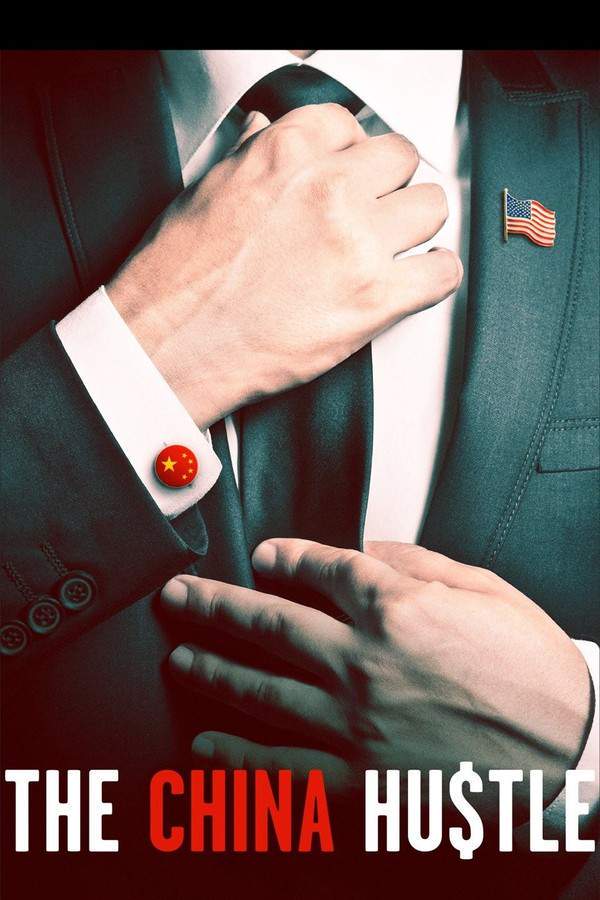
The China Hustle (2018) movie poster

Characters & Themes

The China Hustle (2018) Characters, Setting & Themes Explained

Release, runtime and language
2018 · 82 min · English
Echo score 65
Loading streaming availability…
Directed by
Jed Rothstein
Starring
Pat O'Brien, Carson Block, Dan David, Matthew Wiechert

This gripping documentary explores a significant financial deception within China's markets. Wall Street insiders come forward to reveal how investors were lured into a complex scheme promising substantial returns. A whistleblower's discovery triggers intense scrutiny of the financial system, exposing the potential consequences of deregulation and emphasizing the importance of transparency in the global economy. The film examines the risks involved when chasing high profits and the need for careful oversight.

On this page (7)
  1. 1 Where to watch
  2. 2 Characters explained (3)
  3. 3 Where & when it takes place
  4. 4 Themes & meaning (3)
  5. 5 Character & meaning questions
  6. 6 Movie threads
  7. 7 Every angle
Loading streaming availability…

3 main characters · contains spoilers

The China Hustle Characters Explained: Who Is Who

The main characters of The China Hustle (2018), heroes and villains: what drives them, how they change over the course of the story and what each of them reveals about the film's bigger ideas.

  • Carson Block

    Carson Block, founder of Love Box, plays a critical role as a whistleblower within the film. He is depicted as diligent and insightful, having recognized the fraudulent activities surrounding several Chinese firms. His contributions emphasize the importance of accountability and transparency in the financial industry.

    • 📉 Whistleblower
    • 💼 Investor
  • Dan David

    Dan David is another key figure featured in the documentary, known for his decision to short several inflated penny stocks. His analytical approach and willingness to challenge the status quo make him a prominent voice against financial malpractice during this tumultuous period. His insights provide critical context to the film's narrative.

    • 📊 Analyst
    • 📈 Investor
  • Matthew Wiechert

    Matthew Wiechert represents a link to the investment firms that aided in perpetuating the fraud. As a part of Roth Capital Partners, he illustrates the complexity of the financial web created during this era. His presence in investment conferences highlights the intersection of legitimacy and deceptive practices in the market.

    • 💼 Finance Professional
    • 🔍 Investor

Last updated: October 18, 2026 at 16:57

Was this helpful?

Setting

Where and When Does The China Hustle Take Place?

The setting of The China Hustle (2018): the year and time period, the places and locations, and how they shape the characters, the mood and the tension of the story.

Time period

2008-2016

The narrative unfolds in the aftermath of the 2008 financial crisis and extends through to 2016. This period was marked by economic uncertainty, prompting investment firms to explore questionable strategies to maximize profits. The documentary examines a time when ordinary investors were vulnerable to deceptive financial schemes in the face of inadequate regulations.

Location

China, United States, New York Stock Exchange

The movie primarily explores financial activities occurring across the United States and China. It highlights the New York Stock Exchange, a premier global stock market where several fraudulent Chinese companies were listed through reverse mergers. This juxtaposition of two major economies illustrates the global impact of financial misconduct.

  • 🌏 Global
  • 📈 Finance

Last updated: October 18, 2026 at 16:57

Was this helpful?

3 major themes

The China Hustle Meaning: Themes & Message Explained

What is The China Hustle (2018) really about? The emotional, social and philosophical themes the film keeps returning to, its symbolism and the message beneath the surface.

  • Greed

    The theme of greed permeates the movie, showcasing how investment firms prioritized profits over ethics. The pursuit of financial gain led to widespread deception and the exploitation of unsuspecting investors. This relentless quest for wealth created a culture of corruption in which financial integrity was sacrificed for immediate returns.

  • Fraud

    The film delves deeply into the theme of fraud, highlighting the systematic deception of investors through manipulated financial reporting. It reveals the alarming practices involved in reverse mergers and the resultant financial schemes that led to substantial losses for American investors. The documentary serves as a cautionary tale about the vulnerabilities in financial markets.

  • Regulatory Failure

    A significant theme is the failure of regulatory bodies to safeguard against securities fraud. The documentary underscores the shortcomings of the 'Big Four' accounting firms in validating financial reports. This lack of oversight contributed to a culture where fraudulent practices thrived, affecting countless investors.

Last updated: October 18, 2026 at 16:57

Was this helpful?

Character & theme questions

The China Hustle Characters & Meaning: Your Questions Answered

The questions people ask about The China Hustle (2018): who the characters really are, their relationships, what the symbols mean, where it takes place and what the movie is really about. Each answer contains spoilers.

Q1

Where is the documentary primarily set?

The China Hustle spans two major economies, with significant focus on the United States and China. A central location is the New York Stock Exchange, where many of the fraudulent Chinese companies gained their US listings through reverse mergers. This cross-border setting is essential because it shows how misconduct abroad directly reached American investors and capital markets.

  • setting
  • china
  • united states
  • new york stock exchange
  • global finance
Q2

Why does the documentary focus on both China and the United States?

The film deliberately bridges China and the United States to expose how a scheme orchestrated abroad could reach American bank accounts and retirement portfolios. By tracing the flow of money from Chinese companies listed in New York back to their origins, the documentary demonstrates that financial fraud is no longer confined by national borders. This dual focus underscores the global nature of modern capital markets and the shared responsibility between regulators in both countries.

  • china
  • united states
  • cross-border
  • global markets
  • international finance
Q3

What time period does The China Hustle cover?

The narrative unfolds roughly between 2008 and 2016, beginning in the immediate aftermath of the 2008 financial crisis and extending through the period when the fraudulent schemes began to unravel. This window captures both the rise of the reverse merger boom and the moment when whistleblowers and regulators finally started scrutinizing it. The timeframe is important because it frames the story within a specific era of economic anxiety and regulatory loosening.

  • 2008
  • 2016
  • post-crisis era
  • timeline
  • financial crisis aftermath
Q4

Why is the post-2008 financial crisis setting important to the documentary?

The years following 2008 created an environment where investors were desperate for higher returns and regulators were under pressure to stimulate growth. That atmosphere made ordinary savers more willing to trust unfamiliar foreign companies offering strong yields, and it made regulators more reluctant to block listings that could be framed as pro-business. The film uses this context to argue that economic desperation and deregulation together created the conditions for widespread exploitation.

  • 2008 financial crisis
  • deregulation
  • economic uncertainty
  • investor vulnerability
Q5

What is the documentary's main message about greed?

The China Hustle argues that greed at investment firms overrode ethical concerns and basic due diligence. Wall Street banks, brokerages, and analysts promoted fraudulent Chinese companies because the commissions, underwriting fees, and trading volume were extremely profitable, even when obvious warning signs were present. The film presents greed not as an individual failing but as a systemic force that reshaped behavior across the entire industry during this period.

  • greed
  • ethics
  • wall street
  • investment firms
  • financial incentives
Q6

How does The China Hustle portray fraud in financial markets?

The film presents fraud as a systematic, multi-layered operation rather than a series of isolated scams. It documents manipulated financial reports, reverse mergers with defunct American shell companies, and the use of paid celebrity endorsements to manufacture legitimacy. By showing how deception became an entire business model, the documentary reframes the issue from individual bad actors to an industry-wide pattern of misconduct.

  • fraud
  • financial deception
  • reverse mergers
  • shell companies
  • manipulation
Q7

Why did regulatory oversight fail according to the documentary?

The film attributes the regulatory collapse to two main failures: the shortcomings of the so-called Big Four accounting firms, which signed off on questionable audits of Chinese companies, and the gaps between US and Chinese regulatory jurisdictions that left nobody fully accountable. It argues that auditors prioritized their relationships with Chinese clients over investor protection, allowing fraudulent reporting to enter US markets largely unchecked.

  • regulatory failure
  • big four
  • accounting firms
  • oversight
  • securities regulation
Q8

Who is Carson Block and what role does he play in the film?

Carson Block is introduced in the documentary as a central whistleblower figure whose research exposed fraudulent activity surrounding several Chinese firms listed in the United States. The film depicts him as diligent and analytical, willing to publicly challenge companies that major Wall Street firms continued to promote. His presence anchors the documentary's argument that accountability in financial markets often depends on a handful of independent investigators willing to speak up.

  • carson block
  • whistleblower
  • investigative research
  • accountability
  • transparency
Q9

Who is Dan David in The China Hustle?

Dan David is featured as an analyst and short seller who publicly identified inflated Chinese penny stocks trading on US exchanges. His willingness to bet against the market consensus and name suspicious companies made him one of the documentary's key voices pushing back against the prevailing optimism around Chinese listings. The film uses his research to illustrate how short sellers and forensic analysts, often dismissed by Wall Street, were among the first to spot the fraud.

  • dan david
  • short seller
  • penny stocks
  • analyst
  • forensic research
Q10

What does Matthew Wiechert's role represent in the documentary?

Matthew Wiechert, a representative from Roth Capital Partners, is featured as an example of the investment banking side that helped legitimize and promote fraudulent Chinese companies. His appearances at industry conferences illustrate how Wall Street firms actively courted Chinese issuers and sold their stock to American investors despite internal doubts. The film uses him to symbolize the institutional complicity that turned questionable deals into mainstream business.

  • matthew wiechert
  • roth capital partners
  • wall street
  • investment banking
  • legitimacy
Q11

What are reverse mergers and why do they matter in the documentary?

Reverse mergers are the central mechanism through which hundreds of questionable Chinese companies gained access to US capital markets without going through a traditional IPO. In this structure, a small foreign company merges with an already-listed but inactive American shell company, bypassing the more rigorous scrutiny of a standard listing process. The documentary argues that this loophole was systematically exploited, allowing fraudulent firms to raise money from American investors with minimal oversight.

  • reverse mergers
  • shell companies
  • chinese firms
  • us listings
  • ipo loophole
Q12

Who were the main victims of the scheme exposed in the film?

The documentary centers on ordinary American investors, including retirees and small-scale savers, who bought shares in fraudulent Chinese companies through their brokerage accounts or retirement funds. These were not professional investors but everyday people drawn in by promises of strong returns and the apparent legitimacy of a US listing. The film emphasizes that the human cost of the fraud was borne by people least equipped to absorb the losses.

  • investors
  • retirees
  • victims
  • retirement savings
  • ordinary people

Movie threads

More Movies Like The China Hustle, by Mood & Story

Curated lists built around what makes The China Hustle tick: the same mood, the same kind of story or the same emotional payoff. Each list explains why these movies belong together.

Methodical investigative exposés like The China Hustle

Evidence accumulates layer by layer, exposing corruption powerful institutions tried to bury. Looking for movies like The China Hustle? These are patient, evidence-driven exposés that methodically uncover widespread fraud, corporate malfeasance, or institutional failure. Each story rewards viewers who stay with its slow, deliberate pace, building outrage through whistleblowers, documents, and insider testimony. Perfect for fans of serious financial and corporate documentaries that strip back layers of systemic corruption.

  • investigative
  • outraged
  • cynical
  • slow burn
  • chilling
  • evidence-based
  • Tone: dark, cynical, outraged
  • Pacing: steady, slow burn build
Why these movies?

The story pattern: The narrative unfolds as a structured investigation rather than a linear story. A central figure, often a journalist, lawyer, or whistleblower, encounters an initial anomaly and then chases leads through corporate filings, interviews, and insider documents. Each chapter typically reveals a new layer, whether shell companies, complicit regulators, celebrity endorsers, or hidden ownership, until the full scope of the scheme becomes undeniable. Conflicts center on access to information, the silencing of critics, and the moral weight of complicity. By the climax the audience has internalized enough granular detail to grasp how the fraud actually worked, even when the perpetrators escape full accountability.

Why they belong together: These films share the same emotionally engaging structure: a slow but relentless investigative pace, a dark and cynical view of powerful institutions, and a tone of mounting outrage. They reward attention to complex financial or institutional detail and tend to emphasize the human cost over the abstract numbers. Whether focused on reverse mergers, oil spills, healthcare fraud, or corporate cover-ups, the experience is one of watching truth get painstakingly excavated under hostile conditions, with no neat resolution promised.
Bleak stories of systemic betrayal like The China Hustle

Investors, workers, and citizens exploited while the powerful rarely pay the price. If you liked The China Hustle and its bleak view of investor exploitation, these are similarly heavy stories about ordinary people crushed by powerful systems. Perfect for viewers searching for movies like The China Hustle about corporate fraud, regulatory failure, white-collar crime, and the destruction of retirement savings or public trust, where most perpetrators walk free.

  • bleak
  • outraged
  • cynical
  • heavy
  • exploitation
  • systemic failure
  • Tone: bleak, cynical, outraged
  • Pacing: steady, methodical
Why these movies?

The story pattern: Protagonists in these stories are rarely the wealthy or powerful; they are accountants, retirees, factory workers, patients, or small investors who trusted promises they did not know to be lies. The narrative arc typically moves from plausible setups and seemingly legitimate facades, to mounting suspicions, to confirmed harm, to a final reckoning that is far less complete than viewers want. Investigations may succeed morally but rarely deliver full closure, leaving an emotional residue of cynicism and unease about how the modern economy actually operates.

Why they belong together: These films are unified by their bleak endings, dark and cynical tone, and unflinching willingness to follow harm through to its mundane aftermath. They treat ordinary investors, employees, or citizens as the central figures deserving of empathy rather than abstractions, and they portray regulators, auditors, and executives as complicit in chains of betrayal. The thematic center is always the gap between the laws on the books and the enforcement actually delivered to ordinary people.

Every angle

The China Hustle (2018) Explained: Plot, Timeline & Characters

Everything about The China Hustle in one place: what happens in the plot summary, the timeline in chronological order, the characters and meaning and a spoiler-free summary. What's After the Movie adds the cast, box office and post-credit scenes.

Coming soon on iOS and Android

The Plot Explained Movie Summary App

Plot summaries, endings explained and timelines on your phone. Catch up on any movie in minutes, save your favorites and never miss a twist again.

Be the first to know when we launch. Your email stays private, always.

Learn more about the app