








Plot Explained Spoilers guaranteed!
Plot Explained

Browse by genre

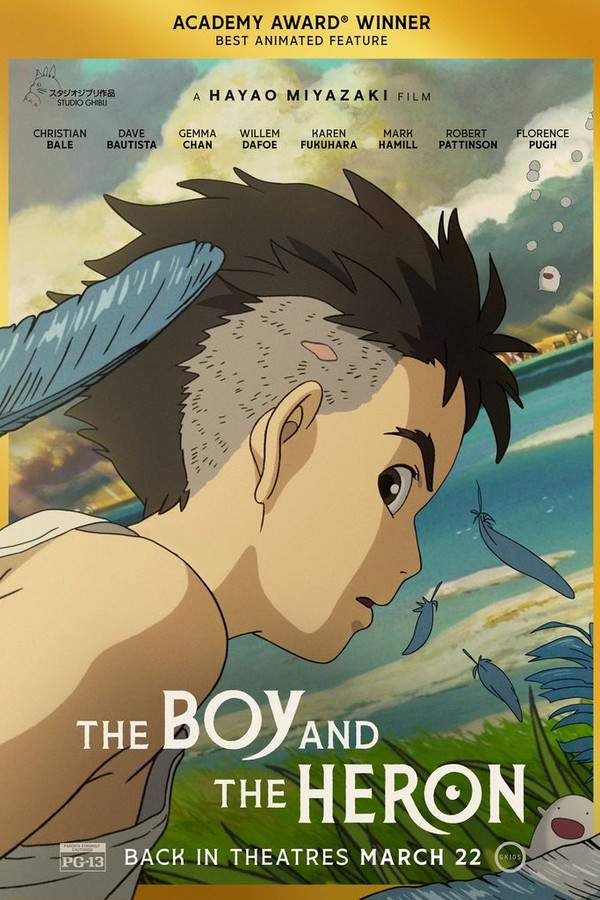
The Boy and the Heron (2023) movie poster

Ending Explained

The Boy and the Heron (2023) Ending Explained – Final Scene & Meaning

Release, runtime and language
2023 · 2 h 4 m · Japanese
Echo score 84
JustWatch #24,561 2
Directed by
Hayao Miyazaki
Starring
Dave Bautista, Gemma Chan, Mamoudou Athie, Willem Dafoe, Christian Bale, Takuya Kimura
Budget
$50M

Following the passing of his mother, young Mahito journeys into a magical realm, guided by a talking heron. He finds himself in a world where the boundary between the living and the deceased blurs, and where he must confront his grief and search for a path forward. Through this extraordinary adventure, he encounters unforgettable characters and discovers profound truths about life, loss, and the enduring power of family.

On this page (7)
  1. 1 Where to watch
  2. 2 What happens at the end
  3. 3 Final events in order
  4. 4 Ending questions answered
  5. 5 Movie threads
  6. 6 Movies like The Boy and the Heron
  7. 7 Every angle

Where to watch

Where to Watch The Boy and the Heron (2023)

Where can you watch The Boy and the Heron? Stream, rent or buy it in the US, including on HBO Max, Amazon Video and Apple TV Store: current JustWatch availability with up-to-date prices.

Streaming availability powered by JustWatch

Ending explained · contains spoilers

What Happens at the End of The Boy and the Heron?

How The Boy and the Heron (2023) ends, what the final scene means, which earlier moments set it up and how to read the ending if the film leaves it open. The full ending explained, with every spoiler.

The ending of The Boy and the Heron reveals Mahito’s journey towards understanding and accepting loss, as well as the importance of human connections. Throughout his adventures in the mysterious realm of the dead—guided by the talking heron—Mahito confronts the complexities of grief and the fantasy of reunion. The talking heron, which embodies the cultural symbolism of a creature that can travel between worlds, initially appears as a deceitful guide but gradually becomes Mahito’s protector, helping him navigate through the surreal landscape. This journey teaches Mahito that the spirits of loved ones continue to influence and shape his life, even after death, through memories and the bonds they leave behind.

As Mahito ventures into the abandoned tower and encounters the figure of his ancestor—the granduncle—he sees a reflection of loneliness and obsessive creativity that can trap a person within their own world. The granduncle’s creation of his internal universe symbolizes the solitary nature of imagination and the loneliness that often accompanies it. Mahito’s refusal to take over this created realm underscores his decision to reconnect with reality and his loved ones, rather than retreat into a fantasy world that, while tempting, offers no true human warmth.

The climax emphasizes Mahito’s emotional growth. When he is offered to rule over the fantasy realm by the granduncle, he declines, choosing instead to return to the real world where he belongs. His decision signifies his acceptance of his mother’s death and his understanding that life’s pain and happiness are intertwined. In the final moments, Mahito’s support for Himi—his mother’s younger self—allows her to choose her own destiny, staying in her world so she can eventually become his mother in a different way. The departure of Himi reaffirms that while the fantasy can provide comfort, genuine healing requires embracing the real, often difficult, relationships in life.

Ultimately, the film concludes with Mahito returning to his world, having gained a mature perspective on love, loss, and hope. The collapsing tower and the birds’ departure symbolize the end of his internal journey and his readiness to face the future with a new understanding: that true love and connection are rooted in reality, and that moving forward involves letting go of impossible fantasies. Miyazaki’s story gently champions the idea that embracing human relationships—no matter how painful—leads to genuine growth, healing, and acceptance.

Last updated: June 25, 2025 at 09:01

Was this helpful?

The last 4 events

How The Boy and the Heron Ends: The Final Events in Order

The last events of The Boy and the Heron (2023) in chronological order, the run-up to the ending explained above. The complete timeline has all 15 events, scene by scene.

Open the full timeline
  1. The Battle for Natsuko

    Faced with the malevolent Parakeet King, Mahito embarks on a bold mission to rescue Natsuko, leading to a confrontation that uncovers shocking truths about his lineage and the realm's delicate balance. His determination shakes the very foundations of their intertwined destinies.

  2. Confrontation with Fate

    As chaos envelops the realm, Mahito grapples with the implications of his choices. He must decide whether to remain under the mentorship of Granduncle or forge his own path, all while navigating the consequences of the Parakeet King’s chaotic ambitions.

  3. The Final Farewell

    In the midst of their struggle, Granduncle’s heartfelt farewell resonates with Mahito, ushering in a realization of his potential and the sacrifices of those around him. The characters grapple with meaning as they navigate the crumbling landscape of their intertwined fates.

  4. A New Beginning

    As Mahito and his companions escape the newly transformed landscape, they flee towards a brighter future. Two years later, Mahito returns to a changed Tokyo with family, carrying the enduring strength of friendship and resilience forged through shared adversity.

    When
    Two Years Later
    Where
    Tokyo

Ending questions answered

The Boy and the Heron Ending: Your Questions Answered

The questions people ask most about the ending of The Boy and the Heron (2023): what the final scene means, how the twist works, what happens to each character and how to read the ending. Each answer contains spoilers.

Q1

Why does Mahito refuse to become the ruler of the fantasy realm?

Mahito refuses because he understands that ruling the fantasy realm would mean isolating himself in a solitary world of imagination. His granduncle created this internal universe as a way to escape loneliness, but Mahito recognizes that true healing comes from real human connections, not retreating into a fantasy that offers no genuine warmth. He chooses to return to reality, accepting life's pain and happiness together.

Foreshadowing: Earlier in the film, Mahito's great-granduncle warns that the realm was created from loneliness, foreshadowing Mahito's eventual choice to reject this isolation.

  • mahito
  • fantasy realm
  • great-granduncle
  • acceptance
  • grief
  • choice
Q2

What happens to Himi at the end of The Boy and the Heron?

Himi, who is Mahito's mother as a young girl, chooses to remain in the magical world rather than returning to the real world with Mahito. By staying, she ensures she will eventually become Mahito's mother in the future timeline. This allows Mahito to eventually be born while also honoring her own choice and destiny.

Foreshadowing: The narrative establishes that Himi has her own agency and desires separate from Mahito's needs, making her choice feel earned.

  • himi
  • mahito's mother
  • young mother
  • destiny
  • choice
Q3

Does Mahito's mother come back to life in the ending?

Mahito's mother does not literally come back to life. The film explores a metaphorical reunion through Himi, a younger version of his mother who exists in the magical realm. Mahito ultimately accepts that his mother has died in the real world, understanding that her spirit continues through memories and the family bonds she left behind.

Foreshadowing: The story establishes early that the magical realm blurs the line between living and dead, but ultimately distinguishes between fantasy and reality.

  • mother
  • death
  • grief
  • acceptance
  • spiritual connection
Q4

Why does the tower collapse at the end of the movie?

The tower collapses because Mahito rejects the role of successor to his great-granduncle. Without a successor to maintain the fantasy realm, it naturally dissolves and returns to its original state. This collapse symbolizes Mahito's complete break from the fantasy world and his commitment to living fully in reality.

Foreshadowing: The great-granduncle explains that the realm requires a successor to maintain its existence, making the collapse inevitable once Mahito declines.

  • tower
  • collapse
  • fantasy realm
  • dissolution
  • return to reality
Q5

What does the talking heron represent in the ending?

The talking heron represents a guide between worlds and the boundary between life and death, reflecting cultural symbolism of herons as messengers. Initially appearing deceitful, it ultimately serves as Mahito's protector, helping him navigate the surreal landscape. By the end, the heron has guided Mahito toward acceptance of loss and choosing reality over fantasy.

Foreshadowing: The heron appears at key moments throughout Mahito's journey, subtly guiding him toward the truth rather than simple deception.

  • talking heron
  • guide
  • symbolism
  • death
  • boundary between worlds
Q6

Why does Mahito decide to leave the magical world?

Mahito decides to leave because he realizes that while the fantasy realm offers comfort and the possibility of seeing his mother again, it cannot provide genuine human connections or true healing. His journey through grief teaches him that facing reality's pain alongside loved ones leads to authentic growth, while fantasy only delays necessary acceptance.

Foreshadowing: Throughout his adventures, Mahito encounters characters trapped by the fantasy realm, showing him the danger of escaping reality permanently.

  • mahito
  • reality
  • fantasy
  • acceptance
  • grief
  • healing
Q7

What does Mahito's great-granduncle represent in the ending?

Mahito's great-granduncle represents the loneliness of creative genius and the danger of retreating into one's own internal world. He created the fantasy realm from his imagination but became trapped within it, unable to connect with the real world. His offer to Mahito reflects his own isolation and desire for connection, but Mahito's rejection frees them both.

Foreshadowing: The great-granduncle's story is told through fragmented memories, showing how his creative power became a prison.

  • great-granduncle
  • loneliness
  • creator
  • fantasy realm
  • imagination
  • isolation
Q8

What does the birds flying away at the end symbolize?

The birds flying away, along with the tower's collapse, symbolizes the end of Mahito's internal journey and his readiness to face the future. These surreal creatures that inhabited the fantasy realm depart as the world dissolves, representing Mahito's transition from childhood grief into a more mature understanding of love, loss, and hope.

Foreshadowing: The birds appeared as mysterious inhabitants throughout Mahito's journey, serving as indicators of the realm's state.

  • birds
  • departure
  • symbolism
  • transformation
  • journey's end
Q9

What is the significance of Mahito's scar burning at the end?

Mahito's scar burning at the end signifies his final release from the fantasy realm's influence and his complete acceptance of his real-world identity. The burn mark he received earlier in the magical world fades as he fully commits to reality, symbolizing that the trauma of his journey is being healed and he is ready to move forward.

Foreshadowing: The scar first appears during a traumatic moment in the fantasy realm, tying it to his resistance against that world.

  • scar
  • burn
  • healing
  • release
  • transformation
Q10

What is the main message of The Boy and the Heron ending?

The ending delivers a bittersweet message about grief: that healing requires accepting loss rather than escaping into fantasies of reunion. Mahito learns that loved ones continue to influence our lives through memories and bonds, but true growth comes from embracing real relationships despite their pain. The film champions choosing difficult reality over tempting fantasy.

Foreshadowing: The entire narrative arc builds toward this thematic conclusion through Mahito's evolving understanding of the fantasy realm.

  • grief
  • healing
  • acceptance
  • loss
  • message
  • theme
  • family
Q11

Does Natsuko become Mahito's stepmother in the ending?

Yes, the ending implies that Natsuko becomes part of Mahito's family as his stepmother. When Mahito returns to reality, he finds his father has married Natsuko, who is pregnant with Mahito's future sibling. This new family structure represents Mahito's acceptance of moving forward and embracing new connections while honoring his mother's memory.

Foreshadowing: Natsuko's presence was established early in the real world, and her pregnancy is revealed as part of Mahito's return to reality.

  • natsuko
  • stepmother
  • family
  • father
  • new sibling

Movie threads

More Movies Like The Boy and the Heron, by Mood & Story

Curated lists built around what makes The Boy and the Heron tick: the same mood, the same kind of story or the same emotional payoff. Each list explains why these movies belong together.

Movies that explore grief through fantasy like The Boy and the Heron

Characters process profound loss by entering a wondrous and symbolic fantasy realm. Discover films similar to The Boy and the Heron, where characters embark on magical journeys to cope with deep loss. If you liked the blend of melancholy and wonder in Studio Ghibli's fantasy, you'll find other movies that use imaginative worlds to explore themes of grief, healing, and the enduring power of memory.

  • melancholic
  • dreamlike
  • wistful
  • hopeful
  • magical
  • grieving
  • Tone: melancholic, wistful, hopeful
  • Pacing: steady, deliberate
Why these movies?

The story pattern: The narrative pattern begins with a tangible, real-world loss that shatters the protagonist's normal life. This trauma acts as a gateway to a fantastical realm, often guided by an enigmatic figure. Within this world, the protagonist encounters symbolic representations of their grief, memories, and unresolved feelings. The external quest—finding a person, an object, or a way home—parallels the internal journey of acceptance, culminating in a return to reality, forever changed but carrying the lessons of the magical world.

Why they belong together: These films are grouped together because they share a unique emotional recipe: the heavy weight of real-world sorrow is balanced by the awe and whimsy of a fantasy adventure. They resonate with viewers seeking stories that don't shy away from pain but offer a cathartic, imaginative path toward healing, blending deep emotionality with visual and narrative wonder.

Quiet coming-of-age stories set in wartime like The Boy and the Heron

Young protagonists mature against a backdrop of societal collapse and personal tragedy. Find movies like The Boy and the Heron that focus on a young person's emotional journey during wartime. If you appreciated the film's portrayal of grief and growth against a backdrop of conflict, these similar stories explore the quiet, reflective side of coming of age when the world is falling apart.

  • reflective
  • grieving
  • solemn
  • wistful
  • historical
  • introspective
  • Tone: melancholic, reflective, bittersweet
  • Pacing: steady, introspective
Why these movies?

The story pattern: The protagonist is typically a child or adolescent whose life is upended by war, often through the loss of a parent or home. The external conflict of the war serves as a constant, oppressive background to their internal journey. The narrative follows their attempts to navigate this new, dangerous reality, forming tentative connections while grappling with themes of survivor's guilt, the loss of innocence, and the struggle to hold onto hope. The resolution is rarely a victory over the war itself, but a personal reconciliation with loss and a step toward a forever-changed future.

Why they belong together: These films share a specific mood: a solemn, contemplative atmosphere where the loudest battles are fought within the protagonist's heart. They are united by a steady, character-driven pacing that prioritizes emotional depth over action, and a tone that balances the bleakness of war with moments of human resilience and bittersweet hope.

If you liked this

Movies Like The Boy and the Heron

Similar movies to The Boy and the Heron: the same genre, themes or kind of story. Each one comes with its own plot summary, timeline and ending explained.

Browse all movie summaries

Every angle

The Boy and the Heron (2023) Explained: Plot, Ending, Timeline & Characters

Everything about The Boy and the Heron in one place: what happens in the plot summary, the timeline in chronological order, the characters and meaning, the ending explained and a spoiler-free summary. What's After the Movie adds the cast, box office and post-credit scenes.

Coming soon on iOS and Android

The Plot Explained Movie Summary App

Plot summaries, endings explained and timelines on your phone. Catch up on any movie in minutes, save your favorites and never miss a twist again.

Be the first to know when we launch. Your email stays private, always.

Learn more about the app